“You’re turning into my dad.”
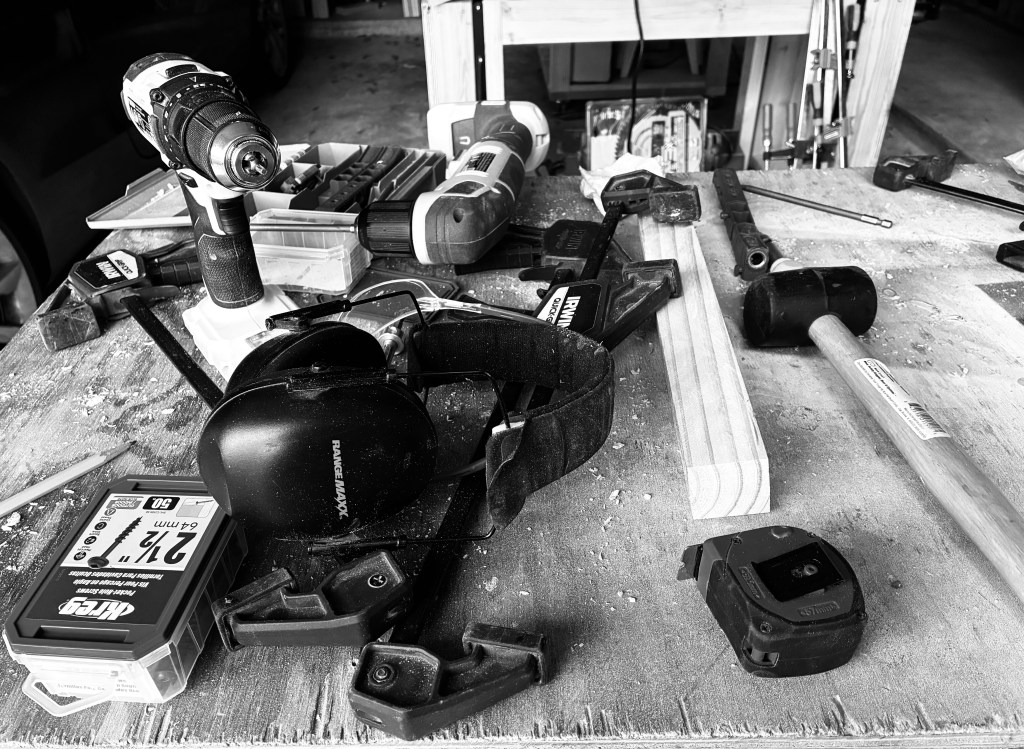
There are a number of now-familiar statements my wife has issued to me over the course of our relationship, and this one is the latest. I hear it typically at bedtime if/when I cue-up a YouTube video of a woodworker guiding viewers through a given project. I lie still in rapt attention as she rolls her eyes and continues reading her book next to me, though she only has herself to blame, having 3 ½ years ago challenged me, with no discernable handyman skills, to build her a patio table for her birthday. The book at my bedside is titled, simply, “Tools,” and was gifted to me by her this Christmas. It has equally kept my attention on the history and use of over 140 hand tools employed over the centuries and still used today. It’s a page-turner for sure, if you ask me, though I wouldn’t have said so 10 years ago. She’s at fault for the transformation, if you could call it that, but I can’t say that I mind.
This morning as I awoke, I landed on a video of a Japanese woodworker constructing a table. Even if you have no interest in the hobby, if you give it a chance, viewing such as this specifically will be sure to settle you down. Videos on the same topic by almost any American are full of a lot of chatter and often pitch, one way or another, the quick and efficient method for completion of a project as they talk directly to you through the lens. By contrast, clips of Japanese craftsmen at work will treat you to quiet, patient care in their effort, the only words provided through subtitles, if at all, silently focused on their task as if you, the viewer, aren’t even there. In the end stands what can only be called a work of art, even in the final product’s very simple, straightforward elegance, the 20-30 minute running time of the video betraying the weeks, if not months, -long deliberate effort to create something beautiful and functional that will outlast its creator and, perhaps, even his/her grandchildren.
I’ve made a lot of things since I started the hobby, many of which I’m pleased with, but I’m not sure any of them will last remotely as long as even one of those shared in these videos by such dedicated and careful craftsmen. As I marveled at the process, I considered what separates such individuals from others, and there’s only one word that came to mind:
Patience.
I get myself in all kinds of trouble when I ditch this attitude, and it’s often a sign that I need to stop for the day. Mistakes begin to pile up and I get careless, impatient to make it to the end rather than waiting for tomorrow’s daylight to finish the task at hand. With this in mind, I have found myself lately, at the start of any project or picking up where I left off, consciously telling myself to “slow down.” The job itself becomes much more of a joy, and you’re more likely to end up with what you’re after, even if there are mistakes to address, as there often are.
“Quick and easy” are uniquely American values, I think, and they have their place. I certainly appreciate the idea of just “getting things done.” However, if you aren’t careful, the unwitting sacrifice for this choice is often, namely, quality. I would argue also one loses a certain pleasure in the process, not to mention creates unnecessary stress, as if it’s a race. I’m not sure one can even accurately compare the pursuit of quality to a marathon as much as a long walk.
“Patience is a virtue,” they say. I’m inclined to agree. That being said, I’ve never been one to make new year’s resolutions, but if I were, I think this attitude would be my theme for the year. I mention it here publicly to allow anyone to remind me of it, as I’m likely to forget in the next day or two. Yes, I mean the craftsman example to be a metaphor, as the attitude can and should thoughtfully be applied in all day-to-day actions, whether parenting, exercise, woodworking, whatever. I’ve told my kids of my interest in that they make wise decisions. Here’s a reminder to me to do the same through patience.
And here’s to 2026. May we all be patient and wise, whatever may come.

 Time in a Bottle