The only thing I recall with middle-aged clarity about my high school graduation is stepping outside of the gym following the ceremony and finding no one waiting to congratulate me in front of the school. As I drove home in our faded-yellow Cavalier, I wondered what was so important that I couldn’t have at least been extended that minor courtesy. My answer arrived once I pulled into our driveway and stepped into the house to find family and friends waiting to celebrate the accomplishment in more comfortable surroundings. I quickly abandoned my disappointment and enjoyed the rest of the evening. My memory also fails me as to anything I might have been gifted, but what I haven’t forgotten is who was present with me. That would not be the last time such a significant detail instructed me about what’s most important overall about life’s milestones — who has been willingly present with you.
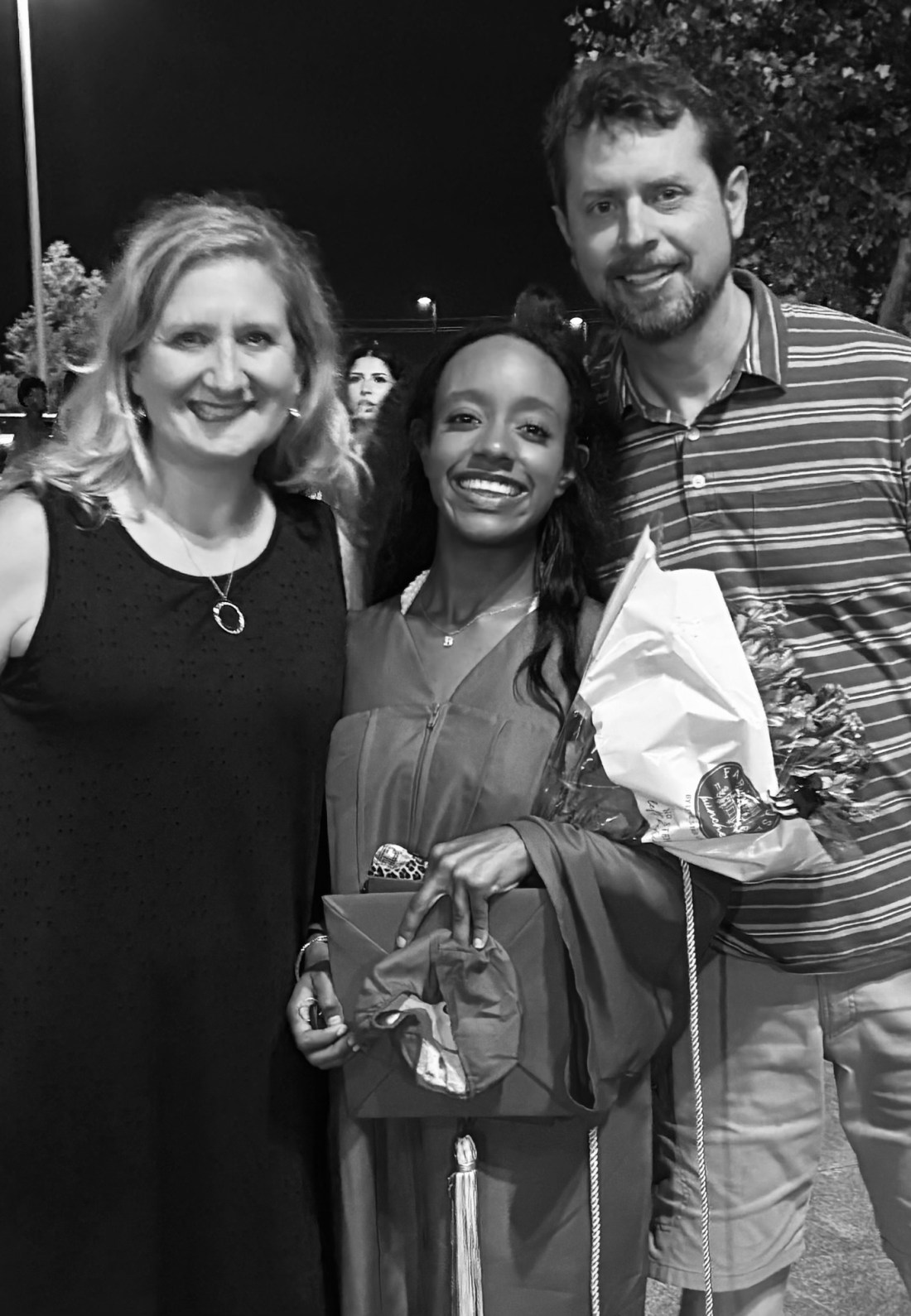
Our oldest graduated from high school yesterday. It’s her accomplishment, of course, and we have fully celebrated with her in a number of ways. I look forward to what’s to come for her and plan on being present for the road ahead as well, understanding a little better the day after, as I think about the next steps, the truth that parenting is indeed a lifelong commitment. As I held her face in my hands, kissed her forehead, and told her I was proud of her, any frustrations I bore up to that point over the last several years since she came to us at the impressionable age of eight didn’t matter so much anymore. The often expressed notion from seasoned parents that it’s all worth it began to materialize in a very new and fulfilling way for me, as did appreciation for the task of parenting and my own parents’ sacrifices to raise me.
Any parent would echo that your kids’ accomplishments feel, to an extent, like your own. You understand the extensive efforts and support that went into bringing them to this point, even if they don’t, at least not completely enough to appreciate. That impression can feel more pronounced if their life before you entered it was less than ideal and stood to take a very different, potentially unfortunate course.
The other half of the truth, however, is that they have to accept what you provide and make a conscious, grateful effort over the days, months, and years, even if an imperfect effort. Progress, not perfection, as they say. I’m happy to say last night is evidence that she has made such an effort, if the genuine smile on her face is any evidence of the attitude she has chosen.
So, I pray and expect she, like me, will remember best in these moments not what but who was a part of them.
Congratulations to our oldest, our kid in every sense of the word.
I have no such fear, but I love the word itself. After attempting to raise 3 kids for the last several years, I can tell you about a host of other things that easily cause me varying levels of anxiety. To fear something as simple as a number only suggests to me one might not have enough going on in life to genuinely or rationally fear.
I mention this since it is our 13th anniversary today, but I feel no such fear of it, as if there is something threatening on the horizon. Each new year can feel like just another number, but more often than not I’m astounded that it’s already been another year. In a way, it hasn’t felt nearly that long, which is to say that I’ve found my wife the most pleasant person with whom to have spent my time, such that it passes easily. “Choose well,” my father-in-law counsels new couples. I’m happy to say I followed his advice, and it remains the best choice I ever made.
This picture from our wedding day, walking into our reception, remains one of my favorites. I can’t quite tell you why except to say that our expressions are real, no artifice or uncertainty. We were happy to be together, and happy for what’s ahead. For my part, I was sure Jenny was the person I wanted to be with, and that remains true today.
So, in the spirit of choosing well, I choose to believe a number is just a number. That goes for “13” as well. May just be the best year yet for us both. Happy anniversary to my lovely wife.
Once upon a time, my wife and I were DINKs. For those who don’t know, that stands for “Dual Income No Kids.” It’s a very comfortable life, I will admit, and a very appealing option. I judge no couple for choosing it, but do note how vastly different it is from the choice to have or bear children.
Once upon a time, Jenny and I also had the opportunity to do one of our favorite things, which is travel together abroad. This coincided with our DINK lifestyle, prior to children. She periodically continued to travel for work after the kids, but it wasn’t quite so much fun since one of us (i.e., me) had to stay behind with them. C’est la vie.
One of our last trips abroad as DINKs was to London, right before the kids entered our home and altered our status forever, back in the spring of 2016. We thoroughly enjoyed it, even as we had no idea how thoroughly life was about to change.
And here we are again, providing the kids with one of their first sojourns across an ocean, once again in London. It feels full-circle, especially when we consider that our oldest is potentially leaving the nest here in her last year of public school. It feels like an accomplishment, not only for her but for us as well, when you think about where they began.
I acknowledge you’re never really finished with the job of parenting, but there are a few satisfying stages I still hope to cross, this being one of them. All the more meaningful when you consider, even if they don’t yet, where they’ve been and how it could easily have been a different outcome for them.
Kids are a form of chaos. It’s true — don’t try to deny it. Navigating the critical stages may feel like a cakewalk, or more likely a turbulent off-road adventure. It depends on the kid. Regardless, it will require effort on your part, not to mention sacrifices on your part, which they may or may not acknowledge. Lack of recognition is part of the job, unfortunately, that I daily try to swallow and simply move past.
But here and now, seemingly full-circle in a country with all the kids we once were about to take on, I feel a glimmer of accomplishment and hope, which is fleeting and temporary at best in the day to day job of parenting. They may have no idea about either in the ignorance of adolescence, but I can see it clearly 9 years into the job, as one of them happily prepares to move on, and seemingly happy to be here with us, still calling us mom and dad.
The satisfaction of completing challenges take many forms. Parenting, adoptive or otherwise, is its own special form, I will tell you. We’re still in the thick of it, but I think I will remember the two trips to this specific place as a couple of bookends, from the uncertainty of the task ahead, to a stage of the task fulfilled, regardless of whether or not it looks exactly like I imagined.
The first fall of snow is not only an event, it is a magical event. You go to bed in one kind of world and wake up in another quite different, and if that is not enchantment then where is it to be found?
– J. B. Priestly
“Is This Your Mattress?”
Small-town newspapers struggle for stories worthy to print, I’m sure, and the Malone Telegram was no exception. This uninspired front-page headline was accompanied above the fold by a far too prominent black-and-white photograph of a filthy, well-used mattress deliberately dumped roadside by an unknown offender, a reprehensible act, the article alleged, that was becoming all too common a petty criminal custom in a town where virtually everyday was a slow news day — except, perhaps, for the time a rogue buck dashed confused and rampant through the steeply inclining and declining streets of the center of town, clearly having taken a wrong turn out of the surrounding woods. There wasn’t much to recommend to outsiders the little town of Malone in the North Country region of New York; unless, that is, dairy farms and state prisons get your motor running.
Following our year-long adventure in post Soviet-era Ukraine, our family moved in late 1993 to this section of the country that felt, at that time of year, more like the frozen, bleak, and lonely edge of the earth to those of us who hailed from the humid, sunny, and densely-populated outskirts of Houston, though, I will admit, the changing colors of the fall there are a sight to see. The weather, which introduced us to show-stopping snow and ice and the acquired skill of winter driving, wasted no time introducing us to the change of scenery, as we walked unbeknownst into one of the heaviest snowfall seasons on record.
Arriving from Houston (via Ukraine), we knew well that snow was an extremely rare event, having grown up in a section of the country better known for its blistering heat and humidity, though the winter before in eastern Europe had provided us with ample opportunity to experience bone-chilling cold and precipitation that lasted more than a day. While it was common enough there not to write home about, it was uncommon to us Houstonians, and we took advantage of snow and ice on more than one occasion to keep ourselves entertained.
One of my first introductions to the thrill of sledding taught me a lesson about staying aware of what lies beneath, so to speak. In the small village of Metalist, north of the sprawling city of Lugansk, where our family resided, lived another missionary family we would visit from time to time. Incidentally, a recent search on Google Maps for this nondescript location yielded pictures almost solely of the town in winter, as if to suggest it’s the only time of year that would occasion a photograph. One of the families we would visit lived in a small house near the edge of town, and next to this house was a decent hill, ideal for sledding, and each of us took advantage of the opportunity, many of us for the first time since most of us hailed also from the Texas Gulf Coast.
My turn came soon enough, though it was clear after a few runs that the snow had not sufficiently settled or packed itself in, resulting in a rough but rapid ride on the way down. Moreover, the terrain beneath was not without its obstacles in the form of rocks, which, it would seem, was hardly sufficient reason to end the show for all of us thrill-seekers gathered. As I took my place on the sled, pushed off, and began the descent, all was otherwise well until I lost control at the bottom, flying off and landing not comfortably prone into a soft cushion of white powder but onto my knees into a concealed patch of unforgiving rocks beneath the deceptive fluff. I should add that it was not my rock-like kneecaps that took the brunt of the impact but that tender space just beneath them — that is, between patella and tibia. How I got up, I don’t know, but to say I was in pain was an understatement. Kids are resilient, they say, and I suppose 16-year-olds are as well, since I found a way to carry on until the bruising and discomfort subsided over the next several days. I know for a fact my 200 pound, 48-year-old body would have left me on the ground writhing from such an injury, waiting to be carried mercifully to the ER, yet here I am upright and ambulatory, able to tell the tale decades later.
My brother, sister, and I had another winter habit, almost equally risky, during our sojourn in Ukraine, specifically in the small triplex we called home for a few months. It’s no secret that water turns to ice in the frigid air, so, in the absence of snow, we would clear a substantial patch of ground in the “garden” space of the enclosure outside of our triplex and generously dump buckets of water onto the cold, barren dirt, waiting for the temperature to create for us our own mini ice rink. And so it did, after a day or so. Miraculously, no injuries were sustained from the hours we spent sliding along the icy patches. I’m not sure there’s a lesson there other than learning how to maneuver successfully on slick surfaces without a fatal fall, or, perhaps, finding creative ways to keep oneself engaged in the absence of entertainment being handed to you.
Our return to Texas in the summer of 1993 might have been the last we experienced a winter wonderland if not for our move to New York state towards the end of the year, as mentioned above. My parents left the mission field across the ocean after an illness and emergency surgery sustained by my mother there brought us back home. Months later, they would accept the pastorate of a small church in the little town of Malone, only minutes from the northernmost border shared with the French Canadian province of Quebec. It might as well have been another country for the differences between us and the citizenry, arriving from about as far south in the country as you can travel, to almost as far north, save Maine and Alaska. We were relative foreigners by contrast, unique in speech, background, and, especially, faith, my parents having taken on the task of shepherding a very modest congregation of Evangelicals in a predominantly Catholic community. I learned first-hand just how odd the five of us appeared to the locals one morning after I seated myself in my first period class near the beginning of my junior year and overheard a classmate remark to another, upon understanding that my father was a “priest,” “Doesn’t that make him illegitimate?”
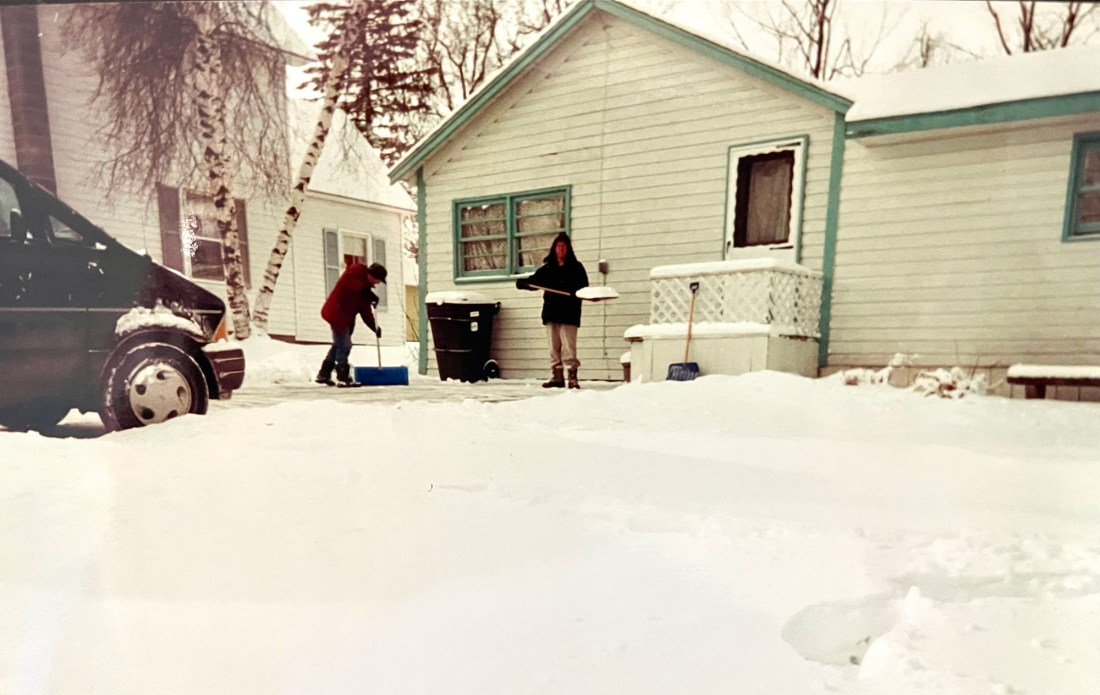
I would remain only long enough to graduate, returning to Texas for college at my first opportunity, but would return for the next seven years during summer and winter breaks. Our first winter, in 1993, pulled no punches and, we learned, would be one of the heaviest experienced in several years. We shoveled snow out of the driveway on a regular basis, acclimated to the sub-freezing temperatures enough not to require heavy attire while doing so, and became well-versed in traveling on the slick roads. One particular steeply-inclined street leading from town up to our parsonage across from the middle school required drivers to build up enough momentum beforehand to reach the level peak rather than slide perilously backwards, in order to try earnestly once more.
My brother, sister, and I made the most of it, however, and I wouldn’t hesitate to say we were each others’ best friends, having learned overseas how to keep ourselves entertained, especially in the cold. I had mentioned that the winter we arrived ended up one of the strongest in many years. I hadn’t the experience to know any different, but I do know that halfway through the season, the piles of snow my father, brother, and I had shoveled out of the driveway and into the yard were taller than me. This fact gave us the interesting notion of occupying ourselves by digging out meandering “trails” in the snow around our yard, which we labored to complete over a day or so. To cap it off, the largest snow-shoveled “hills” we mined, so to speak, creating our own tiny igloo in which to hide. The trails surrounding the modest acreage served as a makeshift racetrack, each of us competing for the best time start to finish.
The only thing more marvelous than the measured snowfall were the icicles. Varied warming and freezing over the season created, at times, fantastic ice columns that stretched from roof to ground, wonderful to observe but, as kid/teen, even better to break apart or use as a tool, yard decoration, or imaginary weapon. Problem with the latter, while an impressive lance, is that it doesn’t hold up to actual swordplay, shattering at first strike. No matter, though. It’s fun and satisfying to break stuff without serious consequence too.
Other than our front yard, the high school football field offered another playground in the form of a perfectly-inclined and distanced hill for sledding. We took the opportunity only a few times since it was not within walking distance to the house and required a drive, its own challenge due to yet another road that necessitated gathered momentum in order to safely arrive at the top. During one particular trip, we met a few of the other youths in the church there and after a number of up-and-downs decided to get creative, building a natural, hastily-constructed ramp at the bottom. Not one of us, I should note, were engineers or had a mind for such, which would soon become evident. Our willing guinea pig was one of the younger kids, who topped the hill, straightened up, and, when given the signal, charged down. We all prepared for a successful outcome as he neared the ramp. Unfortunately, while there was airtime achieved, our ramp revealed itself more as an idiotic obstruction, and said kid, rather than smoothly gliding forward through the air, instead hit the “ramp” like a pilot performing an emergency ejection from a fighter aircraft, shooting violently upward rather than outward. Thankfully, the snow was there to cushion his jarring, flailing tumble back to earth, though we all held our frosty breath for a moment, hoping, as he lay motionless, that we had not just killed a kid. He rose after a moment, to our relief, though I don’t recall that he ascended the hill for another go.
As much fun as the cold can bring, it offers more than its share of inconveniences. I would be remiss not to retell one final tale, regarding the storied ice storm of January 1998. While on winter break from college, my brother and I nearing our return to Texas, temperatures warmed just enough over a couple of days to create freezing rain, which cakes everything on which it lands in ice. Given enough of this, the collected ice begins to allow gravity to do its work and pull whatever its landed upon more forcefully toward the ground. This might not be an issue were it not for suspended tree branches and power lines. If the latter doesn’t snap under the weight, the former will make sure that it does. And so, at some point in the night, while you hear the tired and heavy branches fall heavily to the ground all around you, the power disappears, taking the cherished and necessary heat in your home along with it. Five counties across the North Country were affected, and the National Guard eventually rolled in while we hunkered down for days in my parents’ upstairs bedroom, the warmest room in the house, which wasn’t saying much. It was difficult not to sympathize with the close quarters endured by the Anne Frank family, and we oddly acquired some idea of what it was like to feel trapped in a tight space as if hiding from danger. In due time, we were able to make our way to the home of friends whose power was restored in another part of town, and there we were until it was restored to our own. While inconvenient and uncomfortable at the time, it’s still a story we happily tell, and one that deserves an equal place on the shelf with all of the others, favorable or unfavorable circumstances notwithstanding.
I could say that I regret we don’t live in more frigid regions so that our kids are able to create more of their own favored memories of snow and ice, but I would be lying. The truth is, it doesn’t take long to wish it on its way and long for warmer spring temperatures. I am grateful, however, for the times they have been able to experience it, such as these last few days, and form their own stories. A fresh blanket of snow, to me, always arrives as a natural, blank canvas like nothing else there is in life, inviting you to trudge, play, or just provide visible evidence that you’ve been here, that you’re simply happy to be alive.
“Padre.” This is how our middle chooses to refer to me. Our oldest, I learned the other day, “adopted” the nickname as well and took it a step further in her phone, in which I’m saved as “Mi Padre.” No Spanish heritage anywhere in the background that I’m aware of, and only English spoken in the home, yet, there you have it.
It’s a term of endearment, I know, whether she understands what that is or not, and a strong indication, if I think about it, that somewhere we crossed that unofficial threshold of existing as merely a random couple of adults raising her and her siblings to actual parents, and not merely “mother and father” but “mom and dad.” There is a difference, mind you.
She’s 15 today. If I’m brutally honest, there have been plenty of times I wasn’t sure we’d make it this far. Parenting via fostering/adoption is tough, tougher with certain kids more than others. The trauma and instability some have experienced, to which they often cannot give proper voice, ends up shared with you in your home, making the ultimate goal of connection all the more challenging. With patience and persistence, however, I would tell my younger self, it can happen.
We weren’t present for the earliest years. We became a part of her life at 7 years of age, with Barbie dolls and Disney sitcoms, transitioned to fastidious concerns over hair and makeup, and now we’re on the cusp of a learners permit, a responsibility for which she can hardly wait to enjoy. Eight years isn’t a long time, and yet, it is. “The days are long, but the years fly by,” as one parent described it.
She’s smart, passionate about her feelings, has a unique kinship with animals (especially the adorable ones), and at times reveals a sixth-sense about people and whether they’re genuine or not. She can also drive me to frustration and even anger. The last several years have often been a lesson in restraint for me, an endeavor to be a mature adult rather than a righteously indignant fool. I was long known for being patient. Then we had this kid.
Yet, in spite of the fact that I have been inspired at times to uncharacteristically erupt over the immaturity of adolescent impertinence, I have clearly been able to identify in me that emotion common to all fathers of daughters, all of whom will understand me. And that is, if another attempts to bring undue harm to her, especially another man, young or old (I’m not partial in this regard), then you’d best stay clear of her “Padre.” I’ll gladly take the legal penalty for whatever follows.
So, again, she’s 15 today, an age I certainly remember, and which she’s likely to as well. There have been a lifetime’s worth of transitions with her, and I know there will be more. It should be a joy to watch your children grow, regardless of the ups and downs along the way, or, perhaps, because of them.
Happy bday to our middle, Dezira. Looking forward to what’s to come.
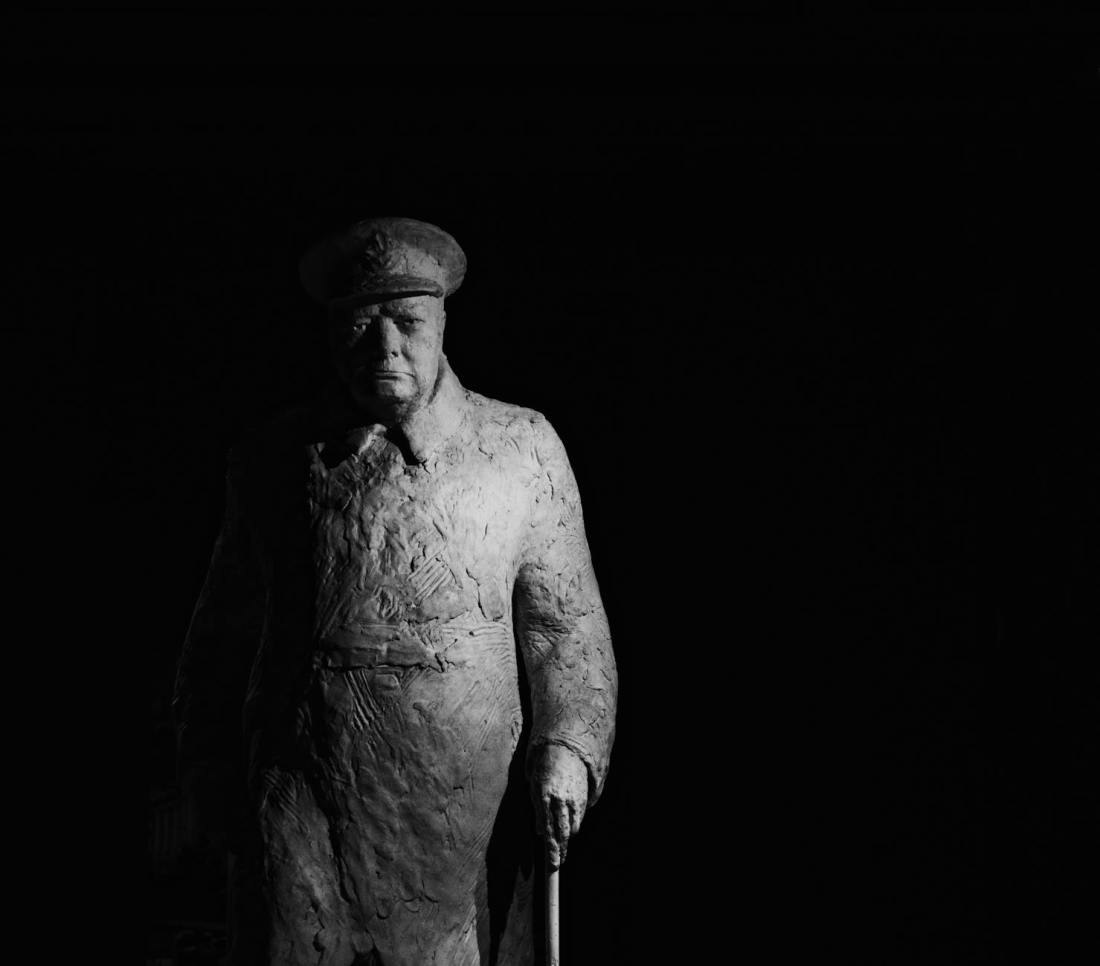
“If you’re going through hell, keep going.” – Winston Churchill
Churchill knew a thing or two about adversity and perseverance. His dogged resolve and determination effectively halted the advance of the Germans across Europe until allies joined the fight to push them back into the heart of the continent, ultimately ending the war that had consumed that part of the world. Although he would lose his political position of influence at the close of the war, his legacy remains that of persistence in the face of incredible odds. Even today, his bulldog-like visage is all it takes to conjure such feelings and find inspiration to carry on.
Perseverance implies adversity, struggle, conflict. If not against something, it is against someone, individually or collectively. For those of us who characteristically avoid conflict, it could be argued that we, likewise, avoid perseverance in general, whatever the cause may be. I might have included myself among such shrinking violets, if not for the confidence that others have often had in me. We all know how we feel about ourselves. We often forget how others actually see us, however. “Perception versus reality,” as it’s typically framed. In my case, it was, lately, one of our children who offered a change in perspective.
In a recent group counseling session, we were given the opportunity at the close of our time for each of us to share one thing we genuniely appreciated about one another. We made the rounds, as did our oldest, and when it came her turn to direct her grateful observation concerning me, she fumbled at first to find the words to describe what she felt. What she eventually got across, after hinting at the significant challenges we’ve had with our unique experience of parenting via adoption, is that she is grateful, in short, that we have not given up.
Not what I was expecting to hear.
“As the body goes, so goes the mind,” it’s said. Here in my late 40s, my shell, so to speak, has begun its deliberate, gradual decline brought on by none other than time, which waits for no man. I’ve felt in recent months I’m now fighting a losing battle with my physiology more than ever before in my life, and knowledge of such has drawn my mind to follow suit and give ground, reflecting the “posture,” if you will, of retreat, frequently posing the question, “What’s the use?” There are other factors in play, but within, my mind is lately choosing to follow the flesh rather than vice versa. I have no fatal illness — don’t misunderstand — other than aging itself, but it’s begun to rear its ugly head and, well, affect my head as much as the rest of me.
The change frequently manifests itself as a poor attitude overall, and while there are pharmaceutical remedies, I’m told, which I may ultimately allow, I see there is no going back. I admit I’m having a hard time with it, though I had imagined I would welcome growing older. It seems, however, that I didn’t take into account the actual effects, and my fickle feelings, more often that not these days, counsel surrender, and I shuffle through the day as if a beaten foe.
Yet, here was our oldest pointedly appreciating perseverance, and in none other than me.
“The kids are watching.” Yes, they are. I shouldn’t have to say to any parent out there that they aren’t listening, or, at least, they rarely appear to be. We all experience this sad and exasperating reality daily with them, though a word or two occasionally takes root and is recalled. We, though, are a “watching” culture, if you will, and on select occasions their eyes drift away from one of the multitude of screens in their line of sight, and they land on us, consciously or unconsciously, unwittingly setting an example.
Feelings often translate into action, one way or another. But if our oldest’s expressed observation of a character trait in me bears any truth, then my defeatist feelings were overshadowed by someting else entirely, which, to her, resembled determination.
Maybe, just maybe, perseverance, for those of us who are parents, is less the poetic and stirring “Charge of the Light Brigade,” facing reckless odds under peril, inspiring as it may be. Perhaps it’s more just the simple act of getting out of bed each morning, again and again, to fix them breakfast and get them to school, banal and endless as the routines can honestly feel. Granted, parenting has its share of battles. I often find myself “Stormed at with shot and shell” on a daily basis by adolescence, and I fall easily into the laughable trap of believing that I’m the only one sustaining the barrage and being treated as the enemy. Nevertheless, rousing the troops out of bed and marching them out the door both fed and dressed, we know, is its own special form of victory. It may not always be “hell,” as Churchill understood it, but the kids will observe and report in the years to come whether or not you kept going. They’ll most certainly notice if you didn’t.
My wife tells me since I left my first profession that I’ve become, unwittingly, more like her father in a few ways. One of these ways is my new habit, at times, of striking up conversations with strangers. I tell her it’s likely because I no longer have coworkers or customers to fulfill my social needs for the 8-5. The dogs have been my only company, and conversations with them tend to be both dull and one-sided as they prefer activity to words.
At any rate, Gene, my father-in-law, rarely runs even the shortest of errands without returning with a story of an interaction with someone known or unknown, and it’s rarely dull. Talking to strangers, though we’re warned of such things as children, is one of the most satisfying changes I’ve made as an adult, and my only regret with the practice is not having picked it up sooner. It’s also a source of occasional embarrassment for my children, which I consider a satisfying bonus.
This morning I met a man with the most outstanding name I’ve ever come across – Babatunde. He was my Lyft driver, carrying me home from the shop while our minivan underwent a few tweaks. The interaction, I soon learned, would be a pleasant one over the short drive. I spilled some of my courtesy coffee in the back seat as I climbed in, apologizing profusely, and he chose to respond graciously, tossing me a hand towel and insisted that I not worry about it. Most drivers might be put out over the accident for the risk of not maintaining the profile status of a clean car, but not Babatunde.
I inquired about where he was from. “Nigeria” was the reply. My previous boss was also from that part of the world, and I bear nothing but fond memories of her. Babatunde would continue over the 10 minute drive to bolster my positive opinion of anyone from the country, as we chatted about what brought him here, who he is, and what he thinks about his time here in general.
Two years now working here in the U.S., and specifically in Houston, he appreciates the opportunities he has had here as opposed to elsewhere. While he’s here on greencard status, he’s earnestly pursuing citizenship. He shared with me about his family, the innumerable dialects in Nigeria, and about his friends elsewhere in the U.S., who have encouraged him to stay here in Texas for the low cost of living. Concerns about the political landscape, though duly important to most of us at the moment, do not overwhelm him to the point of either elation or depression. He has been a part of another world much different from my own and knows what he has and what there is for him to appreciate now, even today.
Babatunde, I would venture to guess, makes very little as a Lyft driver. He possesses few of the privileges I do and, in fact, may never have them. I, to be frank, entered his ride thinking about a few things in my life that could be better. He struck me, however, as someone thinking about a lot in his life that could be worse.
Our ride was soon over, but I learned a lot about this stranger, no longer a stranger but now a pleasant acquaintance, should I run into him again. I was reminded of a thing or two personally for the brief interaction, something I daily forget:
Perspective is everything.
Maybe it’s not such a bad idea to talk to strangers.
“I never was fond of teenagers, even when I was one.”
My beloved cousin’s candid observation resonated with me and put words to what I felt during my mid to late-adolescence, though both of us were in our 20s for this particular conversation. I would never forget it; neither, maybe unfortunately, would I find this personal sentiment changing as I grew older.
What has changed is that I’ve been a parent to teenagers for the last four years. And not just teenagers, mind you, but a couple of the female variety. What’s the difference, you ask? Go ask another parent with two or more. They get it. As further proof that it’s a “thing,” my wife once came across a t-shirt with the bold words emblazoned across the front, “You don’t scare me. I have two teenage daughters.” Nobody creates a t-shirt unless there’s a sizeable market out there who identify with the message.
The only thing potentially worse than the raging hormones and insufferable emotions are, perhaps, the foolish decisions they have a tendency to, or not to, make. And this, more often than not, is what keeps me up at night or wakes me early in the morning. Some of these decisions have a way of impacting one’s immediate and even distant future, and for whatever reason, teenagers tend to regard poorly consequences either near or far due to their undercooked brains. Waiting around for this to change can feel endless, as if they will always be this way. The stress is enough to drive you to despair, if you don’t recall that you were once a teenager yourself. Moreover, you made plenty of regrettable mistakes, in word or in deed, and you likely recovered from all of them, leaving them far into the past.
Which brings me to the curious tale of William Powell.
Once upon a time, young William was a teenager, like the rest of us, but uniquely erudite. He also possessed a bit of angst about the society in which he found himself in the late 1960s/early 1970s, and thought that he ought to apply his talents to addressing the problems of government. So, at 19 years of age, he decided it would be a great idea to research and write what would become one of the most infamous and subversive texts both then and now, cherished only by those who have the most pronounced distrust of the law of the land and are thereby inspired to act nefariously: “The Anarchist Cookbook.”
The book would find an audience and enjoy reputable sales, though most in possession would admit it would remain idle on their dusty bookshelves. A select disreputable few, however, in the decades to follow, found the misguided courage to employ its “recipes” and commit violence upon innocent parties, either as the last act of an alienated school shooter or in the “cause” to upset corrupt government, as they perceived it. By this time, however, William had moved on with his life, which resembled anything but the extreme views and instructions professed in its pages.
A few short years after its publication in 1971, William would find faith, pursue formal studies, and eventually, along with his wife, embrace a passion for educating children with learning disabilities. He would sell the rights to the publisher and then spend the remainder of his life doing his best to distance himself from the book, advocating at times for its removal from publication, even going so far as to declare it “rubbish.” His association with the book would cost him employment on more than one occasion, in spite of his demonstrated expertise and the fact that he never, once, performed any of the researched “recipes” in his book.
While more can be said about the unfortunate William Powell, there is in his story a ray of hope, I think, for the careworn parents of foolish teenagers. That is, even a teenage anarchist of the highest order can effect a turnaround. Teens would seem anarchists at heart, in spite of their often unrecognized subconscious need for security. Young William had a depth of understanding of its concepts and a remarkable facility with words at 19 years of age, enough so that his book continues, regrettably, to influence others today. Yet, there he is at the end of his life, having positively affected many more lives than his book would seem to have claimed in blood.
Few of us now resemble who we were at 19. No need to prove it; we all know it. That’s good news for us parents. The teenager we love, we also find ourselves prepared occasionally to shove out of a moving vehicle for their enfuriating impertinence, laziness, and/or brazen stupidity. And as much as these unpleasant characteristics stubbornly stick around day-to-day, it’s not likely to last forever. They just might turn into decent human beings, though there still may be a few bumps in the road to endure on the way there.
So, let’s take heart, parents. I need to hear this as much as anyone else. Even the little punk who penned, as a teenager, the veritable textbook on sowing discord can, in fact, change for the best. There’s hope for us all.
“We do this not because it is easy. We do this because we thought it would be easy.”
The picture in a high school gymnasium of these words on a banner came across my feed, posted by “Real Estate Humor,” and I easily caught the levity in it, though a fresh realtor having begun only a month earlier. Truthfully, I began to understand that this could apply to a number of endeavors, as I have begun to learn especially with this industry. Few professions are precisely as you imagined them and are often not the “never work a day in your life” dream jobs you perceived, though they still, if you choose the right perspective, can be an authentic joy to perform.
The perception of the suave realtor rolling up in the pricey convertible, making the deal and collecting the bankroll, then heading out to happy hour every evening — I have yet to run into anyone who has succeeded in this business who resembles anything close to this image. The fact is, those who have remained in it, even for the roller-coaster markets, while they may have spared no expense for the eye-catching headshot, these folks, let me tell you, are no slouches. If you’re the introverted type, even more so. Anybody who’s good at this, just like anyone in any chosen profession, you don’t get good at without plenty of practice.
I’m not a salesman. This much I know. Fortunately, I’ve had the fortune of landing in a brokerage, thanks to a friend, which isn’t primarily interested in treating people first like sales prospects but like, well, people.
It’s a bit of a surprise to me, if I’m honest, but equally refreshing to know that I can put aside artifice or inauthenticity and just be a human being. Maybe I’m too green to feel jaded yet, but I hope not. There’s something attractively gospel-centric about this approach, and I hope that remains the case no matter the duration.
The hat in the picture will soon be a part of my semi-daily dress. And I hope you will ask, but only if you want to hear about it. If not, let’s just have a conversation about whatever, and share a relationship. And when you’re ready to get a little help with a home, I’ll be happy to do just that — help.
After all, that’s all any of us should aspire to do in our respective vocations.
Aging sharpens perspective even as it dulls the mind.
Age may also just be a number, they say, and I’m sure there is some truth to that, but the body has a way of reminding you that it’s a meaningful number, as much as you might try to ignore it.
20 years ago, I had moved back to Houston and began my professional career, independent, uncertain of the future, and single without a prospect. Today, I’m 12 years into marriage with three adopted children, attempting a second career, and doing my best to punch these words out without grabbing the cheap yet admittedly useful reading glasses I recently purchased. 20 years from now, I can’t project where I’ll be or what I’ll be doing, but I will be on the cusp of my 70s and all that entails for one’s health and personal pursuits.
It’s a sobering thought.
I know 50 is approaching, but it seems to me it’s still going to feel as if it snuck up on me. I’m neither afraid nor anxious about it (my wife even less so), but what strikes me most lately is how 20 years doesn’t feel at all like it used to. I can remember the very day I stepped out as a professional, as vividly as I can see everything in this room right now, and yet, it was two full decades ago. There was so much time ahead, it seemed, yet here we are now, as if it swiftly and imperceptibly sped along with no regard for our consideration, and there are no signs of slowing.
My grandparents’ passing this year and my parents’ last and final move to a new home has done much to alter my perspective. The fact alone that my grandparents’ were roughly my age when I was born, or the still lucid memory of celebrating my father’s 50th, for that matter, is enough to do it.
At 20, it can already feel as if you’ve lived a lifetime. Up until that point, you’ve been through so many developmental changes to have a sense of having been a different person at different times. So much has happened, yet so little relative time has actually passed.
When 40 arrived, I barely noticed. For many, if not most, of us, it’s the “busy season of life,” as they call it. Kids, career, marriage—everything is rolling along with its own relentless momentum, and you don’t (at least, I didn’t) purposefully take the time to ponder where you actually are.
At 60 — well, I can’t speak to that as of yet, but I’m starting to get an idea of what to expect. Somewhere between 40 and 60, your body, if nothing else, rudely reminds you of the score, in case you weren’t paying attention. This, I find, is also roughly when your attitude and perspective on the passage of time shifts, if you have allowed yourself any opportunity to be undistracted and observant. The time you’ve spent is just that — the time you’ve spent, and it isn’t coming back. Moreover, it didn’t take nearly as long to spend it as you carelessly imagined at 20. With hope, you have few regrets.
My kids are on the cusp of everything, and I desperately want them to understand all of this, as any parent does, as I look ahead to the future along with them, though with different eyes. Yet, there is truth in the saying that “youth is wasted on the young.” I hope this is not the case for them over the next rapid 20 years, but there are some things only experience can provide. I hope it teaches them sooner rather than later.
In the meantime, may I make the meantime meaningful. Time is a gift, and not a second to be wasted, I discover more each day. I pray the next 20 pass with hope and satisfaction.