Sisyphus

If you’re not familiar with the name “Sisyphus,” you’re certainly familiar with his plight. In ancient Greek mythology, this ill-fated individual was punished by Hades for twice cheating death with the task of endlessly rolling a boulder up a hill only, through enchantment, for it to tumble back down to the bottom mere inches from reaching the apex. It’s an apt metaphor for any task that seems or is, in fact, ultimately futile or pointless, as in a “Sisyphean” effort.

Matthaus Loder, Sisyphus engraving, 1st half of the 19th century, engraved by Friedrich John

Now, I’m what’s called a “stay-at-home dad.” I am not a fan of this term, however. If you use it to describe me during the first conversation you and I may be having after you ask me what I do, and I characteristically respond that “I take care of the house/kids,” I’m likely to correct you with, “Well, there isn’t necessarily a lot of ‘staying at home.’” You would courteously laugh or smile, and I, and perhaps even you, subconsciously, wouldn’t be sure if I had lost a little of your respect. Yes, it’s a brave new world of redefined gender roles, but there still lingers with some of us out there the idea that men are the breadwinners and women are the caregivers, even if we don’t announce it openly.

That nasty little year that was 2020 altered the landscape of work location, among many things. Those of us who only needed a computer, a chair, and a WiFi connection to do our jobs, to be fair, did not suddenly become “stay-at-home” engineers, “stay-at-home” teachers, or “stay-at-home” stockbrokers, though they probably should have. Enveloped within the term is the mental image, if we’re brutally honest, of said individual literally sitting around, idling away at home. And I know of few “stay-at-home” parents who do much sitting around. So, I say, let’s get rid of the term and its implications entirely for something more fitting. I’m partial to something along the lines of “pro-bono caregiver.”

I digress. We were discussing futility, as I recall.

Of the many tasks of a parent, instilling good habits in our children requires the utmost patience and persistence. The earlier you start, the better. Usually. Maybe. I think I read that somewhere. Anyway, this can be a special challenge with children who have been adopted in later years, but it isn’t necessarily impossible.

“Clean your room.” This one has been as constant as it gets, inspiring in recent years eye-rolls or grunts of exasperation at our nagging. My own parents did a pretty good job with my siblings and me. We still make our beds and prefer to have personal things each in their orderly and designated locations, and I’ve tried my best to do the same with ours, but often, at the end of the day, observing a mess that has experienced a miraculous rebirth only an hour since its extinction, I think of the ancient king of Ephyra, pause for a moment of silence, and share his pain.

I feel you Sisyphus. I feel you.

Our son could often be described as an ADHD-fueled comic whirlwind surfing on a sprinkled-donut across a rainbow, and it wouldn’t surprise us if he one day gives the late, great Robin Williams a run for his money. He has a very sweet, loving, and generous disposition when he isn’t bouncing like a pinball off the walls, ceiling, minivan interior, whatever, but, God help him, for all his endearing qualities, he can’t keep a clean room to save his life. He is also a “collector” (my wife prefers the term “hoarder”), and decluttering can cause an emotional reaction, so to speak. We have in the past “freed” select items surreptitiously and in small, inconspicuous doses, as if cat burglars who toss rather than keep their stolen trophies. Such secret missions have been a success, for the most part, but the mess still returns minutes later.

I’m convinced I could handily persuade FEMA to provide us emergency assistance. It’s often a disaster, by my observation, and his middle sister isn’t much better, though she is periodically inspired to purge with much stopping and starting over, say, several months. With her, random items of unknown function or purpose may wash up in clusters around the rest of the house as if carried by the tides. In recent days, the reality of the endlessly returning chaos of things hit me like Sisyphus, and I’ve consequently almost begun to overlook it, as parents learn to ignore the noise of children, though not without a sense of complete despair of ever helping them care about or notice the mess they create.

My wife recently returned from a trip with our oldest while I was away on a trip with our middle after dropping off our youngest for trip with his grandfather (Yes, our summers can be a bit much; then again, so is the school year). While all were away, she was inspired to tackle his room before overnight guests arrived and found, after two-hours, she had barely scratched the surface. Undaunted, she planned on regrouping and plunging in once again after an 8-hour work day to address how to clean it up. “Have you tried a good, strong, weapons-grade blowtorch?” I thought to myself. She had her own strategy, and, she decidedly pointed out, after I shared my despondency over any change in our children or interest in it, that we just have to keep after them, plain and simple.

If there is an optimist and a pessimist in every relationship, I think you can intuit where each of us land. It isn’t difficult to work it out. I can get stuck in a muddy rut of negative thoughts if I’m not careful with my head. And after our phone call, I found my thoughts shifting from my despairing attitude regarding our children’s poor organizational habits to one of the many purposes of marriage.

We recently attended Pine Cove family camp, as we have for six years now. It’s a priceless experience for innumerable reasons, all of which I can’t share here, but one of the opportunities we had this year was to publicly share what you appreciate about your spouse. I selected hers easily with little consideration and happily offered it to the audience, interrupting another couple in the process.

My wife seeks out challenges, as I stated. She doesn’t shy away from them or rest long on her laurels. On to the next. I, on the other hand, while characteristically an achiever, often need a nudge out the door, but then I’m off and running. I can lose steam, however, as many of us can, and especially lately, I’ve learned, when it comes to the never-ending job of full-time parenting kids who don’t yet see the importance of good, lifelong habits. You can’t give up, and she doesn’t. I often want to, though, and I certainly would if she wasn’t my partner.

Marriage has many functions and purposes, and different couples likely emphasize certain of them more than others. But chief among them isn’t, I would argue, fun, or sex, or happiness, or whatever. The leisure-saturated world around us suggests that those options are in the running. No, I think marriage, companionship aside, does its best when it encourages us to be better persons. Iron sharpens iron, as Scripture reads. We wed for many reasons, but I believe marriage makes us better images of God overall. He fashioned a “helper” for Adam, and so they learned to help each other. Help makes us grateful, improves us and our circumstances, inspires us to love. It changes us, in short, to be better, to do better.

I don’t know where you think you’d be without your partner, but I know I would remain in a funk forever were I doing this job alone. God forgive me when I’m determined to stay there in spite of her efforts. I’m not one to alter a meaningful myth, but if Sisyphus had a partner to help him push, he stood a much better chance to overcome. And if not, they at least would have each other to appreciate the shared struggle.

Maw

Yesterday, June 29, 2023, my wife’s last living grandparent was buried in Krotz Springs, Louisiana, next to her husband, Albert, who preceded her by 20 years. Lucille Patsy Wanda Aaron Ortis (yes, you read that correctly), or “Maw,” as we called her, was a little over a month shy of her 96th birthday. My father-in-law, Gene Ortis, a former minister, officiated and had organized the proceedings along with his brother, Karl, also a minister, and sister Diane. It was a fine service, as good as any funeral I’ve ever been to. “Jesus puts the ‘fun’ in ‘funeral,’” they quoted their mother as saying, and they didn’t disappoint. My mother-in-law, Gaye Lynn, joked following the service, which was carefully structured and paced to last little more than an hour, that Karl and Gene ought to take their show on the road. It would be the same show, mind you — their mother’s funeral — but a well-done show it was, all agreed. I’m convinced many ministers prefer funerals to weddings. My own father, also a former minister, said as much.

In her final years, Maw’s mind and memory had faded significantly, and it could be a challenge to converse and relate to her as she was prior to the effects of advanced age. But this wasn’t shared during the proceedings. It didn’t earn any attention, in fact, over the course of the hour. Instead, it was evident to all that the sum total of her life’s actions was guided by an unabashed love for Christ and, in turn, for others. If I reach a similar age upon my own passing, I would expect to be present for my memorial only my immediate family or similarly-aged contemporaries, if there were any left by then to attend; in other words, a sparsely attended service. Not so with Maw. Seated in the full chapel were both friends and relatives aged anywhere from 9 to 90. A scan of the room, sermonic words aside, was more than enough to inform that this person’s life mattered, that her time was very well-spent not in insular pursuits, as we are typically encouraged to pursue in life, especially American cultural life, but in the interest and care of others.

Time. As we age, or “mature,” as one of my doctors recently referred to it, stating that they aren’t supposed to use the “a” word, this “t” word seems to move faster as we lose more of it. I’m a few days shy of 47 as I write this, and, hence, just around the corner from inclusion into the esteemed ranks of the AARP. It’s difficult to fathom. It doesn’t frighten me, per se, the idea of aging. It’s just that you rarely feel the age that you are, or at least as you perceived it would looking ahead from the vantage point of younger years. Then again, there are the moments it doesn’t seem so unbelievable, as you find yourself critical or incredulous of current popular trends when you occasionally catch a glimpse of them, usually via your children’s interests, and realize you’re acting your age quite well. I couldn’t identify Post Malone, whoever he is, from Adam, but apparently you can currently acquire his collector’s cups with your purchase from Raising Cane’s. That’s no encouragement for me to buy their delicious, savory chicken strips for my next meal, which should suggest to me that I may now, at my age, have at least begun phasing out of their marketing strategies that target younger whippersnappers who appreciate popular musicians with face-tattoos.

In any event, time is slipping away. I may have less of it ahead than behind. “How am I spending it?” the question comes glaringly to mind.

How do we spend our time? How do I spend it? The majority of mine is consumed with my kids and their needs, of which there were many this past week that left me exhausted each and every day. Followed by this are the needs of my wife, who spends the bulk of her waking hours as our professional breadwinner, for which I have enormous appreciation and who I’m therefore happy to serve. Whatever is left is for me, I suppose, and the exhaustion usually just finds me wasting away in front of the television. I used to read much, much more, which you would expect of a former career librarian, but there you have it. I woke up this morning at my in-laws’ with the intent of getting some rare playtime on my recently Father’s Day-gifted NES classic, but here I sit writing instead. It seems a better use of my time, I must say, if for no other purpose than reflection, though I expect I will end up nostalgically indulging on the Nintendo soon enough for a little “me time,” as they call it.

We’re all about “me time,” though, are we not? Granted, we all need it, but I feel we’re encouraged to overdo it. Our phones and the accompanying apps are designed to hook us and consume our attention, whiling the seconds, minutes, and hours away as the sun sets once again on another day of mostly “me-time.” Many of us are guided by what will make us happy in our lives, and so we pursue those things. My wife and I landed on an episode of “House Hunters” yesterday and watched as a young, attractive DINK couple made the decision to search for a place to live in an exotic, foreign locale simply because they had the “travel-bug.” I admit there is nothing necessarily wrong with what they were doing, but I couldn’t help, following Maw’s passing, asking myself how they were choosing to spend their time. They had no connections there, and it appeared there was little interest in making them. The decision had more to do with what was going to make just the two of them comfortable and happy in both the short- and long-term. Again, not to criticize, but I couldn’t help but ask myself, “How are their funerals going to play out if this is their life in the foreseeable future?” Perhaps they had no such concern. But it seems to me we should.

I enjoy travel as much as the next person, and I need to unwind. We all do. There’s no inherent harm in hobbies. But one can have too much of a good thing. This is more true, I realize, the more time I lose to too much “me-time.”

I didn’t spend a great deal of time with Maw. But Maw spent an enormous amount of not simply time but of her life on others. She wasn’t remembered for staring at a screen or directing her pursuits toward whatever would solely make her happy. Her reward? At the end, a room full of people of all ages and backgrounds who were better off for her chosen efforts to connect with each of them, due to her belief in a good God that chose to connect with her. She wasted no time.

All of us want to feel significant. None of us, I think, would say we want to waste all of the time we’ve been given. But, oh, how we waste it on things of little consequence to anything other than ourselves. I had very little time with Maw, and I did not know her well, but when she was spending her time with me, her attention was indeed on me. That’s what I’ll remember. It’s a worthwhile lesson for the time I have left, else I unwittingly choose a life full of “me-time” and receive only a hollow and empty memorial, void of remembrance.

Past Time Pastime

50 yards deep. The salty sea of bodies were packed malodorously tight as sardines over a mile-and-a-half all along the edge of Smith Street downtown. All were there waiting eagerly to catch a fleeting glimpse of their 2022 World Series Champion Houston Astros as they passed in the victory parade. Little space, let alone breathable air, remained between one attendee and the next inside the dense mass. Attempts to venture into and navigate the crowd for a better vantage point proved just as toilsome as a ship breaking ice through frozen arctic waters. The slow but steady effort yielded nothing but an ever more challenging escape and no closer to the perfect view. Fortune favored not the latecomers to the party.

I had carried our daughters and a friend of theirs to the parade since the school, though scheduled as usual, allowed parents an excuse to take their kids to the event. The girls’ friend would later summarize the experience to her mother as “too much.” She wasn’t wrong. Along with the discomfort of standing almost two hours shoulder to shoulder with strangers were the occasional fainting child due to the stifling conditions and the ensuing panic of parents and bystanders shouting for a medic, or vigorously chanted expletives hurled by the same bystanders at a passing, generally unpopular politician near the beginning of the parade who also suffered the misfortune of not one but two unopened beer cans knuckleballed toward his head as if it were home plate. While I didn’t condone the act, I envied the containers for their swift, though violent, escape from the chaotic crowd, whose arms all were extended high with cellphones overhead, further obscuring any adequate view whatsoever.

“Can we go now?” my middle whined. While I sympathized with her discomfort, the players, who were bringing up the rear, had yet to pass, and for my part, I was willing to endure truckload after truckload of happy, featured participants not a soul recognized ultimately to elicit a cheer for our hometown heroes, if only for a moment. So, she would have to suffer just a bit longer. “You begged for this, kid,” I thought to myself, though acknowledging her pleas to attend had infinitely more to do with an excuse to miss school rather than an opportunity to express her (nonexistent) love of baseball.

The view.

At long last, the advancing roar of the distant crowds announced their approach. Spanning several trucks in the train were the players themselves, just as recognizable as they were on the television. The original and most beloved 2017 veterans were saved for the final vehicle, and as soon as we spotted the diminutive Altuve gleefully toting and hoisting the trophy from one end of his ride to the other, we snapped our pics, and I signaled the girls to move it out. We carved our way through the thinning press of people and trekked back to the van in the spacious, fresh air.

The experience left much to be desired, though I was pleased in the end to say we participated. The celebration was a fair distance from the moment my fandom began but not so terribly far in actual proximity. It was as a kid growing up in the nearby coastal refinery town of Texas City where I first learned to love and appreciate the color orange, its association with the revered and (now) reviled ‘Stros, and their home in what then was regarded as the “eighth wonder of the world.”

_________________

I couldn’t imagine why my mother was here. For that matter, where were everyone else’s mothers? We filed into the elementary school gym by class as 4th grade upperclassmen and found our places “indian-style” on the uncomfortable maplewood surface as mom, lined with other grown-ups and teachers along the wall, grinned and waved excitedly in my direction. I was as far from the status of “troublemaker” as a kid could be during my term in school, so it stood to reason neither I nor others were about to be the unfortunate subjects of a public shaming. Clearly, something was up with this seemingly happy interruption in our routine, and we all would soon find out what.

As everyone settled in, one of our esteemed teachers stood and began reminding us all of a writing assignment we were tasked to complete in recent weeks. I regretfully can no longer recall the chosen topic or a single word I penned for my submission, and I doubt I could then. As she continued, she announced the winners in ascending order, I could only guess, in order to sustain the suspense. Third place rose and was recognized, as was second. And now, for first place. Again, why in the heck was my mom here for this dull exercise?

I then discovered why. My name was announced as my mother’s ear-to-ear grin spread ever farther and those gathered applauded, all heads spinning in my direction. I’m sure I hesitated in disbelief, never having won first place for anything up to that point in my brief existence. Yet, here I was, being handed the coveted first-prize: three tickets to an Astros game in the Dome.

Baseball, until then, was familiar to me as a game that my father watched from time to time on television when his inconvenient chemical operator’s shift work schedule allowed it, or that friends and I played in our tiny front yard, which managed to serve only as an inadequate infield. Outfield was our neighbor’s equally minuscule front lawn, which ended our 17th avenue neighborhood before becoming the busy cross street of 21st. God help anyone’s vehicle who suffered a “home run” hit deep as they passed.

A small but visible divot in our concrete driveway functioned as home plate, the corner of the brick walkway to the front door as first base, a favorite climbing tree at the end of the lot as second, and a depression formerly the home of a palm tree stump as third. It’s difficult to say if the limited space favored either offense or defense, but many a game were played by my brother and I with all our friends up and down the avenue with my worn, blue Louisville Slugger and whatever ball happened to be available.

Few stories survive of these otherwise forgettable moments on our makeshift ballfield. A couple come to mind, however. Fancying myself a pitcher with a measure of potential, one of the many kids my mother kept after school at our home on behalf of working parents claimed to possess a share of talent as a catcher for his little league team. We each took our respective places as he squatted and I began my wind-up. As my arm gathered momentum and arced over my head, I released the ball, and I’m pleased to say it was right down the middle of the strike zone and should have been an easy grab for a seasoned catcher. Unfortunately, this first and only pitch was arrested not by a glove but by the front teeth of my counterpart, who immediately made a mad, screaming dash for the front door as if heading for first. Thus ended any aspirations I may have possessed to pitch one day in the majors.

Or there was the time my brother and I found ourselves without a ball one afternoon. Never fear, we were reminded. We did, in fact, have a ball, though in the form of a collector’s item on our shelf. One of us had received and displayed a baseball containing facsimiles of each of the Astros players’ signatures from the previous season. While it wouldn’t have drawn at the time anywhere close to a fortune at an auction, it was valued a little greater than an unsigned but useful ball acquired at the local sporting goods store. In other words, don’t use it for batting practice. I’ve often wondered what it might have fetched on today’s collector’s market had it lasted longer than our boneheaded idea to play with it. We’ll never know, however, for not more than a couple of hits in, as if the fates were out to punish us summarily for our disrespect, it landed directly in the street and rolled straight for the open sewer before we could prevent its disappearance.

The rules and technicalities of the game I learned piecemeal from my father when there was occasion to ask, usually while watching the team play on the television. These were the days Nolan Ryan graced Houston with his talent, racking up stats that would ultimately become unapproachable for all succeeding pitchers. I remember a unique event in only a single game I viewed with my dad, this one when Ryan himself was not on the mound but at the plate. While I had learned that few in his position ever made an impression in their batting average, we watched stunned as he knocked one clear out of the park that afternoon in what would be only one of two such hits in his entire career.

Ryan was also a rarity in that he was essentially a hometown boy, having grown up not more than an hour from the city. Few, if any, players these days have or take the opportunity to play for their own hometown, but Ryan headed to Houston once he had the chance following his stint with the Angels, in part so that he could be closer to home. While I’m sure the negotiated salary had something to do with it (he made headlines at the time as the first million-dollar player for the move), his local status made it all the easier for fans to cheer for one of its own.

_________________

Why do we love our teams? The players, after all, come from all corners of the country, and in many cases outside of it. Virtually none of them have actual allegiance whatsoever to your town or mine, at least not before they arrive, and are, in a sense, kind of modern-day mercenaries. They are experts in search of a job, and the organization with the deepest coffers tend to acquire the best talent. Michael Lewis’s book Moneyball and film of the same name fleshed this unfair reality out very well. Beneath the surface, it would seem the only loyalty possessed by the players who represent our town is to the mighty dollar. Little civic pride or honor in that.

I’m sure there was a time long past at their origins that the pinnacle of each sport was composed of those who “fought” for the community from which they hailed, though by amateurs. They didn’t quit their day jobs. Only local schools and colleges could now be characterized as such, however. We’ve lived long in the days of professionals in large, profitable organizations and franchises. It stands to reason and should be forgiven that few, if any, would be local. Any of us in our various professions have moved far from our homes the more specialized we’ve become. You go to wherever the work is. So, for those of us who are fans, we must cheer for a different reason.

_________________

My dad and I, for obvious reasons, would fill two of the three allotted seats won by the words I put to paper. The third I offered to my next door neighbor friend Eric, a grade ahead of me but nonetheless a frequent playmate outdoors. The cheap seats would plant us far above majority of the crowd, but no matter. In those days, the Astrodome was a sight to behold, and especially for an impressionable grade-schooler. While I don’t remember the outcome of the game itself, I’ve never forgotten the experience. The Dome is a Houston icon for many, including myself, and inseparably linked to the ‘Stros, due in no small part to that childhood visit. I was hooked as a lifelong fan, whether I knew it or not. I wouldn’t realize it until years later after I returned to Houston to begin my career and noticed on a trip to Academy a denim blue cleanup cap with the familiar “H” logo backed by the orange star. I hadn’t watched a game in years, but it was an otherwise empty object packed with sentimental value, so, naturally, I had to have it. It would become my favorite cap, in spite of their losing record at the time. Fortunately, unbeknownst to all of us, it wasn’t to last.

With the exception of the Rockets in the mid-90s, Houston fans have long learned to live with disappointment when it comes to hopes for a championship from its professional teams. The Oilers came and went. The Texans have sustained the losing tradition. So, you can imagine the doubt and reservations unspoken but nonetheless felt when “Sports Illustrated” produced their prescient cover predicting the Astros’s 2017 World Series win long before the season had begun. They had already miserably shattered our hopes with an embarrassing loss to the White Sox in the 2005 Series, the only one in which they had ever appeared, having been swept four straight games as if to suggest they never deserved to be there in the first place and perhaps weren’t a “real” MLB team to be taken seriously. This season would be followed by some of the worst in their history, at one point a final win-loss record laughably a mirror reflection of the best teams in the league.

And then, they started winning. Slowly but surely, season by season, they became consistent contenders, and it was fun once again to be a fan. Then came 2017.

The rest is, of course, history. At long last, Houston had achieved a series title, just as predicted. Yes, the news soon after would break concerning the cheating scandal, and elation would give way to frustration as the growing evidence could not be denied and scapegoats were named and dismissed. However, the following years remained winning seasons, and it would become clear that, love them or hate them, this team had genuine talent and could be on its way to a dynasty. The number of consecutive ALCS appearances alone since has demonstrated that the Astros are essentially the gatekeepers to the World Series in the American League. You’ve got to go through Houston first. And now, they’ve won a second, and cleanly, and again we’ve celebrated with pride, haters notwithstanding.

_________________

I had the opportunity this summer to take our youngest and one of his cousins to the first game of a double-header against the Yankees in Minute Maid. It was his first visit, and the lofty, distant view from the cheap seats mattered not to him. While his cousin, bored, inquired barely into the first inning how long this was expected to last, my son was captivated and likely would have gladly remained for the second game given the chance. They would win, much to our delight, augmented by the fact that it was the loved and hated Yankees.

The players’ origins, I realized after his first experience, mattered little to me or to him. It’s enough that they wear our colors and Houstonians all can find common ground and cheer together for them and for us. My son’s wonder and excitement formed a memory for both us, a memory he wouldn’t soon forget. And that was also enough.

One of my favorite gifts this Christmas season was a simple cleanup cap with the old Astros logo from their days in the Dome. It was small as gifts go but packed with nostalgia as tight and dense as the victory parade crowd. The image above the bill — the Dome backed by a field of orange — doesn’t immediately resurrect memories, but it does produce the happiness associated with them. It’s not always about the platform for the memories, as in this case, baseball, but about how the memories made us feel — feelings shared with others we love. And feelings die hard. Which is why, I would bet, win or lose, I’ll likely remain a ‘Stros fan till the day I die. I have nothing but that first childhood visit to the Dome with my dad to blame for that.

Immanuel

“There’s an app for that.”

We all remember this common slogan as the smartphone gradually infiltrated every aspect of our lives less than two decades ago, as if to suggest it, or the apps for which it served as a vehicle, could provide answers to almost any of our problems.

Equally prevalent, or so it would seem from the abundance of pharmaceutical commercials targeting specific demographics in between your favorite shows, is the suggestion that “there’s a pill for that.”

I personally don’t hold fast to such an idea, but I am more of a believer than I once was when it comes to the condition of ADHD, which afflicts our youngest. After we tackled the problem with behavioral techniques and strategies, it was evident after a grade level or two that he simply needed help we couldn’t provide in order to get him successfully through the school day. So, we took the medicinal plunge, and the results were clear and immediate. We were pleased to witness a calm and poised version of himself as he found the ability to maintain focus as academic success was soon to follow.

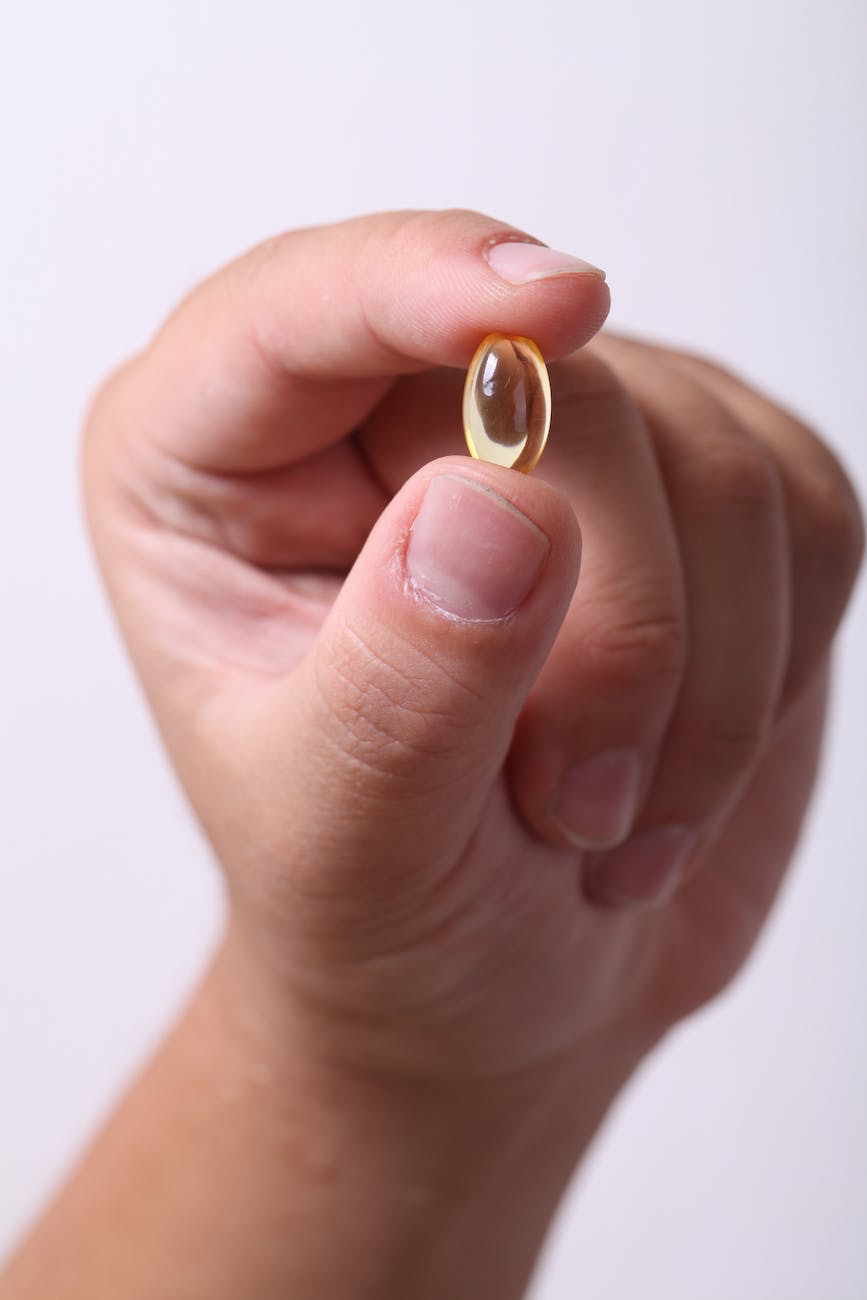
Most early pediatric drugs assume liquid form and are typically tasty and easy to swallow. Pills in any shape or form, however, are a challenge for children, as any parent could tell you as their own come of age. It’s not uncommon for capsules to travel swiftly back up little throats for no other reason than the fear or sensation of choking. Swallowing a tablet is a learned skill. Some grow into adulthood still uncomfortable with the effort.

Our son recently graduated to the pill form of his medication, and pinpointing the correct dosage during the transition was its own special problem, requiring a brief time away from school till the doctor got it right. He simply couldn’t help functioning as a classroom distraction without it, much to his teachers’ consternation, though we, and they, would gladly refer to him at least as a “happy” mess. Once the dosage puzzle was solved, he returned, and all seemed right once again with the world.

Until it wasn’t, that is. Not too terribly long after, we began to notice inconsistencies with the medication, which he routinely took before school. Periodically, his teachers informed us of the same, tired behavioral issues in class, none of which were major but nonetheless required addressing. We called the doctor and waited for a follow-up to discuss alternatives. In the meantime, I made sure to observe our son taking his pill each morning just to be sure. And sure enough, I watched him ingest it and move on with the morning.

Kids are crafty, however. Our son, I discovered, craftier still. Transferring his laundry from the washer to the dryer one afternoon, I observed what appeared to be a few empty capsule shells that bore a striking resemblance to the size and shape of his pills. I resolved to watch him like a hawk thereafter and check above and beneath his tongue, baffled at how he could possibly fool me while I observed him swallowing it each morning. I didn’t have to wait long for an answer.

Another morning, another pill. Seated at the table after finishing his breakfast sandwich, he places it in his mouth and swallows it with the juice I provided. I ask if he got it down, and he nods. For only a moment I turn in the opposite direction but then quickly pivot my attention back, catching him in the act of slipping his fingers up to his lower lip in a surreptitious attempt to remove the pill and discard it in a secret corner elsewhere in the house. The little sneak had been hiding them randomly in his cheek rather than swallowing, which explained the medication’s bizarre inconsistency. Mystery solved.

“Fool me twice . . .,” as the saying goes. I wouldn’t be shamed again. Having had no success with threats of consequences or demands up to that point, I impatiently relinquished command of the ensuing drama as mom took a turn and sat down directly across from him at the breakfast table to ensure gently that he got the job done. “But it’s hard!” was the incessant, tortured refrain as he objected with each failed swallow, risking us all, including his older sister, to be tardy to each of our morning destinations.

Mom’s time managing the situation came to an end as her job required her to get herself on the road and to the office. As she exited, our son motioned me to the now empty chair opposite his. We weren’t finished and he simply wanted me to stay with him as he suffered through it.

I resolved to try a different, more patient approach and reasoned with him. It wasn’t as if the pill was larger than anything else he’d downed before; quite the contrary. By his own admission, he was afraid of choking, and despite gulp after endless gulp, the pill remained because he was still telling the pill with his tongue to remain exactly where it was. “Don’t be afraid. You’re not going to choke.” After 30 long minutes, my reassurances finally made headway, and down it went, his expression at long last relaxing. I pried both under tongue and around cheeks “like a dentist,” he later described to mom, ensuring there was nowhere else to hide, and off he went to school. Eight hours later I would pick him up and hear him proudly share that his teachers praised him as the best behaved student in class that day. I inquired to him as to why he thought that might be, and his knowing smirk gave him away as he remembered the difficult but necessary ordeal of the morning. Sometimes, you just have to swallow that pill.

___________________

Hematidrosis, it’s called, a very rare medical condition in which one sweats drops of blood. It seems only fitting, then, that the gospel of Luke, ostensibly the only physician of the bunch, would be the one both to observe and document this phenomenon in his account of Christ’s agonized prayer in the Garden of Gethsemane. “Father, if you are willing, take this cup from me,” he says, as we are allowed a unique glimpse into his humanity, asking, as many of us often do, that God simply remove a difficulty from our lives rather than, more nobly, provide us with the strength and fortitude to endure it. Even Jesus, it appears, had a moment when he just wanted God to remove the problem. Forget how I might grow spiritually from this experience; just be the doting father that you are and take this pain away, dad.

I think had my son exhibited symptoms of hematidrosis that morning at the breakfast table, I would most certainly have ceased altogether from sheer alarm that the intense stress was causing him an actual physiological loss of blood. Christ had no such luck, however. His “pill” was his to swallow and his alone. And his Father stood by to hear his request while retaining the requirement.

I find it curious that Christ chose the image of a cup to describe what awaited him. His was a challenge to ingest, to consume something inside of himself, not merely outside of him, as in a temporal passing from one moment to the next, quickly forgotten as the next moment arrives. Though we would argue theologically that God never changes, his trial would alter things both without and within. It had to if we were to receive redemption ourselves.

God, his Father, was with him, however, even as he himself was prophesied as Immanuel — God with us — while he lived and acted in the here and now.

Presently, I have found myself struggling with the reality of “God with us,” especially when it’s the only answer you receive to your trouble, great or small as it may be. It can feel like a cheap non-answer until you understand and grasp that Christ himself in the garden didn’t get a better deal either.

I and my wife have dealt with a unique parenting challenge for much longer than we would prefer, and I’ve lost count of the number of times my faith has faltered just for the fact that the problem remains and an easy solution fails to present itself. I just want to feel better. I want God to swoop in and fix it, just as instantaneously as baptismal waters fashion a “new creation” after one rises from the surface. But the change has yet to come, and we remain years now into the cup still before us with no promise of a favorable end, or an end at all.

When my son pointed me to the empty chair in front of him, however, God used the “inconvenient” situation to teach me a thing or two. Though he continued to complain and struggle, his gesture communicated, “If I really must do this, then at least just be here with me while I endure it.” As I sat down, I shifted my own approach and told him not to be afraid, knowing, as his father, he had nothing really to be afraid of. Once he chose to believe me, it wasn’t long thereafter that the pill slid comfortably down his throat and began the work of change.

I have to imagine it’s little different with our often unwanted, divinely-ordained circumstances. I am admittedly afraid at times of what is or is not to come, and my imagination casts no shortage of worst-case scenarios. But as I sat there reassuring him of what he knew he needed to do, my mind casted no shortage of scriptural reminders of “fear not” and “I am with you.” The reminders themselves, no doubt, were evidence of his presence even then.

One of my favorite songs of my youth bears more meaning to me 30 years later. A gentle tune titled “Higher Ways,” by Steven Curtis Chapman, the lyrics tell of the singer’s wish to understand God’s higher purpose in circumstances both great and small and the hope of one day, on the other side, learning of the elusive bigger picture. It finishes:

But until I’m with you
I’ll be here
with a heart that is true
and a soul that’s resting on
your higher ways.

Simple solutions and quick answers can be hard to come by in the kingdom of God. We all want it, but we seldom get it. Maturity and trust within a relationship are the goal; not merely my comfort and ease. There is no app or pill for it. But God help me to remember that there is a prayer for it.

Trouble

“Life is difficult.”

This is how M. Scott Peck begins his acclaimed book, The Road Less Traveled, and I would argue it may be one of the best openings to any nonfiction work past or present. It’s neither poetic nor eloquent, as you might expect of a bestseller. It is, however, inspired, and many readers, myself included, have found their attention arrested by its simple truth due, no doubt, to considering the difficulties in their own lives, be they great or small. Anyone who reads these few elementary words can relate, and so anyone reads on.

As I punch these letters out on my smartphone, I find myself in an unplanned, forced exile away from home due to exposure to that irritating illness we’ve all become familiar with over the last few years. My first venture into the blogosphere found me in identical circumstances, perhaps fertile ground for written thoughts. In any case, I’m not yet showing signs of infection, but I don’t want to risk it for others in my family should it start to present itself. There is, after all, a family trip planned pre-Christmas, at this point just barely inside the 10-day window recommended for those exposed. So, dad is trying hard not to ruin the long-anticipated holiday party by getting everyone else sick.

Around, within, and beneath this misfortune are several others intertwined that led, in part, to this one. I have neither the space nor the interest in sharing it all here, but it brings to mind another brief remark, equally honest but measurably more eloquent: “When it rains, it pours.” Sometimes massive troubles can’t help but bring a friend, or two, or three, to your door. Regardless, they always rudely arrive, never having been offered an invitation.

At least one of these many troubles has lingered longer than the others, enough to feel like an eternity, ebbing and flowing in intensity from one day, week, month, year to the next. Each exhausting, unwelcome moment it reappears, it does so with seemingly greater force. Each time it arrives, a single question persistently comes to mind, both for the short and long-term: “How will this end?”

Oh, how I want it to end.

As time drags on and resolutions remain absent, the wish for a satisfying conclusion can easily give way to just an end — any end — good or bad. Let’s just get this over with, please.
If I also want God genuinely involved in my life, however — and this is a very hard truth to learn — I can’t have it both ways.

I have never been comfortable with tension. I’ve said so before, and it will likely be true until the day I die. I naturally expect that it is something to be avoided for the sake of peace. And I have expected that God looks favorably on my efforts to make peace. We are instructed as believers, after all, to seek peace and pursue it. But a verse I often overlook struck me this past Sunday, a verse that ought to alter my well-intentioned expectations.

“I did not come to bring peace, but a sword.”

While we regard him, among other things, as the “Prince of Peace,” his words are a stark reminder that he did not avoid tension. In fact, he created it where necessary. Christ was accepting of it in a way I simply am not. In short, while many things, he was also a troublemaker.

By extension, God himself is a troublemaker.

Plenty of things for which I have only myself to blame. Plenty. I acknowledge this. Same goes for others whose choices, good or evil, affect me. But, man, how God shows up in the middle of it to take the blame or credit from us. And how our impatience for resolution causes us to lose hope and misperceive that we’ve reached the bitter, unpleasant end to our trouble, failing to see that it’s just the trouble of the day.

“That which doesn’t kill me makes me stronger.”

It’s always struck me that such a staunch, unapologetic unbeliever as Nietzsche not simply coined this statement but that it has such authentic application to the life of a believer. I might make one slight alteration, however, exchanging “me” for “my faith.” I’m not going to pretend here that I’ve reached that goal in current troubles. That’s where hope comes in, which, ironically, is often based on faith bolstered by past troubles resolved.

So, for now, “Life is difficult.” I pray I can learn to exchange this statement in time for another: “Trust the Troublemaker.”

A Thousand Words

“Photography has nothing to do with cameras.”

– Lucas Gentry

Once upon a time, I was searching for a hobby. Graduate school alone was insufficient to sustain my attention or fill my free hours. Time spent casually on TV, reading, and exercise still left space to fill. Smartphones had also not yet made their commercial debut, so there wasn’t the persistent and often irritating distractions they encourage. I knew I could make more productive and satisfying use of my free time and wanted to learn how to do something and enjoy the effort it would take to do so.

As I circled high above the hobby landscape, I found photography as good as anyplace to land. Being a curious and conscientious reader (I was studying to be a librarian, after all), I found several old Time-Life hardbound volumes on the subject and read up on shutter speed, exposure, depth of field, etc. Unlike other topics I had made efforts to wrap my brain around, I found it simply made sense to me. I dove headfirst and chose to learn the hard way, purchasing a student camera — a fully-manual Nikon SLR — along with ample rolls of film. This was a conscious choice considering that digital cameras were just beginning to come into their own and were expected to advance in the approaching years just as exponentially as the computer processor. Even then in digital’s nascent stage, one could still validly debate whether it or film proved the better medium. I selected the latter, believing such a costlier trial-and-error method would foster a firmer grasp of the fundamentals.

We take for granted the privilege of carelessly snapping away with our digital devices at no cost to us other than loss of storage, which is scarcely a concern any longer. No such luxury with film. As I discovered, one learns swiftly the importance of precision with chosen settings and the need to document each and every shot since it requires a trip to the drug or camera store and at least an hour wait for prints to divine whether or not exposure corrections are necessary.

At any rate, opting to learn the old-fashioned way, I gained a grasp of the basics that I otherwise wouldn’t have were I to have taken digital shortcuts. Over time, I became especially skilled at and appreciative of composition, which, I believe, is one of the most difficult aspects to teach. Either you have an eye for how to frame an image of everyday life, or you don’t, which leads me to Mr. Gentry’s words above.

Photography is, among many things, about abstraction. It offers the photographer an opportunity with the easy press of a button to place a frame around a single moment in time, shutting out all other visual distractions. It is simply a way of communicating to a viewer, “Focus on this. See what I see.” The photographer’s eye and mind perceive the images before him or her long before the shutter slides open and shut. The camera itself, though fascinatingly complex, is merely a tool for capturing what the photographer already perceives with his or her own eyes.

This thought came to mind recently at, of all places, a funeral, which serves at least a couple of purposes. First, there is the obvious intent to honor formally and memorialize in the company of others the life of someone you loved, even though they are not present to receive the appreciation. Second, it provides a moment to stop and remember that we all will find ourselves at life’s end one day, and to consider how we are living ours and what kind of legacy we will leave to those who remain.

In this case, it was a man who left a positive and lasting impression on his circle of family and friends, who movingly shared their thoughts and remembrances of his fruitful 70 years. As the service drew to a close, a slide presentation of personal photographs was shared, layered over carefully chosen songs that emoted both his beliefs and the time he spent in life.

As the pictures transitioned from one cherished, frozen moment to the next, I thought of my own parents, who were seated with me, and how I might remember them once the time came. I was reminded of the quote above and a fleeting image my eyes alone captured 30 years ago without the aid of a camera, though stamped upon my mind to this day. The image speaks volumes over a critical moment in their relationship and life, and it remains, for me, one of the most indelible impressions I have or ever will possess of the two of them.

__________________

The closest I’ve ever personally experienced a genuine medical emergency was as a kid in the small East Texas town of Crockett during the late-80s. Our family spent a brief vacation there in a modest cabin next to a lake, where we splashed and played recklessly in a designated, roped area of the murky water, one side of the squared space a pier extending only so far as an average adult could toe the muddy bottom. My brother, sister, and I took turns dashing over the planks and leaping feet first into the natural pool, far too trusting, I now know, of what we couldn’t see beneath the surface. Not long into this activity came my turn. I made my way to the front of the pier, took off like a rocket, and jumped blissfully over the edge.

A jolt of excruciating pain instantly radiated from my left foot throughout the rest of my body after I hit the water, my heel having pierced deeply something sharp on the lake floor. The shock sucked the air out of my lungs as I turned slowly towards everyone behind me, my expression registering only silent horror as my grandfather, nearest to me, immediately discerned my distress and lifted me out of the water. Blood poured from my heel as an agonized howl finally escaped. Long story short, my parents carried me to a local ER, where I was sewn up with three stitches and bandaged. I spent the remainder of the trip seated on the pier, sulkily watching everyone else enjoy themselves, none now daring to jump heedlessly into the water due to the lesson I provided in risk vs. reward.

If the worst physical pain ever experienced were a competition, my mother would win the gold medal uncontested among the five of us in our family. Aside from delivering three children, of which I understand I gave her considerable trouble as the first, she’s endured collapsed lungs, shattered wrists, and a ruptured colon, to name a few. The latter bore the misfortune of taking place in a foreign country under dreadful hospital conditions unsuited to treat properly the affliction, which only prolonged and intensified her suffering. As one local informed them at the time, “One doesn’t go to the hospital here to get well; one goes there to die.”

The plight of the Ukrainian people has dominated the news over the majority of the year, but there was a time when it seemed their independent future was not about conflict and instead was bright and hopeful, following the collapse of the Soviet Union in the early 1990s. This is where our family found ourselves beginning in the summer of 1992 until the beginning of the same season the following year after my parents surrendered to the ministry and gave up a comfortable American life to provide food for the soul and body to the poorest Ukrainians in most desperate need of it. Though they had received their freedom nationalistically, many ordinary people found themselves in dire straits as the economy tumbled rapidly downhill over the months to come, and my parents, as representatives of the faithful back home, shared what they could to ease their suffering.

After a year of living among them, we had begun to feel more at home there than in our own country, we discovered, after a brief furlough back in the States a couple of months previous. For my part, eagerly approaching 17, I had gained a decent grasp of the language and could maneuver from here to there on my own, learning to manage independence differently than most teenagers. Memorializing another year, whether it be a birthday, an anniversary, or a major life transition, in our case, should be a happy occasion, but our moment almost exactly a year since we had arrived would be marked not by celebration but a crisis of faith, wondering if we would need one fewer ticket for the eventual return home.

On an otherwise uneventful evening drawing to a close, the front door to our small two-bedroom flat swung open. It was mom, returning later than expected after shopping for essentials, a task which was carried out on foot without the convenience of a vehicle. Arms laden with bags full of purchases, she stumbled in physically anguished. While ascending the stairs at a nearby underground crosswalk, we would learn, a crippling pain in her abdomen suddenly forced her to the ground. She would labor the remaining distance merely to move, crawling on hands and knees the final stretches toward the residential high-rises with no means to communicate her distress to us and come to her aid.

Like a spent and exhausted marathoner crossing the long-awaited finish for the first time, she collapsed into the flat and found her way to the bed she and my father shared. As she lay still and quiet in abject misery, the next several hours were spent by my father and the Christians, another couple who had been our companions on this adventure over the last year, to determine our next move. She desperately needed help for whatever this was, but the poor reputation of the hospitals and available medical care loomed large in our minds. Urgency discouraged a day-long, emergency trip back home across the ocean.

Witnessing an adult in distress — one’s parents, no less — forms a deep impression on a child, even if that child is a late teen on the cusp of adulthood. As much as we’re tempted to roll our naive adolescent eyes, we nevertheless trust them and their grasp on life in general. We have to, after all, because we know we certainly aren’t confident of ourselves at our age, in spite of our efforts to conceal it. With some exceptions, they are the ones who have made us feel safe. But what happens when we observe in a moment of crisis that they themselves don’t feel safe? What changes in us in a given circumstance when there is no assurance from them that everything will be alright?

In the dining and living area, the Christians waited with my brother, sister, and me, prayed, and considered unwanted options as my father did his best to comfort my mother in their bedroom. We instinctively gave her the space she needed and kept our distance, not feeling helpful or useful under the circumstances. Restless and curious, I rose and moved toward the hallway under the guise of retrieving something from the far bedroom. As I walked past their bedroom, the open doorway functioned as a veritable camera shutter, my eyes permanently imprinting on my mind and memory, like film exposed to light, a poignant scene that spoke volumes.

Click.

What light remained of the day shone dimly through the far window. On a bed composed only of a sparse frame and a mattress wanting for comfortable cushioning, my mother lay on her left side, facing the doorway. Eyes shuttered tight, her expression betrayed only literal gut-wrenching pain. A wastebasket rested on the floor at the edge of the bed, prepared to catch anything her stomach expelled. Beside her, my father sat solemn and silent, holding her hand, offering his presence alone as he stared vacantly and uncertainly ahead.

The mental picture captured in the brief second it took me to pass, I then retrieved whatever it was I was after in the other bedroom and returned to the living room. During the next several days, she would enter one of the local hospitals, the doctors learning only after opening her up that scar tissue from a surgery years prior had shifted and created in her colon a blockage that intensified until it burst, resulting in peritonitis. The experience before, during, and after left her life in peril and deserves its own story. In any event, once able to travel following emergency surgery and insufficient treatment, we were forced home and found our experience as missionaries summarily brought to a swift and decided close with little time for goodbyes to all those we would leave behind.

__________________

I’ve revisited this bedside scene many times over the last 30 years, processed and reprocessed its meaning to me and the emotions I couldn’t adequately express then. It remains a photograph framed and exhibited nowhere but on the walls of my mind, an image I’m able to share only with the visual limitations of words. As a photograph, albeit mental, however, it has much to share.

Years of preparation, of planning, of feeling led to abandon the safety of their life in America and take the risk of a dramatic — some said “crazy” — move across the other side of the world into a country taking its first independent steps culminated in this single moment. Far from home, from the care that could rapidly be provided potentially to save a life, one wondered whether, only a year in, the decision would prove a fool’s errand, and a fatal one at that. “Perhaps it wasn’t God who sent you,” as the doubts might have stirred. “You wanted for purpose, meaning, so you left, and instead you find yourself putting God needlessly to the test. That is, if God is in it at all.”

I don’t know what thoughts may have been circling my parents’ minds in that moment, but in my mind’s eye, I still see the pain in my mother’s face, eyes tightly shutting out the world and wishing desperately for relief, even if it came in the form of death. I see my father’s vacant stare, one of the first and only times in my young life when I witnessed utter helplessness written in his expression. Nothing but faith to which they could cling, nothing but hope to assuage a sense of despair. As mentioned, my mother would spend several torturous days in the hospital thereafter, which is a harrowing story all on its own, but if I remember anything of them and this time in our lives, it is this single image that will survive.

__________________

“Though the fig tree does not bud
and there are no grapes on the vines,
though the olive crop fails
and the fields produce no food,
though there are no sheep in the pen
and no cattle in the stalls,
yet I will rejoice in the Lord,
I will be joyful in God my Savior

Habakkuk 3:17-18

I recently was reminded of this verse during a routine reading. Depending on my mood or circumstances, I either appreciate it or I prefer to be cynical about its attitude and perspective. When life isn’t living up to my expectations, when I am disappointed in myself and my sins or shortcomings, when the kids can’t seem to get it together with their ongoing issues (which can be deep, exhausting, and never-ending with adoptive parenting), I genuinely feel the urge to reject it. I just want to feel better, I don’t at the moment, and the words are of little comfort. Yet, it is for moments such as this that the words are intended. My circumstances, it infers, shouldn’t determine my posture, which, it would seem, is merely a matter of choice. It should be noted that the surrounding verses don’t suggest Habakkuk is ignoring the fact that life could and should be better than it is presently, but he doesn’t wholly blame God for it, and he chooses not to allow it to crush his faith irreparably.

This single, still image of my parents ought to instruct me more often than I have allowed it rather than serve merely as a meaningful picture worthy of a frame, were a camera available at the time. I know they felt desperation, doubt, and profound pain. While my mother languished in the hospital, my father, characteristically contained and controlled with his emotions, found himself unable to finish a simple blessing over a family meal — an observation that was the first genuinely to unsettle me throughout the ordeal. Even my parents’ faith, on which I relied up to that point, was vulnerable and could be tested.

I do wonder what might have been different about each of us had mom’s life ended. We all, ultimately, do not receive a favorable answer to prayer that we retain those we love. I do know that the experience bolstered their confidence and their faith. Remembrance of all that they endured and overcame does not always ease today’s pain, but it does inspire them here and now to choose hope over despair.

So, I will keep this picture tucked away in my mind, recalling it, if I am wise, as needed in moments of doubt or disappointment. It has much to teach me without the help of a thousand words. Yes, a camera might have been a useful tool to employ as I passed the pale doorway, but useful only insofar as it would have allowed me to share what I witnessed. In the end, this is all a camera actually allows us to do — to share what we already see and will be imprinted on our minds. If I’m honest, however, I suppose there are some things that are not to be shared, that are meant for each of us alone. If so, how rare are those moments, those memories, and, therefore, all the more precious and valuable, especially in an overshared age such as ours.

Heart Racing

Perched atop his elevated station, he attentively scans the distant, deeper waters with his binoculars for any signs of beachgoers in mortal peril. To say he is attractive is an understatement; the actor portraying a hyper-vigilant lifeguard was chosen for this very reason. His eyes soon land upon a shark closing fast upon a flailing, bikini-clad woman. Wasting no time or effort, he leaps from his chair and sprints toward the shore, plunging into the water, bravely heading off the deadly predator as he rains blows upon its head and body before it retreats, hungry and defeated. Victorious, he lifts and carries the exhausted, distressed damsel in his arms back to the safety of the sandy shore and gently sets her down. She regains her composure, sits up and gazes into her rescuer’s eyes as the two begin to lean in dramatically for a kiss. The message is clear: What woman wouldn’t fall instantly in love with such a man?

Not so fast. This is a super bowl commercial, after all, so, naturally, we’re waiting for the punchline in this million-dollar mini-drama.

And here it comes. Distracted, she glances to her right, and with as little hesitation displayed by her rescuer’s dash after her into the dangerous waters, she makes a beeline further into land, but for whom or for what? The camera pans as we catch a glimpse of an astronaut enveloped in a spacesuit, prepared not for a swim but for a spacewalk, strolling casually onto the sand as if this is typical attire for a day in the blistering summer sun. He removes his helmet as the enthralled woman pauses before him. The marketing slogan then appears on the screen, advertising a new line of “Apollo” themed body spray:

“Nothing beats an astronaut. Ever.”

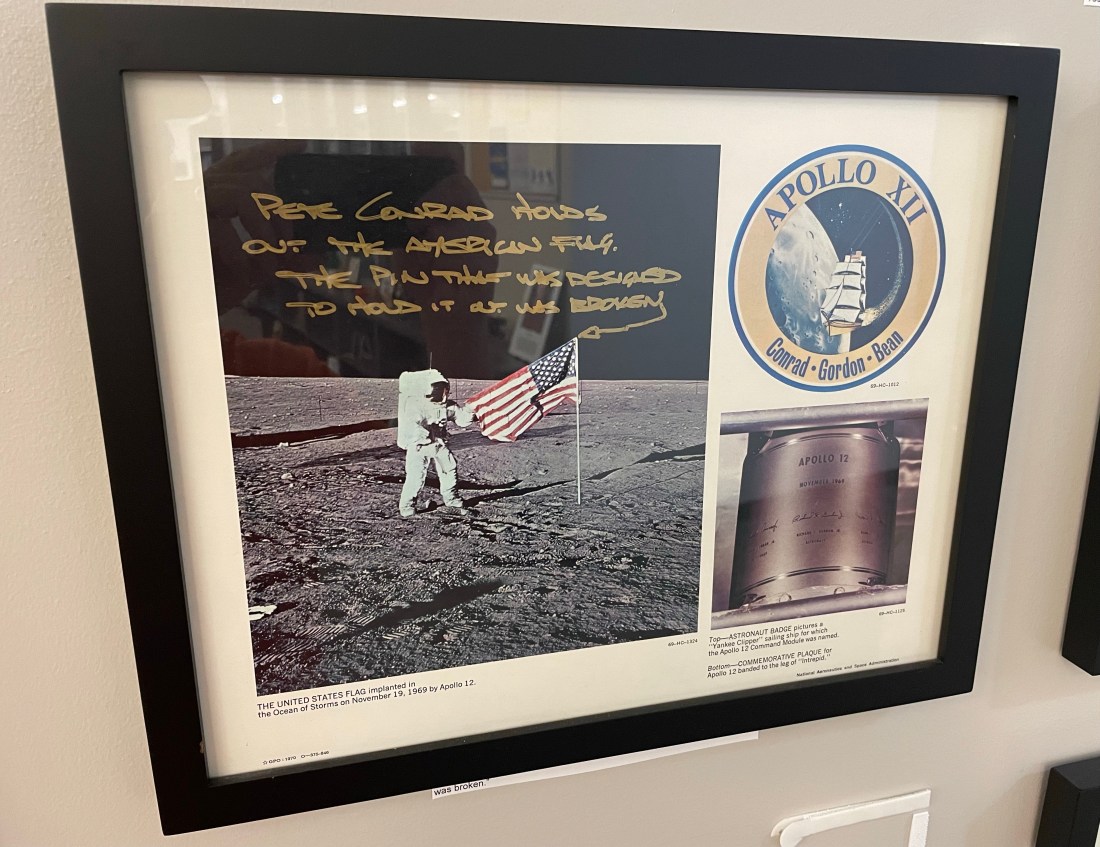
As ridiculous as this scene is, I’m inclined to agree. After 18 years of living in and around the Johnson Space Center community of Clear Lake, you encounter enough astronauts, or those who work among them, to recognize that, in spite of all the promises and encouragement that the “American dream” is attainable if we simply work hard, believe, and hang on to said dream, virtually none of us will actually ever have the opportunity to reach for the stars. There is the “cream of the crop,” the “elite,” the top 10 percent, etc.; and then and only then, there are astronauts. Among the first class of recent Artemis candidates was a relatively young fella who had not only been a soldier in the U.S. military but had scavenged enough time as well to become a doctor, soon after having NASA agree to take him into the fold. As one politician put it, speaking at the first Artemis group introduction to the public, “This guy could kill you, bring you back to life, and do it all in space.”

If nothing beats an astronaut, I would venture to say that nothing beats Neil Armstrong. Back when test pilots were the pool from which the “right stuff” was summoned, Neil was the picture of quiet, capable discipline, unlike many of his colleagues, who, though equally qualified, were neither shy nor humble about their skills. There arguably was a reason he was the first to land and to set foot on the lunar surface, if it wasn’t due merely to being in the right place at the right time. He was there not to chase fame and fortune but simply to do his job, and he did it well, staying cool under pressure as the entire world watched. Both his accomplishments and his character easily suggest to anyone that this is someone whose words are worth heeding. He did, after all, have the distinction of uttering a few of the most memorable ever spoken with an audience larger than that of anyone previously in history.

A lesser-known moment in Armstrong’s history records a few more words once spoken, though decidedly more personal and candid: “I believe every human has a finite number of heartbeats. I don’t intend to waste mine running around doing exercises.”

It should be noted that for all his accomplishments, Armstrong, though living to the respectable age of 82, died post-surgery to correct coronary artery disease, which, it is known, can be prevented, or at least kept at bay, through regular exercise. One has to wonder how many more years it may have added to his life, if any, had he held a different opinion and adjusted accordingly. It certainly could have improved its quality, if not it’s length. In any event, something did, in fact, beat the most recognizable astronaut, and not even a difference of opinion could change it.

While Armstrong’s words were not founded in solid medical science, many of us live with poor daily habits that might imply we’re true believers, though I would guess it has less to do with bogus convictions about an allotted number of heartbeats and more to do with the lack of a quaint virtue lost to many of us in the comfortable lives we casually choose to lead: discipline.

In recent years, I admit to losing more than a smidge when it comes to food or finances, and especially exercise. I don’t know if it’s an effect of age or gaining greater privileges as one moves upwards in career, resources, and accomplishments, and I could blame parenting, but I do that enough as it is. It’s a tired excuse after awhile that even I bore of hearing to blame it on the kids, though they do demand the lion’s share of your time — time previously at your disposal. It’s clear to me, regardless, that I’ve practiced less discipline than I used to.

Each of these facets of personal management typically inform the habits practiced in the others. During my brief sojourn in seminary, my scant income derived as a part-time baker at Great American Cookie Co. dictated my caloric intake, consisting often of beans and rice and $1 store-bought pizzas. Sundays post-church, I permitted a little indulgence and purchased myself a cheap chicken dinner, which has sustained my love of Popeye’s since. Otherwise, finances informed diet informed weight/portion control. Most of us are working for a little more, but, reflectively, it seems there is something beneficial to the habits we’re forced to form by having less.

The greatest physical discipline I ever imposed upon myself was around the time I first met my wife-to-be, long before either of us had an inkling that we would become each other’s most-important-persons. Two or three years into my time as a professional and after having become acquainted, I learned that she and another mutual friend would be running in the Austin half-marathon shortly after the new year in 2007. Running had become my exercise-of-choice following college, though typically no more than a couple of miles in the neighborhood or on a treadmill. Jenny, however, began taking the hobby much more seriously some years before.

Not long after her niece was born, she began taking an interest in her health, as many of us are wont to do when we understand the value of being at our best for others we love. Walking briskly around a local track one day as part of her regimen, the thought occurred to her, “You know, I could finish this much sooner if I ran.” And so, she did. Over time, the distances stretched farther, and she found a new hobby that fit like a glove with her goal-oriented personality. By the time we met, she had more than one completed half- and full-marathon to her credit, and I was persuaded to join her and another friend to train with them for my first 13.1.

_________________

If you’re a runner, you’ve no doubt come across the odd, ancient name of “Philippides,” who bears the distinction of being human history’s first marathoner. If you’ve ever asked yourself, “Why are marathons 26 miles?” his story provides the answer. It’s the stuff of legend, which is to say that there is and has been ample room for debate. As it’s been traditionally recorded, Phil, a Greek messenger, ran from the battle of Marathon to Athens and into an assembly of compatriots declaring “we have won!” He then, tragically, breathed his last. Attempts to trace his route place it somewhere in the neighborhood of this distance. The rebirth of the Olympics in 1896 incorporated the first modern marathon as an event in recognition of his accomplishment, and the rest, as they say, is history.

I have never had even a remote interest in pushing my body to travel a similar distance. It has always been striking to me that runners stubbornly choose to forget that the end of Phil’s story is, well, the end of Phil’s story. There is nothing else to tell because the overexertion did him in. I continue to receive this as a lesson that the body has its limits. If you delve further into the details of the tale, you’d find that there is, nobly, more than a little selflessness in his physical feat, unlike today’s devoted imitators, who, although they still impress, participate almost solely as a personal challenge. Such a conclusion, however, falls on the deaf ears of the achievement-driven. After all, many since have finished, and, so, they welcome the pain — the discipline, if you will — as they imagine crossing the finish.

For my part, I was happy to give 13 a try. I bore no need to identify with Phil’s accomplishment and thereby risk heart failure. My unwitting future bride-to-be organized our training regimen, involving regular, shorter routine runs, often alone, during the week and longer runs, gradually increasing a mile at a time, on the weekends. To train for the hills of Austin, the closest we had in the southeast sea-level corner of Houston was the shoulder of the Kemah bridge, up and down, back and forth. Never in my life had I physically trained for something so hard, and it nearly cost me when I developed a mild but uncomfortable case of plantar fasciitis one day on a routine weekday run on the treadmill. Fortunately, there was enough time to take it easy enough for it to pass in time for the big day in January, which arrived soon enough.

Long-distance running events were not designed with night owls in mind. They instead favor the early birds among us, many participants arriving before the break of dawn to check items in at designated stations for safe-keeping and to find a decent spot in the crowded field ahead of the starting line. We arrived in downtown Austin in the cold black of a Texas winter, myself having carbo-loaded on pasta the evening before, though I feared I might spend the stored energy shivering from the bitter chill prior to the race. I knew better, though, having trained enough to understand the frigid air is effective natural air conditioning to any runner once you’re a mile or two in and the body starts to warm up.

The pistol soon sounded, and we were off. Well, I should say, we would soon be off. The tight, enormous, cramped field of runners, arranged in descending order from fastest to slowest, in reality, shuffled impatiently towards the start line, like a scrum of elderly pedestrians who forgot their walkers. Fortunately, technology long ago equipped participants with a chip/tracker on one’s person that detects when and where you are progressing with acceptable precision, even if you begin long after the gun fires. We eventually found our way across the line, and away we went.

Pacing may be the most important skill to master when running any distance. I learned through the course of the race that as long as I wasn’t gasping for air but still exercising my lungs, my legs must be pumping at just the right pace. All three of us began together, though our friend soon had to pull aside to one of many port-o-john’s along the course for obvious reasons. Jenny and I continued, and I took her cues to walk periodically so as not to overexert ourselves too soon. After a few miles in, however, I turned to her and expressed my intention to continue without the walk, and so I did.

I can’t recall exactly when the pain set in, as it does for most runners, but it was likely around mile 7 or so for me. It may be different for others, but there is a point for everyone when psychology rather than physiology seizes precedence. While one certainly needs to train one’s body for such an extreme event, the mind must at a given point wrest and then maintain control over matter if you hope to finish well.

For the remainder of the race, I learned a couple of important mental lessons. First, I found that maintaining my pace in spite of the pain was overall easier than were I to stop or slow down, even if only for a moment, and then attempt to restart and reset the pace. The break offers relief, but once taken, the satisfaction of muscles relaxed thereafter create a temptation to forgo restarting. It was better to avoid that feeling altogether and just continue with the effort, placing one aching foot in front of the other. Second, as long as I clung to this thought, I also discovered I was less inclined to consider how far I’d come, thereby persuading me to slacken, and instead to observe what little I had remaining, spurring me on to the finish. Upon reaching mile 10, my mental capacity to perform basic mathematical problems remained intact, and I thought to myself, “3 miles left. I can do 3 miles,” as if I had just stepped out my door, fresh and well-rested, for a simple, routine daily run, forgetting that I had already forced my legs to travel 10. Crazy or not, it worked, for I soon reached the straightaway, spectators and strangers cheering everyone on along either barrier, as I shifted into top gear to squeeze the remaining drops of fuel I had left in my limbs to carry me across the finish.

As satisfying as the accomplishment was to cross the line, I decided one was enough for me and was never again compelled to run more than a routine 3 miles. Since the kids arrived 6 years ago, I quit running and in exchange gained 40 pounds and shortness of breath when climbing a flight of stairs. While I can’t necessarily blame parenting for the trend, the act of raising children naturally has a way of shifting your priorities from yourself and instead toward others. If it doesn’t, then you’re probably not doing it right. That doesn’t, however, mean you can’t at least try to take care of yourself, though it’s certainly harder for some of us than others. Of late, I’ve found inspiration from others to make just such a change and have every hope that it sticks.

_________________

It had long been thought my paternal grandfather, David Johnson, would “die in the saddle,” as the saying goes. Whoever first casually predicted it, I couldn’t say, but he proved them right, though not in the manner any of us expected. In his retirement from farming, his only true hobby was golf, though there weren’t too many quality courses from which to choose in the arid atmosphere of the Texas Panhandle. This didn’t stop him, however, and he made as much time as he could, whereas most octogenarians had given up all viable interests other than a comfortable recliner and a television.

Observing a party ahead of theirs ready to tee off, he returned to the cart he and his acquaintances were using and decided to wait seated in its shade rather than standing in the sun. Once the hole was available, his fellow golfers approached to rouse him, eyes shut tight and head leaning back in apparent slumber. Vain attempts to wake him swiftly transformed into alarm as it appeared his breathing was either dangerously shallow or entirely absent. Paramedics were called, and, upon their arrival, frantic efforts revived his heart, but he would never regain consciousness. He had suffered a massive stroke, it was learned, and his body would languish in hospice care for several more days as family were left only with a prolonged and painful goodbye as his heaving chest gradually slowed and finally ceased its labored breathing.

James Tomlin, my maternal grandfather, underwent a triple-bypass in his early 60s and is now very late in his life surviving solely with the aid of a pacemaker. My father undergoes routine treatment for atrial fibrillation, which can be fatal if left undiagnosed. All this to say, it has inspired me in my mid-40s to stay ahead of the potential cardiac issues my progenitors have left to me as an inheritance. A recent visit to a cardiologist who subjected me to a battery of tests fortunately found me with little or no blockage to speak of and a rhythm seemingly as in sync as a high school drum line. Pulse rate and blood pressure could use a little work, but are acceptable, though the one thing on which Neil refused to waste his energy could indisputably improve both.

But, truth be told, like Neil, I hate exercise. Weightlifting, push-ups, sit-ups, aerobics — I’ve tried them all at various periods, but I never stick with it. It gets old and, honestly, boring, and I rarely have the patience required to enjoy the physical results of consistency and discipline.

However, as I write, I’m waiting on emailed instructions detailing how to pick up a new treadmill my wife and I bid on and won from a local auction house. When I was single, running a couple of miles on a treadmill each weekday was my preferred choice of exercise, and I recall it was enough to keep me interested and my health in check. I’ve felt motivated recently to return to this habit, and it seems the only thing stopping me now is simply the will to do it. I’m hoping as well this habit reacquired will likewise regain the satisfaction I lost in the activity itself.

You could make a convincing argument that all of us die of heart failure. It is, after all, the sole organ that receives any and all attention after everything ceases to function, and its eventual silence is the determinant for one’s official time of death. Without the heart, nothing works. I’m sure there’s an apt metaphor there, and you’re welcome to fill it in. At any rate, I pick up the machine tomorrow and hope it’s the beginning of at least a better quality of life. And, discipline permitting, maybe I’ll prove something does, in fact, beat an astronaut.

On the Road

I think we can all generally agree that we spend a fair amount of our lives in our vehicles, either as a passenger or a driver. I shouldn’t have to play the role of the dutiful (former) librarian and provide detailed statistics proving that you have, in fact, spent your share of time in a car. That being said, unless you’re “an excellent driver,” as Rainman put it, among other flawless fellow drivers, you’ve traveled always alone, or you’ve never so much as sustained even a minor scratch to the paint job, we all likely have a great deal of stories to tell with our vehicles as a setting or, perhaps, as a participant, as it were. I know I do, some merely humorous in hindsight, others a wonder that I lived to tell the tale.

_____________________

“ISFJ’s live in a world that is kind.”

That is, in part, how a Myers-Briggs interpretation describes my personality, which, incidentally, is the same type for 4 out of 5 of my immediate family members, my brother the odd-man-out by only a single character. It should, then, come as no surprise that we all chose “helping” professions, namely, nursing, ministry, social work, and public librarianship. Due to this trait, we weren’t a home composed of a great deal of tension or in-fighting, though we kids had our moments, as all do.

Even kindness, however, can be taken a bit too far. 

“Back in the day,” as the saying goes, my parents would pile the three of us kiddos into the back seat of the sedan to travel for any and all purposes, including road trips. One of these found us on the bumpy, poorly-maintained stretches of pavement in Arkansas, from which my mother’s extended side of the family tree hailed. At some point in the lack of an electronically-stimulated passage of time (I forget such a period when we Gen X and earlier generation kids were left to figure out how to entertain ourselves), preteen me asked for the map (I likewise forget a time when road atlases and those pesky paper maps that you could never return to their perfectly folded, compact state were a travel essential, not to mention, more importantly, the ability to navigate; oh, how you’ve ruined us, Google Maps).

As I grasped the map in the back seat and studied it carefully to get a fix on our route, a random housefly buzzing about decided he likewise needed to know where we were bound and landed on the corner, ostensibly likewise to gain his bearings. Rather than test my reflexes and instinctively extinguish his life with a rapid swat, my characteristic Myers-Briggs altruism kicked in, and I determined it best to give this germ-ridden insect a chance at his brief and filthy yet God-given life, but just not in our vehicle. Moving with all the patience and subtlety of a brain surgeon, I lowered the window a smidge with my left hand and with my right guided the map to the crack of open air. My plan, as it were, was to allow the aerodynamic gust to yank him out and let nature determine his fate. What I didn’t plan on was, like an unwitting magic trick gone awry, for the map to vanish into thin air as well, either due to the same current of air or to the fly’s resolve to take the map with him as a final act of revenge. Either way, both the fly and the map disappeared with a “Woosh!” as I sat stunned, dad shortly thereafter asking, without a clue as to recent events, that we return the map to him. Terror-stricken, I remained silent as my traitorous brother, who had stoically observed my ridiculous actions from curious beginning to tragic end, broke the tension and instead returned to him a delighted explanation of the events, brief as they were, that had just transpired. Needless to say, I would not be handling any more maps for the foreseeable future.

_____________________

Texas is a big state. For its expansive square mileage alone, it surpasses more than its share of countries spread across the globe. It is, perhaps, no wonder there are still those out there who pridefully believe it should be on its own. One of the best tongue-in-cheek descriptions of its large, varied regions I’ve ever come across is the dark comedy and true story “Bernie,” in which a momentary scene in a diner features a good-natured local codger breaking the third-wall as he shares, among other things, about the “pine curtain” of East Texas, the “carcinogenic coast” near the Gulf, and, as he finishes up, “of course, I left out the Panhandle, but a lot of people do.”

The only place, I would argue, that feels as desolate or sleepy as the Panhandle or West Texas is probably Central, as in Abilene and surrounding spreads. It was there that I attended college in the pleasantly modest town of Brownwood (not, mind you, to be confused with “Brownsville,” many miles south at the border of Mexico). I spent the standard four-years there studying for a B.A. in Christian Studies at the equally modest yet high-quality institution of Howard Payne University, an experience I still wouldn’t trade for anything. Sting ‘em Jackets.

While I didn’t have a car, I did have friends, and they were happy to let me bum rides off of them when needed. On occasion, this involved leaving town, such as one weekend to DFW during my sophomore year for a weekend college retreat with other Baptist Student Ministries (BSM) leaders both from our beloved school and others like ours. As with many students, a high-priority was placed on activity and a low-priority on sleep — inadvisable, as we would later learn the hard way on the return trip.

Rather than stay a second night and return on Sunday, a few of us opted to leave late Saturday evening. The driver of ours, a freshman, offered myself, my future brother-in-law, and another friend to ride back with her, with the caveat that I ride shotgun and make sure she stayed awake. That should have been a warning to stay put until sunup, but it was left unheeded, and we all piled in for the 2 1/2 hour return.

As you edge closer to central Texas late into the evening, the spaces between tiny patches of civilization tend to expand, the two lane roads become void of traffic, and the headlights of your vehicle provide the only illumination of the world outside — nothing more than the long, monotonous road stretched far into the vacant distance ahead of you. Fatigue is anything but a friend under such conditions as the black night and white noise of the road relentlessly tempt your heavy eyelids to shut down for the day. My friends in the back seat had already given up the fight as I struggled hard in the front, periodically bobbing back to life as I caught myself slipping.

In between nodding off, I noticed the car drifting to the right. I should note that we were traveling close to 70 mph, though not another vehicle was in sight. Nevertheless, the drifting continued as I had enough presence of mind to alert our driver by speaking her name, at which point she roused, corrected, and apologized. All was seemingly right with the world once more and we continued on our way, never slowing.

It wasn’t to last. I can’t recall how much time had passed after this, but soon the drifting again commenced as I once more attempted to regain her attention, to no avail. Before I knew it, the right side of the car was speeding along the shoulder and now into the grassy edge as I shouted her name and realized in desperation that I had no recourse but to reach for the wheel — at which point she startled awake, reflexively jerked and overcorrected, forcing us into a violent, high-velocity spin.

I remember everything that happened at this point, and I should since I was the only one alert for the entire heart-stopping drama, in spite of the mere seconds that transpired. For a fraction of a moment, I caught a glimpse of the opposite lane through my window and expected another vehicle to plow into me as the first victim, but, thankfully, there was no one but us on the road. As we continued to careen out of control, the headlights then revealed not lined asphalt but tall grass, then a grating metallic screech, followed, finally, by a wide, empty and endless patch of soil as the vehicle jarred to a stop.

As we regained our wits, everyone checked in and was found without injury, and the car, remarkably, appeared to have survived as well. The next question was, of course, where in the heck were we? Our best guess left us in a plowed but unsown field. The grating noise we heard was likely the snap of the barbed-wire, now to our right, the road we just escaped directly adjacent. There was nothing but to try and use our forced entrance as egress. So, our driver turned the car around and drove along the edge of the field, revealing, to our chagrin, unbroken fence line as far as the eye could see.

All of us puzzled and now faced with a new problem of finding ourselves trapped in a random farmer’s patch of dirt, I volunteered to step out of the car and walk in the opposite direction to see if I could solve this most peculiar mystery of the magic fence. As I trudged carefully back the way we came, the headlights eventually revealed a patch of grass flattened but not destroyed by tire tracks the approximate width of our vehicle’s axles. Nothing else along the fence offered any clues, but there was one minor problem — though this was obviously the spot at which we burst into the field, the fence, by some miracle of physics, remained intact and in-place. We had entered at just the right speed and angle that the wires stretched, scratched the surface of the car from stem to stern, and then popped back into place to complete the illusion.

Now, I ask you, what would you do? Well, what we did is scratch our heads and prayed for a miracle against a miracle. And we soon received our answer in the form a 4-door Ford pickup driven by our college acquaintance Kendal, traveling back to school from the same retreat. As he approached, he observed a vehicle where it wasn’t supposed to be and, thankfully, slowed to investigate. Recognizing his unmistakable pickup and gait, we shouted back and forth in acknowledgement and asked if, by chance, he had a pair of wire clippers. Well, of course, he did, as he ran back to the truck to retrieve them. After a few snips, we escaped the farm and were on our way, committing to memory this spot so that we could return in waking hours to offer the owner an apology and whatever else he needed as a remedy to the damage we’d caused. Needless to say, we all remained fully alert and awake for the rest of the trip home, myself rattled and slightly traumatized at the reality that this all could have ended very differently.

All but our driver willingly returned the next day to confront the farmer and his wife as we shared our tale, promising to provide whatever he might require. We left our numbers since he was learning of this for the first time and was unaware he had need of any repairs. He took the news with all the gravity and stoicism of a Vulcan as we departed.

We never received a call from the farmer, which may be just as well. I was happy to put the incident behind us, and our driver never spoke with any of us about it ever again. I, for one, am grateful events unfolded as they did, considering the number of pastures we passed that were populated with livestock blithely slumbering away. “The night we spun into a field” could just as easily have been the tale of “The night we killed a cow with a sedan.”

_____________________

Middle school is hard. In my humble opinion, only junior high is harder for all of the awkwardness, social or otherwise, though for most school districts today the two are one and the same. I entered at the height of Nancy Reagan’s “Just Say No” anti-drug campaign directed at the nation’s public school students. The ISD of the refinery town of Texas City, where I was raised, took it upon themselves to capitalize on the expectation that those who chose the high road and refrained from substance abuse would be met with ridicule. So, they encouraged that such kids simply own it and fashioned their own version of Nancy’s effort with an unforgettable but equally unfortunate acronym one also stood a favorable chance of reading on a pub menu: the “C.H.I.C.K.E.N. Club.”

The character traits outlined in said acronym were as follows: Cool, Honest, Intelligent, Clearheaded, Keen, Energetic, and Not-interested-in-drugs. Never mind that the final key trait was, well, not a single word, as the others. It was, admittedly, a bit forced, but no matter. Every club member (which, incidentally, included every student; no opting out of this one), received a bright orange, sore-thumb of a t-shirt emblazoned with both the acronym and a confidently strutting farm fowl to communicate to peer-pressuring junkies that the wearer had no interest in their stoner habits. As much as the presentation opened itself to rejection, it must have done its work. I never touched an illegal substance during my public school tenure and couldn’t have told you where to find them. Still can’t. It wasn’t until many years later in my late-20s as a graduate student and commuter that I first found the need to summon the admirable qualities of an abstinent C.H.I.C.K.E.N.

In between studies of the stimulating science of librarianship, I earned my keep as a media lab supervisor in an osteopathic medical school library late afternoon to midnight on weekdays. The commute to Fort Worth from Arlington, where I rented an apartment with my brother and a college friend, took roughly 30 minutes one-way. On rare occasions, I might grab a late lunch or snack before heading that direction. So, on this particular day, I pulled into the McDonald’s off I-20 and Cooper with the sole intent of efficiently slipping in and out and on my way to work.

As I began moving toward the exit, I was approached by a young man who, by all appearances, could have passed for a similar background and station in life as myself. After a customary greeting, he explained his situation. He left his keys at a nearby apartment where he had attended a party the previous evening and needed a ride to pick them up. Seeing little reason not to trust either him or his story, I agreed to run the errand for him. Though amiable, he seemed slightly on edge, but I gave him the benefit of the doubt. So, off we went.

As I followed his directions, he continued to gab incessantly and animatedly, the edginess rising ever more to the surface. The destination, as it became evident, wasn’t around the corner, so to speak, as I was led to believe, though it was still within city limits. He segued as we approached into an explanation about a “prescription” both he and his mother took, stopping short of the method or means of administering said pharmaceutical.

At last, we arrived. I was asked to park in a retail lot, not at the apartment complex across the street, where he ostensibly had attended the party. Thinking my sketchy act of humanitarianism complete, I watched as he hopped out, then asking that I wait to return him to the McDonald’s. And with that, he ran across the street and disappeared into the complex.

I should have put the car in gear and driven away. Instead, I called my supervisor and explained that I would be a few minutes behind, recounting the stranger’s story as it was shared with me. My supervisor then briefed coworker Yvonne, a middle-aged, no-nonsense black mama who I then overheard instructing that I get my naive, over-trusting behind to work where it belonged instead of allowing a stranger to use me, clearly, to meet his nefarious dealer.

I hung up as he made his way back to the car. As we departed, he made yet another request. The “prescription,” it seemed, required unique hardware, which required a lighter. Would I mind if he quickly administered it?

For once, I found the gumption to put a stop to this and asked that he do no such thing. Oh, it’s nothing, he explained, and then proceeded to produce a small glass tube, an unidentifiable white substance, and, as they say, “put it in his pipe and smoke it.” It was over in a moment, as he insisted again he was finished and I had nothing to be concerned about. I had never been more eager to get rid of a passenger, and soon enough we had found our way back to where we began. He left, and I gladly never saw him again.

My first and only encounter ended almost as soon as it began, but it felt far too long for comfort. Fortunately, there were no passing “po-pos” that day to pull us over and cuff me for possession. If I had to do it again, perhaps I should have kept the middle school club shirt for just such unplanned encounters. If the anti-drug message didn’t steer him away as he approached, the garish, unsightly orange chicken certainly stood a chance.

_____________________

I could tell as well of a minor fender-bender I sustained one morning while making a quick run for donuts before taking the kids to the neighborhood elementary, the only year they all attended the same school. After the “bump,” as one of them referred to the sudden stop upon rear-ending the SUV, she inquired calmly on behalf of the others if we had just had an accident. Seeing all were well, I consciously maintained my own sense of calm and patiently responded that we had, expecting them to mirror my placid response. Nope. As if a switch had been flipped, they all received the information and proceeded to howl in panicked despair. There would be a couple more “bumps” in the next five years, I confess, our middle the only one in the vehicle present for each of them. By the time the third occurred just outside of our neighborhood, there was no wailing but, carrying a preteen seasoned veteran of “bumps,” I heard behind me only a terse and incredulous, “Really, dad?”

Our oldest will soon be acquiring her permit, and I feel little anxiety over it, unlike my wife. After all, it means ultimately simply more freedom both for us and for her. Fortunately, she’s exercised care and caution when we’ve practiced, so I’m confident she’ll do well. Perfection eludes us all, however, so I’m certain she’ll have her own stories to share once on the road, and I look forward to hearing them all.

Hope

“Be joyful in hope, patient in affliction, faithful in prayer.” – Romans 12:12

He rose feebly from his elevating recliner and shuffled deliberately out the back door with the help of his walker, in spite of my insistence that my daughter and I could handle it. You don’t argue with your 91-year-old grandfather, however, especially one as headstrong as mine. While visiting my parents for a few days in the DFW area one summer, my oldest and I found a moment one afternoon to drive to my grandparents’ house and retrieve a lawnmower they no longer could use due, of course, to their age, and she and I were happy to load it ourselves into the van to transport it to my parents’ place a brief 5-minutes away; if not, that is, for his resolve first to teach me a thing or two.

As if my years of practical experience with this simple machine counted for naught, he scooted hastily out the back door and into the driveway, released his grip on the walker, grabbed the handlebar of the mower with his left hand, and with awkward elderly aggression repeatedly yanked the pullstring with his right in order to demonstrate for my benefit how to start the motor. I gave up on my insistence and resigned myself to the likelihood that my teenage daughter was about to suffer the indelible trauma of Papaw cranking a lawnmower and collapsing violently and fatally to the pavement from overexertion. To my surprise, it started, he survived, and I thanked him for the unnecessary lesson as he shuffled back inside.

I have little desire to live to 100, as many do. Maybe I’ll sing a different tune the closer it approaches, but from my vantage point on the timeline, old age is no picnic. We all think we want a long life, but what I suspect is what we actually want is to put off the reaper for as long as possible. Though we all have our beliefs about it, death is largely an unknown, and the unknown is a source of fear for us all, especially those of us with little faith. The Bard put it best: “But that the dread of something after death, the undiscovere’d country, from whose bourn no traveller returns, puzzles the will, and makes us rather bear those ills we have than fly to others that we know not of?”

In any event, my grandparents, now 93, find scant strength or energy to do much more than gingerly transition from one seat to another inside their modest home, and this very seldom. Trips outside of the house are rare, and for good reason. The world is built for a pace that often exhausts even me; how much more so for them, exceeding the capabilities of both their minds and bodies.

It would seem an accomplishment to have reached their age. The only fact as impressive might be the number of years they have been together: 75. Their marriage has nearly outlived the CDC’s researched average life expectancy of most Americans, which they plot at 78 years, give or take. A few months ago, they celebrated this milestone in their own quiet and understated way, satisfied with a fried chicken dinner with my parents, my wife and I, and our youngest. No gifts were requested or exchanged. There is nothing on God’s green earth nor among man’s manufactured creations they either want or need any longer other than a good meal and the company of family. They have both given and taken much of what one is able to of life and have exhausted their interest in the common wants and pursuits of younger men and women who have many years stretched ahead of them.

Our visit in celebration of their anniversary concluded on Saturday, and we left the following Sunday morning. My wife and I and our son began the 4-hour trek back to Houston, departing bright and early in order to pick up our daughters, who had spent the weekend at a church youth retreat. Timing ourselves to arrive at noon, we grabbed on the way out of town our son’s favorite sugar-saturated breakfast — donuts and chocolate milk — and were on our way.

Scarcely an hour into the drive, my wife’s phone rang. She answered familiarly, though I could only guess at who was on the other end. The comfortable greeting segued jarringly into an expressively ambiguous “What?!” as I wondered at both who might have died and who was thoughtful enough to share the tragic news. Instead, she turned to me and exclaimed with unabashed delight that our oldest was calling from church to tell us she was getting baptized that morning during the service. She had made a “confession of faith in Christ,” as we Baptists like to call it, and was performing her first act of obedience as a new Christian.

We all bear hopes for our children as they mature, some of them very specific and unique. For parents such as my wife and I, our Christian faith is an inseparable aspect of our identity, in no small part due to our parents’ influence, both of whom were ministers. The decision our oldest made that weekend remained at the top of our list of hopes for her and her siblings from day one, even more so as adoptive parents, considering we often feel as if we’re making up for lost time in their early upbringing. The relief, satisfaction, and joy of learning that they have independently embraced your faith, making it their own, cannot be understated. There are few decisions they will make in life that will have a greater impact on how they will choose both to see the world and to act upon it, a world that increasingly pushes faith to the margins or dismisses it altogether.

As ecstatic as we were to hear the news, we pled with her to wait until the following Sunday when we could attend along with her grandparents. Moreover, I asked her for the privilege of baptizing her myself, still technically a licensed minister, though I did not pursue it as a career as I once had planned. She gladly agreed, and we ended the call. Though the decision was her own, my wife and I in silence and welling tears took each other’s hand, a knowing gesture expressing a sense and gratitude that we are, after all, having an impact upon them.

Pre-baptism

Though the role of parenting never truly ends, Paul’s exhortation to his Roman readers centuries ago — “Be joyful in hope, patient in affliction, faithful in prayer” —seemed fitting for where we found ourselves up to the moment she shared the news. It’s an ideal verse for parenting in general, as it is for the life of faith. And as much as I could retrieve my college toolbox of rusty hermeneutical implements to plumb its meaning, I find ample clarity on the surface to see through to its depths.

“Be joyful in hope”

“Are you okay?”

I heard this question from my wife more times than I can count during the first year of our marriage. The fact is, I hail from a family whose emotions are generally subdued. We’d make great poker players, if only for our lack of facial ticks or cues (though I am told I have made a recent habit of talking to myself). Wearing one’s heart on one’s sleeve, as the expression goes, is just as risky emotionally as it is physiologically for my ilk. Not so with her kin. As couples do, we learned a few things about one another once we were under the same roof, one of many about how we do/don’t express our feelings. My answer to her question was typically that I was fine, which was true, but after a month or so of this, it left me with the impression that one of the implications of our marital vows was that I turn cartwheels across the living room if I were even moderately pleased in the moment.

While I am generally “fine,” it might surprise those with whom I’m acquainted that if there is a yin and yang in every relationship, it is I who bears the honorific of “sourpuss.” I lean towards the negative end of the spectrum in our partnership, though, perhaps, not to the extreme. With only moderate influence, my confidence may be sapped and feelings tipped easily to the pavement by the difficulty of the moment, especially when it regards the frequent ups and downs in the lives of one’s children. My wife, by contrast, is characteristically optimistic and positive about life and all that it presents. It is one of her many attractive qualities as well as a reason, I would argue, I often hear another loaded string of words from her that instantly elevates my anxiety: “I have an idea.” Such ideas as hers, furthermore, tend not to be small in stature and carry the expectation that I find a way happily to get on board. They are big and bold, and this, I believe, because she is “joyful in hope,” as Paul wrote. She generally expects the best of wherever she focuses her efforts, and even if such expectations are dashed, she merely picks herself up and moves on to the next idea.

While we both agreed to it and believe (on most days) we were called to it, parenting by way of adoption was one of these big ideas. If I had thought the 1-2 years of training was hard, I was in for a shock once the kids were placed. “They have no idea what they’re getting into,” my mother expressed to my siblings, each already in the thick of parenting for several years. Prior to parenting, the endpoint of my various “hopes” often landed at the end of the week, month, or year; in other words, at a distant point in the future. The phrase, “take it a day at a time,” however, took on startlingly new meaning with kids. The object of my hopes shrunk temporally — Let’s see if we can make it to bedtime without incident. Currently, we are finding ourselves in the thick of the teen and preteen years.

I will admit, though, that I have felt little joy in hope, as Paul encourages, even in the smaller day-to-day portions. The fact that he does encourage it, however, indicates that we have a choice. How hard a choice it is to make. We hope especially for big change and progress in our kids, but it is often slow in coming, if or when it does.

When I lowered and raised our oldest in the cold water that morning at church, I felt a hope fulfilled. It was easy to find joy in that moment, and, not to mention, to wish that I had chosen to be joyful in my hope until then. My mother was recently asked what advice she would offer her younger self given the opportunity. “Don’t worry so much.” Likewise with hope and the attitude we choose towards it. As much a high it was in that moment with her in the baptistry, there would be a down just around the corner, to be certain. Such is life with children.

“Be joyful in hope,” Paul says. Choose joy as you wait, as he segues into the manner in which we should do so under unfavorable circumstances.

“[be] patient in affliction”

He coasted into the oncoming lane, thinking the maneuver would allow him to avoid the car that had drifted into his just ahead. The other driver drifted back, however, and then once more as each responded in kind. They collided at the last second, too late to correct.

The police report took longer to read than the event itself, which was a theory, at best, since no witnesses were present. The drifting driver was drunk, and he would languish in the hospital for another week, his life ending ironically on the day my grandparents and mother were to celebrate when my uncle’s began. His life, however, ended instantly that night on the road.

I would never have the privilege of knowing my mother’s brother, who exists for me only in various stories and a few photographs. I’ve thought it odd that he should survive the many deadly perils of the Vietnam war as a marine only to meet his end at the hands of a careless driver once home, and this not long after his return. The best years of his life should have been yet to come, but it was not to be.

My mother had anticipated upon his return a relationship as adults better than that they had shared as children, which was often strained. My grandparents had to endure the tragedy of burying their child, a fate no parent would wish upon themselves or others. For each of them, the grief of the loss became what felt much like a physical affliction, lingering and painful, deep into the marrow. There would be no closure.

The “affliction” my grandparents were forced to endure patiently following his death was not for a hope that he would return to life but the absence of an answer to the overwhelming sorrow they would feel in their remaining days, months, and years. They would live in the unexpected reality of an unshared life with their only son. How does one ever overcome such an affliction?

I can’t imagine how one could ever arrive at peace after such a devastating loss. What good is patience if my child will never return in this life? One either wallows in bitterness, or allows the years and one’s faith to reward patience instead with one’s grief. I am happy to say they opted for the latter, finding other joys in life while preserving in gratitude the memory of their son.

I still have my children, and, hence, hope for my patience with the “afflictions,” if you will, that they bring home. If my grandparents were able to move past a grief that threatened to drown them, surely I can find the patience to deal with the day-to-day.

“[be] faithful in prayer.”

My grandparents’ home was modest by today’s standards, but it sufficed, and it was a safe and comfortable place we enjoyed visiting during our childhood. We learned to love and cherish what we saw and experienced there. The backyard garden full of vegetables, my grandfather’s workshop walls lined with all manner of tools, a batch of homemade chocolate chip cookies cooling on a sheet of wax paper in the kitchen — all became welcome and familiar sights as the years wore on. But it wasn’t only the daylight hours in their home that left an impression on me.

Rising in the middle of the night, a step or two was all it took to traverse from the guest bedroom for a quick trip to the bathroom. At the end of the short hallway was another bedroom, though used as such only when all three of us siblings were visiting. Without fail, if the time was right, I would catch a glimpse of our grandmother crouched on the floor, Bible spread in front of her, studying and praying. This, we learned, was her private routine each and every night. Well after midnight and into the earliest hours, she would rise from bed and take advantage of the stillness and silence to study and to pray for all those she cherished. I never learned how long she spent up in this posture before returning to bed, but what was certain is that she was faithful in this practice for all the times I spent in their home.

I wonder if this verse ever crossed my grandmother’s mind in the midst of her despair at losing her only son, a pain — an affliction — that would never fully be alleviated. There is no pill to swallow that would restore the loss. One learns to live with it and, in their case, lean on the words, even if it is a circumstance for which there will be no change. How one could chose to remain faithful in prayer rather than bitterness is beyond me, but she did, habitually rising for an intermission in slumber to pray.

I also wonder that the reason God has allowed her to live as long as she has is because he knows me and mine still require the faithful prayers of spiritual stalwarts such as her. God knows I allow myself far too many distractions to practice this discipline as well as her. Then again, it’s difficult to find many nowadays who do. I’m thankful, nonetheless, that I have one in my bloodline who has never failed to continue praying for me. I can only hope to live up to the example she has set.

Yes, hope. Seated behind each of these admonitions from Paul is, I believe hope. Without it, I have no motivation to be joyful, no cause to be patient with my troubles, no reason to pray faithfully. Hope is a foundational Christian virtue, and I find I need more than a heavy dose of it, especially with the bad news and negativity circling us daily in the world out there.

But it’s often more a choice rather than a feeling, especially for those of us not engaged in the conscious practice of choosing it. The more any attitude is chosen, the more readily it becomes our nature.

My grandmother had no hope of ever seeing her son again in this life after that fateful night. There was seemingly nothing left in which to hope for him and every reason to cease caring about a cruel and unfair world in which all your hopes, in her case for her child, evaporate in an instant. And yet, she somehow managed to continue to try and live out this verse day after day in the first and earliest hours of each and every day.

That, I realize, was because she learned not to center her hope in her child and his future but in the one to whom she was offering her prayer.

I admit to despairing from time to time over my inability to maintain good personal habits, in the behaviors my kids may or may not exhibit, or in the pitiful state of the world at large. But it occurs to me, considering my grandmother, that the reason may lie in the fact that my faith, my hope, may be misplaced. No wonder I remain disappointed.

My grandmother has never instructed me to rise in the middle of the night to pray. This has been her discipline, not mine. But, unbeknownst to her, I’ve observed it enough to admire it gratefully, not just in the knowledge that I have been and remain one of the subjects of her prayers, but in the example of unwavering hope such a secret practice she has unwittingly left as a legacy to me. It is joyful hope that prompts her to rise, patiently and selflessly sacrificing time that could be spent in sleep, faithfully offering her prayers. I’m not sure to this day she knew I was watching, but I was.

Would that I would learn to demonstrate hope through such steadfast discipline, and that my children, perhaps my grandchildren, would be left an example of hope that would likewise sustain them in the lives they have yet to lead.

Library Stories: Incident Report All-Stars

Once upon a time, there was a binder in the branch manager’s office of the public library. In this binder were a collection of documents known as “incident reports.” In these reports were meticulously edited accounts of library patrons who misbehaved in one form or fashion on a given day. A handful of patrons earned a number of mentions in this binder, but most only once. The ultimate purpose of these reports were 1) to detail formally the actions of a patron should they find themselves involved in legal wranglings, and 2) to protect the staff by detailing their policy- and/or procedurally-guided responses to an incident. While these reports excluded the descriptive flair and drama crafted by your favorite novelist, I had frequently remarked while still employed, “This would be great material for a book.” I no longer have access to these documents, but age has not yet withered my memory irrecoverably, though I fully expect that day to arrive in the approaching years. So, while my gray matter survives, here I lay out for posterity my list of Incident Report All-Stars.

Scooty-Car Man

After almost four years as an entry-level reference librarian, I was compelled to pursue a promotion. I had learned enough to know if I was going to learn more than enough, I needed to try my hand at supervision. And the next logical step-up for a professional on the public front-line was “Assistant Branch Librarian” — essentially an assistant manager. These positions made rare appearances in the job listings, especially if you wanted to remain in your 26-branch big-city system. Two became available, and finding my opportunity, I was encouraged to apply.

In my opinion, there is no position in a public library, or perhaps in other similar workplace settings, more versatile than “Assistant Branch Manager.” In a 10- to 20-person staffed branch, this dependable worker bee can be expected to wear the greatest number of hats, and he/she tends to wear them well. More than any other position, its duties expect one to float from circulation to reference desk with ease and grace and perform everything from shelving to management. It is, by design, the ultimate backup for all other positions at a small- to medium-sized branch, and, therefore, offers the greatest opportunity in a public library system to amply pad the “experience” category of one’s resume.

In any event, I was invited to interview, so I dusted off the suit, showed up, and answered the questions. The branch manager, with whom I would develop one of the best working relationships I ever had, was a couple of decades my senior and a veritable extroverted yin to my introverted yang. She also had an uncanny talent for assigning unique, surreptitious nicknames to our more troublesome patrons, merely, it would seem, for our staff’s amusement and as a way to cope with the special kind of intense interpersonal stress they brought with them wherever they would go.

First among many I would get to know was, as she dubbed him, “Scooty Car Man.” Scooty, it should be noted, earned his moniker due to his mode of transport — a motorized wheelchair. At the risk of sounding cruel, it was difficult not to find humor in the way he both filled the chair space and operated it. Resembling a grizzled and bloated Professor X with a death wish, Scooty left both drivers and pedestrians no option but to be vigilantly hyper-aware of their surroundings as he zipped with reckless abandon over sidewalks and heedlessly through crosswalks or crowds, taking the privilege of “right-of-way” to mean that any vehicle’s momentum can and would be arrested without his need for caution. My boss admitted at least once to a narrow miss with her SUV as he sped carelessly across the pavement on his way to who-knows-where.

In the library, he spent his time planted before one of many public computers surfing the web — that is, when he wasn’t complaining to staff in a series of gradually escalating tirades, which characteristically climaxed with accusations of us remotely fiddling with his computer over the network in the back workroom anytime he ran into problems. And as interesting and mischievously fun as that might have been, as our children’s librarian put it to him with all the delicacy of a hammer one fine day in an insufferable moment, “You’re not important enough for us to do that!”

I was the chosen recipient more than once of his ill-temper, merely for the fact that I happened to be the lucky professional seated behind the reference desk when the dam broke. We all kept an eye on Scooty anytime he was in the building. And each time he reversed from his computer station, there was only one question on our minds: will he then turn left or right?

If the former, that meant either a trip to the restroom or, better still, the exit, where he would obliviously provide car owners the unnecessary opportunity to brush up on their defensive driving skills against a rogue, rapidly mobile paraplegic. If the latter, it was a slow and suspenseful motorized crawl in your direction as he fixed his angry, droopy gaze straight at you, trapped behind the desk, having entirely too much time to anticipate what was about to happen as he creeped forward ever closer. I admit to periodic cowardice, having escaped a few times for a “restroom break” as soon as I witnessed him reversing, leaving him ultimately stranded at the desk for a victim. In any event, when once he arrived before you with as much speed and haste as the Nine on their quest to Mordor, you had time to imagine and prepare for at least a dozen variants of verbal lashings, but mostly your patience was tested and tried for the wait. Rarely was it ever rewarded, as either you offered to accompany him back to his station to take a look, or you shrugged your shoulders, recognizing that he merely wanted to spit fire and venom before backing up, turning, turning some more, straightening up, then rolling forward either back to his station or out the door.

One day, he ventured too far with our children’s librarian and foolishly allowed his “comments” to assume the form of a threat. While it’s likely he posed no actual threat, there comes a time for any public servant when enough is enough, and a customer — any customer — relinquishes their right to be served. I had learned as much at the larger branch where I had begun my career that you can and may request officers to arrive and simply be present as you issue a criminal trespass warning to an offender, formally banning them from the premises indefinitely. While there are legal limitations to the power and effectiveness of such a warning, as I learned over time, most patrons got the message and departed, allowing us to breathe a little easier.

I’m sure it looked either comical or tragic to any passers-by as I stood next to the officer in the lobby, both of us glaring imperiously down at Scooty as I informed him he would not be returning anytime soon due to his threat, not to mention his general, accumulated mistreatment of staff. I can’t recall how he responded, but I know we didn’t see him again until the new and improved library building was completed a year or two later. While we could have confronted him and reinstated the ban, we chose to let it slide and instead observe. Fortunately for us, his temper had diminished, though he still occasionally had his moments. Overall, he was a much cooler customer. We all have our challenges, I learned, but there isn’t an excuse for a lack of kindness and patience with others, regardless of your circumstances or, as it were, your mode of transport.

Jersey Joe

“Don’t touch a hot stove.“

“Don’t let your kids play in traffic.”

“Don’t consume alcoholic beverages in the library.”

There are common-sense rules in life, which is to say that they shouldn’t require official documentation and find themselves posted in full view of the public as a warning or carved indelibly into stone tablets and carried down a mountain to the waiting world. However, once you enter a “public” place, you quickly learn that anything at anytime can be expected of anyone, and you find sense isn’t quite so common as you thought. And even if it is a generally understood rule, bad habits are hard for some to break, common sense notwithstanding.

He called himself “Jersey Joe.” He rode hither and yon around town atop his faithful pedal-powered mechanical steed — an inexpensive but cherished no-frills bicycle he referred to as “The Flying Fortress.” Small in stature, he wore the simplest of threads and a visage that betrayed a body aged at least 10 years older due to the strains of life and to poor self-care. When sober, he was humble, courteous, and easy to talk to. When off the wagon, all inhibitions slipped away, and you were in for an intervention.

I don’t recall my first encounter with him, but I do remember the evening I witnessed the first of his many transformations wrought by drink. Sitting at the reference station at the corner of the building opposite the circulation desk, I whiled away the evening completing incidental tasks on the staff computer, waiting patiently for 9:00 p.m. — quitting time — to arrive. The last hour was often both the quietest and most sluggish, which sounds dull but can, for the introverted librarian, feel like a reprieve from a challenging afternoon or morning attending to all manner of public needs.

He slipped in unnoticed and seated himself at a public computer along the row on my side of the partition. Only a collection of study tables separated us, and I had full-view of both his back and the chosen contents of his screen, though I paid no attention to either at the time. That is, until I heard it above the otherwise placid evening atmosphere.

Singing. He was lost in the rhythm and melody of the song, belting it out as articulately as a slurred tongue would permit, unaware of his elevated volume, as many of us are when headphones cover our ears. His body likewise participated in the tune and swayed sloppily in time like a drunk, organic metronome back and forth, at risk of knocking into adjacent patrons. My easy coast to closing time would be interrupted.

I rose from the desk and made my way to Joe, prepared only to inform him that he needed to lower his voice. As necessary as that was, with all the uncanny observational skill of Sherlock Holmes, I spotted there beside his seat on the floor an unhidden empty 25 ounce can, accurately deducing that it may, in fact, provide a clue into his rowdy behavior. Information changes things. I now had to don my manager hat and escalate this from a simple noise issue to a possible public drunkenness charge, calling on the assistance of local authorities.

I fruitlessly asked Joe to keep it down, which he accepted but was in no state to do so capably, and then called the police non-emergency number as he jovially resumed swaying and crooning. They arrived and carried him away to dry up without major incident, and peace was restored. He would return again and again over the weeks and months, each time approaching me to apologize, which I graciously accepted. He would, however, fall victim repeatedly into his habit, and once again we would be expected to address it and usher him out.

We all have problems, personal or otherwise. Those disadvantaged with resources the public library provides bring not only themselves but often their addictions as well, which staff is unfortunately forced to address, notably when it infringes upon other patrons’ use of the same resources. It was difficult for me to feel harsh and judgmental of Joe because I knew who he was when sober, and I understood that he wanted to be better. Last I heard shortly after leaving, his inebriated mind convinced him that he needed to direct traffic in the parking lot. The badges, on a first-name basis with him by this time, showed up to relieve him of this unnecessary task. Joe wouldn’t be the last alcoholic I got to know on the job, but I still wonder what became of him and hope to God that he found his way out.

Homeless “Fred”

After four years of assistant management, the opportunity to manage the branch where my career began presented itself. I had imagined that such a responsibility dwelt much further into the future, and I hardly felt qualified to lead. Other colleagues around me felt differently, however, and I was encouraged to toss my hat into the ring. To my surprise, I landed the job, both excited and intimidated at what lied ahead and determined to vindicate those who had chosen to place me in this position.

First on the agenda, as I was told, was to address a delicate issue with a problem patron who the staff had been unable to correct. Moreover, handling the issue would inform the policy I would ultimately draft not only for this branch but for the library system as a whole. Simple enough, except for one thing:

How do you politely tell a complete stranger that they stink?

My children have no qualms whatsoever informing each other that they smell. Come to think of it, I tell them frequently myself, followed naturally with instructions to go and bathe. They’re my kids, and I’m their dad. I have the right to expect it of them. Bearing the responsibility to share this information with a customer at your place of work, however, ranks high on the list of awkward and unpleasant conversations no one wants to have with anyone, ever. But there I was, and a job is a job.

So, I inquired of the staff about the gentleman in question. As they explained, they had confronted him many times, albeit graciously, attempting to enlighten him about his odor, of which, it would seem, he was fully aware. They offered information on where to get a good shower, where he might find a place to wash or acquire clean clothing, etc. With each painful interaction, he would hear the advice, but it became evident to staff after each return to the library that he had no intention to change anything.

I asked the staff to point him out the next time he arrived. It proved an unnecessary request. “Fred,” as I’ll call him, bore as potent and putrid a scent as I’ve ever encountered by either man or beast. His overpowering body odor could be detected across a large, open room, announcing his presence from yards away long before you ever laid eyes on him. And it was the eyes that informed you with the final, critical clue that Fred, by all appearances, was homeless.

I recognized him walking the sidewalks in the neighborhoods and streets around the library. He was always patiently moving, aimless, as it were, towards no particular destination. He wore the same drab, oversized coat, irrespective of the weather. His clothing, never changed, might as well had been a second skin, every much a part of him as an essential organ.

The homeless are regular “patrons” of the public library, and this should come as no surprise. As an institution, it exists to level the playing field by offering its services free-of-charge to all, unless you count the minimal, practically painless tax exacted from each citizen to maintain its offerings. It’s a place to escape from the elements, to catch a nap, and, of course, to acquire information or entertainment during open hours. As long as one doesn’t interfere with others’ use of the same facility and services, take all the time that it has to offer. The 2018 film The Public, starring Emilio Estevez, intentionally featured this patron group and setting to drive the plot. However, as the film’s story depicted in more dramatic fashion, their use of the library, unfortunately, often can and does interfere with others’ use — a reality staff and professionals continue to try and address as graciously and justly as they can, though not always with the outcome either would prefer.

In Fred’s case, there was no question that his was an issue of hygiene that affected others who were even a substantial distance away. So, one afternoon, I did my job, asked him gently aside to chat, and shared the unwelcome news with him that he undoubtedly had heard many times before, though providing him options with shelters and services nearby to take care of the problem.

“Once you take care of this, you’re welcome to return.”

It pained me to say it to a stranger, but I did it. He left disgruntled, but he did leave, I assumed, to do what needed to be done.

A day or two later, Fred returned and seated himself at a computer station as the same familiar, offensive odor wafted far throughout his corner of the library. Sighing, I once again approached him privately and engaged in a second difficult conversation with him, changing little, if any, of the message. Again, he left unequivocally unhappy, and I hoped against hope that he wouldn’t force my hand and would either choose to heed my advice and make a change or choose not to return. I received my answer not many days after.

Regardless of our privileges or station in life, we all have choices to make. Those choices can and will affect others. It’s a reality I sometimes think to which we turn a blind eye, quick to assert our rights to ourselves and our “individuality.” While this may not have been running through Fred’s head at the time, it became clear that he had an interest neither in making minimal effort to change nor in considering those around him, regardless of whether he actively engaged with them or not.

So, I did what I was expected to do when all other options were exhausted and I wasn’t being heard, which, sadly, was to call on those charged, if necessary, to exercise force. After sharing with them the details upon their arrival, they approached him and asked him to step aside with them, to which he refused and loudly protested after inquiring as to why. It remains one of the few times in my career when my decision resulted in a patron exited the building wearing cuffs on his wrists. While it was, indeed, a way to fix a problem, and though he never returned again to resurrect the issue, such a conclusion is always, at best bittersweet. Librarians, especially public librarians, generally want and are pleased to serve those they encounter rather than turn them away, and it hurts a little to think that they may not be able to take advantage of the privileges you provide, immeasurably more valuable to those who have almost nothing in this life that they can call their own.

There are many other stories I could tell of difficult people in difficult circumstances, but these three earned a place near the top of my 18-year career. I have a wealth of colleagues who can easily top these, including one at a branch that almost routinely deals with blood in some form or fashion, believe it or not. Public librarians are among the lowest paid professionals out there when you consider that it requires a masters degree, but you won’t hear many of them whine about it. They didn’t get into it for the money but for the love of what they get to provide — not simply information but a little of themselves as well. And while they may not have expected to encounter such “charming” characters as I’ve described, they finish the job with plenty of interesting stories to tell. Be mindful, however, how you treat them, else you find yourself a subject of such stories.