Prelude to Risk, pt. 1 (or Chapter 1)

May 1992. I sit down on the floor of my empty bedroom, legs in front of me, arms folded across my knees. I’ll celebrate 16 years in roughly a month’s time, but it won’t be here. My mother, brother, and sister are somewhere else in this imminently vacant house. It is, at this moment, the only home I’ve ever known. The next one is waiting for us on the other side of the world.

The late afternoon sun pours through the window ahead to my right. I see the west side of Mr. and Mrs. Woody’s house. A couple of years earlier, my siblings and I raced outside in the night through a category 1 hurricane and sought shelter next door with them to escape an appliance fire in our home after a power surge. From there, wet in our bedclothes from the rain, we watched the fire trucks roll up to our driveway in the darkness and heavy wind. We lived to tell the tale of a house that didn’t burn down, which, admittedly, would have been a far more interesting story.

I look to my left through the long, narrow window running along the upper quarter of the wall, an architectural oddity seldom featured on any current home improvement show. The inner shade of a tree my siblings and I named “The Jungle” years ago is all that’s visible. We and our neighborhood friends spent many afternoons hidden inside its branches, concealed from the world outside, imagining ourselves in any number of places but here. 

Life is said to flash before your eyes in a moment that may be your last. As I sit here still and silent — house empty, memories full —  my brief life flashes before me in a matter of minutes. I’ll still be breathing in a moment, but it feels like an ending, and I’m not prepared for it. I don’t know it yet, but this moment will indelibly be seared on my mind in the years to come. 

“It’s time.”

I look to my right and see my mother leaning against the doorframe. Until I entered the bedroom for the last time, I thought this departure would be uneventful and gave it barely a second thought. Few of us, however, especially the youngest among us, have the foresight to anticipate a moment that will impact us for the rest of our lives. 

Her words land like a gunshot. Without warning, the tears start to flow like a bleeding wound and express what I won’t be able to in words until years from now, after the maturity of hindsight — this place, this home, has unwittingly been a sixth member of the family. Within it, I’ve felt safe and secure. Now I have to leave that safety, these memories, and the only life I’ve known.

My mother walks toward me and sits down on the floor. She puts her arms around me as I sob. She will tell me years later that until then, she didn’t know how hard this change would be for my siblings and me. 

I soon collect myself and we get up to leave. I take a few last looks at the empty rooms before we exit and pile into the car.  Many years from now, I will have the opportunity to revisit this place, without understanding why, to find the guidance to make a decision that will impact a child, much as my parents’ decision now impacts me. 

As we drive away, I find myself unable to imagine what lies ahead of us thousands of miles away in what was long a Cold War country until only months ago. For our family, the wider world is a place we’ve seen only in pictures or on TV.  The farthest east we’ve traveled is Florida; the farthest west, Colorado. Where we are going, the news of the world describes turmoil and unrest. “Safety” and “security” are no bywords, and my parents appear to friends and family to be recklessly abandoning both, along with their sanity. They’ve quit jobs, sold the house and our possessions, and have prepared to move themselves and their three older children to this place in faith that God spoke and commanded them to do so.  

“Go from your country, your people, and your father’s household to the land I will show you.”

They are taking a leap of faith, and time will soon tell if these words spoken to another sojourner thousands of years ago are, for them, deeper and more direct than a mere inspiration, as they believe, or if they are out of their minds, taking a desperate mid-life gamble that will, in the end, leave them more confused and uncertain of their purpose in the world God has made. 

“So Abram went, as the Lord told him.”

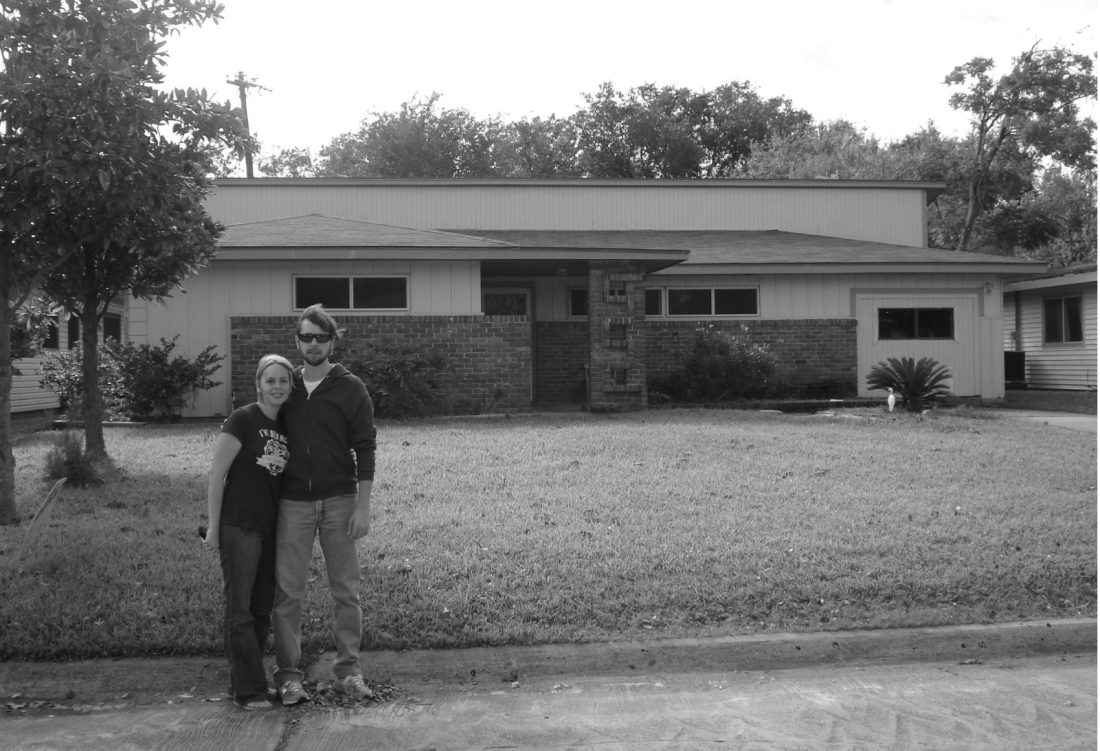
Visiting our former home with my sister years later.

Peace on Earth

“The truth is out there.”

I wonder if any devoted “X-Files” fans found it curious, during the forgettable year that was 2020, that when the government itself acknowledged in long-awaited declassified reports that they had, in fact, collected and documented evidence for decades of UFOs, the world generally took little notice or interest. Maybe it speaks to the incapacity of many of us to be truly impressed or surprised by anything anymore. It seems the truth was, in fact, out there, as the show once pitched weekly following the opening credits, but we moved on, treating the news no differently than if we had exited the theater, venturing from fiction writ large on a screen only to return to mundane reality. Maybe it’s just as well. It seems the official evidence presents nothing more than harmless, flashing objects evading pursuit and performing bizarre aeronautical feats before vanishing from sight. It’s possible to enjoy similar entertainment at the annual air show. Watching agents Mulder and Scully uncover the mysteries of the paranormal or investigate closely-guarded government secrets of alien existence in the space of an hour is, arguably, much more intriguing.

Many episodes diverged from this overarching storyline and had a bit of fun as stand-alones. While I didn’t spend time with the series from start to finish, one of my personal favorites is a season seven tale titled “Je Souhaite.” Long story short, the agents investigate a centuries-old jinniyah (i.e., genie) in the form of a woman who appears just as human as you or me. Hijinks ensue. A more memorable moment towards the end of the episode finds Agent Mulder chanced with a turn to offer three wishes of his own. Pausing a moment so as not to squander this rare opportunity, he opts for the high-road with his first wish, nobly and altruistically requesting peace on earth. The jinniyah routinely and disinterestedly complies. The wish is answered not with a bang but a whimper as an unsettling silence descends. The white noise of traffic and city bustle is eerily and suddenly absent. Peering out of the window, Mulder observes that all living things, with the exception of him and the jinniyah, have vanished from existence. Her vast years of experience with humankind have afforded her interpretive privilege, and the outcome of the wish clarifies her position: You can’t have both peace on earth and people, whose hearts are what they are. Pick one or pick the other.

If you were to ask me on any given day what I want most out of the forthcoming 24 hours, if I dug deep, I would likely respond with the word “peace” or some version of it. Peace in the schedule, peace at work, and, most of all, peace in relationships. I wasn’t bred well for conflict, but I wouldn’t dare attribute that to a failure on the part of my parents. I’m less critical of parents generally since I’ve been one.

In any event, I have been know to pursue harmony in tense encounters at times the same way an addict will cut corners to sate a craving and settle his mind and body. It’s a fault of mine, I know, but there you have it. I’ve managed to make it in life agreeably with most I encounter, though the character flaw has, ironically, been the cause of tension in a handful of moments in spite of efforts to avoid it. It seems some aren’t afraid of it but actually seek and create opportunities for conflict. My children, or at least one of them, are just such persons, though they are good kids overall. Nonetheless, I find God must have a sense of humor when I consider that he’s paired the three of them with me.

My perspective since having children has broadened significantly as to what is at one’s disposal about which to disagree passionately. Clothes, food, toys or other cherished possessions, you name it, they’ll argue over it. I once listened to a long, anguished, tear-stained altercation develop in the backseat of our van between two of ours over the rightful owner of a commonwait for it — rock. Yes, you read that right. They were both committed to dying on that hill, doubtless made of innumerable figurative stones equally as common. It was at that moment I knew I had now heard it all, and it remains the only time in my life I’ve felt the impulse to throw myself out of a moving vehicle.

Recent battles between our oldest and middle have assumed the form of a blame-game I would refer to as “Who Ate the Last of the _______?!” The winner is typically our oldest, who couldn’t care less about her alleged victories but is forced to play by our middle, who, of late, has taken to labeling items and carefully crafting and depositing notes in various locations around the kitchen and pantry to serve as reminders of what she is convinced is hers. She still hasn’t caught on that she makes no actual food purchases herself and has no rights or claims on what is or isn’t consumed, in spite of our own reminders, though I will admit our teenager, like many adolescents gifted with rapid metabolisms, has a unique talent for disposing of communal food as if it were a sworn duty. Nonetheless, we find notes like the one I discovered on the stovetop after rising early to get myself ready along with the other two (see below), who head to school at least an hour before her. It was the first note in my memory that made an attempt at polite acknowledgement of who owns what, merely, I should say, by virtue of the included words “please” and “thank you.” The rest was a blessing, of sorts, juxtaposed with a subtle, almost hidden warning, signified by a smiley-face and not-so-smiley face each deliberately placed next to two specific names in judgment. Apparently, one does not gracefully forgive and forget the previous month’s ice cream “theft.”

This is relatively mild by comparison. Early interactions overall at the beginning of our adoption journey were exhausting and challenging, to say the least. It’s hard becoming a family formed by adoption, especially if your kids have memories of life before you. Not too long ago, the movie “Instant Family” was released, and while my wife and I rarely take the time alone to go to the theater, we found space for this one. For those unaware, the story tells of a couple who choose to adopt three older siblings, ranging from preschooler to teenager. It fashions itself as a comedy, but the two of us viewed it almost as if someone had been reading our mail. Yes, much is exaggerated, but much also felt uncomfortably close to home. For a span, my 15-second elevator-pitch when someone asked what it was like to foster-to-adopt three children, I would refer them to this movie and tell them to catch up with me later if they had any further questions. While the conflicts depicted there are not as focused on what happens between the siblings, the tension and struggles are just as palpable. “We didn’t train for this!” Mark Wahlberg’s character exclaims during the chaotic dinner table scene. Such a sentiment I’ve felt time and again for the gamut of adoptive family-building, especially when navigating moments of sibling rivalry and conflict. Fortunately, my faith has provided a little transformative help.

If you’re a parent and a believer, you likely witnessed that the way you read Scripture altered significantly after kids came along. The stories in Exodus alone, for example, often read like stubborn, spoiled children who simply can’t quit complaining on a long road trip. They’re pleased to accept the benefits, but they’re also soft and ungrateful, unable to endure discomfort in any form. In the few spaces when Moses steps in to stay God’s hand on the disgruntled Israelites’ behalf, the parent in me is anticipating and hoping for a thorough smiting and wants to shove Moses aside to let Dad take care of it.

Take a step back to the book before it — the very first in Scripture, I might add — and after reading you might find one could make a convincing argument that the narrative of Genesis and, by extension, the purposes of God, were largely driven by sibling rivalry. Maybe you haven’t noticed, parent, but it may provide you a hint of hope to know that it all started right there at the very beginning, and it happened time and again. You’re far from alone in the human experience of bringing up bickering babies. What you deal with, what you referee day in and day out, has been going on since recorded history began, and, it seems, was the impetus for moving many things along.

Of the 1,189 chapters in Scripture, we’re barely getting started when we come across the story of Cain and Abel in the fourth. Like many conflicts, jealousy and the attention and approval of a parent (i.e., God) are at the center. The result of the bitterness, as we know, is the first murder. “Well,” I think to myself, “mine haven’t avenged themselves in such a violent manner; perhaps I have little to complain about, after all.” And I wouldn’t be wrong; but let’s keep reading.

Isaac may have been the promised child of Abraham and Sarah, but it’s easy to forget about Ishmael, his literal brother from another mother. If we believe Sarah and our translators, Ishmael, the older of the two, saw fit to “mock” the younger half-sibling on the day he was weaned. Sarah was none too pleased, and when mom ain’t happy, ain’t nobody happy, as the saying goes. The first parent in known history to establish an anti-bullying campaign, she coldly issued Abraham orders to cast mother and son out of his household, to which he assented only after assurance from God that they would be taken care of. The Ishmaelites would later become the early tribes of the Muslim faith and would quietly live out their days to the present in relative peace and harmony with the rest of the world . . . except that they haven’t. It’s as if the youthful fraternal animosity that served as cause to be cast out would thereafter characterize a people and faith in their relations with their cultural brothers and neighbors.

Then we meet Jacob and Esau. Now, this is a classic rivalry for the ages. These twins exited their mother’s womb veritably as discord defined, though, to be fair, Jacob duly bore much of the credit for that, especially throughout their early relational history. For those of us who blame our lack or misapplication of nurture as parents for the negative traits our kids exhibit, here is an example of nature trumping nurture. Jacob was granted the name “supplanter” or “deceiver” as soon as the curtain rolled up by virtue of the odd obstetric fact that he “grasped the heel” of his brother on the way out, as if to presage his methods would hereafter involve the unwilling and forced assistance of others in order to get his way. We know the story of Jacob stealing both his brother’s birthright and later “pulling the wool” over his own father’s eyes to swipe his brother’s blessing. This guy later had the gall to wrestle with God himself and stubbornly refuse to let go after they encountered a stalemate until he got what he wanted. I wonder that clinicians today might diagnose that as a penultimate case of oppositional defiant disorder, which, nonetheless, was the spark that resulted in the birth of Israel itself.

Then there’s Leah and Rachel, lest we forget it’s not only about the boys. Prior to his wrestling match, Jacob fled the wrath of his brother, decided to settle down, and was forced to toil a number of years for these two sister wives as a result of duplicitous tables turned upon him for a change. And in case we needed a demonstration as to why polygamy is a terrible idea, here we’re treated to a vigorous birthing competition between the sisters. When they ran out of steam, so to speak, they threw other women in their charge at him, and this all for the sake of “winning.” Throughout this narrative, Jacob/Israel becomes less the progenitor of a nation and more of a prop for the sisters’ bitter rivalry. Such a twisted tale nevertheless produced the nation’s twelve tribes, which would serve as the basis for Israel’s multi-faceted identity throughout the rest of its history.

Finally, we have Joseph and his brothers, whose story is given the greater share of space in Genesis. Our children accuse us of having favorites, though the truth, or at least what I tell myself, is that we relate to them differently based on their personalities. These siblings, however, knew full well the little runt was dad’s favorite. Consumed but united by their jealousy and incense at his arrogant dreams, they went so far as to throw him down a well and then sell him into slavery to strangers, though their original plan involved ending him once and for all. Unbeknownst to dad, they brought back false evidence of an animal attack and let him believe the lie that cruel nature had claimed his life.

One of my cherished observations about Scripture is that it doesn’t whitewash human shortcomings and failures. It’s ugly, unpleasant, and heartbreaking, and in my opinion, serves as strong and persuasive testimony that it’s telling the truth. It doesn’t over-employ the best qualities of its characters to convince you. To the contrary, we see the best and and the worst together, much like our own lives, and we find we can relate. My kids and yours may not have committed quite so atrocious acts against one another, but we’ve personally witnessed the same feelings motivating them to do whatever it is they do to or for each other.

I want my kids to do well, but I more often pray that they choose to be kind. If such things start at home, frankly, it’s difficult to tell where we might be in the process. Just last night there were bitter, vicious words exchanged over simple drinks spills, whereas days before they were happily sharing their devices because they “love each other.” I’ll happily take the latter, but more often than I’d like, I see the former. On the other hand, they haven’t stooped to murder in the first, mocked each other to the point of forced exile from the home, fled the house in fear because of deception, birthed a bunch of babies to earn a man’s favor, or conspired to sell one of the others off to strangers but tell us and God that he/she died. So, I guess we’ve dodged a bullet. So far.

We still worry, though, each time we see less than what we hope for in their characters. But here’s the beautiful thing about this first book and the reason Joseph’s story was deliberately reserved for the end, I think. After all that — and I don’t mean his story alone — after all that was endured in almost 50 chapters prior, after every instance of siblings threatening not only each other but the plans of God himself and, I would argue, their parents’ deepest hopes for them, we hear Joseph’s refreshing words: “. . . you meant evil against me, but God meant it for good.”

“The art of living is more like wrestling than dancing,” said Marcus Aurelius. I don’t know if the esteemed Roman emperor was familiar with the story of Esau’s brother, but, perhaps, despite all his character flaws, Jacob was unwittingly onto something as he stubbornly struggled and strained against God himself that evening on his way to reconcile with his twin. If so, maybe I shouldn’t fret too much about the backseat bickering, as tame or terrible as it might be. God is aware of what he’s doing with my kids, even if I don’t. I’ll still strive to encourage peace between them in our modest corner of the earth, but if Genesis has anything to teach us, it’s that even the the most vengeful of sibling rivalries can’t thwart the purposes of God. He’s got it in hand; there’s no need for a genie with a handful of wishes.

Dropout

“. . . the great evil of the church has always been the presence in it of persons unsuited for the work required of them there. One very simple sifting rule would be, that no one should be admitted to the clergy who had not first proved himself capable of making a life in some other calling.”

– George MacDonald, “The Curate’s Awakening”

I reluctantly cracked open the heavy tome a fourth time, attempting to plow once more through the Old Testament survey reading assignment. I had already completed four years majoring as an undergraduate in the study of Scripture, not to mention in the original languages, so much of the information in the textbook had been covered. The scholasticism curved slightly steeper here at the graduate level, however. Seminarians all enroll in the same preliminary courses, college credit notwithstanding, so there was no getting around it. Having previously been guided through similar information, I should have found it simple enough. While this ought to have been the case, I struggled to maintain focus not a week into my third semester, second year, in a course of study that would ultimately earn myself the degree “Master of Divinity.”

After attempt number four failed, exasperated, I surrendered and placed the book aside. I uttered a brief, sincere, desperate prayer, expressing my lost interest in my chosen field, wondering if it meant I was lost as well. I had a decision to make. On the one hand, the scale seemed to tip decidedly in favor of remaining where I was. I understood the value of staying the course, of maintaining a commitment. I had graduated from my alma mater with highest honors and had received the religion department’s top award for an exiting senior. I tutored Greek and was even given an opportunity or two as a senior to fill in for professors in a couple of classes. I hadn’t left myself with a wealth of options post-college, having both majored and minored in “Christian Studies.” Due to my performance as an undergrad, my tuition here was covered (word to the wise: finishing formal education debt-free is not to be taken lightly). My parents were ministers whose experiences had deeply influenced my siblings and me enough to consider pursuing the profession. Then there was the pesky, unwanted impression of turning your back on your perceived calling; surely one doesn’t “drop out” of seminary without incurring the wrath of God, or at least his ire. All signs advised staying put.

On the other hand, there was scant as much other than feelings. Nevertheless, I thought, what if my difficulties and lingering reservations were evidence that maybe, just maybe, I wasn’t called to this at all, that I was simply a good student and nothing more, mistaken about the career that best lies before me? After all, here I was, attending classes in a different seminary than that at which I began and in less than a year’s time, having believed the unease I had felt beneath the surface at the outset simply necessitated a change of scenery, carrying me to this moment and this place. Here I was back in my familiar home state, and still I had little or no passion remaining to serve as either a minister or academic. I wasn’t spiritually disillusioned but professionally uninspired and uncertain. If my heart was no longer in it, perhaps the rest of me should no longer remain either.

Not willing or ready to abandon recklessly a relatively secure station in life for God-knows-what, I sought the counsel of a trusted friend as well as my parents, who themselves were serving in ministry. I expressed my thoughts that perhaps I wasn’t where I belonged, though I hadn’t determined precisely what else there could be. I have heard since that one should not quit a job until you have another waiting for you; thoughtful words, indeed, but a few more years would pass before I gleaned such wisdom. To my surprise, they each recommended withdrawal, and I found myself thankful for friends and especially parents who so often supported and trusted my decisions. I would sleep on it and find resolve in the morning.

My course determined, I set out the next day to begin the process and paperwork, but there was one task that first needed attention. I had the privilege not more than a week or two prior of having begun a position as a graduate assistant for one of the seminary’s esteemed professors. I now had to deliver the inconvenient news that he would have to search for another assistant so unexpectedly soon into the semester. I couldn’t be certain how he would receive it. Both the dean and assistant dean of the previous seminary, where I also served as a grad assistant, went to great pains to persuade me to stay after I had decided to return to Texas, and it was difficult not to feel their efforts were wholly self-interested. It was, after all, a fledgling seminary on the cusp of accreditation, so retaining rather than losing students was a priority for them.

I arrived at his convenience and seated myself in his office, coming straight to the point. I no longer believed seminary is where I belonged; I would be withdrawing. His response was equally direct and honest, and what he said has stayed with me to this day. After expressing genuine respect for and understanding of my decision, he replied, “I’d ask that you not share this outside of these walls, but there are other students here who ought to make that decision.”

_______________

As the year 2000 dawned, the magazine “Christianity Today” selected C. S. Lewis’s “Mere Christianity” as the best religious book of the 20th century. If you take the time to read this and Lewis’s other works — not only the more popular but nonetheless timeless and outstanding Narnia series — you begin to understand the unique gift he possessed to illustrate, explain, and simplify even the most complex of theological concepts. I know some who would argue this point, but I discovered his work at a spiritually unsettled time in my life and found him to be a clear breath of fresh air in the thin, stifling atmosphere of skepticism. In his deft and capable hands, he demonstrated that it can, in fact, make logical sense to be a believer. While no man is infallible, I have found my faith encouraged and bolstered time and again when I revisit his works.

As original and unique as his thoughts were, even the best among us have been mentored or taught, formally or informally. “No man is an island,” as John Donne famously put it. Lewis’s “master,” as he would dub him, was George MacDonald, a man he never met but whose writing deeply influenced him and many others whose names have overshadowed his own.

I came across MacDonald shortly before my decision to withdraw, thanks to a very well-read friend who never lacked for literature both to recommend and lend. Published in 1864, “The Curate’s Awakening” tells the story of Thomas Wingfold, a minister who finds himself in a crisis of belief after his Christian faith is intellectually challenged. While there is a wealth of insight in the story for anyone who might find themselves even a century-and-a-half later in a similar crisis, among my favorite quotes is the gem above, spoken by Wingfold’s mentor, of sorts, who patiently guides him back to his faith.

MacDonald must have encountered in his own life the “great evil” of men unsuited for the ministry. I’ve wished he could have further unpacked this claim, even if spoken through a fictitious yet truth-telling protagonist in a novel. Perhaps I should read more of his works and search it out. I know, nevertheless, that these words struck a chord with me at a critical time. They and my professor’s private opinion shared also confirmed observations I had made over the course of a year in seminary, if not earlier, by those “called” to a life of professional church ministry.

While the Protestants among us applaud what Luther and the Reformers accomplished with the doctrine of the priesthood of the believer, I’ve wondered what good or ill this truth, by extension, has done for the conviction of those who believe they have been “called” to ministry. In the same way I do not need a priest to mediate God’s truth, likewise my calling is between myself and God, as it goes; who’s to dispute it?

_______________

The evening came on, and I joined my acquaintance and his friend for a little company. The former had recently finished seminary; the latter was nearing the end. I was somewhere between the second and third semester, already wondering in the back of my mind if I shouldn’t be elsewhere in life. The conversations I would hear rather than join that evening would only sow further uncertainty, along with a measure of disappointment.

I can’t recall finer details, but they conversed easily and freely. It was loud, bawdy, and more to the point, when women were mentioned, unapologetically and wholly objectifying. There was alcohol, which wasn’t necessarily a problem, but thrown atop everything else I was hearing from a pair ostensibly “called,” it certainly didn’t elevate my impression, which I kept to myself.

Granted, we all feel the need to blow off steam, and we all benefit from friends, or should, who allow us to speak our minds candidly. However, the best friends hold us accountable, and I confess I had expected better from future shepherds, so to speak. My acquaintance would later tell me in a private moment that, all evidence considered, he had arrived at the conclusion there likely wasn’t a God; he would ultimately change professions. His friend, to the best of my knowledge, moved on into ministry. Learning what I did that evening, wherever he landed is no place I wanted to be.

I could tell as well of ministerial undergrads who stole books from the university library where I held a work study job for 2 1/2 years, or the classmate and coworker who continued to pursue theological studies post-college, only to determine, like my acquaintance, that he was an atheist, albeit an atheist with a purpose. He would find his 15-minutes of fame years later after filing suit against the military for their refusal to allow him to serve as a humanist chaplain. Video I discovered online of a lecture he had delivered to an audience unfamiliar with his past revealed a curious affectation he had also developed — a crisp but unmistakably clean British accent. I gathered from such that he had either suffered a bump to his brain’s left hemisphere, or his theological education, not to mention his careful and conscientious presentation of himself, was deliberately tailored to gain the admiration of others rather than to edify the body of Christ.

In very recent years, I’ve known and heard of career ministers abandoning the profession and their congregations long before retirement over reasons not entirely clear to me or others, and some of them have done so in dramatic and disappointing fashion, leaving a trail of damaged relationships and churches in their wake. We’ve all heard of prominent pastors who have made the headlines taking it a step further and abandoning their faith as well. Then there are those who happily stay in place and whose behavior or doctrine falls far short of the mark. I heard of one recently whose teaching strayed so far from a fundamental doctrine laid plain in Scripture, it was worth questioning whether or not he takes the time to read it at all. And I haven’t even begun to mention claims of sexual misconduct, in some cases criminal, which the press is always pleased to share with the public. Regardless of whether it’s burnout, moral failing, or something else, it leaves me discouraged, and I return to MacDonald’s words, wishing, perhaps, that they had chanced to read them years before, if not to dissuade them from their calling to elevate its significance, prompting them to have made a wiser choice.

_______________

Future ministers, at least in Baptist institutions, are encouraged to take a good, hard, introspective look at their call early into their formal education. There is no grade to be earned in doing so, nor is there an august body of professors or clergymen before whom you stand to be judged on whether or not your call is valid. This call, your call, is between you and the Creator. That being said, I do believe there are enough who mistake a call simply to be an authentic, faithful follower of Christ in life, generally speaking, as a call to professional ministry. Feeling poignantly touched by the Gospel and its truth in a life-altering way is, in my opinion, something all believers ought to experience. And such believers are meant to infiltrate every profession, not just the clergy. The command — the “call,” if you will — to “go out into all the world,” can’t happen if we don’t actually go out into all the world.

In his first recorded letter to Timothy, Paul laid it out for those desirous of the task of “overseer”:

Whoever aspires to be an overseer desires a noble task. Now the overseer is to be above reproach, faithful to his wife, temperate, self-controlled, respectable, hospitable, able to teach, not given to drunkenness, not violent but gentle, not quarrelsome, not a lover of money. He must manage his own family well and see that his children obey him, and he must do so in a manner worthy of full respect (If anyone does not know how to manage his own family, how can he take care of God’s church?). He must not be a recent convert, or he may become conceited and fall under the same judgment as the devil. He must also have a good reputation with outsiders, so he will not fall into disgrace and into the devil’s trap.

I can’t help but notice that Paul opens with “whoever aspires to be” rather than “whoever is called to.” It appears one can actually choose this noble task. However, there are a few expectations. Do you have the inherent qualities required for the job? You’re welcome to earn the degree, but the best of what’s expected can’t necessarily be learned in a classroom. For many, you either have it or you don’t, perhaps in much the same way my oldest child has natural, God-given athletic abilities that I never had and never will.

I consider myself privileged to know at least a couple of men who fit the bill, degreed or not. My father and father-in-law both spent the greater part of their professional lives in career ministry in one form or another, and I have seen in them the qualities Paul details in the passage above. The degree, if we’re honest, could assist with only one — able to teach — insofar as the coursework would provide content for instruction. The ability to teach, however, along with the rest, comes from somewhere else. Moreover, with this ability should accompany an understanding on whose authority one is teaching.

“Thus saith the Lord.” There are few bolder pronouncements in Scripture than this, delivered most often by the prophets. It is not a phrase one would utter unless absolutely certain what followed was indeed the holy thoughts of God himself. Yet the minister, as interpreter and teacher, effectually serves as God’s mouthpiece each moment he steps into a pulpit and opens the book, whether he has considered the weight of this responsibility or not. There is no greater position of power and influence, in my opinion, and it is for this function alone I find MacDonald’s words above cautioning entrance into the profession most relevant. It reminds me of what our beloved professor of the original New Testament language shared with us at the close of our third course: “Students, you now know just enough Greek to be dangerous.”

I hope I do not sound contentiously dismissive of anyone’s call to ministry. Scripture is replete with examples of those who appeared unqualified for the task given to them. God uses the “weak things of the world to shame the strong,” as we know and read. It is one of his most beautiful and attractive characteristics that he utilizes those the callous world blithely casts aside. But I also believe God can and does equip us for the jobs he gives us, and it is worth at least a moment of the time granted to us to consider whether or not he has, in fact, gifted us accordingly. The lives of those we shepherd, by choice, by call, or both, may depend on it.

_______________

For almost 18 years, I have spent my professional life in public libraries. It is a career that has treated me very well, and I hope I have shown the same courtesy to those I’ve served. I’ve enjoyed successes that many never achieve and was convinced by 40 that if my career ended at that age, I would be satisfied with what had been accomplished. I have wondered on a handful of occasions what might have happened had I stayed put in seminary, but there’s no way to know. I have never regretted the decision, and I’ve never felt, judging from the way life has worked out, that God is displeased somehow with the decision. I have much to be thankful for, and I believe he had something to do with where I’ve ended up. I have considered that ministry may be somewhere down the road. It seems a waste of an education such as I absorbed to never utilize it in a professional context. In any event, it’s up to someone other than me, and I hope I’m attentive to the call if or when it arrives.

Maybe it’s presumptuous of me, but I’ve imagined returning to my alma mater to impart a few words of wisdom to the undergraduate ministers in training. Given the opportunity, I would likely open with MacDonald’s words. While my interest would not lie in dissuading them from their “noble task,” I would hope they might gain a greater respect for their call and consider its weight. It’s easy enough to take a class and earn the credit. It’s much harder to lead others desperate and thirsty for spiritual truth, especially if we’re meant to lead elsewhere.

Unqualified

In less than a year’s time, my wife and I will celebrate 10 years of marriage. On our bedroom wall is a single, wide frame waiting to accept several small photographs of the two of us in five-year increments, arbitrarily up to year 25. My brother and sister preceded me in wedlock and remain happily married to their partners, each for 14 and 20 years, respectively. My parents are fast approaching their 48th anniversary, and I expect they will make it much further than that. Before “death do us part” ended their partnership, my paternal grandparents were wed for a slow and steady 60 years. My maternal grandparents, whom I have long lovingly referred to as “Meme and Papaw,” are still together and have been for a staggering 74 years.

I share none of this as a matter of pride. Rather, I say it to point out that the marital bonds made and rigorously maintained in my immediate family, along with the fact that I consequently have been spared the shock and heartache that formal separation can cause for all those involved, may explain, at least in part, why I feel such sensitivity upon learning of the divorce of friends, family, or even the most remote of acquaintances. It always breaks my heart. Each time I hear of it — and it happens more often now — the upset prompts me to take a closer look at my own marriage while wondering desperately how others’ could have ended, if for no other reason than to understand how to protect my own.

It’s an oft-repeated, banal statistic: half of all marriages in America end in divorce. I have heard more than once from the pulpit that this percentage “changest not” for Christian churchgoers, a fact perhaps surprising given that the faith is among the strongest advocates for the institution. There are plenty of risks in life I wouldn’t take given odds no better than those offered by the toss of a coin; but it would seem from the stats that’s the best deal any of us who venture into marriage will get. We enter into it confident and assured that love will see us through. But that’s not enough. From what I understand and have observed, what most commonly occurs for the unlucky in love is that time erodes mere romantic feelings, differences or offenses are left unresolved or unforgiven and consequently birth resentment, and resentment breeds contempt, until, left to fester, there is little left to salvage of the relationship.

Perhaps this is an oversimplification. Regardless, none of this happens in the space of an evening. Realizing the best or worst of anything in our lives is a patient process, and I have found in my 9 years that when I feel resentment creeping in, humility is the only cure. I am not a perfect man. If I follow the counsel of pride, I shouldn’t be surprised if loneliness accompanies my need to be right. So, I buy the bouquet and apologize.

I don’t intend that my thoughts alienate those who have known the pain of divorce, and I understand that the details surrounding such issues can be very complicated and may differ from one person to the next. We all need grace, myself included. But if you’re a believer, I haven’t come across any interpretive tools that allow one to sidestep the meaning of the simple, plainspoken words of God in the final book of the Old Testament: “I hate divorce.”

I have once felt the temptation to walk away. While it may not hold a candle to the experiences or challenges others have had, and though it wasn’t borne of resentment, it felt as real and compelling as anything else I’ve experienced.

Not terribly long after our oldest and youngest were placed in our home for the six-month long period before adoption could be pursued, we found ourselves one evening dealing with an irritable toddler who couldn’t get himself to sleep. We had endured the patient and exhausting process of training, paperwork, and preparation for two years and exchanged it for the draining realities of parenting in such moments as this. Most nights after placement were a challenge lulling him to sleep and keeping him in slumber, but this evening was different. As the night progressed, my wife and I found ourselves taking turns sitting up with him, occasionally drifting off only to wake soon again in a state of rapid and labored breathing and coughing. While he himself did not seem to be alarmed about his efforts, in hindsight, we should have had the sense to take him to the ER right then. We second-guessed ourselves, however, and tried not to overreact to whatever this was. By the time the sun began to rise, we could see nothing was improving, and so we made the decision to seek help. So, I got him and myself ready, and we headed to the hospital.

Arriving, we checked in, and we were not left to wait interminably after I shared the details and medical staff were able to see for themselves how he struggled to breathe. They soon found him a space and a bed and began the process of assessing him. Needles and such were soon to follow, much to his displeasure, as they found his oxygen levels much lower than normal. This would be the first of future medical visits that would ultimately acclimate him to medical treatment and form him into a better patient than he was at this moment.

Without the resources or expertise to treat him, it was decided that he should be transported to Texas Children’s Hospital downtown via ambulance. Once he was prepped, they rolled him into the back as I sat alongside him for the journey. After arriving, we would stay for four days and three long nights as they endeavored to stabilize him before officially diagnosing it as asthma and releasing him back into our care to head home.

So the routine business of day-to-day adoptive parenting began again, now with the added task of daily pharmaceutically-treated asthma prevention. We pressed on toward the goal of adoption, though I admit the adjustment from no kids to two kids had begun to feel extreme. I had more than one moment of anger or frustration at the changes and occasionally expressed this in such a way that surprised even me. I gained a greater appreciation for the fact that most of us are eased into parenting with a single baby; the needs are very basic, they don’t yet have much of a will of their own, and they are fragile in every way. Yes, the change is still a change, and one still loses some sleep and “me time,” but jump-starting from zero to multiple “not-babies” from traumatic backgrounds is not a natural life transition. The stress of such a change can compound if you don’t appreciate the adjustment required. And I didn’t fully appreciate how daily life would change.

A month later, the coughing began again late one afternoon, persistent and uninterrupted. Fearing another long night, we decided to forego the inevitable and brought him again to the local hospital. And once again, after evaluating him, they chose to carry him downtown via ambulance to TCH.

After he and I arrived into the evening, we were checked in and eventually placed in an ER room, where we were left to wait. My wife and our oldest soon joined us for what would end up a long night of patient observation. In the end, it was merely a cough, nothing more, and he was administered a steroid and breathing treatment. This would be one of our first moments in which a physician would inform us that his cough was not necessarily concerning; moreover, nothing but a steroid would be prescribed for it, due in part to the fact that physicians generally do not recommend cough medicines at his age — a frustrating reality for parents who simply want their child to sleep.

Early into the morning, exhausted, we were released from what felt like a waste of a visit, though assured our concerns were nothing serious. We made our way back to the van and headed home in the dark, the sun not long in rising. Though sleep was foremost on all of our minds, my wife and I knew relatively little time would be permitted for that. Our life now revolved around a couple of kids, and the toddler among them would be up very soon after the sun, prepared to wake the rest of us up with his needs and treat us as well you can expect of a sleep-deprived two-year-old.

This trip to the ER, not the first but the third for me with him (there was also, by the way, an unfortunate incident in which he stuck his finger into the moving, rolling track of the garage door as it opened) left me spent in every way. Our journey of parenthood had only just begun, and all of the training that sought to prepare us for moments such as this meant nothing to me now. Yes, of course, our life would change, it wouldn’t be easy, etc.; I’d heard all that. But here and now, I only felt complete and utter exhaustion. I also felt trapped with this feeling, realizing perhaps for the first time that I had made a commitment to this and all it entailed, that I couldn’t necessarily expect relief even when my head hit the pillow. I’d signed up for a marathon that would last not a few hours but many long years, and the pop of the starter pistol still echoed in the air. The entire course stretched endlessly before us.

As the weary morning began, I called a friend to take me to the local ER to pick up the car, where I’d left it before we were escorted downtown in the ambulance the previous evening. I then drove to the pharmacy for the prescription. Having collected it, I returned to the car, sat in the driver’s seat, and paused.

Staring aimlessly ahead, it occurred to me in my spent state — emotionally, physically, mentally, and even spiritually — that I wasn’t bound to this course. I still had a choice. I was alone in a vehicle that could take me almost anywhere I wanted to go. And what I wanted right now was to be anywhere but here, anywhere but home. I loved my wife very much, but I didn’t want the rest of it at this moment, not anymore. My new identity, the changes in how I spent my time, the challenges of parenting kids from trauma — it all was received and heard one way but experienced in an entirely different way. You don’t fully grasp what you’re entering until you step through the door.

A left turn out of the parking lot took me away from here. A right turn brought me home.

Turn left. Turn left and find an escape. Yes, you would leave your wife behind, but think how pleasant it would be simply to sleep and wake on your own time, not to be responsible for anyone but yourself, to let others more qualified than you take on the task of raising kids such as these. You’re clearly not cut out for this, so feel no guilt about walking away. Turn left. Doesn’t matter where, just go.

I don’t know how long I sat still and silent in the car. The weight of what I was actually considering slowed time to a laborious crawl. Everything in me wanted to abandon this choice I had made to be a father to kids I didn’t father, kids with whom I was barely acquainted, who looked nothing like me. I was tired, I was unqualified, and I wanted out.

At some point, I looked right. To return home, I had to find faith that I wouldn’t always feel this way, that things would be different, better, given time, that God was behind this endeavor. I wanted to believe it. But I didn’t feel it.

I picked up the phone and texted my wife. “We need to talk.”

Starting the car, I paused once more.

I turned right.

Our conversation would be one of the first and only times I’ve shed tears in front of my wife. While there would be other moments of tension due to the changes the adoptive process had wrought, in this one, I expressed how much harder this was than I expected and shared my doubts as to whether or not I could continue. In her own patient way, my wife listened, expressed understanding, and tried to counsel taking it a day at a time. If I learned one thing about her character through the process, it was that she was all-in, that she embraces challenges, even when the doubts creep in, and is more likely to look for solutions, any solutions, that would foster success. This should have been a strong indication to me that she was equally committed to us, to our marriage, if and when the road would be rough.

That was over five years ago. I hope I’m not so naive as to believe that had I turned left, our marriage would have instantly fallen apart. But it most certainly would have been the first step, possibly of many, in the wrong direction.

Parenting has the potential to be a strain on any marriage. Adoptive parenting, all the more. Little did we know at the time that in less than a year, we would take in their sister, who had the misfortune of enduring the instability of four primary caregivers before she ever arrived with us at the tender age of 7. She would also unwittingly provide us with a raw and jarring education on what it actually means to parent a child from trauma. The stress of it would test us many times, and sometimes it still does.

“It’s so great what you guys are doing,” we occasionally hear, referring to adoption. We don’t feel like heroes at all, simply because we know ourselves, and have a hard time responding to the compliment. It’s the humble confession that often follows, however, for which I have a ready response but choose to stifle. “I could never do that,” they say. “That’s interesting,” I imagine replying. “I feel that way almost everyday.”

Adoptive parenting doesn’t require perfection as a qualification, I’ve learned. I likewise shouldn’t expect it of other relationships, marriage included. If not for the grace of God, we would wait indefinitely to feel qualified to do anything of worth.

“If anything is worth doing, it is worth doing badly,” wrote G.K. Chesterton. While his words testified specifically in his time to a debate over amateurism versus professionalism, I take a little interpretive liberty and choose to hear it as a challenge simply to try, regardless of personal shortcomings or the potential for mistakes likely to be made. Some things in life merely ask us to press forward, qualified or not.

Just as with parenting, I’ve made my share of errors in my marriage. I can’t see the road ahead, but I fully hope and pray that my wife and I will eventually have a photo to insert in the 25 year spot of the picture frame, and then some. The faith I had that day that compelled me to return home felt far more minuscule than the storied mustard seed. If so, then there is something both true and effective in those words after all. Armed hereafter with nothing more than a sliver of faith, I need only believe, and keep turning right.

Altitude

For the record, cell phone reception works relatively well when flying 1,100 feet above a major metropolitan area in an aeronautically snail-paced PT-17 Stearman. Soaring above as a front-seat passenger in the bright yellow biplane, used originally as a trainer for aspiring WWII pilots, I spotted our subdivision below. I texted my wife to let her and our kids know that the pilot and I were directly above our tree-obscured neighborhood. “We saw you!!!” came the thrilled reply. Months before, she had purchased the 30-minute, open-cockpit ride as a birthday gift for me from the flight museum practically nestled in our backyard at the adjacent airfield. On this day, incidentally the 20th anniversary of 9/11, I made time for the change in vertical perspective and presented my ticket. It was brief as flights go, but it was an experience I won’t soon forget.

Our neighborhood, bird’s-eye view.

If you’ve ever coasted far above the earth on a pair of wings and an engine or two, looking down through the window in the pressure-sealed passenger cabin, you can’t help but observe how different your local haunts below appear. For one, at this altitude, you can see many of them simultaneously, and the distances between seem much less distant; my sphere of day-to-day influence on the ground isn’t quite so expansive. Moreover, while my family pinpointed me in the plane, I never could find them on the ground. They weren’t even on the scale of an ant I often spot on the sidewalk in front of our house. The four of them might as well have been invisible, as any other human below.

Maybe it was the effects of the altitude, but it put me into a reflective mood. Down below, where gravity binds us to the earth, it’s easy to feel important when you’re blind to the big picture. Far above, however, every self-important person on the ground disappears. As we glided along for the half-hour ride, I considered this, the nature of ambition, and the sometimes misguided pursuit by certain of us to rise above it all.

If you keep up with the news even remotely, regardless of your source of choice, you’re likely to have come across the name “Elizabeth Holmes.” Presently, she is on trial facing multiple criminal charges of fraud involving Theranos, a company she started in 2003 at the tender age of 19. Once touted as the next Steve Jobs, Holmes took this to heart and deliberately fashioned her likeness in the image of the storied tech titan, even going so far as to sport the black turtlenecks for which he was famous. Her management style, it is said, bred more fear and anxiety in the workplace than a spirit of teamwork or cooperation. To say she was task- versus people-oriented was an understatement.

Some of these tendencies might have been excusable if there were a world-changing product to unveil. Holmes’s single-minded pursuit was to develop a comprehensive blood testing device requiring only a few drops of blood rather than multiple vials. For years, her staff attempted to achieve what was known by others more knowledgeable to be impossible in this physical universe, but she plowed on nonetheless, opting instead to fake-it-till-you-make-it. While scientists and developers behind the scenes in her company for years experienced little more than failure after failure, Holmes ordered the results buried or whitewashed, opting for smoke and mirrors with the public and investors, brazenly lying about the success of her “Edison” device, as it was named. When the pressure mounted and the Edison continued to fall short of expectations, samples taken from patients and volunteers were secretly run through traditional 3rd-party machines and diluted to the required volume, repeatedly returning inaccurate results. When the Edison did work, it was not even remotely comprehensive in the number of tests it was claimed by its founder to perform. In some cases, actual patients made critical health decisions based on the information provided by either method, only later to find they had been duped. Holmes, blindly ambitious to a fault, would rather have let others believe she had a revolutionary product than patiently test it before releasing it or admitting defeat and moving on. Even after whistleblowers blew her cover, she ultimately saw the collapse of her company, and found herself a defendant in the dock, she stubbornly would not admit to any wrongdoing.

Then there’s the story of Stephen Glass, one of my favorites. In the mid- to late-90s, the young writer earned a spot in the offices of “The New Republic,” which, at the time, boasted of being the official in-flight magazine of Air Force One. Glass’s gifts as a journalist were evident almost from the start; it seemed he had a special knack not only for narrative but also for finding unique sources for his fantastic pieces that strained credulity but were nonetheless entertaining to read. The truth, however, was far more interesting.

Reading Glass’s article “Hack Heaven,” journalists at Forbes magazine couldn’t help but wonder why they hadn’t heard of Ian Restil, Jukt Micronics, or the “Uniform Computer Securities Act.” Upon closer inspection, and after grilling Glass and TNR’s editor, it became abundantly clear to the writers that the article was about as rock solid as a marshmallow. The facts were hollow, and Glass was forced into a corner. Rather than confess his sins, Glass invented further fiction to support the fiction. Long story short, Glass lost his job, the majority of his published work in the magazine was found to be completely or partially fabricated, and TNR was compelled to apologize to its readers and struggled to regain its integrity and reputation.

What’s of greater interest and relevance to me about either of these tales, however, reaches further back, long before the very public, colossal fall and even beyond the early expectations of great things to come in their youth. It’s a very young Holmes who came from a once well-endowed family, whose parents felt and applied pressure to make a name for herself. It’s Glass deciding to study law while while penning his articles for “The New Republic,” because it wasn’t enough for his parents that he was employed by a highly-successful, nationally-recognized publication as a writer. In short, it’s the expectations we foist upon our kids and the manner in which they choose to fulfill our hopes for them.

Our oldest did not inherit our lack of athletic prowess, fortunately for her. Rather, she arrived to us at almost 9 years of age with the skills of a natural at any physical activity. Learning to ride a bike took all the painstaking effort of less than half an hour. We first encouraged and nurtured her abilities by enrolling her in gymnastics only to be told a year or two later that the instructors had nothing left to teach her. What she did learn and had opportunity to practice would serve her well in middle school, where, by the time she finished, she had competed successfully in multiple sports and made the cheer team her final year.

Transitioning into high school this year, she wisely chose to limit herself to one or the other and opted to try out for cheer. Much to her pleasure and not to our surprise, she not only made the team but was asked to join varsity, and this as a freshman. She dutifully cheers at weekly games and is one of their few featured tumblers. If this weren’t enough, she made the team’s elite competitive performance group, again, as I mentioned, as a freshman. I’m still amazed at how she can tumble and twist end over end given only a long, open patch of ground.

Before opting out of gymnastics, we discussed what it would mean for us to be the kind of parents who raised the stakes and our expectations to transition her from casual hobbyist to serious contender, as was encouraged. We learned this would involve greater financial resources, daily hours-long practices after the school day, regular weekend competitions, etc. The sacrifices made would also redirect time away from her younger brother and sister as we focused our attention on her God-given talent.

In the end, we did not choose that route, and she was happy not to. We can see she is better for it. The instability and stress of life before her transition into our home was, in part, enough to persuade us that her life could still be great without the overwhelming pressure to be great, so to speak, at just one thing. Had we charged ahead, however, regardless of wins and accolades, I have wondered the impression we would have left on her had we pushed her.

We all need to encourage our kids to be at their best, as should we. I could never dispute that. I’m reminded of the quote from the actor portraying British runner Eric Liddell from the famed movie “Chariot’s of Fire”: “I believe God made me for a purpose, but he also made me fast. And when I run, I feel his pleasure.” These words speak truth to the direction in which our aspirations should be pointed — towards the One who gave us our gifts. As I reflect on the impression our choices have on our children, I’m convinced it’s the only way our and their ambitions can remain pure and admirable.

Stories such as those of Glass and Holmes are instructive about our ambitions. When we strive merely to be better than, all bets are off; ethics and fair-play fall low on the list of priorities. There will always eventually be someone better than us at whatever we do, even it if it takes a little time to discover it, and especially if we are dishonest in our pursuit. When we strive instead simply to be better with an audience of One, we’re truly free to be at our best. I pray our approach with our kids reflects this in their efforts.

I can’t help but hope that folks such as Glass and Holmes might consider this as well next time they find themselves peering down at the ground below.

Screen Time

I don’t recall the precise reason, but it became eminently clear it was no longer a living room accessory. It had silently departed the house in our absence, and we never had a chance to say goodbye. As our parents drove my brother, sister, and me from our grandparents’, where the three of us had spent the weekend, and we made the hour-long trip back home, one of us must have expressed a screen-starved eagerness to play our game system — an Atari 2600 — as soon as we would set foot in the door. Upon hearing this, mom pounced from the front seat with a ready reply. Our anticipation was summarily extinguished by her unwelcome news.

“It broke.” “It messed up the TV.” “The dog chewed it up.” Whatever the reason, all we heard was, “It’s gone.” In the history of parental excuses, whichever mom chose was likely as common as they come. The subtext, however, was, “You were spending too much time on it.” So, with the cold-heartedness of a hitman, she offed it. Even dad, I expect, quietly mourned while simultaneously presenting a united front with our mother. No more heavily-pixelated “River Raid” bombing runs after we were in bed. Cue single tear.

It would be the only game system our parents would purchase themselves for the family while growing up in our single-screen home, and it came as quickly as it went. Even in the 80s, long before the advent of iPads, smartphones, and the conscientious parenting term “screen time,” it was still possible for one’s kids to oversaturate on the latter, my mother believed. As I matured, I inherited a similar belief and learned to approach screens and what they deliver with a measure of caution.

A few years later in June of 1992, following the collapse of the Soviet Union, our family migrated to Ukraine to engage in charitable mission work supported by churches in Texas. Among the wealth of experiences we collected over what would culminate in a full and very meaningful year in our lives (about which I intend eventually to write more), we had the opportunity to live screenless. We rarely encountered a television. Moreover, smartphones and tablets wouldn’t make their introductions to society at large for more than a decade. We were strangers disconnected in a strange land, where even a brief, poor-quality, long-distance phone call literally required scheduling with the phone company ahead of time. While such conditions sound primitive and unacceptable by today’s standards, we found ways to keep ourselves occupied. When a screen simply isn’t anywhere, it ceases to be an option, so attention naturally shifts elsewhere. We learned to live comfortably and happily without it.

Fast forward nearly 30 years, and here I sit tapping out these very words one character at a time with my thumb on a modest rectangular screen that never leaves my side. I find it hard to remember any longer what day-to-day living was like prior to constant connectivity and endless entertainment in our palms. We obviously made life work without this technological privilege and have for century after century of human history, but it only took a meager year or two of the current 100-year span to change us forever. We all take for granted that each of us now carry in our pockets a tool far and away more advanced and complex than the earthshaking machines that sent men to the moon. With that kind of personal power, we all know there’s no going back, regardless of the extremity of any downsides discovered since.
Among this technology’s vast number of advantages — and there are, indeed, too many to name — there is really only one familiar disadvantage that matters: we seldom have the willpower to put these devices down as often as we should, turn them off, and interact with the real world we inhabit instead of staring endlessly into a carefully edited and framed projection of it.

Very early in his work with Apple, Steve Jobs once said dismissively of market research, “People don’t know what they want until you show it to them.” The later success of his products would seem to have proved him right. While he wasn’t the inventor of the smartphone, per se, his “i” devices found themselves in the impatient, hungry hands of the majority very soon after their introduction to the market. Apparently, he alone knew what we really wanted, judging from the volume of cash we appreciatively threw at him. Once software/app developers got a hold of the iPhone and similar devices, they found further ways to keep us hooked until this “want” gradually morphed into a “need.” Whether we’re at home, at work, dining out, or even driving, we feel the itch every inactive moment and impulsively silence reflection by reaching reflexively for our phone. Few of us know any longer how to sit still and quiet with our thoughts.

Ironically, many of the developers of these breakthrough devices and apps see their way differently through the distracted digital fog and distance themselves and their families from what they’ve wrought. Bill Gates is said to have established very strict limits on his kids’ use of technology. Jobs himself stated shortly after he released the iPad that he would not allow his children to make use of one. Many of the movers and shakers of social media platforms shared in the cautionary Netflix documentary “The Social Dilemma” that they significantly limit when their children are able to visit the sites they curate, if at all, and some even go so far as to enroll them in low- or no-tech schools. Jaron Lanier, an early pioneer of virtual reality and well-known voice in Silicon Valley, published a few short years ago “Ten Arguments for Deleting Your Social Media Accounts Right Now,” among other works in a similar vein counseling caution in the technological universe we now inhabit. All in all, it appears very telling that these creators are not the strongest advocates for their creations.

A closer look, though, reveals it’s not the technology itself they’ve rejected but its overuse, abuse, or misuse. Any technology, like any tool, is fashioned for a specific function; but I can use it for different ends if I or others so choose and the functionality affords it. A hammer’s designed purpose is to drive or pull a nail, but certain individuals have been known to employ it effectively as a weapon.

Our middle is currently in a months-long process of demonstrating she is mature enough to acquire a phone (and use it as intended). Good grades and behavior are the criteria. While it’s a great motivator for her, I admit mixed feelings about what waits for her at the end. This new rite-of-passage we Gen Xers and earlier never experienced; we transitioned as adolescents just fine without it, so, naturally, we harbor concerns about what it should signify and when they have earned the right to carry, so to speak. They’ve never known a reality that wasn’t populated with a personal device for every person, so they feel less cautious about the change than us, who remember a time when our attention had vastly fewer interruptions and was more consistently present with the world around.

While she stands to gain, I can’t help feeling like something will be lost. Given the option, we’ve found, kids will almost always pick a screen over any other available activity. It’s clear, consequently, that it takes a great deal of vigilance to monitor, educate, and, most importantly, model how to handle joining the ranks of the connected. If my kids observe me glued to this device, they will naturally assume the same posture.

In 1984, William Gibson published the seminal, critically-acclaimed science fiction novel “Neuromancer,” which, in a nutshell, envisioned a future in which we essentially plug our conscious brains into digital reality. The story directly inspired the later box office blockbuster “The Matrix.” While we aren’t precisely there yet (and I hope and pray we never are), reading the novel 25 years after its publication, I couldn’t help but observe that I lived in a version of Gibson’s vision. There is no need to physically “jack-in” if we can’t pull our eyes from our screens. In a way, even then, we were already there.

The best science fiction, in my humble opinion, does not merely spin a fun and adventurous tale of gadgets, lasers, and spaceships. To the contrary, the greatest among them, I would argue, closely scrutinize the present to a purpose. These stories presciently trace out causality and utilize the platform of the unknown future, wittingly or unwittingly, to describe where we’re headed if we do, or don’t, change course. The visions are often extreme and imprecise, making it a challenge to recognize if we’ve arrived at said dystopia. I once expressed to a roommate incredulity about the likelihood of Bradbury’s future tale of the temperature at which books burn. He replied thoughtfully, “Why burn books if no one is reading them?”

I don’t know where we’re all headed with our screens, but I know there are times I think back to that disconnected year in Ukraine and realize their absence is rarely woven into the stories our family recounts about our life there. We didn’t miss them. Nonetheless, at the same time I appreciate the facility to instantly send pictures to my parents of their grandkids, pull up a detailed driving route to anywhere in the world, and post my ramblings online to someone like yourself (whose attention, incidentally, is still intact enough to see these thoughts to their conclusion; and I thank you for that), I wish sometimes I could return to a time when I wasn’t burdened with the task of monitoring my kids’ online presence and activity or paying responsible attention to my own.

But this is the world we now live in, and we take the good with the bad. So, perhaps we should blame neither the tools nor the toolmakers. They simply give us what we want.

Headlines

Water shortages. Hurricanes. Wildfires. Afghanistan. COVID. Political discord. Racial tension. I check the news each day and wonder when I’m finished why I continue to do so. You read it and step away persuaded the larger story after you put all the pieces together is that we’re nearing the end of human civilization as we know it. Maybe we are. Some days, I think it might not be the worst idea for God to introduce another cataclysmic event and start fresh; I’d even volunteer as the first of numberless victims if it would accelerate the cleanup. It’s very depressing, staying informed about the state of the world. Add on top of this a poor-night’s sleep, and the future looks bleak, at best.

This is the state of my mind as I wake up on a recent Sunday morning. Shortly, I’ll get up and around and begin the task of prepping the kids for church, which is easier than it used to be but still a chore. I want to go, but I also want to stay in bed. It’s supposed to be a day of rest and I don’t feel rested. But the place we’re going is about reminding ourselves about the truth of a hope we have, and I realize our gathering effectively counters the negative picture of the world that we’re served in our exhausting 24/7 news cycle. This is why we go and why it will remain ever more important to do so.

I don’t know if my occasional less-than-optimistic perspective of the human theater is simply a side-effect of middle-age or if it’s an accurate reflection of the way things actually are. In the course of a conversation with my wife recently, it occurred to me that I rarely ever encounter in my circle of influence any of the dangers or desperate circumstances detailed in the news. Day to day life for me is not too bad when juxtaposed against the headlines, which retain such power to make pessimists of us all. Nonetheless, it’s a mess out there.

“Why would I bring a child into this screwed-up world?” the thought goes. I’ve heard this a few times over the years. On one of these very news sites, I recently read surveys have found that the number of couples choosing to remain childless has been steadily increasing over the years. While parenting isn’t for everyone, among the reasons cited in the article, many, I was persuaded, were somewhat self-serving. But to this particular question posed as to why one would introduce a child to such a broken and backward world, I found my own answer on a routine morning errand.

The day before, Saturday, is donut day. Our youngest knows this and rises out of bed to prepare diligently for it the way some begin the day with religious devotions or prayer. It’s one of the few days of the week there’s a strong chance he’ll get himself dressed and ready with almost no direction or nagging from me. While his sisters prefer to snooze away the morning, opting for extra sleep, he knocks on our bedroom door to announce he is now ready for iced pastries with sprinkles.

So, I pull myself out of bed, get myself together and drive us there. Our routine is so established that the shop owner knows us by name. We sit down to our breakfast and talk of favorites and school. After that, we head for a quick run to the store for a few things. I expect a hint of whining since it delays Saturday morning cartoons, but I hear no protests from the backseat.

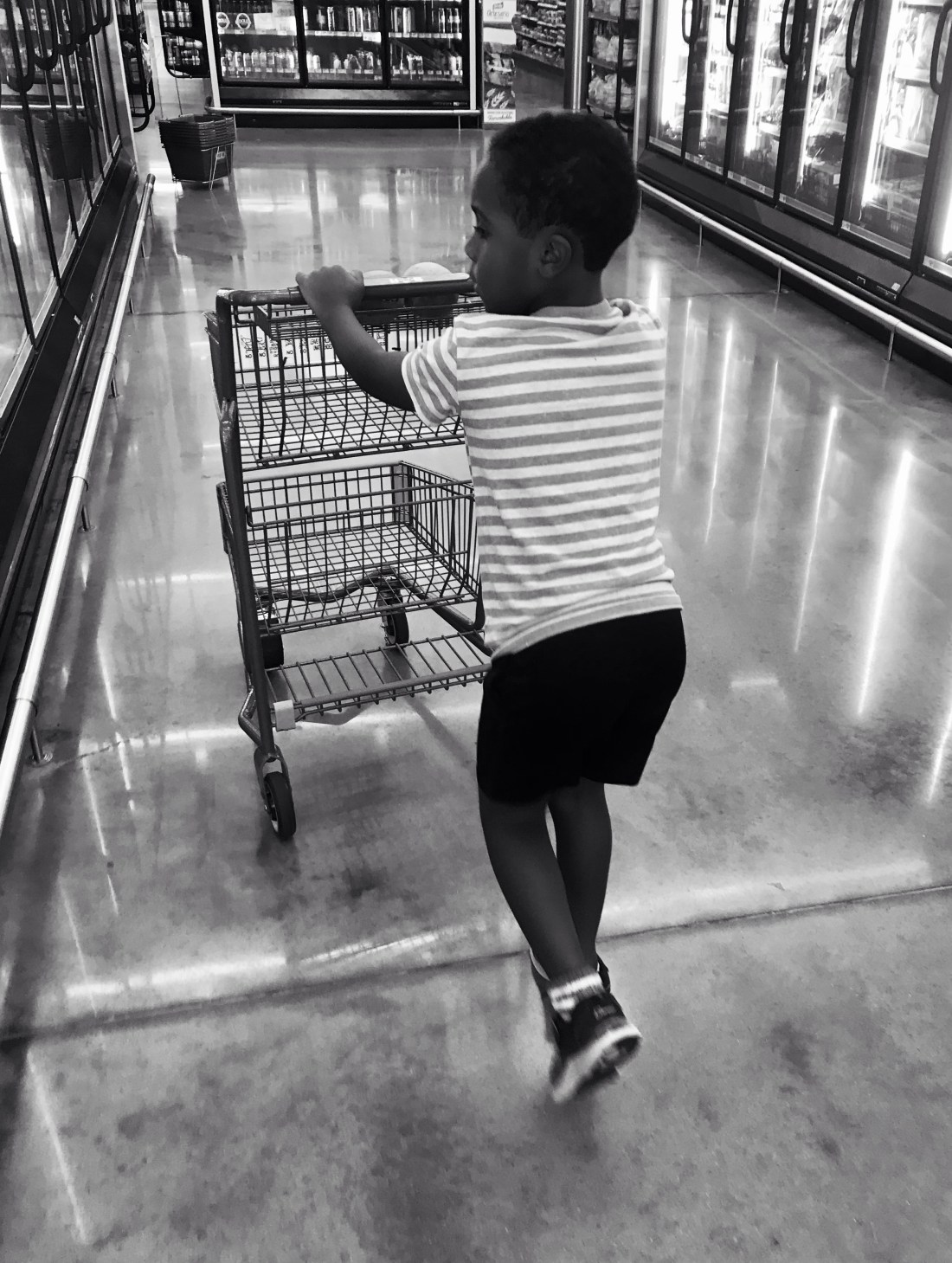
After parking, I decide to encourage good habits and recruit him as a helper. He enthusiastically grabs a small cart and follows me carefully around for the few things we need. Checking out, he places our items on the belt, pushes the cart outside, helps me load our purchases into the van, and even eases the cart to the designated spot in the parking lot. I’m pleased to observe he does it all eagerly and without complaint.

It’s a delight as a parent when your child selflessly takes initiative to help others. It’s an even greater pleasure when they generously step in and take on an altruistic task entirely on their own. When we arrived home, he insisted upon carrying everything inside himself, that I didn’t need to. I’m not sure what came over him, but I certainly didn’t discourage it. Once he completed the task, I made sure to give him a sizable dose of praise before he moved on with his day, ensuring that he would find satisfaction in repeating the same behavior next time the opportunity arose.

It may sound like an unremarkable moment, but as a parent, it’s small moments such as these that give you hope not only for your child’s character but also for the world they will inhabit. Yes, the world is and can be a nasty place, and they are bound to encounter their share of the worst of it. But I realized the world will also encounter them and, God-willing, will be made better for it if we’ve done our job of instilling in them the values that will improve it. The choice not to bring children into this crazy world is a belief that influence runs only in one direction — against them. We all, however, make a contribution to the world, whether great or small, and, if we’re fortunate, we catch our share of glimpses of our kids’ characters pushing in the opposite direction of the most worrisome headlines.

I recently watched a documentary about a former high-profile Hollywood film producer whose career-long misbehavior was largely the impetus for the “Me Too” movement. To listen to the multitude of survivors recount his repetitively gross abuse of power and influence was to witness a transformation from someone who merely committed such deplorable acts to someone who inescapably became the awful thing itself, through and through. I have no doubt it may also have started with a small, seemingly unremarkable series of moments, perhaps in childhood or maybe a little later. Regardless, his own character pivoted at a critical point, and the world he would later create around him would become worse both for himself and for others.

Bob Marley famously said, “The people who are trying to make this world worse are not taking the day off. Why should I?” Now, I’m not a fan of reggae and I don’t subscribe to all of Marley’s convictions, but that’s good stuff. He shared these words only two days after intruders had shot him in his home and he had chosen to perform as scheduled instead of quietly and reclusively recovering from his injuries. He knew the world, even then, could be a terrible place, but he also knew he could bravely push in the other direction.

Parenting, at its best and most inspiring, is a chance to change the world. This is why we choose to bring children into it. They may or may not ultimately move mountains or multitudes, but they might simply inject a little more kindness and consideration into it thanks to many small, unremarkable moments that encourage their character. If we all took this thought to heart in such moments while raising our kids, we might actually stand a chance of changing the headlines.

Choosing Well

“He chose . . . poorly.”

You know the scene. “Indiana Jones and the Last Crusade” — arguably, the last great Indy movie that rounded out a fine, adventurous trilogy, and should have, in the opinion of the masses, marked the end of the franchise. In any event, our hero’s foil, Walter Donovan, forces at gunpoint Indy and his former love interest, the duplicitous Elsa, to choose for him in a dank cavern from innumerable chalices which of them is the Holy Grail — the storied sacred cup of Christ. Elsa randomly selects one of ornate design, foretelling in her subtle expression to the viewer and to Indy alone what the Templar knight standing by would declare above after Donovan, slaking a selfish thirst for immortality, drinks from the false cup and shrivels to dust in a matter of seconds.

His enemy vanquished in dramatic and grotesque fashion, Indy returns to the task at hand, scans the collection and reaches for an unadorned artifact of common appearance, concealed in plain sight amongst the glitter and gold. “That’s the cup of a carpenter,” he says to himself. He dips it into the basin, swallows the contents, and apprehensively looks to the knight, anticipating his patient pronouncement: “You chose . . . wisely.”

Driving our second to her first day of middle school, this scene came to mind. It might not have if the previous evening’s eager excitement had not given way to tearful anxiety that morning due to insurmountable worries she felt. The plan was to ride the bus, but it had come and gone and here we were, mom and dad tag-teaming to settle frazzled nerves and work the problem. All was well, for the most part, by the time she and I hopped in the van, and off we went.

I found myself on the way with the rare opportunity to offer first-day fatherly advice. It was an honest attempt to perpetuate calm, though my wife informed me after I shared later with her what I had to say that I probably could have skipped a few pressure-laced points. No matter; she took it well, I remarked. As to her concern about a close friend or two with an entirely different schedule, I shared that, though she’d still see them, here was a fresh opportunity to make new friends. “But choose them well,” I left her with as she hopped out, recalling the scene and observing that I hadn’t always followed this advice.

It’s a dilemma as a parent. We want them to have friends; we all need them. But age and experience have taught us about the pitfalls associated with the wrong associations, so to speak, and there comes a time when we simply can’t control or be present for every interaction or connection they make at school or elsewhere. We can either monitor them mercilessly, compelling them to pull away as we fearfully attempt to keep them safe, or let them go and hope and pray our messages have sunk deep into their brains, ready to recall and act upon when the most critical moments arrive.
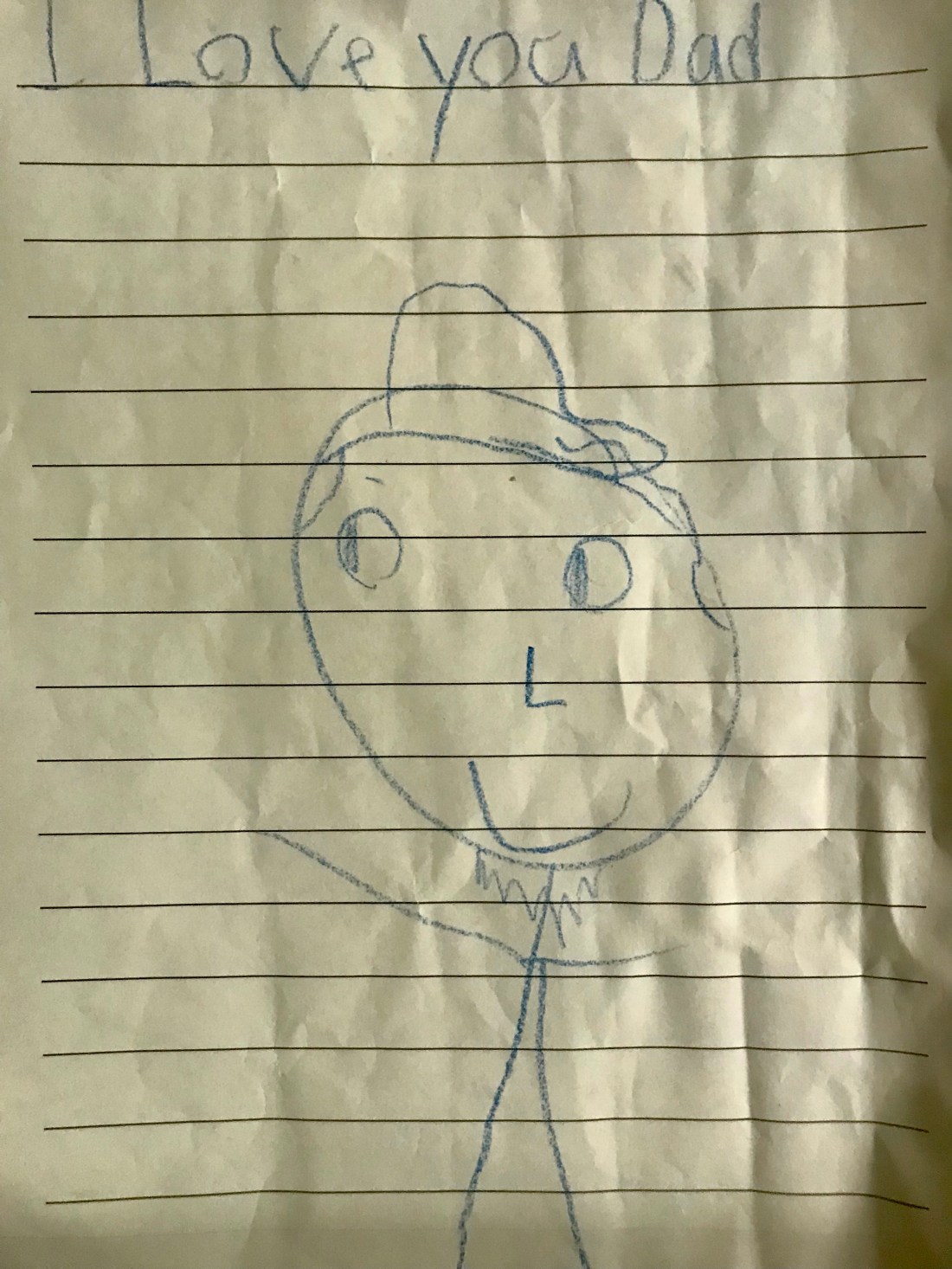
My own parents knew this, and, from my perspective, granted my siblings and me just enough space to socialize with those we picked. They trusted us, or believed we would approach them when we made mistakes. I don’t know how the added layer of social media and technology might have changed their approach, but I had friends, though I hadn’t always chosen them well.

In hindsight, I don’t know that I actively made friends in public school as much as others made friends of me. A close, observant college friend of mine once described me as neither leader nor follower. This seemed to hold true in middle school/junior high, one of the few times I’ve harbored a bit of regret for drifting into the circle that I did.

I can still remember stepping into my new friend’s house. It was a revelation into the parenting practices of others, or lack thereof, if we’re honest. On the spectrum of liberality in parenting, there is “turning a blind eye” to your kids, and then there is blatant permissiveness. With the former, they may at least make an effort to hide their misdeeds. I got a literal eyeful of the latter, however, when I visited his home. His interests as a young teen boy were on full display, from the “art” adorning the walls to the “literature” scattered about. His bedroom did not even remotely resemble mine, and unless mom routinely entered blindfolded, it was clear she was the permissive type, who either relinquished her duties as a parent or believed in little or no boundaries.

I don’t know how long our friendship transpired, but there were further visits and even sleepovers. I never shared with my own parents about the “education” I was receiving until there came a moment after a visit when guilt overwhelmed me to the point that I confessed tearfully to them about all I had willingly viewed and participated in. I don’t remember being punished, but I do believe there was consensus that the visits were at an end.

30 years since, and I still believe this relationship did more lasting harm than good. I can’t blame my parents, who did their best. I was trusted to make my own choices, and I chose to be influenced rather than an influencer. Fortunately, their lessons ultimately won the day, and they supportively forgave me and helped me move on a little wiser. Though they couldn’t be present for every moment I might be tested, their influence and modeling plugged in the gaps.

Unless your child is a complete recluse or is clinically anti-social, they’re going to make friends. That they will have friends is seldom the worry of most parents. Rather, it’s the quality of their friendships that can either set our minds at ease or our teeth on edge. In just five-years of jump-started (i.e., adoptive) parenting, we’ve dealt with both and have had to respond accordingly.

It didn’t take long, though, to discover that the trouble doesn’t always stem with friends, per se, but, as we discovered, with the overly-permissive parents of chosen friends, especially in the area of media. My wife and I have found ourselves astounded at the lack of almost every restriction our kids inform us is on this or that friend’s personal device. The content available at their fingertips amazes me, and we find we’re fighting a battle not with our kids, who confuse “mature” content with actual maturity in their eagerness to be treated like a grown-up, but with the allowances of other parents.

We each make our own decisions about our kids. What I will or will not allow may differ from the standards for yours. But having no standards whatsoever where there should be, as much as our kids may think is the measure of a “cool” parent, won’t help them in the long-run learn the virtue of discernment and will leave them guessing about how to make a critical decision on basic rights and wrongs in a world that often seems to leave those topics up to personal preference. Entertainment is not merely entertainment in a young mind that hasn’t yet learned to discern.

The friend I mentioned grew up like the rest of us, and I lost touch. I’ve gleaned what I could about his life now in the present. From my limited vantage point, he’s certainly alive and kicking and appears to be moving along in life, but he’s had his share of problems, some mental, and it’s difficult not to take a cursory glance and observe that he isn’t a strong candidate exemplifying the phrase “living your best life.” Rather, from my admittedly incomplete perspective, his is a lonely and self-centered life. It’s not for me to judge whether or not the parenting he did/did not receive contributed to his current state, but you’d have a tough time defending any benefits.

“As iron sharpens iron, so one man sharpens another.”

Hopefully we learn as we mature that it’s friends who not merely lighten our mood but who improve us, as this verse notes, who ought to be chosen and cherished. I pray our kids learn this, though they’ll make their share of missteps. Moreover, I hope they can learn to be this kind of friend.

At the end of the day, stepping off the bus after the return trip, she replied to my question as to how it all went with the terse but acceptable judgement of “good.” From a kid that is sometimes bent more like Eeyore than Tigger (our youngest), it was a win. No word on new friends yet, but the best things take time. Until then, we hope and pray they all follow the wisdom of my father-in-law, whose advice for a long and happy marriage applies no less to long and happy friendships: “Choose well.”

Paper Mirror

I have a problem with the phrase “the patience of Job.” I don’t know who coined it, but reading his self-titled account of misery (arguably the oldest book in the Bible, in spite of its placement), I can’t help thinking that whoever popularized it skipped ahead in the script and overlooked his bitter lines. When I read his story, which I have more than once, I’m left with the distinct impression that the only thing separating Job from your children or mine is that Job simply complains more eloquently about his lot in life.

I’m over-exaggerating, of course. The fact is, I don’t begrudge him his penchant for extensive bellyaching, in which I personally see little of the ascribed virtue of patience. There are few in Scripture who have more of a right to it than Job, in my humble opinion. After all, his suffering was not the result of personal sin, karma, or even chance; nobody to blame there except, maybe, yourself. No, his misfortune was the result of a bet staked between the Creator and the “Accuser.” While this book is among my favorites of the 66, it does feel a bit cold the way his life was essentially employed as a playing field to settle a score. Then again, as Job concluded, who am I to judge? “Surely I [speak] of things I [do] not understand.”

I imagine the virtue of patience is better applied to Job at the end of his ordeal, when he couldn’t possibly experience thereafter anything worse than what we read. Nowhere to go but up. And let’s be honest — it’s tales such as this that prompt us to think twice about asking God for more of this quality, which reminds me of another phrase: “Be careful what you wish for . . .”

Patience serves well those in my profession of public librarianship. Insert the word “public” before your chosen occupation and you’re likely to deal with anything and anyone, with special emphasis on the “anyone.” Moreover, the all-encompassing “public” includes you, me, and that difficult person you do your best to avoid. More often than we’d like, it’s the latter we librarians encounter across the reference desk, and without an extra measure of patience we’d probably finish most days with cuts and bruises, both given and taken.

During my time at the desk, I was given special regard among my colleagues for this quality when interacting with patrons or people in general. I even once was told by a staff person that they would settle when I showed up to handle a tense encounter; I brought calm to a situation, she said, though I seldom felt it. When once I paused to wonder why, it came as no surprise. I was bred, if you will, in relative peace and calm, thanks both to nature and nurture. I can’t recall a moment growing up when my siblings and I ever came to literal blows over anything, though we had our minor spats on occasion. I learned later as an adult, to my surprise, that such domestic tranquility is atypical. Nevertheless, my mother made it her mission to create an environment for us she rarely experienced in her own upbringing. Our consequent peace-loving natures unknowingly cultivated in us a conspicuous patience in our interactions with others, which, for the most part, has served us well in relationships. Patience, it seemed, was as natural to me as any functioning internal organ; whether I thought of it or not, it was somewhere in there and did its job regardless.

Enter children.

If you want to get to know yourself better, have kids. Contrary to popular belief, they don’t enter the world naked. They arrive equipped with a figurative outward-facing mirror designed to reveal to you and your spouse both your best and your worst characteristics.

Calib, our youngest, is still unaware that one of his purposes in life is to refine my patience, to demonstrate to me how little of it I actually possess. It turns out, I’m not quite the paragon of longsuffering that I once thought. He and his oldest sister, Deztinee, entered our lives just over five years ago and their sister, Dezira, a few months after that. As for him, it was clear from the start that this 2-year-old was not informed by the adoption agency that he had to accommodate my idea or manner of expressing patience, much to my consternation. It didn’t take long to discover that I myself had an inner toddler that felt the impulse to rebel when things weren’t going his way.

Our first family pics, only months after placement, were in Alexandria, Louisiana, home to my in-laws. One photo in particular of the two of us currently hangs on his bedroom wall. We were not able to cut his hair yet, per the rules, but we also hadn’t a clue what to do with it in the meantime. He consequently resembled a Don King mini-me, an expression on his face betraying an interest in stirring up mischief. I sit behind him, and it is, admittedly, a cute picture, except that my smile is forced, which only my wife would be able to identify. The photo is an honest picture of how I often felt and how he was bent.

Calib’s thorn-in-the-flesh, we would later learn, is an irritating little beast named ADHD. To be fair, almost every little boy has moments of inattention or overexcitement. I once was among those who discredited the disorder as an excuse for poor parenting or the result of too much screen time. While I wouldn’t dismiss that possibility out of hand, my wife and I could see we were doing the best we could, yet he struggled to focus and get it together, especially in school.

There are an overabundance of distractions in our day-to-day life, notably digital. With ADHD, however, the tendency toward distraction can be triggered by anything; digital devices, interestingly, often provide an opportunity to focus. External distractions, however, abound. A two-minute task such as getting dressed in the morning, unsupervised, may take twenty minutes, or may never happen at all without oversight, since the die cast superhero figures need to be setup in a row on the bed frame, and, hey, is that a dog outside? I love dogs. Where is my dog book? I don’t see it, but this other one has stickers in the back and etc., etc., until mom or dad return to find that, while many steps have been taken over the last half-hour, not one of them was in the right direction. Make this a daily occurrence for multiple tasks and you’ll have some idea of the struggle.

That’s the AD side of the coin. The HD, in Calib, manifests itself, at its peak, as a surplus of supercharged joie de vivre, as in, life is a musical comedy, he’s the leading man, and dad is proving a tough crowd; no matter, I’ll just sing louder and see if I can break him. He can put on an entertaining show, but it makes for a long day. I once attempted, at bedtime, to almost hypnotize him into standing still and quiet. While he made a valiant attempt, the resemblance to an animated rocket shaking under the pressure either to launch or explode was jarring.

Put the two of these together, AD and HD, and it’s difficult for the afflicted to get anything done. It became clear after some time that he, and we, needed help. If he wasn’t focusing in school, he was using the environment as his stand-up stage, his classmates a captive club audience. Such a bright shade of positive energy may not sound like the worst one could imagine, but he simply wasn’t capable of reining it in. After a diagnosis by both a psychologist and physician, it was determined he was a candidate for medication. Once the dosage was pinpointed, the change was almost immediate with no negative side effects. Straight As and no more notes or calls from the teacher.

I don’t necessarily consider it a miracle and wouldn’t stand in front of a camera to laud the benefits of medication, but it proved an enormous help for the time he has to spend in a classroom. You can’t and shouldn’t medicate 24/7, however, at least not in our case. For the moments in between, which is typically with us at home, my patience is still significantly tested. As with his condition, it remains at times hard for me to rein in my impatience.

For those who attempt it, getting kids ready for church on Sunday mornings is its own special challenge. Success or failure hinges on getting everyone out the door and into the van at a reasonable time with lofty aspirations of arriving no more than fashionably late. It’s tough, but it can be done. First things first, though. At breakfast recently, I responded to his antics with severity rather than understanding and lost my cool with him more than once, much to my wife’s, and his, displeasure. As justified as I felt at the moment, and though there was resolution, albeit imperfect, self-talk, as it’s known, judged me a terrible father. It often does.

By the time service was finished, he stepped into the van and passed forward to me from the back his most recent masterpiece. On it were the words “I love you Dad” and his best impression of me, complete with baseball cap and facial hair, not to mention a smile on my face. Jenny, my wife, also received a similar image from his time at camp a week before. Though it was intended as an opportunity to write a letter to mom and dad, he took the artistic route and penned a simple picture of her surrounded by hearts. In any event, his portrait of me didn’t reflect in the slightest what I saw of myself that morning, but it was a revelation to me that the mirror our kids unwittingly hold up to us seldom reveals how they actually see us.

Beneath the ADHD that frustrates and tries my patience almost daily is simply a kid who loves his mom, wants to please his dad, and who would rather spend his camp money on gifts for each of us than on himself. To that, I say thank God for the patience and forgiveness of our children. Without it, we would not see ourselves as they do and might not have the courage as parents to get back up and try again.

Too Much of a Good Thing

I enjoy the sound of cicadas chirping — a swelling and fading chorus concealed in the surrounding trees. It’s nature’s summertime white noise where I come from. If you’re outdoors and your mind is absent of distractions, it can effortlessly lull you into meditation. I enjoy this most when sitting outside on a shaded patio in a comfortable chair, alone or with the sole company of my wife or someone with the presence of mind not to interrupt their chatter. It’s practical perfection when the weather is just right and you find yourself miles away from the nearest neighbor or the distant, manmade white noise of traffic — a rare brand of solitude that’s afforded only where there’s more evidence of nature than of civilization.

I’m thankful at such times for these fat, ugly insects, whose only other God-given purposes, to be blunt, are to serve as food for fowl or divine amusement as they clumsily and randomly body or head-shot you on their way to who-knows-where, prompting you to drop whatever’s in your hands and, with all the reflexes of a startled chimp, furiously karate chop the air like a Jackie Chan understudy. These seeming unsegmented fliers talk to one another in the packed and populated city as well, their conversations encouraging Zen-like reflection, but it isn’t quite the same for the setting. Inasmuch as the sprawling suburbs try to offer escape, separating themselves from the bustle of the big city, they still can’t hold a candle to the peace and calm of a cabin in the woods.

While the kids all spent their time at sleepaway camps for the week, my wife and I chose to spend a day and a night at a sleepaway camp of our own choosing, sans counselors or camp staff. Nestled off a precariously rising and falling dirt road more ambitious to exist as a canyon riverbed than an even stretch of pavement, we arrived at what amounted to a cozy studio apartment next to a residence, the only other one in sight from the front door. We ate takeout, read, and watched the Olympics. We slept very well, woke the next morning at our leisure, exercised, and ate a modest breakfast. After a little work online, I decided to try out the porch. I wasn’t disappointed. I don’t know how long I remained there pleasantly still and silent, but it was long enough to feel inspired by the hidden but chatty bug muses and pound out the first couple of sentences read above.

Long before I was ready, my wife poked her head out of the front door and noted that it was time to go. In truth, I’m doubtful I would have been ready to pack it up even after a weeklong stay. The solitude and take-it-easy pace offered at the end of a long dirt road are always hard for me to leave behind. There’s nothing like it to soothe the introvert or settle the harried soul of a big city dweller.

And leave we did, but not before a couple of drive-bys to scout out properties on the market. One of my wife’s many dreams is to own a vacation home, though it’s not presently in the budget, which she manages with the precision and attentiveness of an air traffic controller — she knows exactly where everything is and where it’s supposed to be. Not to sound redundant, but her organizational skills are off the chart in an organization that prides itself on organization, which should tell you something. She loves creating spreadsheets the way some are thrilled by a trip to Disney World.

In any event, we hopped in the van and headed out. We had time to spare for just a couple of property stops before the two-hour trek to retrieve two of our three kids and return to responsibility. While I don’t necessarily share the dream with my wife, I fully appreciate the wish to have one’s own personal retreat from the world. I feel it more as we drive and the road on the return widens, the frenzy and rush of traffic growing closer as we approach the heart of the city. The building speed and press of cars starts to feel like the pressure and stress of a race I have to win. I wish I were instead gingerly testing the shocks on the dirt road we left behind and resting on the modest, quiet porch rather than in the driver’s seat.

We’ve all binged on “House Hunters.” I tease my wife that each episode is essentially identical to the last, and it doesn’t take an uninitiated viewer more than an hour to see that I’m right. There are several rebranded versions you may also have enjoyed — “Beachfront Bargain Hunt,” “Caribbean Life,” etc. Though the same runtime and formula, these variants feature couples who possess a disposable income most of us would envy and who, more importantly, endeavor to utilize their resources to make tropical vacation realty their permanent reality. As much as it makes for good TV, it’s difficult not to watch and wonder that what they’re veritably attempting to capture is a feeling, not a place.

I’m often curious about what a visit a year or two later to those who’ve purchased a piece of paradise would yield; I have a hunch they aren’t as satisfied as they initially were with their beachside acquisition. I could certainly be wrong, but I’m guessing that the novelty has worn off, that the dream now realized has lost much of it’s luster. Vacation can be be virtually anywhere. While we all prefer varied locations, the feeling of escape from responsibility — from jobs, bills, relationships — is near the top of the list of reasons that we depart in the first place.

But vacation made permanent is less a retreat than a surrender. I recognize this anytime I step away from the solace proffered at the end of a dirt road. I don’t want to leave, but the fact that it’s temporary makes it so much sweeter. I would lose my taste and interest in cake if I made a meal of it every moment of every day. It’s the business of toiling six days that makes the seventh so sacred and desired.

“Peter said to Jesus, ‘Lord, it is good for us to be here. If you wish I will put up three shelters — one for you, one for Moses, and one for Elijah.’” Hard not to hear in Peter’s request a wish to remain there on the mountain, far above the troubles they faced routinely closer to sea level. Matthew records no rebuke from Jesus, and it seems they descended shortly thereafter and got back to the business of living. I have to wonder what Peter was thinking as they made their way down, but it is clear that he moved on with his life and mission, no doubt never relinquishing the memory.

I wouldn’t object at all if one day we had our getaway. I don’t expect I would receive any more rebuke that Peter did; nothing reprehensible for simply having it. However, it is possible to have too much of a good thing, especially if, as an escape, it transforms into its own inescapable distraction and, ultimately, a surrender from the life I’m meant to lead. The next time I find myself reluctantly driving away, I can instead be grateful that it was afforded in the first place. The rarer the pleasure, the better the flavor.