Sisyphus

If you’re not familiar with the name “Sisyphus,” you’re certainly familiar with his plight. In ancient Greek mythology, this ill-fated individual was punished by Hades for twice cheating death with the task of endlessly rolling a boulder up a hill only, through enchantment, for it to tumble back down to the bottom mere inches from reaching the apex. It’s an apt metaphor for any task that seems or is, in fact, ultimately futile or pointless, as in a “Sisyphean” effort.

Matthaus Loder, Sisyphus engraving, 1st half of the 19th century, engraved by Friedrich John

Now, I’m what’s called a “stay-at-home dad.” I am not a fan of this term, however. If you use it to describe me during the first conversation you and I may be having after you ask me what I do, and I characteristically respond that “I take care of the house/kids,” I’m likely to correct you with, “Well, there isn’t necessarily a lot of ‘staying at home.’” You would courteously laugh or smile, and I, and perhaps even you, subconsciously, wouldn’t be sure if I had lost a little of your respect. Yes, it’s a brave new world of redefined gender roles, but there still lingers with some of us out there the idea that men are the breadwinners and women are the caregivers, even if we don’t announce it openly.

That nasty little year that was 2020 altered the landscape of work location, among many things. Those of us who only needed a computer, a chair, and a WiFi connection to do our jobs, to be fair, did not suddenly become “stay-at-home” engineers, “stay-at-home” teachers, or “stay-at-home” stockbrokers, though they probably should have. Enveloped within the term is the mental image, if we’re brutally honest, of said individual literally sitting around, idling away at home. And I know of few “stay-at-home” parents who do much sitting around. So, I say, let’s get rid of the term and its implications entirely for something more fitting. I’m partial to something along the lines of “pro-bono caregiver.”

I digress. We were discussing futility, as I recall.

Of the many tasks of a parent, instilling good habits in our children requires the utmost patience and persistence. The earlier you start, the better. Usually. Maybe. I think I read that somewhere. Anyway, this can be a special challenge with children who have been adopted in later years, but it isn’t necessarily impossible.

“Clean your room.” This one has been as constant as it gets, inspiring in recent years eye-rolls or grunts of exasperation at our nagging. My own parents did a pretty good job with my siblings and me. We still make our beds and prefer to have personal things each in their orderly and designated locations, and I’ve tried my best to do the same with ours, but often, at the end of the day, observing a mess that has experienced a miraculous rebirth only an hour since its extinction, I think of the ancient king of Ephyra, pause for a moment of silence, and share his pain.

I feel you Sisyphus. I feel you.

Our son could often be described as an ADHD-fueled comic whirlwind surfing on a sprinkled-donut across a rainbow, and it wouldn’t surprise us if he one day gives the late, great Robin Williams a run for his money. He has a very sweet, loving, and generous disposition when he isn’t bouncing like a pinball off the walls, ceiling, minivan interior, whatever, but, God help him, for all his endearing qualities, he can’t keep a clean room to save his life. He is also a “collector” (my wife prefers the term “hoarder”), and decluttering can cause an emotional reaction, so to speak. We have in the past “freed” select items surreptitiously and in small, inconspicuous doses, as if cat burglars who toss rather than keep their stolen trophies. Such secret missions have been a success, for the most part, but the mess still returns minutes later.

I’m convinced I could handily persuade FEMA to provide us emergency assistance. It’s often a disaster, by my observation, and his middle sister isn’t much better, though she is periodically inspired to purge with much stopping and starting over, say, several months. With her, random items of unknown function or purpose may wash up in clusters around the rest of the house as if carried by the tides. In recent days, the reality of the endlessly returning chaos of things hit me like Sisyphus, and I’ve consequently almost begun to overlook it, as parents learn to ignore the noise of children, though not without a sense of complete despair of ever helping them care about or notice the mess they create.

My wife recently returned from a trip with our oldest while I was away on a trip with our middle after dropping off our youngest for trip with his grandfather (Yes, our summers can be a bit much; then again, so is the school year). While all were away, she was inspired to tackle his room before overnight guests arrived and found, after two-hours, she had barely scratched the surface. Undaunted, she planned on regrouping and plunging in once again after an 8-hour work day to address how to clean it up. “Have you tried a good, strong, weapons-grade blowtorch?” I thought to myself. She had her own strategy, and, she decidedly pointed out, after I shared my despondency over any change in our children or interest in it, that we just have to keep after them, plain and simple.

If there is an optimist and a pessimist in every relationship, I think you can intuit where each of us land. It isn’t difficult to work it out. I can get stuck in a muddy rut of negative thoughts if I’m not careful with my head. And after our phone call, I found my thoughts shifting from my despairing attitude regarding our children’s poor organizational habits to one of the many purposes of marriage.

We recently attended Pine Cove family camp, as we have for six years now. It’s a priceless experience for innumerable reasons, all of which I can’t share here, but one of the opportunities we had this year was to publicly share what you appreciate about your spouse. I selected hers easily with little consideration and happily offered it to the audience, interrupting another couple in the process.

My wife seeks out challenges, as I stated. She doesn’t shy away from them or rest long on her laurels. On to the next. I, on the other hand, while characteristically an achiever, often need a nudge out the door, but then I’m off and running. I can lose steam, however, as many of us can, and especially lately, I’ve learned, when it comes to the never-ending job of full-time parenting kids who don’t yet see the importance of good, lifelong habits. You can’t give up, and she doesn’t. I often want to, though, and I certainly would if she wasn’t my partner.

Marriage has many functions and purposes, and different couples likely emphasize certain of them more than others. But chief among them isn’t, I would argue, fun, or sex, or happiness, or whatever. The leisure-saturated world around us suggests that those options are in the running. No, I think marriage, companionship aside, does its best when it encourages us to be better persons. Iron sharpens iron, as Scripture reads. We wed for many reasons, but I believe marriage makes us better images of God overall. He fashioned a “helper” for Adam, and so they learned to help each other. Help makes us grateful, improves us and our circumstances, inspires us to love. It changes us, in short, to be better, to do better.

I don’t know where you think you’d be without your partner, but I know I would remain in a funk forever were I doing this job alone. God forgive me when I’m determined to stay there in spite of her efforts. I’m not one to alter a meaningful myth, but if Sisyphus had a partner to help him push, he stood a much better chance to overcome. And if not, they at least would have each other to appreciate the shared struggle.

Immanuel

“There’s an app for that.”

We all remember this common slogan as the smartphone gradually infiltrated every aspect of our lives less than two decades ago, as if to suggest it, or the apps for which it served as a vehicle, could provide answers to almost any of our problems.

Equally prevalent, or so it would seem from the abundance of pharmaceutical commercials targeting specific demographics in between your favorite shows, is the suggestion that “there’s a pill for that.”

I personally don’t hold fast to such an idea, but I am more of a believer than I once was when it comes to the condition of ADHD, which afflicts our youngest. After we tackled the problem with behavioral techniques and strategies, it was evident after a grade level or two that he simply needed help we couldn’t provide in order to get him successfully through the school day. So, we took the medicinal plunge, and the results were clear and immediate. We were pleased to witness a calm and poised version of himself as he found the ability to maintain focus as academic success was soon to follow.

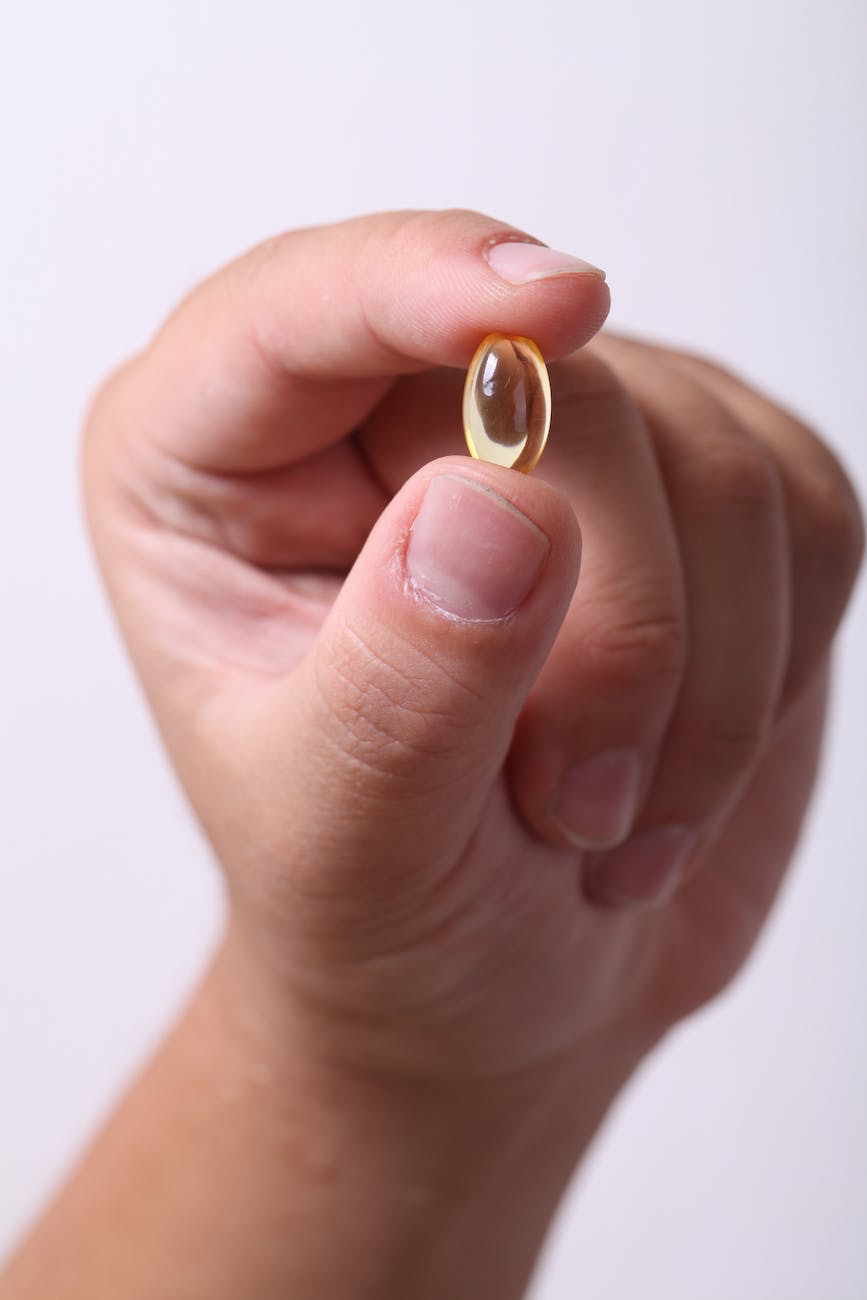
Most early pediatric drugs assume liquid form and are typically tasty and easy to swallow. Pills in any shape or form, however, are a challenge for children, as any parent could tell you as their own come of age. It’s not uncommon for capsules to travel swiftly back up little throats for no other reason than the fear or sensation of choking. Swallowing a tablet is a learned skill. Some grow into adulthood still uncomfortable with the effort.

Our son recently graduated to the pill form of his medication, and pinpointing the correct dosage during the transition was its own special problem, requiring a brief time away from school till the doctor got it right. He simply couldn’t help functioning as a classroom distraction without it, much to his teachers’ consternation, though we, and they, would gladly refer to him at least as a “happy” mess. Once the dosage puzzle was solved, he returned, and all seemed right once again with the world.

Until it wasn’t, that is. Not too terribly long after, we began to notice inconsistencies with the medication, which he routinely took before school. Periodically, his teachers informed us of the same, tired behavioral issues in class, none of which were major but nonetheless required addressing. We called the doctor and waited for a follow-up to discuss alternatives. In the meantime, I made sure to observe our son taking his pill each morning just to be sure. And sure enough, I watched him ingest it and move on with the morning.

Kids are crafty, however. Our son, I discovered, craftier still. Transferring his laundry from the washer to the dryer one afternoon, I observed what appeared to be a few empty capsule shells that bore a striking resemblance to the size and shape of his pills. I resolved to watch him like a hawk thereafter and check above and beneath his tongue, baffled at how he could possibly fool me while I observed him swallowing it each morning. I didn’t have to wait long for an answer.

Another morning, another pill. Seated at the table after finishing his breakfast sandwich, he places it in his mouth and swallows it with the juice I provided. I ask if he got it down, and he nods. For only a moment I turn in the opposite direction but then quickly pivot my attention back, catching him in the act of slipping his fingers up to his lower lip in a surreptitious attempt to remove the pill and discard it in a secret corner elsewhere in the house. The little sneak had been hiding them randomly in his cheek rather than swallowing, which explained the medication’s bizarre inconsistency. Mystery solved.

“Fool me twice . . .,” as the saying goes. I wouldn’t be shamed again. Having had no success with threats of consequences or demands up to that point, I impatiently relinquished command of the ensuing drama as mom took a turn and sat down directly across from him at the breakfast table to ensure gently that he got the job done. “But it’s hard!” was the incessant, tortured refrain as he objected with each failed swallow, risking us all, including his older sister, to be tardy to each of our morning destinations.

Mom’s time managing the situation came to an end as her job required her to get herself on the road and to the office. As she exited, our son motioned me to the now empty chair opposite his. We weren’t finished and he simply wanted me to stay with him as he suffered through it.

I resolved to try a different, more patient approach and reasoned with him. It wasn’t as if the pill was larger than anything else he’d downed before; quite the contrary. By his own admission, he was afraid of choking, and despite gulp after endless gulp, the pill remained because he was still telling the pill with his tongue to remain exactly where it was. “Don’t be afraid. You’re not going to choke.” After 30 long minutes, my reassurances finally made headway, and down it went, his expression at long last relaxing. I pried both under tongue and around cheeks “like a dentist,” he later described to mom, ensuring there was nowhere else to hide, and off he went to school. Eight hours later I would pick him up and hear him proudly share that his teachers praised him as the best behaved student in class that day. I inquired to him as to why he thought that might be, and his knowing smirk gave him away as he remembered the difficult but necessary ordeal of the morning. Sometimes, you just have to swallow that pill.
___________________

Hematidrosis, it’s called, a very rare medical condition in which one sweats drops of blood. It seems only fitting, then, that the gospel of Luke, ostensibly the only physician of the bunch, would be the one both to observe and document this phenomenon in his account of Christ’s agonized prayer in the Garden of Gethsemane. “Father, if you are willing, take this cup from me,” he says, as we are allowed a unique glimpse into his humanity, asking, as many of us often do, that God simply remove a difficulty from our lives rather than, more nobly, provide us with the strength and fortitude to endure it. Even Jesus, it appears, had a moment when he just wanted God to remove the problem. Forget how I might grow spiritually from this experience; just be the doting father that you are and take this pain away, dad.

I think had my son exhibited symptoms of hematidrosis that morning at the breakfast table, I would most certainly have ceased altogether from sheer alarm that the intense stress was causing him an actual physiological loss of blood. Christ had no such luck, however. His “pill” was his to swallow and his alone. And his Father stood by to hear his request while retaining the requirement.

I find it curious that Christ chose the image of a cup to describe what awaited him. His was a challenge to ingest, to consume something inside of himself, not merely outside of him, as in a temporal passing from one moment to the next, quickly forgotten as the next moment arrives. Though we would argue theologically that God never changes, his trial would alter things both without and within. It had to if we were to receive redemption ourselves.

God, his Father, was with him, however, even as he himself was prophesied as Immanuel — God with us — while he lived and acted in the here and now.

Presently, I have found myself struggling with the reality of “God with us,” especially when it’s the only answer you receive to your trouble, great or small as it may be. It can feel like a cheap non-answer until you understand and grasp that Christ himself in the garden didn’t get a better deal either.

I and my wife have dealt with a unique parenting challenge for much longer than we would prefer, and I’ve lost count of the number of times my faith has faltered just for the fact that the problem remains and an easy solution fails to present itself. I just want to feel better. I want God to swoop in and fix it, just as instantaneously as baptismal waters fashion a “new creation” after one rises from the surface. But the change has yet to come, and we remain years now into the cup still before us with no promise of a favorable end, or an end at all.

When my son pointed me to the empty chair in front of him, however, God used the “inconvenient” situation to teach me a thing or two. Though he continued to complain and struggle, his gesture communicated, “If I really must do this, then at least just be here with me while I endure it.” As I sat down, I shifted my own approach and told him not to be afraid, knowing, as his father, he had nothing really to be afraid of. Once he chose to believe me, it wasn’t long thereafter that the pill slid comfortably down his throat and began the work of change.

I have to imagine it’s little different with our often unwanted, divinely-ordained circumstances. I am admittedly afraid at times of what is or is not to come, and my imagination casts no shortage of worst-case scenarios. But as I sat there reassuring him of what he knew he needed to do, my mind casted no shortage of scriptural reminders of “fear not” and “I am with you.” The reminders themselves, no doubt, were evidence of his presence even then.

One of my favorite songs of my youth bears more meaning to me 30 years later. A gentle tune titled “Higher Ways,” by Steven Curtis Chapman, the lyrics tell of the singer’s wish to understand God’s higher purpose in circumstances both great and small and the hope of one day, on the other side, learning of the elusive bigger picture. It finishes:

But until I’m with you
I’ll be here
with a heart that is true
and a soul that’s resting on
your higher ways.

Simple solutions and quick answers can be hard to come by in the kingdom of God. We all want it, but we seldom get it. Maturity and trust within a relationship are the goal; not merely my comfort and ease. There is no app or pill for it. But God help me to remember that there is a prayer for it.

Paper Mirror

I have a problem with the phrase “the patience of Job.” I don’t know who coined it, but reading his self-titled account of misery (arguably the oldest book in the Bible, in spite of its placement), I can’t help thinking that whoever popularized it skipped ahead in the script and overlooked his bitter lines. When I read his story, which I have more than once, I’m left with the distinct impression that the only thing separating Job from your children or mine is that Job simply complains more eloquently about his lot in life.

I’m over-exaggerating, of course. The fact is, I don’t begrudge him his penchant for extensive bellyaching, in which I personally see little of the ascribed virtue of patience. There are few in Scripture who have more of a right to it than Job, in my humble opinion. After all, his suffering was not the result of personal sin, karma, or even chance; nobody to blame there except, maybe, yourself. No, his misfortune was the result of a bet staked between the Creator and the “Accuser.” While this book is among my favorites of the 66, it does feel a bit cold the way his life was essentially employed as a playing field to settle a score. Then again, as Job concluded, who am I to judge? “Surely I [speak] of things I [do] not understand.”

I imagine the virtue of patience is better applied to Job at the end of his ordeal, when he couldn’t possibly experience thereafter anything worse than what we read. Nowhere to go but up. And let’s be honest — it’s tales such as this that prompt us to think twice about asking God for more of this quality, which reminds me of another phrase: “Be careful what you wish for . . .”

Patience serves well those in my profession of public librarianship. Insert the word “public” before your chosen occupation and you’re likely to deal with anything and anyone, with special emphasis on the “anyone.” Moreover, the all-encompassing “public” includes you, me, and that difficult person you do your best to avoid. More often than we’d like, it’s the latter we librarians encounter across the reference desk, and without an extra measure of patience we’d probably finish most days with cuts and bruises, both given and taken.

During my time at the desk, I was given special regard among my colleagues for this quality when interacting with patrons or people in general. I even once was told by a staff person that they would settle when I showed up to handle a tense encounter; I brought calm to a situation, she said, though I seldom felt it. When once I paused to wonder why, it came as no surprise. I was bred, if you will, in relative peace and calm, thanks both to nature and nurture. I can’t recall a moment growing up when my siblings and I ever came to literal blows over anything, though we had our minor spats on occasion. I learned later as an adult, to my surprise, that such domestic tranquility is atypical. Nevertheless, my mother made it her mission to create an environment for us she rarely experienced in her own upbringing. Our consequent peace-loving natures unknowingly cultivated in us a conspicuous patience in our interactions with others, which, for the most part, has served us well in relationships. Patience, it seemed, was as natural to me as any functioning internal organ; whether I thought of it or not, it was somewhere in there and did its job regardless.

Enter children.

If you want to get to know yourself better, have kids. Contrary to popular belief, they don’t enter the world naked. They arrive equipped with a figurative outward-facing mirror designed to reveal to you and your spouse both your best and your worst characteristics.

Calib, our youngest, is still unaware that one of his purposes in life is to refine my patience, to demonstrate to me how little of it I actually possess. It turns out, I’m not quite the paragon of longsuffering that I once thought. He and his oldest sister, Deztinee, entered our lives just over five years ago and their sister, Dezira, a few months after that. As for him, it was clear from the start that this 2-year-old was not informed by the adoption agency that he had to accommodate my idea or manner of expressing patience, much to my consternation. It didn’t take long to discover that I myself had an inner toddler that felt the impulse to rebel when things weren’t going his way.

Our first family pics, only months after placement, were in Alexandria, Louisiana, home to my in-laws. One photo in particular of the two of us currently hangs on his bedroom wall. We were not able to cut his hair yet, per the rules, but we also hadn’t a clue what to do with it in the meantime. He consequently resembled a Don King mini-me, an expression on his face betraying an interest in stirring up mischief. I sit behind him, and it is, admittedly, a cute picture, except that my smile is forced, which only my wife would be able to identify. The photo is an honest picture of how I often felt and how he was bent.

Calib’s thorn-in-the-flesh, we would later learn, is an irritating little beast named ADHD. To be fair, almost every little boy has moments of inattention or overexcitement. I once was among those who discredited the disorder as an excuse for poor parenting or the result of too much screen time. While I wouldn’t dismiss that possibility out of hand, my wife and I could see we were doing the best we could, yet he struggled to focus and get it together, especially in school.

There are an overabundance of distractions in our day-to-day life, notably digital. With ADHD, however, the tendency toward distraction can be triggered by anything; digital devices, interestingly, often provide an opportunity to focus. External distractions, however, abound. A two-minute task such as getting dressed in the morning, unsupervised, may take twenty minutes, or may never happen at all without oversight, since the die cast superhero figures need to be setup in a row on the bed frame, and, hey, is that a dog outside? I love dogs. Where is my dog book? I don’t see it, but this other one has stickers in the back and etc., etc., until mom or dad return to find that, while many steps have been taken over the last half-hour, not one of them was in the right direction. Make this a daily occurrence for multiple tasks and you’ll have some idea of the struggle.

That’s the AD side of the coin. The HD, in Calib, manifests itself, at its peak, as a surplus of supercharged joie de vivre, as in, life is a musical comedy, he’s the leading man, and dad is proving a tough crowd; no matter, I’ll just sing louder and see if I can break him. He can put on an entertaining show, but it makes for a long day. I once attempted, at bedtime, to almost hypnotize him into standing still and quiet. While he made a valiant attempt, the resemblance to an animated rocket shaking under the pressure either to launch or explode was jarring.

Put the two of these together, AD and HD, and it’s difficult for the afflicted to get anything done. It became clear after some time that he, and we, needed help. If he wasn’t focusing in school, he was using the environment as his stand-up stage, his classmates a captive club audience. Such a bright shade of positive energy may not sound like the worst one could imagine, but he simply wasn’t capable of reining it in. After a diagnosis by both a psychologist and physician, it was determined he was a candidate for medication. Once the dosage was pinpointed, the change was almost immediate with no negative side effects. Straight As and no more notes or calls from the teacher.

I don’t necessarily consider it a miracle and wouldn’t stand in front of a camera to laud the benefits of medication, but it proved an enormous help for the time he has to spend in a classroom. You can’t and shouldn’t medicate 24/7, however, at least not in our case. For the moments in between, which is typically with us at home, my patience is still significantly tested. As with his condition, it remains at times hard for me to rein in my impatience.

For those who attempt it, getting kids ready for church on Sunday mornings is its own special challenge. Success or failure hinges on getting everyone out the door and into the van at a reasonable time with lofty aspirations of arriving no more than fashionably late. It’s tough, but it can be done. First things first, though. At breakfast recently, I responded to his antics with severity rather than understanding and lost my cool with him more than once, much to my wife’s, and his, displeasure. As justified as I felt at the moment, and though there was resolution, albeit imperfect, self-talk, as it’s known, judged me a terrible father. It often does.

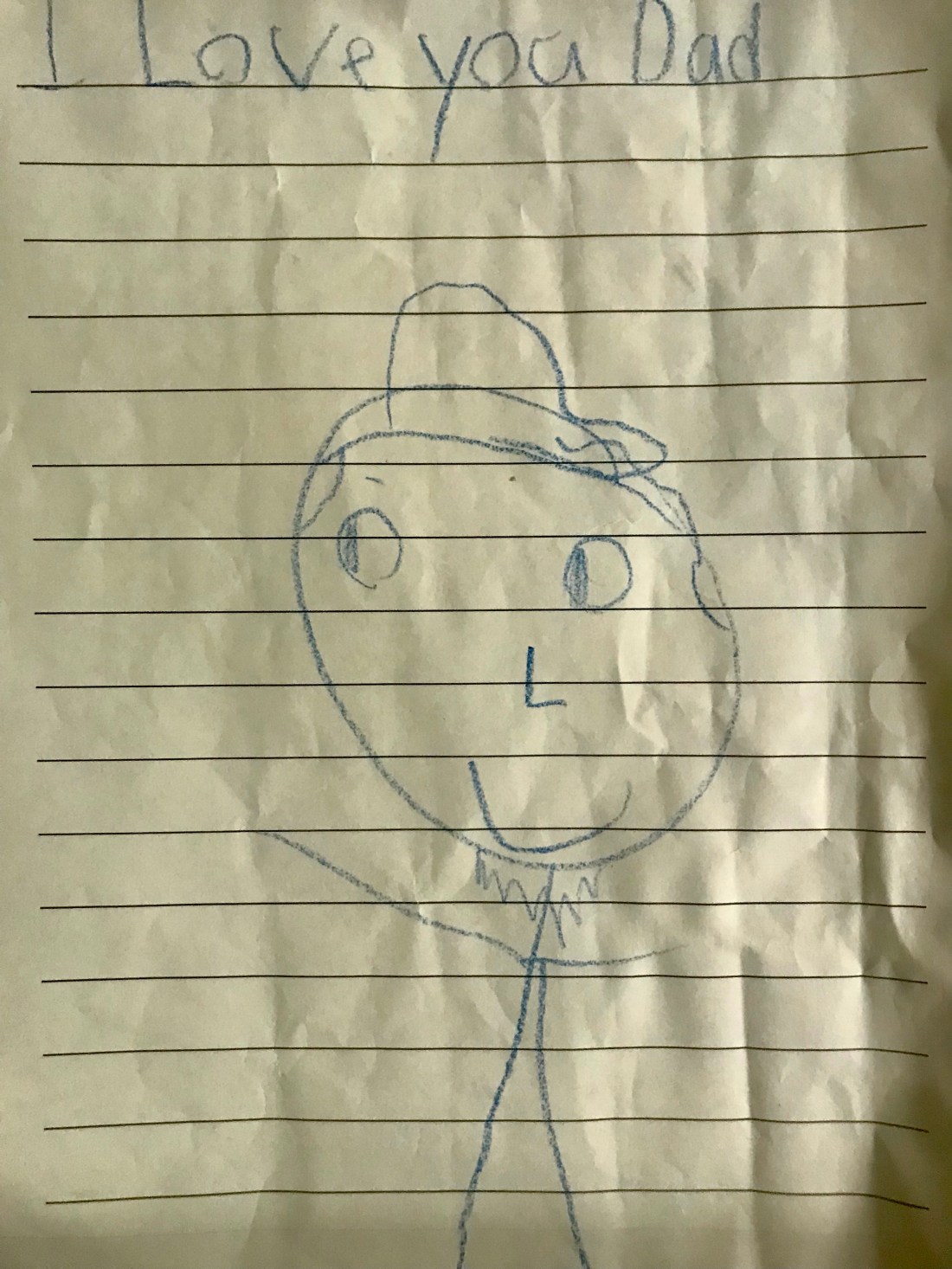
By the time service was finished, he stepped into the van and passed forward to me from the back his most recent masterpiece. On it were the words “I love you Dad” and his best impression of me, complete with baseball cap and facial hair, not to mention a smile on my face. Jenny, my wife, also received a similar image from his time at camp a week before. Though it was intended as an opportunity to write a letter to mom and dad, he took the artistic route and penned a simple picture of her surrounded by hearts. In any event, his portrait of me didn’t reflect in the slightest what I saw of myself that morning, but it was a revelation to me that the mirror our kids unwittingly hold up to us seldom reveals how they actually see us.

Beneath the ADHD that frustrates and tries my patience almost daily is simply a kid who loves his mom, wants to please his dad, and who would rather spend his camp money on gifts for each of us than on himself. To that, I say thank God for the patience and forgiveness of our children. Without it, we would not see ourselves as they do and might not have the courage as parents to get back up and try again.