Headlines

Water shortages. Hurricanes. Wildfires. Afghanistan. COVID. Political discord. Racial tension. I check the news each day and wonder when I’m finished why I continue to do so. You read it and step away persuaded the larger story after you put all the pieces together is that we’re nearing the end of human civilization as we know it. Maybe we are. Some days, I think it might not be the worst idea for God to introduce another cataclysmic event and start fresh; I’d even volunteer as the first of numberless victims if it would accelerate the cleanup. It’s very depressing, staying informed about the state of the world. Add on top of this a poor-night’s sleep, and the future looks bleak, at best.

This is the state of my mind as I wake up on a recent Sunday morning. Shortly, I’ll get up and around and begin the task of prepping the kids for church, which is easier than it used to be but still a chore. I want to go, but I also want to stay in bed. It’s supposed to be a day of rest and I don’t feel rested. But the place we’re going is about reminding ourselves about the truth of a hope we have, and I realize our gathering effectively counters the negative picture of the world that we’re served in our exhausting 24/7 news cycle. This is why we go and why it will remain ever more important to do so.

I don’t know if my occasional less-than-optimistic perspective of the human theater is simply a side-effect of middle-age or if it’s an accurate reflection of the way things actually are. In the course of a conversation with my wife recently, it occurred to me that I rarely ever encounter in my circle of influence any of the dangers or desperate circumstances detailed in the news. Day to day life for me is not too bad when juxtaposed against the headlines, which retain such power to make pessimists of us all. Nonetheless, it’s a mess out there.

“Why would I bring a child into this screwed-up world?” the thought goes. I’ve heard this a few times over the years. On one of these very news sites, I recently read surveys have found that the number of couples choosing to remain childless has been steadily increasing over the years. While parenting isn’t for everyone, among the reasons cited in the article, many, I was persuaded, were somewhat self-serving. But to this particular question posed as to why one would introduce a child to such a broken and backward world, I found my own answer on a routine morning errand.

The day before, Saturday, is donut day. Our youngest knows this and rises out of bed to prepare diligently for it the way some begin the day with religious devotions or prayer. It’s one of the few days of the week there’s a strong chance he’ll get himself dressed and ready with almost no direction or nagging from me. While his sisters prefer to snooze away the morning, opting for extra sleep, he knocks on our bedroom door to announce he is now ready for iced pastries with sprinkles.

So, I pull myself out of bed, get myself together and drive us there. Our routine is so established that the shop owner knows us by name. We sit down to our breakfast and talk of favorites and school. After that, we head for a quick run to the store for a few things. I expect a hint of whining since it delays Saturday morning cartoons, but I hear no protests from the backseat.

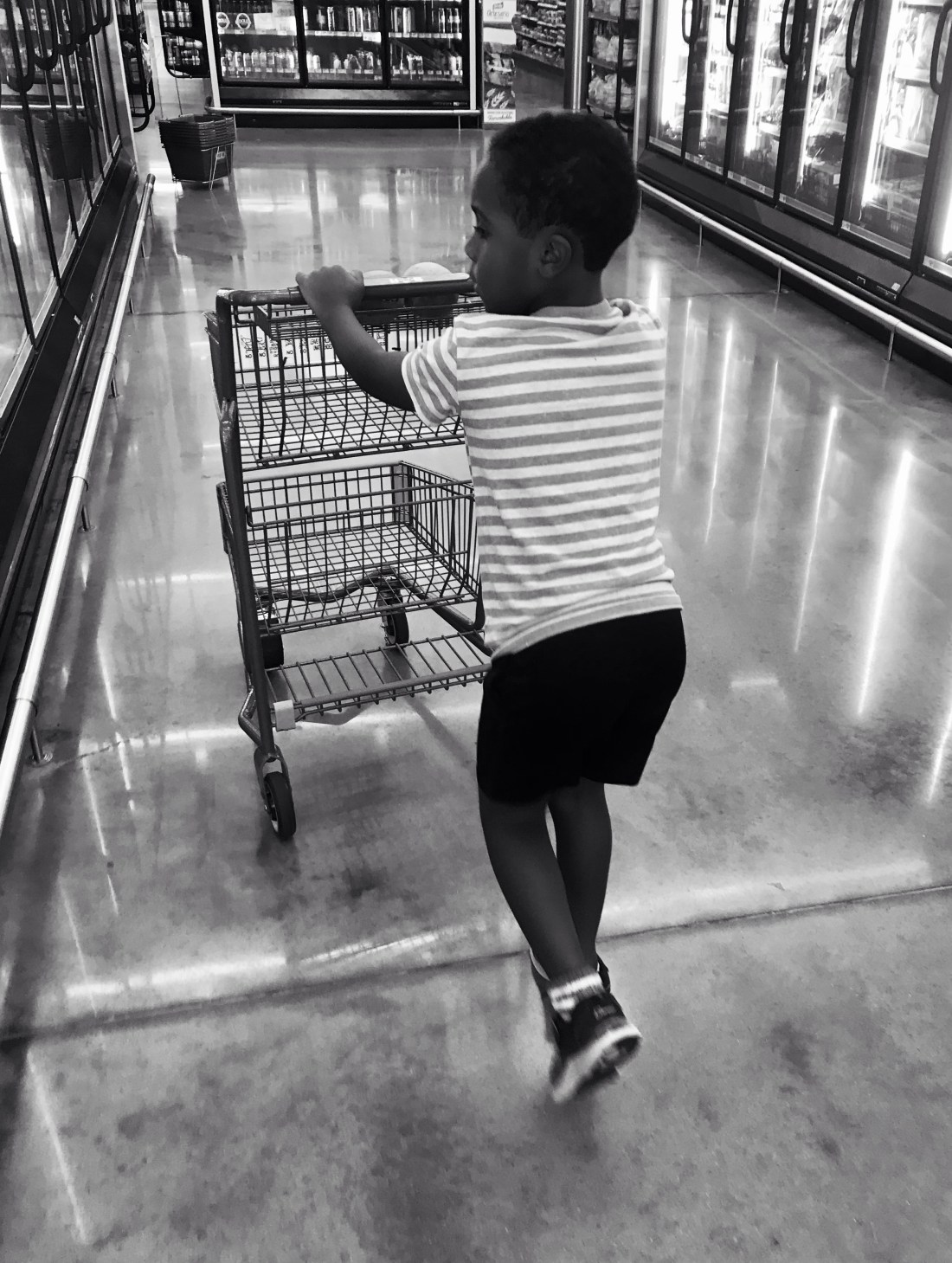
After parking, I decide to encourage good habits and recruit him as a helper. He enthusiastically grabs a small cart and follows me carefully around for the few things we need. Checking out, he places our items on the belt, pushes the cart outside, helps me load our purchases into the van, and even eases the cart to the designated spot in the parking lot. I’m pleased to observe he does it all eagerly and without complaint.

It’s a delight as a parent when your child selflessly takes initiative to help others. It’s an even greater pleasure when they generously step in and take on an altruistic task entirely on their own. When we arrived home, he insisted upon carrying everything inside himself, that I didn’t need to. I’m not sure what came over him, but I certainly didn’t discourage it. Once he completed the task, I made sure to give him a sizable dose of praise before he moved on with his day, ensuring that he would find satisfaction in repeating the same behavior next time the opportunity arose.

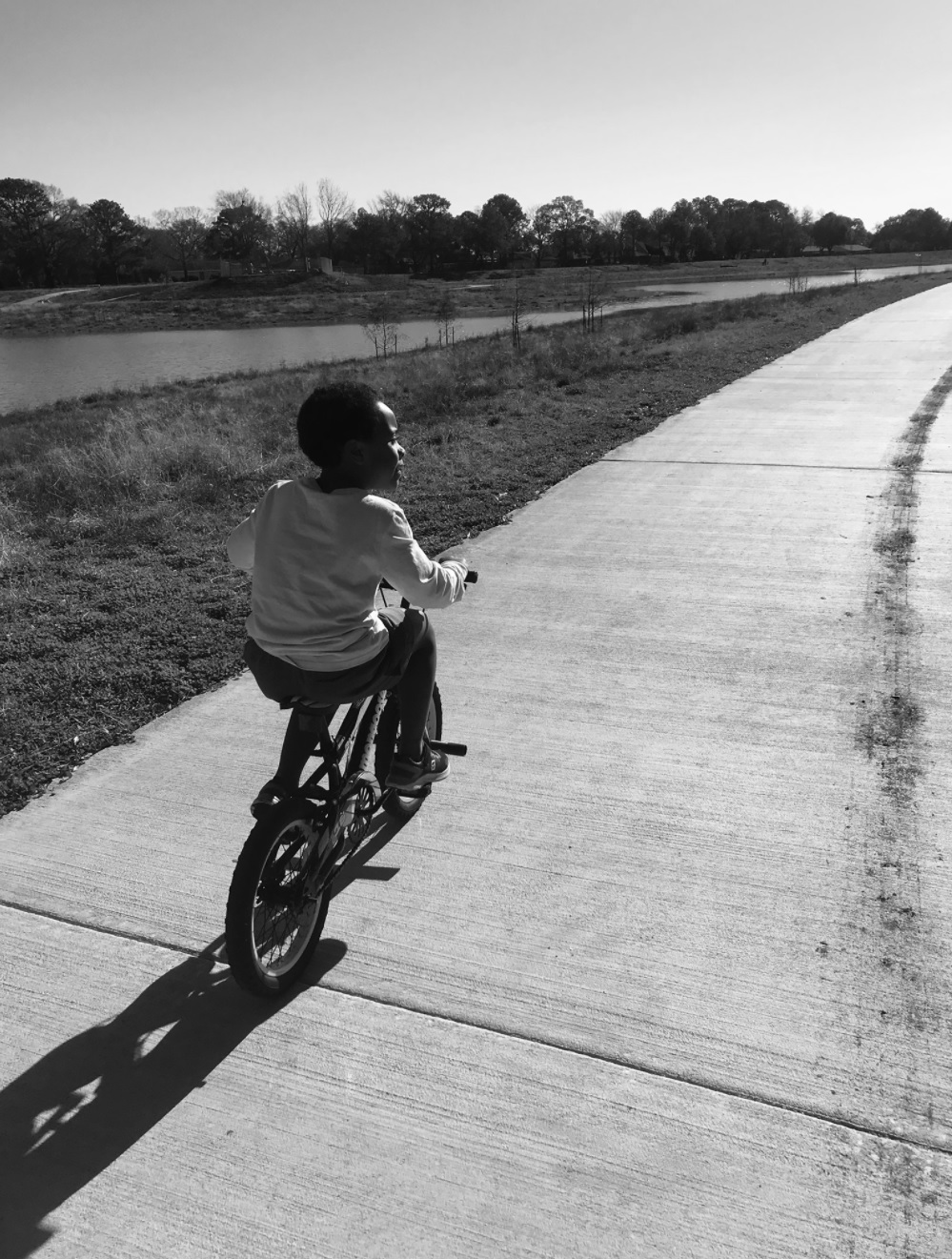
It may sound like an unremarkable moment, but as a parent, it’s small moments such as these that give you hope not only for your child’s character but also for the world they will inhabit. Yes, the world is and can be a nasty place, and they are bound to encounter their share of the worst of it. But I realized the world will also encounter them and, God-willing, will be made better for it if we’ve done our job of instilling in them the values that will improve it. The choice not to bring children into this crazy world is a belief that influence runs only in one direction — against them. We all, however, make a contribution to the world, whether great or small, and, if we’re fortunate, we catch our share of glimpses of our kids’ characters pushing in the opposite direction of the most worrisome headlines.

I recently watched a documentary about a former high-profile Hollywood film producer whose career-long misbehavior was largely the impetus for the “Me Too” movement. To listen to the multitude of survivors recount his repetitively gross abuse of power and influence was to witness a transformation from someone who merely committed such deplorable acts to someone who inescapably became the awful thing itself, through and through. I have no doubt it may also have started with a small, seemingly unremarkable series of moments, perhaps in childhood or maybe a little later. Regardless, his own character pivoted at a critical point, and the world he would later create around him would become worse both for himself and for others.

Bob Marley famously said, “The people who are trying to make this world worse are not taking the day off. Why should I?” Now, I’m not a fan of reggae and I don’t subscribe to all of Marley’s convictions, but that’s good stuff. He shared these words only two days after intruders had shot him in his home and he had chosen to perform as scheduled instead of quietly and reclusively recovering from his injuries. He knew the world, even then, could be a terrible place, but he also knew he could bravely push in the other direction.

Parenting, at its best and most inspiring, is a chance to change the world. This is why we choose to bring children into it. They may or may not ultimately move mountains or multitudes, but they might simply inject a little more kindness and consideration into it thanks to many small, unremarkable moments that encourage their character. If we all took this thought to heart in such moments while raising our kids, we might actually stand a chance of changing the headlines.

Choosing Well

“He chose . . . poorly.”

You know the scene. “Indiana Jones and the Last Crusade” — arguably, the last great Indy movie that rounded out a fine, adventurous trilogy, and should have, in the opinion of the masses, marked the end of the franchise. In any event, our hero’s foil, Walter Donovan, forces at gunpoint Indy and his former love interest, the duplicitous Elsa, to choose for him in a dank cavern from innumerable chalices which of them is the Holy Grail — the storied sacred cup of Christ. Elsa randomly selects one of ornate design, foretelling in her subtle expression to the viewer and to Indy alone what the Templar knight standing by would declare above after Donovan, slaking a selfish thirst for immortality, drinks from the false cup and shrivels to dust in a matter of seconds.

His enemy vanquished in dramatic and grotesque fashion, Indy returns to the task at hand, scans the collection and reaches for an unadorned artifact of common appearance, concealed in plain sight amongst the glitter and gold. “That’s the cup of a carpenter,” he says to himself. He dips it into the basin, swallows the contents, and apprehensively looks to the knight, anticipating his patient pronouncement: “You chose . . . wisely.”

Driving our second to her first day of middle school, this scene came to mind. It might not have if the previous evening’s eager excitement had not given way to tearful anxiety that morning due to insurmountable worries she felt. The plan was to ride the bus, but it had come and gone and here we were, mom and dad tag-teaming to settle frazzled nerves and work the problem. All was well, for the most part, by the time she and I hopped in the van, and off we went.

I found myself on the way with the rare opportunity to offer first-day fatherly advice. It was an honest attempt to perpetuate calm, though my wife informed me after I shared later with her what I had to say that I probably could have skipped a few pressure-laced points. No matter; she took it well, I remarked. As to her concern about a close friend or two with an entirely different schedule, I shared that, though she’d still see them, here was a fresh opportunity to make new friends. “But choose them well,” I left her with as she hopped out, recalling the scene and observing that I hadn’t always followed this advice.

It’s a dilemma as a parent. We want them to have friends; we all need them. But age and experience have taught us about the pitfalls associated with the wrong associations, so to speak, and there comes a time when we simply can’t control or be present for every interaction or connection they make at school or elsewhere. We can either monitor them mercilessly, compelling them to pull away as we fearfully attempt to keep them safe, or let them go and hope and pray our messages have sunk deep into their brains, ready to recall and act upon when the most critical moments arrive.
My own parents knew this, and, from my perspective, granted my siblings and me just enough space to socialize with those we picked. They trusted us, or believed we would approach them when we made mistakes. I don’t know how the added layer of social media and technology might have changed their approach, but I had friends, though I hadn’t always chosen them well.

In hindsight, I don’t know that I actively made friends in public school as much as others made friends of me. A close, observant college friend of mine once described me as neither leader nor follower. This seemed to hold true in middle school/junior high, one of the few times I’ve harbored a bit of regret for drifting into the circle that I did.

I can still remember stepping into my new friend’s house. It was a revelation into the parenting practices of others, or lack thereof, if we’re honest. On the spectrum of liberality in parenting, there is “turning a blind eye” to your kids, and then there is blatant permissiveness. With the former, they may at least make an effort to hide their misdeeds. I got a literal eyeful of the latter, however, when I visited his home. His interests as a young teen boy were on full display, from the “art” adorning the walls to the “literature” scattered about. His bedroom did not even remotely resemble mine, and unless mom routinely entered blindfolded, it was clear she was the permissive type, who either relinquished her duties as a parent or believed in little or no boundaries.

I don’t know how long our friendship transpired, but there were further visits and even sleepovers. I never shared with my own parents about the “education” I was receiving until there came a moment after a visit when guilt overwhelmed me to the point that I confessed tearfully to them about all I had willingly viewed and participated in. I don’t remember being punished, but I do believe there was consensus that the visits were at an end.

30 years since, and I still believe this relationship did more lasting harm than good. I can’t blame my parents, who did their best. I was trusted to make my own choices, and I chose to be influenced rather than an influencer. Fortunately, their lessons ultimately won the day, and they supportively forgave me and helped me move on a little wiser. Though they couldn’t be present for every moment I might be tested, their influence and modeling plugged in the gaps.

Unless your child is a complete recluse or is clinically anti-social, they’re going to make friends. That they will have friends is seldom the worry of most parents. Rather, it’s the quality of their friendships that can either set our minds at ease or our teeth on edge. In just five-years of jump-started (i.e., adoptive) parenting, we’ve dealt with both and have had to respond accordingly.

It didn’t take long, though, to discover that the trouble doesn’t always stem with friends, per se, but, as we discovered, with the overly-permissive parents of chosen friends, especially in the area of media. My wife and I have found ourselves astounded at the lack of almost every restriction our kids inform us is on this or that friend’s personal device. The content available at their fingertips amazes me, and we find we’re fighting a battle not with our kids, who confuse “mature” content with actual maturity in their eagerness to be treated like a grown-up, but with the allowances of other parents.

We each make our own decisions about our kids. What I will or will not allow may differ from the standards for yours. But having no standards whatsoever where there should be, as much as our kids may think is the measure of a “cool” parent, won’t help them in the long-run learn the virtue of discernment and will leave them guessing about how to make a critical decision on basic rights and wrongs in a world that often seems to leave those topics up to personal preference. Entertainment is not merely entertainment in a young mind that hasn’t yet learned to discern.

The friend I mentioned grew up like the rest of us, and I lost touch. I’ve gleaned what I could about his life now in the present. From my limited vantage point, he’s certainly alive and kicking and appears to be moving along in life, but he’s had his share of problems, some mental, and it’s difficult not to take a cursory glance and observe that he isn’t a strong candidate exemplifying the phrase “living your best life.” Rather, from my admittedly incomplete perspective, his is a lonely and self-centered life. It’s not for me to judge whether or not the parenting he did/did not receive contributed to his current state, but you’d have a tough time defending any benefits.

“As iron sharpens iron, so one man sharpens another.”

Hopefully we learn as we mature that it’s friends who not merely lighten our mood but who improve us, as this verse notes, who ought to be chosen and cherished. I pray our kids learn this, though they’ll make their share of missteps. Moreover, I hope they can learn to be this kind of friend.

At the end of the day, stepping off the bus after the return trip, she replied to my question as to how it all went with the terse but acceptable judgement of “good.” From a kid that is sometimes bent more like Eeyore than Tigger (our youngest), it was a win. No word on new friends yet, but the best things take time. Until then, we hope and pray they all follow the wisdom of my father-in-law, whose advice for a long and happy marriage applies no less to long and happy friendships: “Choose well.”

Paper Mirror

I have a problem with the phrase “the patience of Job.” I don’t know who coined it, but reading his self-titled account of misery (arguably the oldest book in the Bible, in spite of its placement), I can’t help thinking that whoever popularized it skipped ahead in the script and overlooked his bitter lines. When I read his story, which I have more than once, I’m left with the distinct impression that the only thing separating Job from your children or mine is that Job simply complains more eloquently about his lot in life.

I’m over-exaggerating, of course. The fact is, I don’t begrudge him his penchant for extensive bellyaching, in which I personally see little of the ascribed virtue of patience. There are few in Scripture who have more of a right to it than Job, in my humble opinion. After all, his suffering was not the result of personal sin, karma, or even chance; nobody to blame there except, maybe, yourself. No, his misfortune was the result of a bet staked between the Creator and the “Accuser.” While this book is among my favorites of the 66, it does feel a bit cold the way his life was essentially employed as a playing field to settle a score. Then again, as Job concluded, who am I to judge? “Surely I [speak] of things I [do] not understand.”

I imagine the virtue of patience is better applied to Job at the end of his ordeal, when he couldn’t possibly experience thereafter anything worse than what we read. Nowhere to go but up. And let’s be honest — it’s tales such as this that prompt us to think twice about asking God for more of this quality, which reminds me of another phrase: “Be careful what you wish for . . .”

Patience serves well those in my profession of public librarianship. Insert the word “public” before your chosen occupation and you’re likely to deal with anything and anyone, with special emphasis on the “anyone.” Moreover, the all-encompassing “public” includes you, me, and that difficult person you do your best to avoid. More often than we’d like, it’s the latter we librarians encounter across the reference desk, and without an extra measure of patience we’d probably finish most days with cuts and bruises, both given and taken.

During my time at the desk, I was given special regard among my colleagues for this quality when interacting with patrons or people in general. I even once was told by a staff person that they would settle when I showed up to handle a tense encounter; I brought calm to a situation, she said, though I seldom felt it. When once I paused to wonder why, it came as no surprise. I was bred, if you will, in relative peace and calm, thanks both to nature and nurture. I can’t recall a moment growing up when my siblings and I ever came to literal blows over anything, though we had our minor spats on occasion. I learned later as an adult, to my surprise, that such domestic tranquility is atypical. Nevertheless, my mother made it her mission to create an environment for us she rarely experienced in her own upbringing. Our consequent peace-loving natures unknowingly cultivated in us a conspicuous patience in our interactions with others, which, for the most part, has served us well in relationships. Patience, it seemed, was as natural to me as any functioning internal organ; whether I thought of it or not, it was somewhere in there and did its job regardless.

Enter children.

If you want to get to know yourself better, have kids. Contrary to popular belief, they don’t enter the world naked. They arrive equipped with a figurative outward-facing mirror designed to reveal to you and your spouse both your best and your worst characteristics.
Calib, our youngest, is still unaware that one of his purposes in life is to refine my patience, to demonstrate to me how little of it I actually possess. It turns out, I’m not quite the paragon of longsuffering that I once thought. He and his oldest sister, Deztinee, entered our lives just over five years ago and their sister, Dezira, a few months after that. As for him, it was clear from the start that this 2-year-old was not informed by the adoption agency that he had to accommodate my idea or manner of expressing patience, much to my consternation. It didn’t take long to discover that I myself had an inner toddler that felt the impulse to rebel when things weren’t going his way.

Our first family pics, only months after placement, were in Alexandria, Louisiana, home to my in-laws. One photo in particular of the two of us currently hangs on his bedroom wall. We were not able to cut his hair yet, per the rules, but we also hadn’t a clue what to do with it in the meantime. He consequently resembled a Don King mini-me, an expression on his face betraying an interest in stirring up mischief. I sit behind him, and it is, admittedly, a cute picture, except that my smile is forced, which only my wife would be able to identify. The photo is an honest picture of how I often felt and how he was bent.

Calib’s thorn-in-the-flesh, we would later learn, is an irritating little beast named ADHD. To be fair, almost every little boy has moments of inattention or overexcitement. I once was among those who discredited the disorder as an excuse for poor parenting or the result of too much screen time. While I wouldn’t dismiss that possibility out of hand, my wife and I could see we were doing the best we could, yet he struggled to focus and get it together, especially in school.

There are an overabundance of distractions in our day-to-day life, notably digital. With ADHD, however, the tendency toward distraction can be triggered by anything; digital devices, interestingly, often provide an opportunity to focus. External distractions, however, abound. A two-minute task such as getting dressed in the morning, unsupervised, may take twenty minutes, or may never happen at all without oversight, since the die cast superhero figures need to be setup in a row on the bed frame, and, hey, is that a dog outside? I love dogs. Where is my dog book? I don’t see it, but this other one has stickers in the back and etc., etc., until mom or dad return to find that, while many steps have been taken over the last half-hour, not one of them was in the right direction. Make this a daily occurrence for multiple tasks and you’ll have some idea of the struggle.

That’s the AD side of the coin. The HD, in Calib, manifests itself, at its peak, as a surplus of supercharged joie de vivre, as in, life is a musical comedy, he’s the leading man, and dad is proving a tough crowd; no matter, I’ll just sing louder and see if I can break him. He can put on an entertaining show, but it makes for a long day. I once attempted, at bedtime, to almost hypnotize him into standing still and quiet. While he made a valiant attempt, the resemblance to an animated rocket shaking under the pressure either to launch or explode was jarring.

Put the two of these together, AD and HD, and it’s difficult for the afflicted to get anything done. It became clear after some time that he, and we, needed help. If he wasn’t focusing in school, he was using the environment as his stand-up stage, his classmates a captive club audience. Such a bright shade of positive energy may not sound like the worst one could imagine, but he simply wasn’t capable of reining it in. After a diagnosis by both a psychologist and physician, it was determined he was a candidate for medication. Once the dosage was pinpointed, the change was almost immediate with no negative side effects. Straight As and no more notes or calls from the teacher.

I don’t necessarily consider it a miracle and wouldn’t stand in front of a camera to laud the benefits of medication, but it proved an enormous help for the time he has to spend in a classroom. You can’t and shouldn’t medicate 24/7, however, at least not in our case. For the moments in between, which is typically with us at home, my patience is still significantly tested. As with his condition, it remains at times hard for me to rein in my impatience.

For those who attempt it, getting kids ready for church on Sunday mornings is its own special challenge. Success or failure hinges on getting everyone out the door and into the van at a reasonable time with lofty aspirations of arriving no more than fashionably late. It’s tough, but it can be done. First things first, though. At breakfast recently, I responded to his antics with severity rather than understanding and lost my cool with him more than once, much to my wife’s, and his, displeasure. As justified as I felt at the moment, and though there was resolution, albeit imperfect, self-talk, as it’s known, judged me a terrible father. It often does.

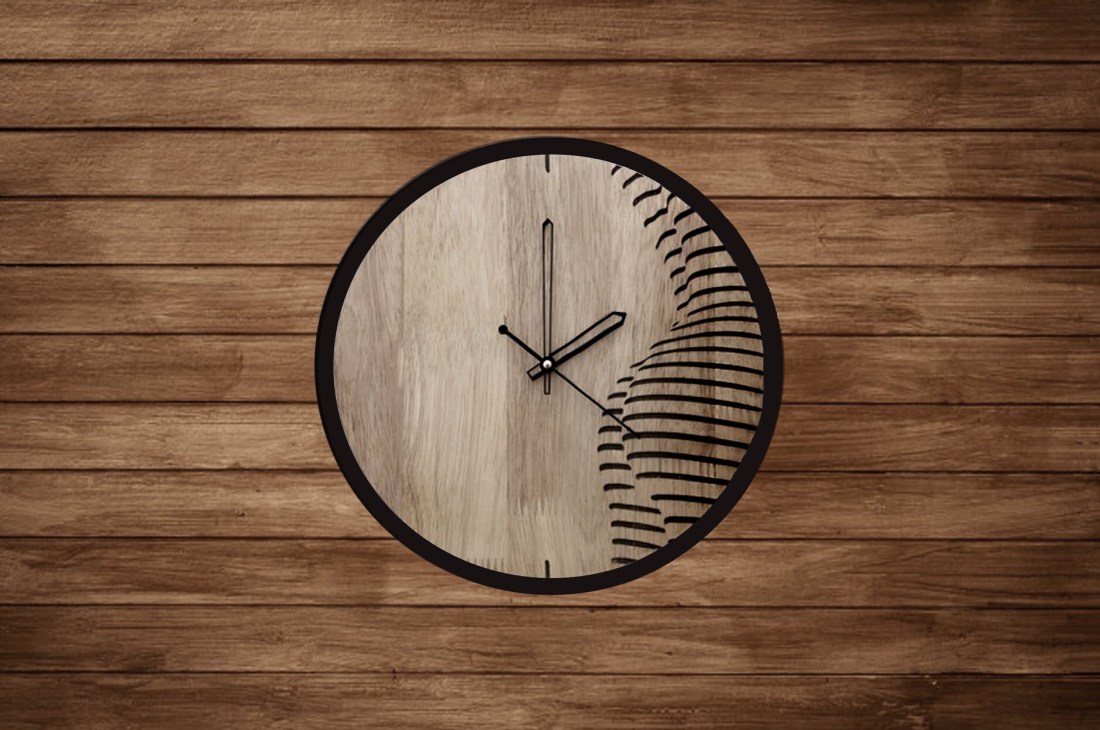
By the time service was finished, he stepped into the van and passed forward to me from the back his most recent masterpiece. On it were the words “I love you Dad” and his best impression of me, complete with baseball cap and facial hair, not to mention a smile on my face. Jenny, my wife, also received a similar image from his time at camp a week before. Though it was intended as an opportunity to write a letter to mom and dad, he took the artistic route and penned a simple picture of her surrounded by hearts. In any event, his portrait of me didn’t reflect in the slightest what I saw of myself that morning, but it was a revelation to me that the mirror our kids unwittingly hold up to us seldom reveals how they actually see us.

Beneath the ADHD that frustrates and tries my patience almost daily is simply a kid who loves his mom, wants to please his dad, and who would rather spend his camp money on gifts for each of us than on himself. To that, I say thank God for the patience and forgiveness of our children. Without it, we would not see ourselves as they do and might not have the courage as parents to get back up and try again.

Numbered Days

It struck me while I was shaving. It escapes me why I hadn’t taken solemn notice of the change before then. Staring incredulously at myself in the mirror, it suddenly occurred to me, a month or two beyond my birthday, that I was now a 30-year-old man.

In my 20s, I still felt, at best, a “young” man. Mistakes, missteps, and immaturity could still be dismissed to the inexperience and naïveté of youth. I had an excuse for stupidity.

But I had never before imagined what 30 might portend for me. I grew up having been told about an uncle I never had the opportunity to meet due to having tragically met his end in his 20s. Somehow, he had survived the terrors of Vietnam as a forward observer in the Marines only to meet his fate at the hands of a drunk driver not but a few miles from home. A head-on collision returning from work, and it was all over. I was given part of his name in his memory once I was born a few years later. As a superstitious teenager, I feared sharing his name might mean I would share his fate. I consequently didn’t spend a great deal of time thinking about what to expect past three decades.

“Huh. So, this is what 30 looks like,” I expressed to myself. I had never experienced a formal rite of passage as a teenager, as in a bar mitzvah or something similar. This felt like such a moment, however, minus the festivities and religious underpinnings. Unceremonious and anti-climactic, but unmistakable — I was now a “man.”

I have yet to live every decade most men and women, by God’s grace, are permitted to be considered a “full” life span. But I have to say, one’s 30s, in my humble opinion, should by no means be wasted, and for good reason. Though there are always exceptions, most of us still have bodies that are not yet showing pronounced signs of age, allowing us to enjoy common and even vigorous forms of physical activity. There is likely still more of life ahead of us than behind. Many of us have finished school by the beginning of our third decade and are surging forward expectantly in our careers, but we may still have the flexibility of changing course if desired. There may be loans to pay off, but you are, for the most part, financially independent. For many, kids may have entered the picture, and they decidedly alter life plans. But all things considered, there is no place like one’s 30s.

I should mention that I’m observing all of this from the proverbial peak of the hill, granted I make it to 90 (which I’m not sure I want to; old age looks like anything but a party to me). I didn’t make time to reflect on “40” once it hit, and I never truly have. I expect, though, that 50 will be a similar moment to 30. How ponderous, after all, is it to say that you’ve lived half a century?

In any event, in my 40th year, the kids boarded the ship, and off we went. I haven’t had an abundance of time since to stop for hours and take in the view.

What you begin to notice in your 40s is that your body, notably, isn’t as forgiving of the poor choices you make. Taking care of it can start to feel like an uphill battle. Having more dessert, or more of anything ingestible, for that matter, is almost never a good idea. The doctor tells you that this is too high or that’s too low, so take some of this, which, you realize, is currently in your parents’ medicine cabinet. That can’t be right, because they’re old, after all. Your brain may start playing tricks on you as well, especially if you don’t exercise it. Names evade me more frequently than they used to, even those of whom I am well-acquainted. Maybe that expanding bald spot at the crown of my head has something to do with that. Wait — are those white hairs in my beard?

Kids accelerate the progress of years, I’ve found, as many of you have as well. “The days are long, but the years are short,” I once heard someone sagely remark about raising children. I’m not sure why this is, but I can’t help observe that the passage of time while growing up before one moves out seems much longer than it does when one is parenting over the same span. “You blink your eyes one day and they’re gone,” more than one empty-nester has remarked to me. On the hardest days with them, I admit I sometimes think that day can’t come soon enough, though I admit the last five years have flown by; they’ve changed so much.

With age, even the slow days, collectively, are faster than they once were. Our middle daughter and I recently finished a 10-day COVID quarantine at home, alone, after she became infected at summer camp. Naturally, we did very, very little of consequence during that time — which is just another way of summing it up as “boring,” as she would unapologetically describe it. Nonetheless, I found that the evening each day came on sooner than I would have expected.

Fast or slow, the years are here and then gone. There are gains as more of it passes, but there are inevitable losses as well. I can take the fact that I’ll lose a few things along the way and have even begun to, namely physically and mentally. I feel somewhat prepared for that. It’s the loss of time, however, and especially the less of it that’s available that gives me pause.

Many decades ago, songwriter Jim Croce crafted his song “Time in a Bottle.” A brief tune, the memorable melody alternates between haunting and hopeful. “There never seems to be enough time to do the things you want to do once you find them,” he shares in the chorus. His inspiration for the song, I understand, was the birth of his child and the realization that, in spite of the fact that it would seem they had many years ahead to spend together along with his wife, their time would ultimately have an end. Little did he know how true this would be. Like the uncle I never met, Croce tragically and prematurely met his end. Only 30 years old, he and those with whom he was traveling died instantly when, on their way to a performance, their plane collided into a tree shortly after takeoff.

The reality of death makes life itself all the more precious and meaningful, they say. I like to think Croce’s life, though not “full” in the sense of the span we all hope for, was not wasted if for no other reason than that he left us with verses that ask us to pause and learn to value the time we are given. He did not live to raise the child who, in part, was the muse for his song, but his time was used well and and his talent wisely.

“Teach us to number our days, that we may gain a heart of wisdom.”

I don’t know if Croce was a religious man, but I imagine this verse could have served as further inspiration for a song such as this. It’s one of a select few verses pinned on my work cubicle wall in an attempt to remind me of something I so often forget but will be ever more important as the days, months, and years move along: your time is limited, so use it wisely.

Were I to number the days that I’ve wasted time, I’m certain I’d lose count. I could say the same for the days I phoned it in or failed as a parent. I worry at times how the kids will remember me once they’re grown or how my influence on them will be beneficial or detrimental. None of us is perfect; we figure this out never more quickly or viscerally than as parents.

I remember few of my parents’ mistakes with my siblings and me, though I know they would say they committed more than a few; almost any parent would echo such a sentiment. But just as the reality of reaching my third decade struck me while gazing at myself in the mirror, it strikes me that I rarely, if ever, remember any parenting mistakes my own might have made.

“I thought my dad was tough on me, and now, looking back on it, I just remember the good stuff.”

No, I didn’t voice this quote myself, nor did I pull it from the pages of a book. Just for fun, I’ll leave it to you to trace the reference. But I pray it could just as well be uttered by any one of my kids years from now as they learn the wisdom of numbering their own days.

Continue reading “Numbered Days”

What if?

I don’t read as much as you would expect of a librarian. Granted, I do enjoy it, but for the last 5 years I’ve become more easily distracted by the TV, a nap, or just about anything else that offers a break from parenting. If I gave you two numbers that represented how many books either my wife or I read this year, you would guess wrong.  She’s got some serious goals.

Nevertheless, I find time when I can. I recently read a novel in which the protagonist, disappointed about the unsuccessful and lonely state of her early adult life (in her opinion), found herself, after an attempt to end it, instead faced with the opportunity to try on other lives she could have led had she made one pivotal choice to move in a different direction. It wasn’t exactly a sci-fi approach of how things might change on a large scale, as in the parallel universes explored by, say, Star Trek or Marvel storytelling (see “Loki” on Disney+, for instance). No, this was more of a personal nature, as in “What if I had married so-and-so?”, “Should I have taken the opportunity to move over there?”, or “What if I had pursued that passion wholeheartedly?”

A form of this question came to my mind recently.  As I write, I’m here at home with our middle halfway through a 10-day stay, just the two of us. To be more specific, we’ll be here together, alone, for the duration of a standard COVID quarantine period. Sparing too many details, it took literally many miles and much frantic maneuvering by my wife and me over an initial and unexpected 24 hour period to figure out how and where each of the five us, already spread out across the state, would place ourselves for the duration once it was discovered she tested positive very early into summer camp and I had to book-it to get her out of there.

As I drove the first few hours of the change, the sudden diversion in plans brought the question to mind: “What would I be doing if I didn’t have kids?”

Before you feel inclined to judge, a few clarifications: I have kids, and I don’t wish that I didn’t. We’ve shared many times with one another that the choice, for us, was inevitable, one way or another. We both would always have regretted not choosing parenthood. Also, once you meet or conceive them, you love them and worry incessantly about their present and future, God’s admonitions not to worry notwithstanding. Rather, this question is better phrased, “If the choice to have kids had never been made in the first place, knowing nothing of them or about the future as it is, what would life look like right now?”

My wife and I had four years together to enjoy the DINK lifestyle. And enjoy it, we did. Coming home from work or waking up to the weekend, I had plenty of “me” time, as did she. Go for a run? Sure. Cook dinner and watch your favorite show quietly together on the couch ? Of course. Randomly go out for a nice dinner in the middle of the week with other DINK friends? What’s stopping you? 

Travel, namely, is one among many ways we seized the day. Never before or since have I been able to tell anyone, for example, that I would be joining my wife on her work trip for the weekend not across town or simply out of state, but in Belgium.  We didn’t even have to arrange a pet-sitter for such a spur-of-the-moment trip.

So, I imagine we’d be doing any number of things. We’d likely be living in a different house, maybe even abroad. I’d be further along in a full-time career. I’d be making much more time to take better care of myself and wouldn’t have the dad-belly I’ve been successfully nurturing the past five years. 

You don’t realize how much you take that time for granted until it’s gone. They aren’t “kidding” when they say kids change things. And once you’re in, no turning back. 

Sacrifice is the name of the game with kids. And it’s hard. Sure, there are still plenty of pleasures to be had; but school, homework, trips to the doctor, soccer practice, positive COVID tests forcing you all to change your plans, etc., now take precedence. Take ample time for yourself later. 

Not hard at all to imagine what you would be doing if it were only the two of you. Tempted to sigh longingly while pondering it over, I’m prodded into an even better question:

“Where would they be had you not chosen parenthood?”

Ouch. 

“It’s not about you.” That’s how a well-known minister many years ago opened his bestseller. And I’m afraid he’s right. 

Our three were adopted. Our kids weren’t always our kids. I have no way of knowing what life might have been for them had we not made this choice, but I understand it certainly may not have been idyllic or privileged. But that’s not a question they have to put to themselves. In fact, “What would I be doing if I didn’t have kids?” is a selfish question, I realize, and one which they wouldn’t want answered.

In the end, the protagonist of the story ended up almost right back in the life she left behind. There were other lives that were most certainly worth envying, but not one of them was perfect, and each had its drawbacks due to other choices not made.   With a changed perspective and attitude, she made the best of where she was, not dwelling on where she thought she should or could be.

So, maybe it isn’t the best use of time to wonder what could’ve or might’ve been in various alternate versions. It seems to me such over-speculation makes a god out of our ability to choose. If you believe, as I do, that there is a God ultimately writing the story, then there’s something to his instruction not to stress or worry about the day to day.

I see I could be doing a lot of things were it just the two of us, and we’d likely enjoy ourselves thoroughly.  I could choose a more comfortable life, a life more for myself.  A lot of us choose that, and many of us think that’s what we are supposed to pursue. But it would be a life vacant of the opportunities and benefits — the love — I could provide to others. 

Speculation aside, the reality is there are 3 kids who comfortably call us “mom” and “dad”, and I know for a fact they think it ridiculous that it could be any other way.  Why should I, then, spend time imagining it differently? How they’ve been changed for the better by this choice is far more important than the choice I could have made solely for me. 

God, give me rest from parenting when it’s needed, and help me to remember you’re writing the story. I need not worry about the choices I could have made nor remain in regret for those I have.  Amen.