20 Years

Aging sharpens perspective even as it dulls the mind.
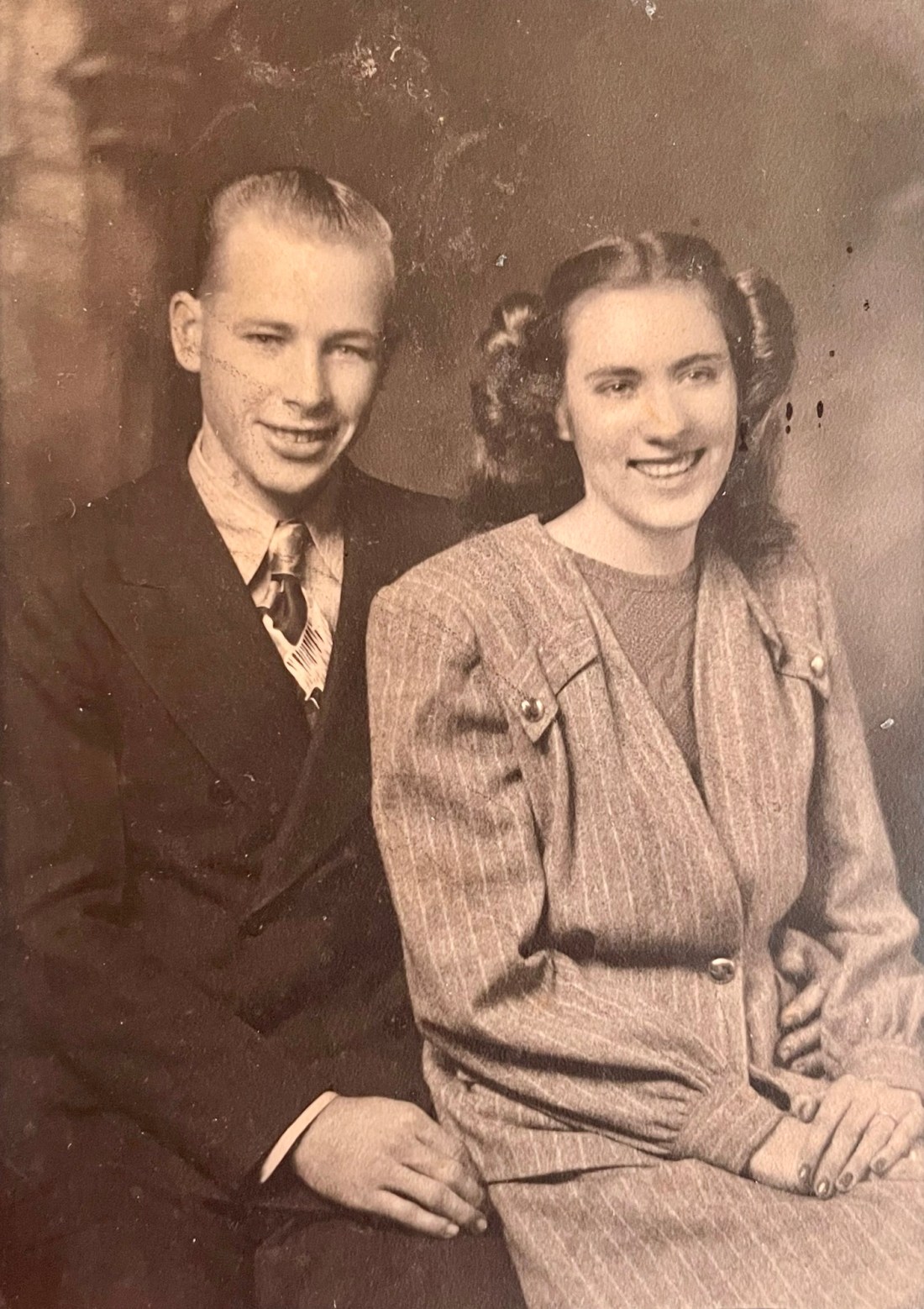
Age may also just be a number, they say, and I’m sure there is some truth to that, but the body has a way of reminding you that it’s a meaningful number, as much as you might try to ignore it.

20 years ago, I had moved back to Houston and began my professional career, independent, uncertain of the future, and single without a prospect. Today, I’m 12 years into marriage with three adopted children, attempting a second career, and doing my best to punch these words out without grabbing the cheap yet admittedly useful reading glasses I recently purchased. 20 years from now, I can’t project where I’ll be or what I’ll be doing, but I will be on the cusp of my 70s and all that entails for one’s health and personal pursuits.

It’s a sobering thought.

I know 50 is approaching, but it seems to me it’s still going to feel as if it snuck up on me. I’m neither afraid nor anxious about it (my wife even less so), but what strikes me most lately is how 20 years doesn’t feel at all like it used to. I can remember the very day I stepped out as a professional, as vividly as I can see everything in this room right now, and yet, it was two full decades ago. There was so much time ahead, it seemed, yet here we are now, as if it swiftly and imperceptibly sped along with no regard for our consideration, and there are no signs of slowing.

My grandparents’ passing this year and my parents’ last and final move to a new home has done much to alter my perspective. The fact alone that my grandparents’ were roughly my age when I was born, or the still lucid memory of celebrating my father’s 50th, for that matter, is enough to do it.

At 20, it can already feel as if you’ve lived a lifetime. Up until that point, you’ve been through so many developmental changes to have a sense of having been a different person at different times. So much has happened, yet so little relative time has actually passed.

When 40 arrived, I barely noticed. For many, if not most, of us, it’s the “busy season of life,” as they call it. Kids, career, marriage—everything is rolling along with its own relentless momentum, and you don’t (at least, I didn’t) purposefully take the time to ponder where you actually are.

At 60 — well, I can’t speak to that as of yet, but I’m starting to get an idea of what to expect. Somewhere between 40 and 60, your body, if nothing else, rudely reminds you of the score, in case you weren’t paying attention. This, I find, is also roughly when your attitude and perspective on the passage of time shifts, if you have allowed yourself any opportunity to be undistracted and observant. The time you’ve spent is just that — the time you’ve spent, and it isn’t coming back. Moreover, it didn’t take nearly as long to spend it as you carelessly imagined at 20. With hope, you have few regrets.

My kids are on the cusp of everything, and I desperately want them to understand all of this, as any parent does, as I look ahead to the future along with them, though with different eyes. Yet, there is truth in the saying that “youth is wasted on the young.” I hope this is not the case for them over the next rapid 20 years, but there are some things only experience can provide. I hope it teaches them sooner rather than later.

In the meantime, may I make the meantime meaningful. Time is a gift, and not a second to be wasted, I discover more each day. I pray the next 20 pass with hope and satisfaction.

Ashes

“This is probably going to be it guys.”

My mother’s text to my brother, sister, and me, we had been anticipating for at least a year, though what we couldn’t foresee was whether it would first concern our grandfather or grandmother. In their mid-90s and each declining steadily in different ways, it was impossible to tell whose body would be the first to fail. The early afternoon of May 7th, 2024, while seated in his living room recliner, my grandfather’s heart, subject to several attacks over his late but full life, began to struggle once more, this time, however, resisting any and all remedies. By the time the following day dawned, he would be unresponsive, my weak and frail grandmother doing her best to comfort him through her tears as his chest heaved violently and mechanically, the body doing its best to survive even in absence of consciousness.

After innumerable messages and calls as time slipped away, I would answer the final call from my mother 24 hours after it had begun. Relief commingled with grief choked in my throat, as I held back the bitter emotions when she spoke the long-expected yet unwelcome words.

“It’s over. He’s gone.”


My earliest memory of my maternal grandparents is a regrettable scene in which I brought my grandmother to tears. I’m not more than 3 or 4 years old and seated in her recliner in the room they long referred to as the “den.” Her chair is adjacent to the television at an angle plainly unsuited for comfortable viewing, an arrangement that implies little interest for her in what the box has to offer. The armrests of the recliner are fashioned of polished wood rather than cushioned upholstery. In my hand is a small, die-cast, jet airplane toy.

Why I did what I did next, I can’t excuse to anything other than idle, childish curiosity. Like a hammer driving a nail, I point the nose of the toy plane in my hand down and poke the surface of the armrest. Instantly, an indentation is left in the formerly smooth, glossy wood. The thought that I’ve permanently damaged something that belongs to someone else never crosses my impressionable toddler mind. Instead, there is only youthful interest. So, naturally, like a busy woodpecker, I drop the nose again and again and get to work, experimenting dutifully with the phenomenon of cause and effect. Before long, the armrest is blanketed with a sea of tiny depressions.

I don’t recall precisely what may have happened next, but what I do remember, accurate or not, is my grandfather trying his best to console my grandmother upon surveying the irreparable damage. Whether or not I was reprimanded, I can’t say. What is clear to me, though, is that this final scene is what made the deepest impact upon me. I could see my actions had made an emotional dent, so to speak, on an adult, no less, much like the physical dents left in the armrest. I learned an unexpected, more poignant lesson about causality; and I would consequently not make that particular mistake again.

Memories are curious things. I’m sure there was more to this one, and it’s likely my grandparents would have told it differently. But the details just described that have remained in my mind all these years, real or imagined, would seem to be most important and, moreover, critically formative in learning respect for the feelings of others. Fortunately, the tenor of this first memory is not representative of the vast collection I have of my grandparents or their personal history.

We all start with a name, and the oldest grandchild bears the distinct privilege of determining what new moniker grandparents will assume. You may argue that it’s parents who introduce them to the child and refer to them in one way or the other. This may be true. However, I would argue that no matter what you articulate, a child will pronounce whatever it is they think they hear. For my part, I heard “Meme” and “Papaw.” And so they are to this day.

The closing decade of their lives found them, as many in their 80s and 90s, having lost general interest in common things and common pursuits. The world was reduced, willingly, to their living space, a modest, single-level, duplex apartment a few short miles from my parents. Freedoms that our oldest children were beginning to enjoy had been in steady retreat for them. Time and frailty forced them to give ground days, months, and years at a pace until naught was left to them but to survey their past and make peace with it or take pleasure in it. I would contest the scales of their life tipped decidedly toward the latter.


James Raymond Tomlin and Frances Gladine Taylor were born in late Great Depression-era Arkansas. My grandfather grew up with a small army of siblings, an emotionally-distant mother, and an absent father. My grandmother enjoyed the company of her older sister and brother and her kindhearted mother, whom I had the privilege of knowing as “Nana.” My grandmother also grew up without the presence of a father — a fact for both of them not lost on me, a “stay-at-home” dad to kids who also have no relationship whatsoever with their own fathers. To say they did without modern comforts would be an understatement. Like many in their time, they learned to work hard for everything they earned, and, to my knowledge, they didn’t complain that they had to do so. The world was what it was. The reality prompts a pause both for myself and in consideration of the youth of today, many of whom, while worthy of admiration in some ways, are provided with a host of privileges that seem to be accompanied by a host of entitled behaviors. But I digress.

They eventually found one another in their late teens, he having influenced her religiously by taking her with him to church. Over the years, her faith became the stronger of the two. As I’ve mentioned before, unscheduled trips by my siblings or me to the bathroom at their home in the middle of the night often found my grandmother devotedly studying and praying while crouched ascetically on the carpeted floor of their front bedroom, a practice which began following the death of their son. In any event, they married only months after meeting and began what would become the longest marriage I’ve ever known personally, at an almost inconceivable 77 years.

My grandfather’s working life was a matter of pride, as I observed in the handful of times he took the intentional opportunity to share about his first job selling newspapers on street corners as a child still in single-digits. In time, after resettling in the Lone Star State, following a series of jobs, he completed his education as a trade electrician and spent the remainder of his working life with Dow Chemical in Freeport. I still remember weekdays, as a kid, Papaw arriving home promptly at 4:30, Meme dutifully having the table set and ready for what anyone else except for them would consider an early dinner.

“Dutiful” is the best description I could stamp firmly upon the character of my grandmother. Her life was spent, almost iconically in their time, in the devoted care of house and home. She never, in all her years, took on a professional occupation or expressed much of an interest in it. Any task she took on willingly was seldom reimbursed; money, for her, was no motivator. Arriving on Fridays for a weekend visit was a timed arrangement for our family due to her routinely volunteering her time at the local hospital, where, for years, she assisted patients moving from here to there or with various tasks seemingly beneath the responsibilities of paid staff.

Such was their life before my grandfather’s retirement. Following this, their lives remained active, maintaining one of several houses he and my grandmother owned and rented out, tending to their gardens, serving those with various needs at their church, or completing one of many woodworking projects in the shop he and my grandmother built in their backyard.

In short, as dull as it might read to young modern eyes, their life was not full of exceptional YOLO adventures worthy of Instagram or Facebook posts. They did not bury themselves in frenzied busyness, often mistaken today as the hallmark of a meaningful life, but in routine and deliberate occupation, understanding and accepting the purposes of their daily activity. Undistracted, uninterrupted habits of daily life afford moments of reflection that the digital noise of today drowns out, as I’ve often observed myself. My grandparents, however, lived in such regular, clockwork-like routines–disciplines, if you will–and have left me with an observed and admirable example to which I am compelled to return when life becomes too hurried even to hear one’s own thoughts. I have wondered that such careful, hasteless attention to their life and the lives of others was the profound effect of the most prominent milestone in their timeline: a sudden, heartbreaking death that preceded theirs by decades, a death not any sympathetic, caring soul would wish upon any parent.


He coasted into the oncoming lane, thinking the maneuver would allow him to avoid the car that had drifted into his just ahead. The other driver drifted back, however, and then once more as each responded in kind. They collided at the last second, too late to correct.

The police report took longer to read than the event itself, which was a theory, at best, since no witnesses were present. The drifting driver was drunk, and he would languish in the hospital for another week, his life ending ironically on the day my grandparents and mother were to celebrate when my uncle’s began. His life, however, ended instantly that night on the road. 

I would never have the privilege of knowing my mother’s brother, who exists for me only in various stories and a few photographs. I’ve thought it odd that he should survive the many deadly perils of the Vietnam War as a marine only to meet his end at the hands of a careless driver once home, and this not long after his return. The best years of his life should have been yet to come, but it was not to be.

My mother had anticipated upon his return a relationship as adults better than that they had shared as children, which was often strained. My grandparents had to endure the tragedy of burying their child, a fate no parent would wish upon themselves or others. For each of them, the grief of the loss became what felt much like a physical affliction, lingering and painful, deep into the marrow. There would be no closure.

(Reprinted from “Hope,” published on July 26, 2022)

The birth of James “Jimmy” Raymond Tomlin, Jr., on August 9, 1949, transitioned my grandparents into the tumultuous experience of parenthood as the “happy days” of the 1950s got underway. Almost four years later, my mother entered the world on May 13, 1953, as their second and final child. I can still see in my mind’s eye hanging on the wall of my grandparents’ master bedroom the large, framed black-and-white portrait of the two of them together as children, happy and smiling, eyes fixed off-camera as if anticipating what lied ahead for each of them. The seemingly idyllic image would belie in a few short years a relationship fraught with tension as childhood gave way to adolescence.

The absence of one parent or another early in life would have an impact on anyone. Though I never recall my grandfather speaking at length about it, I know his father’s absence had to have informed his own style of parenting, which, unfortunately, was as a strict authoritarian. While my mother made it through, reluctantly, her older brother inherited their father’s stubborn resolve, which sustained a palpable, trauma-inducing tension, until my grandfather eventually ordered their son angrily out of the home, once and for all. Soon after, he would join the Marine Corps as an odd act of rebellion, but not until his recruiter issued his first order to him, once he was made aware his parents would not have offered their approval: “Call your mother and tell her what you’re doing.”

The news would devastate my grandmother. No parent wishes to send their child off to war, and Vietnam was the divisive conflict of the day that had claimed the lives of many young men. Such was her fear when they saw him once more before he shipped off to the East, where he was to serve as a forward observer.

I can only imagine what horrors he witnessed on his front-line assignment, which I’ve read from veteran accounts offered a relatively brief life-expectancy. Yet, somehow, he survived, and in 1971 was welcomed back home to return to civilian life. He would never share the details of his experiences, however, nor would he ever have the opportunity. His life would end abruptly on his way to work on a road outside of town just a week shy of his 22nd birthday.

Two moments following his passing permitted them a sense of closure to their grief and allowed them to press on with the business of living. My grandmother shared that she received a vision late one night. Stirring awake, she found her son’s form standing serenely near the end of their bed, and he conveyed to her that, not to worry, he was alright and would be alright. The simple message of comfort was all she needed to begin moving on, and so she did. It would reinforce her growing faith in God and would allow her to make peace with her son’s absence. My mother and her father had no such vision. Theirs, by contrast, was a silent, shared moment. While feelings remained raw, my mother entered their den one day to find her father sitting pensively in his recliner. She sat down next to him and, after a pause, allowed herself to weep for her lost sibling. As she leaned against him, he soon allowed his own repressed tears to flow. It was a rare, vulnerable moment for each of them that would connect them in a way they had not been until then.

“I’ve lived with a lot of regret over my brother,” my mother has said. Never were they afforded sufficient time or opportunity after his return to repair their relationship; nor were my grandparents. This reality informed how she related to her parents thereafter and is one of the reasons her children enjoyed as close a relationship as kids can have with their grandparents, who were altered as a result, and who I remember as kind, generous, and loving souls to the three of us. His death changed them all.


Backyard rides in the wheelbarrow, Friday nights watching television with popcorn and Diet Pepsi, visiting with them on their back patio during a rainstorm, eating Meme’s Jello and whipped cream out of bronze tins, helping Papaw with one of various projects in his shop or at one of his rent houses . . . I will remember many things about them. What I will remember best, however, will not be any of these as a child but a brief and special time I spent with them during my budding years as an adult.

In January of 2004, I relocated from DFW after completing my graduate degree to begin my life’s occupation as a public librarian. This brought me back to Houston, and just under an hour from their house in the blue-collar town of Angleton, where they had spent most of their adult life. They opened their home to me for the time it would take to find a place closer to work, and so I would live with them for a month until I landed in an apartment complex situated directly next to Space Center Houston in the suburb of Clear Lake.

For a brief time, my life would intertwine with their daily rhythms. Although I had every intention of pulling my own weight, hardly intending to mooch or take advantage of the arrangement, my grandmother could not help her homemaking habits during my stay. I would often return at the end of each workday to laundry clean and folded, accompanied by warm, homemade, chocolate chip cookies on the kitchen counter. Dinner would be ready as well, and rarely was I expected to lift a finger. The exception might be weekends, when my grandfather recruited me for a project or two—time and effort I was happy to offer in exchange. Standing on the cusp of the rest of my life, it doesn’t escape me that their own son, whose name I shared, once stood in a similar place years before. I don’t know if either of them made such an observation as well, but by all appearances, it was a second opportunity to send one of their own out into the world, this time with the confidence and assurance of a relationship at peace with them, and vice versa, come what may.

I made regular, weekend visits after that month and for several years following, until foresight and aging suggested that they relocate closer to my parents in DFW so that they could look after them as they anticipated their closing years. And close, they did. As I write, it has been a single week since my grandfather’s passing, and my grandmother is sure to follow in due time, though much of her careworn demeanor has ebbed in the last several days, no doubt from the calm of knowing she no longer has to worry about her partner.


During the final hours, as my grandfather’s body struggled to capture air and he slipped into unconsciousness, she never left his side, pained tremendously at his body’s struggle to hang on, shedding all of her tears here at the last. “You go on ahead,” she would tell him, “but not too fast, because I’ll be right behind you.”

“Guys, I don’t know if I can do this.” My mother kept us updated via text, my brother, sister, and I each with our own families, unable to make the trek up to be present as it transpired. My parents’ final calling in life before retiring was as hospice caregivers, so they were no stranger to death and dying, having attended the waning moments of many, many strangers. My mother’s words, however, were very telling, indicative of how much more painful it is when it involves someone about whom you care very deeply. The process of dying is often unpleasant. The very end can be a peaceful moment, but until that point, the body often fights aggressively, almost clumsily, to stay alive. They asked us to pray that it would end soon for his own sake, and so we did.

As he struggled, I chose, I suppose as a means of honoring him, to engage in an activity he thoroughly enjoyed in life, and in which he seemed to be proud that I had taken an interest. I stepped into the garage and continued working on an oak end table I was building for my wife, its partner having been completed a couple of weeks before. I made my final cuts and fastened the side and top panels patiently and deliberately into place, much as he would have, as I thought about the number of times I had assisted him in the backyard just outside of his shop. One of the last builds I helped him with was a bookshelf, which he constructed for me, and which, incidentally, happened to be made of oak as well. I still have it and will never dispose of it, likely passing it down to my kids before my time is up.

Shortly thereafter, my mother made the call I had long been expecting. It was over.


The day before, I had just picked up our youngest from school when my mother called to share an update. It came in through the van’s speaker, so my son heard it all. After we ended the call, he asked to know what it was about, and I told him that Papaw, whom he had met only a handful of times, was dying. Shortly after his questions ceased, it became unusually quiet as we neared home. As I glanced back at him, silent tears streamed down his cheeks. In spite of his lack of a close relationship with my grandfather, the reality of his imminent death struck a chord, and he wept for him. I did my best to comfort him, but little helped soothe his grief, and it would be several hours before he was consoled.

The following day, again on the drive home from school, I shared with him that Papaw had passed a couple of hours earlier. While still expressing sadness upon hearing the news, his grief expressed the day before was enough to provide him with emotional closure, and so I used it instead as an opportunity to discuss what it all meant, where we, as Christians, believe Papaw was now, and what it meant to be a Christian. Much of it he had heard many times before both in church and in his private school, so he was no stranger to the gospel message, which we had also shared with him personally in the past in an effort to plant a seed.

“Whenever you’re ready to make that decision, buddy, you just let mom and I know,” I said, just as I had on a few different occasions in the past. Whether or not I expected him to respond, I couldn’t say, but I left it there with him. After a brief pause, he decidedly looked at me and said, “Can we do that now?”

We had not yet exited the van and sat parked in the driveway. I called my wife down from upstairs where she was working from home, asking her to meet us where we remained in our seats. And right there, on the very day my grandfather breathed his last, our son began his life anew.

By the time he had said his prayer of confession and acceptance, my grandfather’s body was on its way to its terminal destination, where its form would be reduced to ashes prior to burial, delayed until my grandmother would eventually join him. As I considered the wonder of death and life realized within hours of each, I couldn’t help but think of the ancient, mythical phoenix, a storied creature that, at its own end. consumed itself in flame, leaving naught but a pile of ashes, only to have another miraculously reborn from the same ashes.

I have my own sense of the legacy my grandparents have left behind, just as my siblings each have theirs. Our son’s decision that afternoon, however, left each of us with a shared sense of his legacy of faith. Of all of the ups and downs experienced in parenting, few equal the unique and special joy of having your children willingly accept your chosen faith as their own; even more so for children not born to you, whose personal history began with years of which you were not a part.


Theirs was not a life that others might consider exciting or worthy of popular attention. The vain, ambitious teenagers among us might even classify it as somewhat boring. They did not travel the world, make a million dollars, accumulate thousands of social media followers, nor attain widespread fame. Yet, they meant more to me than almost anyone I could name in the almost 50 years that I’ve been alive, and this simply for their calm and steady dedication to their responsibilities, their faith, and their relationships. Despite a few bumps in the road and imperfections of character, on the whole, they lived and loved what mattered.

None of us need a world of strangers to love us in order to matter. Only a few, even one, I would argue, is enough. They mattered to me, and that’s enough.

I will miss them.

Reconstruction

I ambled across the street from the house to the collection of mailboxes planted at the center of our neighborhood. A car pulled up alongside the curb and stopped, its driver ostensibly intent on gathering his or her mail as well. Out of the driver’s seat climbed Tony, a local septuagenarian I’ve passed on plenty of evening walks with his Toto-sized canine companion.

As I approached, he offered not a greeting but an observation that I was moving with a slight limp. “Yeah,” I replied, sharing what I had just learned from the orthopedist an hour ago, to which he responded not with sympathy but a wiggle of his waist. “I just got a new hip. Welcome to aging!” I remarked to this unwelcome reply that this year, my 47th, is shaping out to be the year my body has begun to inform me wordlessly of its high mileage and the mortal fact that I can no longer maneuver it as if it just drove off the lot. “That’s when it happened for me!” he expressed excitedly, leaving me with the stark realization that I had now reached an age when one’s ailments are an acceptable topic of small talk.

Four weeks earlier, my son’s final soccer practice offered parents the opportunity to face-off in a friendly game versus their grade-school charges. I willingly lined up on the field, in spite of the fact I was 40 pounds and several years removed from such rigorous physical activity. No matter, I thought, as I pushed my flabby fortysomething physique to play as if a carefree, nimble twentysomething. When my labored breathing between points was ignored as a warning I ought to settle down and act my age, 20 minutes into the game—a game the parents were shamelessly dominating, I might add—my body forced a stop to this foolish nonsense.

As I attempted to juke right with the ball, pushing off with my left leg, a loud “POP!” issued from my left knee, and I collapsed to the ground in excruciating pain. Play continued to swirl around me, though a couple of concerned fellow parents helped me limp to the edge of the field to wait out what was hopefully nothing more than something akin to cracking one’s knuckles. After a few patient minutes, I attempted to stand with my right leg and try a few steps. As I placed my weight on my left leg, however, my knee joint now felt unsupported and preferred to move unnaturally in almost any direction except for the correct one, which was accompanied by the same agonizing pain I felt at the moment something, I now surmised, had snapped like an overextended rubber band, something I couldn’t yet name that was now either entirely missing or out of place.

X-rays conducted shortly thereafter that evening at the nearby strip-center ER, to which I struggled to drive myself using my good right leg, yielded no break, and I was advised to visit my primary care physician the following day to see about the possibility of a MRI. I’ll spare the banal and frustrating saga of struggling with insurance for three weeks to agree to cover the cost of the scan. Suffice it to say that once done, a short visit thereafter with the orthopedist, preceding my chat with neighbor Tony, yielded results that confirmed what my wife had correctly suspected at the moment of injury: a fully torn ACL.

__________________

The anterior cruciate ligament is a small, tough, flexible band of tissue whose sole purpose is to keep the knee stable and is situated between the bottom of the femur and top of the tibia. An overextensive twist of the joint during strenuous physical activity is all it can take to snap it, especially if the surrounding muscles and tissues are not strong enough to support the movement. It’s one of the most common athletic injuries, especially in sports that involve sudden changes in motion. I myself was first made aware of it several years ago while playing weekly games of ultimate frisbee with friends, many of whom were carried off the field for a full or partial tear of the ligament, my wife included.

Depending on one’s lifestyle, there are at least a couple of treatment options available. If you don’t plan on regularly putting stress on your knees for the remainder of your life on, say, a competitive field of play, you can likely live out your days well enough with a regimen of physical therapy to build up strength around the joint, especially if it’s only a partial tear, such as that sustained by my wife, who has since been able to successfully participate in a number of half marathons. Or, you can opt for surgery not to repair but to reconstruct the ligament with tissue harvested from another part of your leg or from a cadaver. The choice is yours, but, especially with a full tear, surgery is a favorable option in order to stave off osteoarthritis that is likely to develop at an accelerated rate due to stress placed upon the remaining cartilage.

After the injury and prior to treatment, if you’re careful, you eventually learn how to maneuver and walk relatively safely without further pain, though certain movements are out of the question, especially those aforementioned sudden changes in direction, especially lateral. While pondering the options there in the exam room with the orthopedist, I explained that there had been at least half a dozen times since the injury when I was brought to the ground from the pain due to what before should have been typical motion. One of those was on a long walk with our dog, an otherwise normal, everyday sort of activity.

Beaux and I made our way on this particular day to the local Petsmart for a treat to carry home for him. I had moved almost perfectly and painlessly for the distance, until, that is, we approached the store. As we walked across the parking lot, my phone slipped out of my hand and fell on the pavement behind me. As I doubled back suddenly to reach down for it, pain shot through my joint and I fell to the cold, solid concrete. I sat immobilized and grimacing as I gripped my leg, waiting for the discomfort to subside, dangerously in the way of any traffic that might decide to pass through the lot. After a minute or two, I found the strength to stand with my good leg, hobbled into the store to complete the intended purchase, and then slowly and deliberately made the trek home. Half a dozen similar incidents since the injury sounded far too many to the orthopedist, and after a brief conversation with my wife, it was decided we would schedule the surgery.

I have (knock on wood) been fortunate enough to have avoided heretofore the necessity of lying on a surgeon’s table, though I vaguely recall in my scattered, incomplete memory as not more than a toddler a brief stay in the hospital to cauterize vessels in my nose due to frequent nosebleeds. Beyond that, I have only been a visitor, never a patient subject to the scalpel. I’ve long expected my day would come along with age, however, though uncertain of how or for what ailment(s). While the news might leave most anxious or disconcerted, I found myself oddly anticipating the new experience. I recall writer and humorist David Sedaris once remarked regarding a personal incident that could have been perceived in an unfortunate light that, well, at least he had something to write about. No experience is wasted on a story worth telling later.

__________________

Overnight Friday evening visits to my grandparents, while they still lived independently in the blue-collar town of Angleton, unofficially consisted of at least a handful of things: popcorn, Diet Pepsi, and the investigative news program 20/20, hosted at the time by Hugh Downs and Barbara Walters. One of the show’s many stories that has remained with me all of these years reported the horror endured by those who went under the knife only to become conscious during the procedure, physically paralyzed by anesthesia and unable to alert their OR attendants of the sudden, undesired awareness of their bodies being sliced and opened. It’s a phenomenon reported occasionally even today though not experienced generally by the mass of surgical patients. I’ve long stowed away this unique fear, expecting it to surface when once I would require surgery myself.

After 6 weeks, the day arrived. I was remarkably not anxious for such a first as this and had second thoughts only due to the fact that I had learned over the duration to walk on it relatively normally now without any pain or discomfort, though I was reminded on occasion of its instability. There are those, the orthopedist mentioned, who opt out of surgery and instead strengthen the muscles around it and avoid what would be considered athletic activity. The risk, however, is developing osteoarthritis sooner than most without the support of the ACL in the joint. The way I saw it, I was going to have to strengthen those muscles and avoid such activity regardless of either option, so might as well put off degeneration for as long as I can and endure the recovery period post-surgery. Additionally, the adult version of myself tends to appreciate and value most new experiences, a fact as far from my younger self’s character as one could be. I rarely dread even a jury summons as others do and instead look forward to engaging in a part of the process and having a story to tell.

The morning began as it always does, waking myself and our middle and youngest kids up at 5:30 am. Our oldest received her license and a car a few months ago and manages herself from sunup to sundown for the most part now, which has been an invaluable help to me especially. Our youngest relishes arriving at 6:45 for what’s known as “early care” at his school so he can play and interact with friends before the actual school day begins, and I’ve been more than accommodating since it provides me with more time to get things done around the house, though Jenny is able on most days to get him there before she heads to work. Our middle was offered the manager job on her school basketball team, a position which is right up her alley and allows her to interact with most of her friends without the rigorous physhcal regimen of players, though it does expect her to arrive at 6:30 just like everyone else. The dog eagerly travels with us for drop off and typically can’t hide his eagerness, racing through the back gate and leaping into the backseat as soon as I remotely open the minivan door. Today, he’ll be at the local kennel for doggy daycare, and once he realizes it a few minutes later as we drive up after getting Dezira to practice, it’s consumes all of his effort not to leap out of the van window from the parking lot. He once excitedly and without warning bolted out of my front door after I stepped out, though I had no reason to fear him escaping into neighborhoods beyond. He patiently waited leashless at the kennel door for me to open it and begin his own day with the two things he loves most in life, in no particular order: people and other dogs.

After dropping the dog off, it was a return trip home for an Uber on the way to deposit me at the medical center. My wife would join me soon after in our well-traveled 200K+ mile minivan after finishing a couple of urgent work meetings. Though simply starting it now is a risky affair, bearing a striking resemblance to the sound of an elderly gentleman struggling out of bed while coughing and clearing his lungs in the morning, it would be much easier for me to slide into, we decided, post-surgery than her sleek new sedan. In 5 minutes time arrived the driver, an aged man who had immigrated to the area several years ago from Pakistan, where he was employed with their version of the Federal Reserve. Much of his extended family had moved here many years previously and resided either here or in New Jersey. As he happily answered my questions, though I generally enjoy learning about the lives of these random drivers, I observed that perhaps a casual chat wasn’t the best idea as he carelessly blew through at least one red light, failed to signal lane changes, and seemed distractedly to stay far under the speed limit when it wasn’t advisable to do so, earning a honk or two from other harried morning drivers. I might lose my life on this short trip to surgery, I thought, but at least, I guess, a couple of strangers had a pleasant conversation on the way.

We made it in one piece, thankfully, to die another day, and I wished him well as I shut the door and walked into the surgical center. Registration, paperwork, and copay completed, I lingered alone with strangers, trying not to think about food as my stomach begged for it. “The Today Show” reported on the waiting room television on each U.S. State’s most popular Christmas movie and an app that lulls listeners to sleep as an AI Jimmy Stewart reads you a Christmas story. Soon enough my name was called, and I headed through the double-doors for prep.

A few years ago I took the time to read “The Butchering Art,” by Lindsey Fitzharris. If ever there was a reason to be grateful for mankind’s innovations, I’d gladly set aside any and all of them involving personal technology or entertaining distractions for achievements in the field of medicine. Nineteenth century surgical practices, which Fitzharris describes in sufficient detail, were enough to persuade one to avoid the doctor altogether. Hospitals had earned from many the reputation of places where one goes not to receive life-saving treatments but to die. My first experience with surgery would prove to be as far from what the author described, earning my gratitude for all those who have gone before and have suffered for the sake of the improvements we now enjoy. Minimizing pain and discomfort in the preparation and process of surgery is a priority in modern medicine, I’m pleased to say, and any fears I had about everything leading up to and during it were unfounded. Granted, there are many whose ailments are severe enough to have endured a less favorable experience, but by and large, physicians and nurses strive to alleviate the pain associated with “going under the knife.”

Photo by Raul Infante Gaete on Pexels.com

I undressed as instructed and did my best to relax in the bed before the nurse returned. After taking vitals, which revealed elevated blood pressure, a fact that had become more common over the year, I was informed about what would be happening in the moments to follow as Jenny, my wife, finally arrived after finishing up details remotely for work. The anesthesiologist paid a visit, indicating how his job would play out with my care, asking if there were any objections to the use of a “nerve block” once administered. I had no reason to refuse, having had no experience with it, and he assured me not to worry about a thing. Jenny was instructed to leave the room soon thereafter and did so once we exchanged affections. Several minutes later the anesthesiologist returned with a large syringe, which he did not then administer, but answered affirmatively when the attending nurse asked if she should get the IV fluid going.

“Do you need any help getting that on?” a different nurse inquired, referring to my shirt. I didn’t recall shutting my eyes even for a moment, but somehow someone else had randomly appeared, my leg was now wrapped and stationary, and the procedure was finished. I felt a little drowsy, as if I had been out, but the transition one feels and is aware of when falling into and rousing from sleep was absent. One second I was awaiting what followed, the next trying to process that it had all passed, as if I had missed it all in a single blink of the eyes. Three hours were, strangely, missing, like a lost item that could not and would never be found again. The time was simply gone.

I got my shirt back on, and I vaguely remember receiving help putting on my shoes, but it didn’t occur to me until the day after that I was unaware how my shorts returned to my waist. Maybe best not to know. In any case, the phenomena of time lost due to anesthesia was fascinating to me, and I now realized why such professionals are respected and paid as well as they are. Their scientific art skillfully removes the trauma and pain from the process. I had nothing to fear after all from the dreadful 20/20 report in my youth of patients becoming conscious during the proceedings. To the contrary, I had knowledge of nothing having actually taken place. Ignorance, in this case, was a kind of anticlimactic bliss.

Recovery, I would learn, is the most unpleasant part of the process. Real, authentic pain would not arrive until day three, when the nerve block, as they called it, would begin to dissipate. My wife had planned to take the kids to church that morning, but my sudden discomfort and consequent challenge making even the short trip to the restroom and back forced them to stay put. The next several days would find me gradually forcing a little more independent movement around the house in my impatience to heal up and get back to responsibilities. Eventually able to run select errands on my own, I would lose count of the number of folks who observed the leg brace and correctly identified it as an ACL injury, commenting on their lack of envy for my recovery.

Officially, four weeks of PT still lie ahead of me as I write. A bookshelf I was constructing for our middle before surgery remains unfinished until I can stand for any length of time on my own. I feel like I’m there now and eager to get it done, but I slept uncharacteristically for 13 hours last night after driving four hours to in-laws and an intense PT session. Under any other circumstances, nothing about these two activities should exhaust anyone, but normal movement can be brutal when a part of you has been cut open and reconstructed.

I was reminded as well why there are those out there, often men, who avoid the doctor as a rule. You may not like what he/she has to say. Since surgery, my resting blood pressure was revealed to be way too high without medication, and a periodic tingle in my ring and pinky finger on my right hand over the last couple years has become almost constant, mirroring something known as ulnar nerve entrapment. These, layered on top of the ACL reconstruction and reading glasses, has made it eminently clear that 2023 will go down as the year the warranty on my personal health expired.
It’s not all bleak, however. I am slowly regaining movement in the knee as I get a little closer everyday to that elusive 90-degree bend. I’m without the brace around the house, which isn’t advisable but I think is pretty good for a little over two weeks out. I’ll be back to movement soon enough, but any aspirations of participating in athletic activities went “poof” when I heard the “pop” on the soccer field.

I heard a friend comment recently that aging is a privilege. I’m sure she’s right, but its onset can feel rudely unannounced. In the meantime, I’m trying to accept what is just the beginning of unwelcome changes to come. Staying off the soccer field is not the worst start.

Maw

Yesterday, June 29, 2023, my wife’s last living grandparent was buried in Krotz Springs, Louisiana, next to her husband, Albert, who preceded her by 20 years. Lucille Patsy Wanda Aaron Ortis (yes, you read that correctly), or “Maw,” as we called her, was a little over a month shy of her 96th birthday. My father-in-law, Gene Ortis, a former minister, officiated and had organized the proceedings along with his brother, Karl, also a minister, and sister Diane. It was a fine service, as good as any funeral I’ve ever been to. “Jesus puts the ‘fun’ in ‘funeral,’” they quoted their mother as saying, and they didn’t disappoint. My mother-in-law, Gaye Lynn, joked following the service, which was carefully structured and paced to last little more than an hour, that Karl and Gene ought to take their show on the road. It would be the same show, mind you — their mother’s funeral — but a well-done show it was, all agreed. I’m convinced many ministers prefer funerals to weddings. My own father, also a former minister, said as much.

In her final years, Maw’s mind and memory had faded significantly, and it could be a challenge to converse and relate to her as she was prior to the effects of advanced age. But this wasn’t shared during the proceedings. It didn’t earn any attention, in fact, over the course of the hour. Instead, it was evident to all that the sum total of her life’s actions was guided by an unabashed love for Christ and, in turn, for others. If I reach a similar age upon my own passing, I would expect to be present for my memorial only my immediate family or similarly-aged contemporaries, if there were any left by then to attend; in other words, a sparsely attended service. Not so with Maw. Seated in the full chapel were both friends and relatives aged anywhere from 9 to 90. A scan of the room, sermonic words aside, was more than enough to inform that this person’s life mattered, that her time was very well-spent not in insular pursuits, as we are typically encouraged to pursue in life, especially American cultural life, but in the interest and care of others.

Time. As we age, or “mature,” as one of my doctors recently referred to it, stating that they aren’t supposed to use the “a” word, this “t” word seems to move faster as we lose more of it. I’m a few days shy of 47 as I write this, and, hence, just around the corner from inclusion into the esteemed ranks of the AARP. It’s difficult to fathom. It doesn’t frighten me, per se, the idea of aging. It’s just that you rarely feel the age that you are, or at least as you perceived it would looking ahead from the vantage point of younger years. Then again, there are the moments it doesn’t seem so unbelievable, as you find yourself critical or incredulous of current popular trends when you occasionally catch a glimpse of them, usually via your children’s interests, and realize you’re acting your age quite well. I couldn’t identify Post Malone, whoever he is, from Adam, but apparently you can currently acquire his collector’s cups with your purchase from Raising Cane’s. That’s no encouragement for me to buy their delicious, savory chicken strips for my next meal, which should suggest to me that I may now, at my age, have at least begun phasing out of their marketing strategies that target younger whippersnappers who appreciate popular musicians with face-tattoos.

In any event, time is slipping away. I may have less of it ahead than behind. “How am I spending it?” the question comes glaringly to mind.

How do we spend our time? How do I spend it? The majority of mine is consumed with my kids and their needs, of which there were many this past week that left me exhausted each and every day. Followed by this are the needs of my wife, who spends the bulk of her waking hours as our professional breadwinner, for which I have enormous appreciation and who I’m therefore happy to serve. Whatever is left is for me, I suppose, and the exhaustion usually just finds me wasting away in front of the television. I used to read much, much more, which you would expect of a former career librarian, but there you have it. I woke up this morning at my in-laws’ with the intent of getting some rare playtime on my recently Father’s Day-gifted NES classic, but here I sit writing instead. It seems a better use of my time, I must say, if for no other purpose than reflection, though I expect I will end up nostalgically indulging on the Nintendo soon enough for a little “me time,” as they call it.

We’re all about “me time,” though, are we not? Granted, we all need it, but I feel we’re encouraged to overdo it. Our phones and the accompanying apps are designed to hook us and consume our attention, whiling the seconds, minutes, and hours away as the sun sets once again on another day of mostly “me-time.” Many of us are guided by what will make us happy in our lives, and so we pursue those things. My wife and I landed on an episode of “House Hunters” yesterday and watched as a young, attractive DINK couple made the decision to search for a place to live in an exotic, foreign locale simply because they had the “travel-bug.” I admit there is nothing necessarily wrong with what they were doing, but I couldn’t help, following Maw’s passing, asking myself how they were choosing to spend their time. They had no connections there, and it appeared there was little interest in making them. The decision had more to do with what was going to make just the two of them comfortable and happy in both the short- and long-term. Again, not to criticize, but I couldn’t help but ask myself, “How are their funerals going to play out if this is their life in the foreseeable future?” Perhaps they had no such concern. But it seems to me we should.

I enjoy travel as much as the next person, and I need to unwind. We all do. There’s no inherent harm in hobbies. But one can have too much of a good thing. This is more true, I realize, the more time I lose to too much “me-time.”

I didn’t spend a great deal of time with Maw. But Maw spent an enormous amount of not simply time but of her life on others. She wasn’t remembered for staring at a screen or directing her pursuits toward whatever would solely make her happy. Her reward? At the end, a room full of people of all ages and backgrounds who were better off for her chosen efforts to connect with each of them, due to her belief in a good God that chose to connect with her. She wasted no time.

All of us want to feel significant. None of us, I think, would say we want to waste all of the time we’ve been given. But, oh, how we waste it on things of little consequence to anything other than ourselves. I had very little time with Maw, and I did not know her well, but when she was spending her time with me, her attention was indeed on me. That’s what I’ll remember. It’s a worthwhile lesson for the time I have left, else I unwittingly choose a life full of “me-time” and receive only a hollow and empty memorial, void of remembrance.

Heart Racing

Perched atop his elevated station, he attentively scans the distant, deeper waters with his binoculars for any signs of beachgoers in mortal peril. To say he is attractive is an understatement; the actor portraying a hyper-vigilant lifeguard was chosen for this very reason. His eyes soon land upon a shark closing fast upon a flailing, bikini-clad woman. Wasting no time or effort, he leaps from his chair and sprints toward the shore, plunging into the water, bravely heading off the deadly predator as he rains blows upon its head and body before it retreats, hungry and defeated. Victorious, he lifts and carries the exhausted, distressed damsel in his arms back to the safety of the sandy shore and gently sets her down. She regains her composure, sits up and gazes into her rescuer’s eyes as the two begin to lean in dramatically for a kiss. The message is clear: What woman wouldn’t fall instantly in love with such a man?

Not so fast. This is a super bowl commercial, after all, so, naturally, we’re waiting for the punchline in this million-dollar mini-drama.

And here it comes. Distracted, she glances to her right, and with as little hesitation displayed by her rescuer’s dash after her into the dangerous waters, she makes a beeline further into land, but for whom or for what? The camera pans as we catch a glimpse of an astronaut enveloped in a spacesuit, prepared not for a swim but for a spacewalk, strolling casually onto the sand as if this is typical attire for a day in the blistering summer sun. He removes his helmet as the enthralled woman pauses before him. The marketing slogan then appears on the screen, advertising a new line of “Apollo” themed body spray:

“Nothing beats an astronaut. Ever.”

As ridiculous as this scene is, I’m inclined to agree. After 18 years of living in and around the Johnson Space Center community of Clear Lake, you encounter enough astronauts, or those who work among them, to recognize that, in spite of all the promises and encouragement that the “American dream” is attainable if we simply work hard, believe, and hang on to said dream, virtually none of us will actually ever have the opportunity to reach for the stars. There is the “cream of the crop,” the “elite,” the top 10 percent, etc.; and then and only then, there are astronauts. Among the first class of recent Artemis candidates was a relatively young fella who had not only been a soldier in the U.S. military but had scavenged enough time as well to become a doctor, soon after having NASA agree to take him into the fold. As one politician put it, speaking at the first Artemis group introduction to the public, “This guy could kill you, bring you back to life, and do it all in space.”

If nothing beats an astronaut, I would venture to say that nothing beats Neil Armstrong. Back when test pilots were the pool from which the “right stuff” was summoned, Neil was the picture of quiet, capable discipline, unlike many of his colleagues, who, though equally qualified, were neither shy nor humble about their skills. There arguably was a reason he was the first to land and to set foot on the lunar surface, if it wasn’t due merely to being in the right place at the right time. He was there not to chase fame and fortune but simply to do his job, and he did it well, staying cool under pressure as the entire world watched. Both his accomplishments and his character easily suggest to anyone that this is someone whose words are worth heeding. He did, after all, have the distinction of uttering a few of the most memorable ever spoken with an audience larger than that of anyone previously in history.

A lesser-known moment in Armstrong’s history records a few more words once spoken, though decidedly more personal and candid: “I believe every human has a finite number of heartbeats. I don’t intend to waste mine running around doing exercises.”

It should be noted that for all his accomplishments, Armstrong, though living to the respectable age of 82, died post-surgery to correct coronary artery disease, which, it is known, can be prevented, or at least kept at bay, through regular exercise. One has to wonder how many more years it may have added to his life, if any, had he held a different opinion and adjusted accordingly. It certainly could have improved its quality, if not it’s length. In any event, something did, in fact, beat the most recognizable astronaut, and not even a difference of opinion could change it.

While Armstrong’s words were not founded in solid medical science, many of us live with poor daily habits that might imply we’re true believers, though I would guess it has less to do with bogus convictions about an allotted number of heartbeats and more to do with the lack of a quaint virtue lost to many of us in the comfortable lives we casually choose to lead: discipline.

In recent years, I admit to losing more than a smidge when it comes to food or finances, and especially exercise. I don’t know if it’s an effect of age or gaining greater privileges as one moves upwards in career, resources, and accomplishments, and I could blame parenting, but I do that enough as it is. It’s a tired excuse after awhile that even I bore of hearing to blame it on the kids, though they do demand the lion’s share of your time — time previously at your disposal. It’s clear to me, regardless, that I’ve practiced less discipline than I used to.

Each of these facets of personal management typically inform the habits practiced in the others. During my brief sojourn in seminary, my scant income derived as a part-time baker at Great American Cookie Co. dictated my caloric intake, consisting often of beans and rice and $1 store-bought pizzas. Sundays post-church, I permitted a little indulgence and purchased myself a cheap chicken dinner, which has sustained my love of Popeye’s since. Otherwise, finances informed diet informed weight/portion control. Most of us are working for a little more, but, reflectively, it seems there is something beneficial to the habits we’re forced to form by having less.

The greatest physical discipline I ever imposed upon myself was around the time I first met my wife-to-be, long before either of us had an inkling that we would become each other’s most-important-persons. Two or three years into my time as a professional and after having become acquainted, I learned that she and another mutual friend would be running in the Austin half-marathon shortly after the new year in 2007. Running had become my exercise-of-choice following college, though typically no more than a couple of miles in the neighborhood or on a treadmill. Jenny, however, began taking the hobby much more seriously some years before.

Not long after her niece was born, she began taking an interest in her health, as many of us are wont to do when we understand the value of being at our best for others we love. Walking briskly around a local track one day as part of her regimen, the thought occurred to her, “You know, I could finish this much sooner if I ran.” And so, she did. Over time, the distances stretched farther, and she found a new hobby that fit like a glove with her goal-oriented personality. By the time we met, she had more than one completed half- and full-marathon to her credit, and I was persuaded to join her and another friend to train with them for my first 13.1.

_________________

If you’re a runner, you’ve no doubt come across the odd, ancient name of “Philippides,” who bears the distinction of being human history’s first marathoner. If you’ve ever asked yourself, “Why are marathons 26 miles?” his story provides the answer. It’s the stuff of legend, which is to say that there is and has been ample room for debate. As it’s been traditionally recorded, Phil, a Greek messenger, ran from the battle of Marathon to Athens and into an assembly of compatriots declaring “we have won!” He then, tragically, breathed his last. Attempts to trace his route place it somewhere in the neighborhood of this distance. The rebirth of the Olympics in 1896 incorporated the first modern marathon as an event in recognition of his accomplishment, and the rest, as they say, is history.

I have never had even a remote interest in pushing my body to travel a similar distance. It has always been striking to me that runners stubbornly choose to forget that the end of Phil’s story is, well, the end of Phil’s story. There is nothing else to tell because the overexertion did him in. I continue to receive this as a lesson that the body has its limits. If you delve further into the details of the tale, you’d find that there is, nobly, more than a little selflessness in his physical feat, unlike today’s devoted imitators, who, although they still impress, participate almost solely as a personal challenge. Such a conclusion, however, falls on the deaf ears of the achievement-driven. After all, many since have finished, and, so, they welcome the pain — the discipline, if you will — as they imagine crossing the finish.

For my part, I was happy to give 13 a try. I bore no need to identify with Phil’s accomplishment and thereby risk heart failure. My unwitting future bride-to-be organized our training regimen, involving regular, shorter routine runs, often alone, during the week and longer runs, gradually increasing a mile at a time, on the weekends. To train for the hills of Austin, the closest we had in the southeast sea-level corner of Houston was the shoulder of the Kemah bridge, up and down, back and forth. Never in my life had I physically trained for something so hard, and it nearly cost me when I developed a mild but uncomfortable case of plantar fasciitis one day on a routine weekday run on the treadmill. Fortunately, there was enough time to take it easy enough for it to pass in time for the big day in January, which arrived soon enough.

Long-distance running events were not designed with night owls in mind. They instead favor the early birds among us, many participants arriving before the break of dawn to check items in at designated stations for safe-keeping and to find a decent spot in the crowded field ahead of the starting line. We arrived in downtown Austin in the cold black of a Texas winter, myself having carbo-loaded on pasta the evening before, though I feared I might spend the stored energy shivering from the bitter chill prior to the race. I knew better, though, having trained enough to understand the frigid air is effective natural air conditioning to any runner once you’re a mile or two in and the body starts to warm up.

The pistol soon sounded, and we were off. Well, I should say, we would soon be off. The tight, enormous, cramped field of runners, arranged in descending order from fastest to slowest, in reality, shuffled impatiently towards the start line, like a scrum of elderly pedestrians who forgot their walkers. Fortunately, technology long ago equipped participants with a chip/tracker on one’s person that detects when and where you are progressing with acceptable precision, even if you begin long after the gun fires. We eventually found our way across the line, and away we went.

Pacing may be the most important skill to master when running any distance. I learned through the course of the race that as long as I wasn’t gasping for air but still exercising my lungs, my legs must be pumping at just the right pace. All three of us began together, though our friend soon had to pull aside to one of many port-o-john’s along the course for obvious reasons. Jenny and I continued, and I took her cues to walk periodically so as not to overexert ourselves too soon. After a few miles in, however, I turned to her and expressed my intention to continue without the walk, and so I did.

I can’t recall exactly when the pain set in, as it does for most runners, but it was likely around mile 7 or so for me. It may be different for others, but there is a point for everyone when psychology rather than physiology seizes precedence. While one certainly needs to train one’s body for such an extreme event, the mind must at a given point wrest and then maintain control over matter if you hope to finish well.

For the remainder of the race, I learned a couple of important mental lessons. First, I found that maintaining my pace in spite of the pain was overall easier than were I to stop or slow down, even if only for a moment, and then attempt to restart and reset the pace. The break offers relief, but once taken, the satisfaction of muscles relaxed thereafter create a temptation to forgo restarting. It was better to avoid that feeling altogether and just continue with the effort, placing one aching foot in front of the other. Second, as long as I clung to this thought, I also discovered I was less inclined to consider how far I’d come, thereby persuading me to slacken, and instead to observe what little I had remaining, spurring me on to the finish. Upon reaching mile 10, my mental capacity to perform basic mathematical problems remained intact, and I thought to myself, “3 miles left. I can do 3 miles,” as if I had just stepped out my door, fresh and well-rested, for a simple, routine daily run, forgetting that I had already forced my legs to travel 10. Crazy or not, it worked, for I soon reached the straightaway, spectators and strangers cheering everyone on along either barrier, as I shifted into top gear to squeeze the remaining drops of fuel I had left in my limbs to carry me across the finish.

As satisfying as the accomplishment was to cross the line, I decided one was enough for me and was never again compelled to run more than a routine 3 miles. Since the kids arrived 6 years ago, I quit running and in exchange gained 40 pounds and shortness of breath when climbing a flight of stairs. While I can’t necessarily blame parenting for the trend, the act of raising children naturally has a way of shifting your priorities from yourself and instead toward others. If it doesn’t, then you’re probably not doing it right. That doesn’t, however, mean you can’t at least try to take care of yourself, though it’s certainly harder for some of us than others. Of late, I’ve found inspiration from others to make just such a change and have every hope that it sticks.

_________________

It had long been thought my paternal grandfather, David Johnson, would “die in the saddle,” as the saying goes. Whoever first casually predicted it, I couldn’t say, but he proved them right, though not in the manner any of us expected. In his retirement from farming, his only true hobby was golf, though there weren’t too many quality courses from which to choose in the arid atmosphere of the Texas Panhandle. This didn’t stop him, however, and he made as much time as he could, whereas most octogenarians had given up all viable interests other than a comfortable recliner and a television.

Observing a party ahead of theirs ready to tee off, he returned to the cart he and his acquaintances were using and decided to wait seated in its shade rather than standing in the sun. Once the hole was available, his fellow golfers approached to rouse him, eyes shut tight and head leaning back in apparent slumber. Vain attempts to wake him swiftly transformed into alarm as it appeared his breathing was either dangerously shallow or entirely absent. Paramedics were called, and, upon their arrival, frantic efforts revived his heart, but he would never regain consciousness. He had suffered a massive stroke, it was learned, and his body would languish in hospice care for several more days as family were left only with a prolonged and painful goodbye as his heaving chest gradually slowed and finally ceased its labored breathing.

James Tomlin, my maternal grandfather, underwent a triple-bypass in his early 60s and is now very late in his life surviving solely with the aid of a pacemaker. My father undergoes routine treatment for atrial fibrillation, which can be fatal if left undiagnosed. All this to say, it has inspired me in my mid-40s to stay ahead of the potential cardiac issues my progenitors have left to me as an inheritance. A recent visit to a cardiologist who subjected me to a battery of tests fortunately found me with little or no blockage to speak of and a rhythm seemingly as in sync as a high school drum line. Pulse rate and blood pressure could use a little work, but are acceptable, though the one thing on which Neil refused to waste his energy could indisputably improve both.

But, truth be told, like Neil, I hate exercise. Weightlifting, push-ups, sit-ups, aerobics — I’ve tried them all at various periods, but I never stick with it. It gets old and, honestly, boring, and I rarely have the patience required to enjoy the physical results of consistency and discipline.

However, as I write, I’m waiting on emailed instructions detailing how to pick up a new treadmill my wife and I bid on and won from a local auction house. When I was single, running a couple of miles on a treadmill each weekday was my preferred choice of exercise, and I recall it was enough to keep me interested and my health in check. I’ve felt motivated recently to return to this habit, and it seems the only thing stopping me now is simply the will to do it. I’m hoping as well this habit reacquired will likewise regain the satisfaction I lost in the activity itself.

You could make a convincing argument that all of us die of heart failure. It is, after all, the sole organ that receives any and all attention after everything ceases to function, and its eventual silence is the determinant for one’s official time of death. Without the heart, nothing works. I’m sure there’s an apt metaphor there, and you’re welcome to fill it in. At any rate, I pick up the machine tomorrow and hope it’s the beginning of at least a better quality of life. And, discipline permitting, maybe I’ll prove something does, in fact, beat an astronaut.

Hope

“Be joyful in hope, patient in affliction, faithful in prayer.” – Romans 12:12
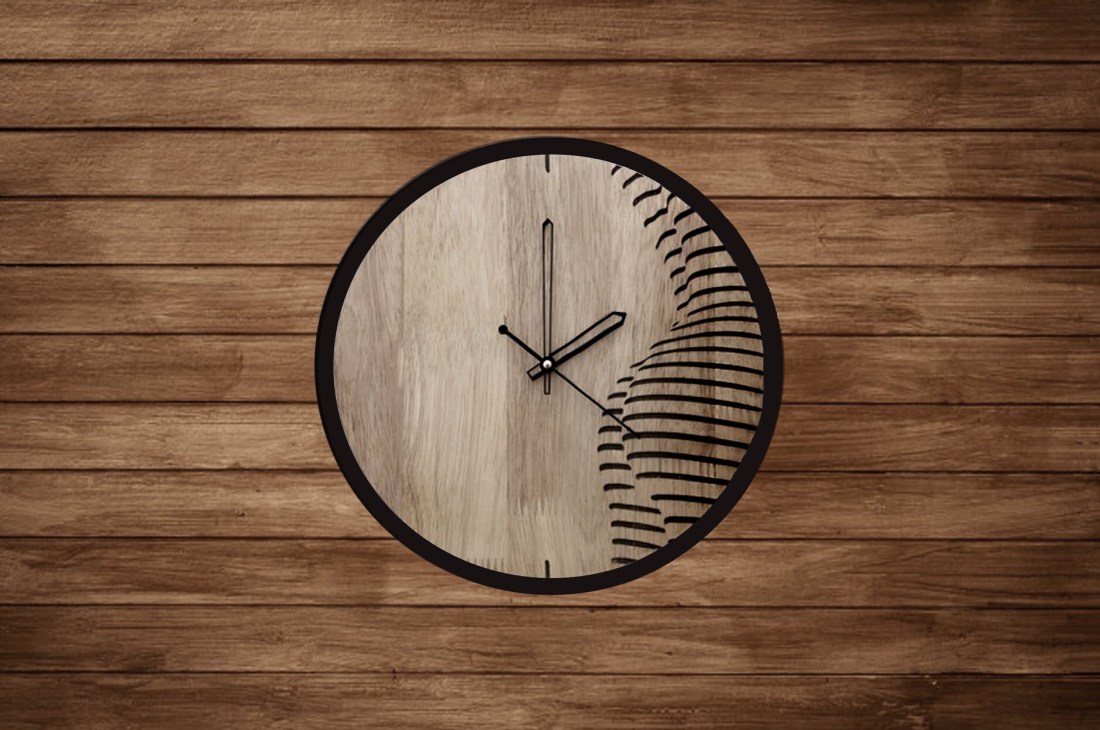
He rose feebly from his elevating recliner and shuffled deliberately out the back door with the help of his walker, in spite of my insistence that my daughter and I could handle it. You don’t argue with your 91-year-old grandfather, however, especially one as headstrong as mine. While visiting my parents for a few days in the DFW area one summer, my oldest and I found a moment one afternoon to drive to my grandparents’ house and retrieve a lawnmower they no longer could use due, of course, to their age, and she and I were happy to load it ourselves into the van to transport it to my parents’ place a brief 5-minutes away; if not, that is, for his resolve first to teach me a thing or two.

As if my years of practical experience with this simple machine counted for naught, he scooted hastily out the back door and into the driveway, released his grip on the walker, grabbed the handlebar of the mower with his left hand, and with awkward elderly aggression repeatedly yanked the pullstring with his right in order to demonstrate for my benefit how to start the motor. I gave up on my insistence and resigned myself to the likelihood that my teenage daughter was about to suffer the indelible trauma of Papaw cranking a lawnmower and collapsing violently and fatally to the pavement from overexertion. To my surprise, it started, he survived, and I thanked him for the unnecessary lesson as he shuffled back inside.

I have little desire to live to 100, as many do. Maybe I’ll sing a different tune the closer it approaches, but from my vantage point on the timeline, old age is no picnic. We all think we want a long life, but what I suspect is what we actually want is to put off the reaper for as long as possible. Though we all have our beliefs about it, death is largely an unknown, and the unknown is a source of fear for us all, especially those of us with little faith. The Bard put it best: “But that the dread of something after death, the undiscovere’d country, from whose bourn no traveller returns, puzzles the will, and makes us rather bear those ills we have than fly to others that we know not of?”

In any event, my grandparents, now 93, find scant strength or energy to do much more than gingerly transition from one seat to another inside their modest home, and this very seldom. Trips outside of the house are rare, and for good reason. The world is built for a pace that often exhausts even me; how much more so for them, exceeding the capabilities of both their minds and bodies.

It would seem an accomplishment to have reached their age. The only fact as impressive might be the number of years they have been together: 75. Their marriage has nearly outlived the CDC’s researched average life expectancy of most Americans, which they plot at 78 years, give or take. A few months ago, they celebrated this milestone in their own quiet and understated way, satisfied with a fried chicken dinner with my parents, my wife and I, and our youngest. No gifts were requested or exchanged. There is nothing on God’s green earth nor among man’s manufactured creations they either want or need any longer other than a good meal and the company of family. They have both given and taken much of what one is able to of life and have exhausted their interest in the common wants and pursuits of younger men and women who have many years stretched ahead of them.

Our visit in celebration of their anniversary concluded on Saturday, and we left the following Sunday morning. My wife and I and our son began the 4-hour trek back to Houston, departing bright and early in order to pick up our daughters, who had spent the weekend at a church youth retreat. Timing ourselves to arrive at noon, we grabbed on the way out of town our son’s favorite sugar-saturated breakfast — donuts and chocolate milk — and were on our way.

Scarcely an hour into the drive, my wife’s phone rang. She answered familiarly, though I could only guess at who was on the other end. The comfortable greeting segued jarringly into an expressively ambiguous “What?!” as I wondered at both who might have died and who was thoughtful enough to share the tragic news. Instead, she turned to me and exclaimed with unabashed delight that our oldest was calling from church to tell us she was getting baptized that morning during the service. She had made a “confession of faith in Christ,” as we Baptists like to call it, and was performing her first act of obedience as a new Christian.

We all bear hopes for our children as they mature, some of them very specific and unique. For parents such as my wife and I, our Christian faith is an inseparable aspect of our identity, in no small part due to our parents’ influence, both of whom were ministers. The decision our oldest made that weekend remained at the top of our list of hopes for her and her siblings from day one, even more so as adoptive parents, considering we often feel as if we’re making up for lost time in their early upbringing. The relief, satisfaction, and joy of learning that they have independently embraced your faith, making it their own, cannot be understated. There are few decisions they will make in life that will have a greater impact on how they will choose both to see the world and to act upon it, a world that increasingly pushes faith to the margins or dismisses it altogether.

As ecstatic as we were to hear the news, we pled with her to wait until the following Sunday when we could attend along with her grandparents. Moreover, I asked her for the privilege of baptizing her myself, still technically a licensed minister, though I did not pursue it as a career as I once had planned. She gladly agreed, and we ended the call. Though the decision was her own, my wife and I in silence and welling tears took each other’s hand, a knowing gesture expressing a sense and gratitude that we are, after all, having an impact upon them.

Pre-baptism

Though the role of parenting never truly ends, Paul’s exhortation to his Roman readers centuries ago — “Be joyful in hope, patient in affliction, faithful in prayer” —seemed fitting for where we found ourselves up to the moment she shared the news. It’s an ideal verse for parenting in general, as it is for the life of faith. And as much as I could retrieve my college toolbox of rusty hermeneutical implements to plumb its meaning, I find ample clarity on the surface to see through to its depths.

“Be joyful in hope”

“Are you okay?”

I heard this question from my wife more times than I can count during the first year of our marriage. The fact is, I hail from a family whose emotions are generally subdued. We’d make great poker players, if only for our lack of facial ticks or cues (though I am told I have made a recent habit of talking to myself). Wearing one’s heart on one’s sleeve, as the expression goes, is just as risky emotionally as it is physiologically for my ilk. Not so with her kin. As couples do, we learned a few things about one another once we were under the same roof, one of many about how we do/don’t express our feelings. My answer to her question was typically that I was fine, which was true, but after a month or so of this, it left me with the impression that one of the implications of our marital vows was that I turn cartwheels across the living room if I were even moderately pleased in the moment.

While I am generally “fine,” it might surprise those with whom I’m acquainted that if there is a yin and yang in every relationship, it is I who bears the honorific of “sourpuss.” I lean towards the negative end of the spectrum in our partnership, though, perhaps, not to the extreme. With only moderate influence, my confidence may be sapped and feelings tipped easily to the pavement by the difficulty of the moment, especially when it regards the frequent ups and downs in the lives of one’s children. My wife, by contrast, is characteristically optimistic and positive about life and all that it presents. It is one of her many attractive qualities as well as a reason, I would argue, I often hear another loaded string of words from her that instantly elevates my anxiety: “I have an idea.” Such ideas as hers, furthermore, tend not to be small in stature and carry the expectation that I find a way happily to get on board. They are big and bold, and this, I believe, because she is “joyful in hope,” as Paul wrote. She generally expects the best of wherever she focuses her efforts, and even if such expectations are dashed, she merely picks herself up and moves on to the next idea.

While we both agreed to it and believe (on most days) we were called to it, parenting by way of adoption was one of these big ideas. If I had thought the 1-2 years of training was hard, I was in for a shock once the kids were placed. “They have no idea what they’re getting into,” my mother expressed to my siblings, each already in the thick of parenting for several years. Prior to parenting, the endpoint of my various “hopes” often landed at the end of the week, month, or year; in other words, at a distant point in the future. The phrase, “take it a day at a time,” however, took on startlingly new meaning with kids. The object of my hopes shrunk temporally — Let’s see if we can make it to bedtime without incident. Currently, we are finding ourselves in the thick of the teen and preteen years.

I will admit, though, that I have felt little joy in hope, as Paul encourages, even in the smaller day-to-day portions. The fact that he does encourage it, however, indicates that we have a choice. How hard a choice it is to make. We hope especially for big change and progress in our kids, but it is often slow in coming, if or when it does.

When I lowered and raised our oldest in the cold water that morning at church, I felt a hope fulfilled. It was easy to find joy in that moment, and, not to mention, to wish that I had chosen to be joyful in my hope until then. My mother was recently asked what advice she would offer her younger self given the opportunity. “Don’t worry so much.” Likewise with hope and the attitude we choose towards it. As much a high it was in that moment with her in the baptistry, there would be a down just around the corner, to be certain. Such is life with children.

“Be joyful in hope,” Paul says. Choose joy as you wait, as he segues into the manner in which we should do so under unfavorable circumstances.

“[be] patient in affliction”

He coasted into the oncoming lane, thinking the maneuver would allow him to avoid the car that had drifted into his just ahead. The other driver drifted back, however, and then once more as each responded in kind. They collided at the last second, too late to correct.

The police report took longer to read than the event itself, which was a theory, at best, since no witnesses were present. The drifting driver was drunk, and he would languish in the hospital for another week, his life ending ironically on the day my grandparents and mother were to celebrate when my uncle’s began. His life, however, ended instantly that night on the road.

I would never have the privilege of knowing my mother’s brother, who exists for me only in various stories and a few photographs. I’ve thought it odd that he should survive the many deadly perils of the Vietnam war as a marine only to meet his end at the hands of a careless driver once home, and this not long after his return. The best years of his life should have been yet to come, but it was not to be.

My mother had anticipated upon his return a relationship as adults better than that they had shared as children, which was often strained. My grandparents had to endure the tragedy of burying their child, a fate no parent would wish upon themselves or others. For each of them, the grief of the loss became what felt much like a physical affliction, lingering and painful, deep into the marrow. There would be no closure.

The “affliction” my grandparents were forced to endure patiently following his death was not for a hope that he would return to life but the absence of an answer to the overwhelming sorrow they would feel in their remaining days, months, and years. They would live in the unexpected reality of an unshared life with their only son. How does one ever overcome such an affliction?

I can’t imagine how one could ever arrive at peace after such a devastating loss. What good is patience if my child will never return in this life? One either wallows in bitterness, or allows the years and one’s faith to reward patience instead with one’s grief. I am happy to say they opted for the latter, finding other joys in life while preserving in gratitude the memory of their son.

I still have my children, and, hence, hope for my patience with the “afflictions,” if you will, that they bring home. If my grandparents were able to move past a grief that threatened to drown them, surely I can find the patience to deal with the day-to-day.

“[be] faithful in prayer.”

My grandparents’ home was modest by today’s standards, but it sufficed, and it was a safe and comfortable place we enjoyed visiting during our childhood. We learned to love and cherish what we saw and experienced there. The backyard garden full of vegetables, my grandfather’s workshop walls lined with all manner of tools, a batch of homemade chocolate chip cookies cooling on a sheet of wax paper in the kitchen — all became welcome and familiar sights as the years wore on. But it wasn’t only the daylight hours in their home that left an impression on me.

Rising in the middle of the night, a step or two was all it took to traverse from the guest bedroom for a quick trip to the bathroom. At the end of the short hallway was another bedroom, though used as such only when all three of us siblings were visiting. Without fail, if the time was right, I would catch a glimpse of our grandmother crouched on the floor, Bible spread in front of her, studying and praying. This, we learned, was her private routine each and every night. Well after midnight and into the earliest hours, she would rise from bed and take advantage of the stillness and silence to study and to pray for all those she cherished. I never learned how long she spent up in this posture before returning to bed, but what was certain is that she was faithful in this practice for all the times I spent in their home.

I wonder if this verse ever crossed my grandmother’s mind in the midst of her despair at losing her only son, a pain — an affliction — that would never fully be alleviated. There is no pill to swallow that would restore the loss. One learns to live with it and, in their case, lean on the words, even if it is a circumstance for which there will be no change. How one could chose to remain faithful in prayer rather than bitterness is beyond me, but she did, habitually rising for an intermission in slumber to pray.

I also wonder that the reason God has allowed her to live as long as she has is because he knows me and mine still require the faithful prayers of spiritual stalwarts such as her. God knows I allow myself far too many distractions to practice this discipline as well as her. Then again, it’s difficult to find many nowadays who do. I’m thankful, nonetheless, that I have one in my bloodline who has never failed to continue praying for me. I can only hope to live up to the example she has set.

Yes, hope. Seated behind each of these admonitions from Paul is, I believe hope. Without it, I have no motivation to be joyful, no cause to be patient with my troubles, no reason to pray faithfully. Hope is a foundational Christian virtue, and I find I need more than a heavy dose of it, especially with the bad news and negativity circling us daily in the world out there.

But it’s often more a choice rather than a feeling, especially for those of us not engaged in the conscious practice of choosing it. The more any attitude is chosen, the more readily it becomes our nature.

My grandmother had no hope of ever seeing her son again in this life after that fateful night. There was seemingly nothing left in which to hope for him and every reason to cease caring about a cruel and unfair world in which all your hopes, in her case for her child, evaporate in an instant. And yet, she somehow managed to continue to try and live out this verse day after day in the first and earliest hours of each and every day.

That, I realize, was because she learned not to center her hope in her child and his future but in the one to whom she was offering her prayer.

I admit to despairing from time to time over my inability to maintain good personal habits, in the behaviors my kids may or may not exhibit, or in the pitiful state of the world at large. But it occurs to me, considering my grandmother, that the reason may lie in the fact that my faith, my hope, may be misplaced. No wonder I remain disappointed.

My grandmother has never instructed me to rise in the middle of the night to pray. This has been her discipline, not mine. But, unbeknownst to her, I’ve observed it enough to admire it gratefully, not just in the knowledge that I have been and remain one of the subjects of her prayers, but in the example of unwavering hope such a secret practice she has unwittingly left as a legacy to me. It is joyful hope that prompts her to rise, patiently and selflessly sacrificing time that could be spent in sleep, faithfully offering her prayers. I’m not sure to this day she knew I was watching, but I was.

Would that I would learn to demonstrate hope through such steadfast discipline, and that my children, perhaps my grandchildren, would be left an example of hope that would likewise sustain them in the lives they have yet to lead.

Numbered Days

It struck me while I was shaving. It escapes me why I hadn’t taken solemn notice of the change before then. Staring incredulously at myself in the mirror, it suddenly occurred to me, a month or two beyond my birthday, that I was now a 30-year-old man.

In my 20s, I still felt, at best, a “young” man. Mistakes, missteps, and immaturity could still be dismissed to the inexperience and naïveté of youth. I had an excuse for stupidity.

But I had never before imagined what 30 might portend for me. I grew up having been told about an uncle I never had the opportunity to meet due to having tragically met his end in his 20s. Somehow, he had survived the terrors of Vietnam as a forward observer in the Marines only to meet his fate at the hands of a drunk driver not but a few miles from home. A head-on collision returning from work, and it was all over. I was given part of his name in his memory once I was born a few years later. As a superstitious teenager, I feared sharing his name might mean I would share his fate. I consequently didn’t spend a great deal of time thinking about what to expect past three decades.

“Huh. So, this is what 30 looks like,” I expressed to myself. I had never experienced a formal rite of passage as a teenager, as in a bar mitzvah or something similar. This felt like such a moment, however, minus the festivities and religious underpinnings. Unceremonious and anti-climactic, but unmistakable — I was now a “man.”

I have yet to live every decade most men and women, by God’s grace, are permitted to be considered a “full” life span. But I have to say, one’s 30s, in my humble opinion, should by no means be wasted, and for good reason. Though there are always exceptions, most of us still have bodies that are not yet showing pronounced signs of age, allowing us to enjoy common and even vigorous forms of physical activity. There is likely still more of life ahead of us than behind. Many of us have finished school by the beginning of our third decade and are surging forward expectantly in our careers, but we may still have the flexibility of changing course if desired. There may be loans to pay off, but you are, for the most part, financially independent. For many, kids may have entered the picture, and they decidedly alter life plans. But all things considered, there is no place like one’s 30s.

I should mention that I’m observing all of this from the proverbial peak of the hill, granted I make it to 90 (which I’m not sure I want to; old age looks like anything but a party to me). I didn’t make time to reflect on “40” once it hit, and I never truly have. I expect, though, that 50 will be a similar moment to 30. How ponderous, after all, is it to say that you’ve lived half a century?

In any event, in my 40th year, the kids boarded the ship, and off we went. I haven’t had an abundance of time since to stop for hours and take in the view.

What you begin to notice in your 40s is that your body, notably, isn’t as forgiving of the poor choices you make. Taking care of it can start to feel like an uphill battle. Having more dessert, or more of anything ingestible, for that matter, is almost never a good idea. The doctor tells you that this is too high or that’s too low, so take some of this, which, you realize, is currently in your parents’ medicine cabinet. That can’t be right, because they’re old, after all. Your brain may start playing tricks on you as well, especially if you don’t exercise it. Names evade me more frequently than they used to, even those of whom I am well-acquainted. Maybe that expanding bald spot at the crown of my head has something to do with that. Wait — are those white hairs in my beard?

Kids accelerate the progress of years, I’ve found, as many of you have as well. “The days are long, but the years are short,” I once heard someone sagely remark about raising children. I’m not sure why this is, but I can’t help observe that the passage of time while growing up before one moves out seems much longer than it does when one is parenting over the same span. “You blink your eyes one day and they’re gone,” more than one empty-nester has remarked to me. On the hardest days with them, I admit I sometimes think that day can’t come soon enough, though I admit the last five years have flown by; they’ve changed so much.

With age, even the slow days, collectively, are faster than they once were. Our middle daughter and I recently finished a 10-day COVID quarantine at home, alone, after she became infected at summer camp. Naturally, we did very, very little of consequence during that time — which is just another way of summing it up as “boring,” as she would unapologetically describe it. Nonetheless, I found that the evening each day came on sooner than I would have expected.

Fast or slow, the years are here and then gone. There are gains as more of it passes, but there are inevitable losses as well. I can take the fact that I’ll lose a few things along the way and have even begun to, namely physically and mentally. I feel somewhat prepared for that. It’s the loss of time, however, and especially the less of it that’s available that gives me pause.

Many decades ago, songwriter Jim Croce crafted his song “Time in a Bottle.” A brief tune, the memorable melody alternates between haunting and hopeful. “There never seems to be enough time to do the things you want to do once you find them,” he shares in the chorus. His inspiration for the song, I understand, was the birth of his child and the realization that, in spite of the fact that it would seem they had many years ahead to spend together along with his wife, their time would ultimately have an end. Little did he know how true this would be. Like the uncle I never met, Croce tragically and prematurely met his end. Only 30 years old, he and those with whom he was traveling died instantly when, on their way to a performance, their plane collided into a tree shortly after takeoff.

The reality of death makes life itself all the more precious and meaningful, they say. I like to think Croce’s life, though not “full” in the sense of the span we all hope for, was not wasted if for no other reason than that he left us with verses that ask us to pause and learn to value the time we are given. He did not live to raise the child who, in part, was the muse for his song, but his time was used well and and his talent wisely.

“Teach us to number our days, that we may gain a heart of wisdom.”

I don’t know if Croce was a religious man, but I imagine this verse could have served as further inspiration for a song such as this. It’s one of a select few verses pinned on my work cubicle wall in an attempt to remind me of something I so often forget but will be ever more important as the days, months, and years move along: your time is limited, so use it wisely.

Were I to number the days that I’ve wasted time, I’m certain I’d lose count. I could say the same for the days I phoned it in or failed as a parent. I worry at times how the kids will remember me once they’re grown or how my influence on them will be beneficial or detrimental. None of us is perfect; we figure this out never more quickly or viscerally than as parents.

I remember few of my parents’ mistakes with my siblings and me, though I know they would say they committed more than a few; almost any parent would echo such a sentiment. But just as the reality of reaching my third decade struck me while gazing at myself in the mirror, it strikes me that I rarely, if ever, remember any parenting mistakes my own might have made.

“I thought my dad was tough on me, and now, looking back on it, I just remember the good stuff.”

No, I didn’t voice this quote myself, nor did I pull it from the pages of a book. Just for fun, I’ll leave it to you to trace the reference. But I pray it could just as well be uttered by any one of my kids years from now as they learn the wisdom of numbering their own days.

Continue reading “Numbered Days”