“This is probably going to be it guys.”
My mother’s text to my brother, sister, and me, we had been anticipating for at least a year, though what we couldn’t foresee was whether it would first concern our grandfather or grandmother. In their mid-90s and each declining steadily in different ways, it was impossible to tell whose body would be the first to fail. The early afternoon of May 7th, 2024, while seated in his living room recliner, my grandfather’s heart, subject to several attacks over his late but full life, began to struggle once more, this time, however, resisting any and all remedies. By the time the following day dawned, he would be unresponsive, my weak and frail grandmother doing her best to comfort him through her tears as his chest heaved violently and mechanically, the body doing its best to survive even in absence of consciousness.
After innumerable messages and calls as time slipped away, I would answer the final call from my mother 24 hours after it had begun. Relief commingled with grief choked in my throat, as I held back the bitter emotions when she spoke the long-expected yet unwelcome words.
“It’s over. He’s gone.”
My earliest memory of my maternal grandparents is a regrettable scene in which I brought my grandmother to tears. I’m not more than 3 or 4 years old and seated in her recliner in the room they long referred to as the “den.” Her chair is adjacent to the television at an angle plainly unsuited for comfortable viewing, an arrangement that implies little interest for her in what the box has to offer. The armrests of the recliner are fashioned of polished wood rather than cushioned upholstery. In my hand is a small, die-cast, jet airplane toy.
Why I did what I did next, I can’t excuse to anything other than idle, childish curiosity. Like a hammer driving a nail, I point the nose of the toy plane in my hand down and poke the surface of the armrest. Instantly, an indentation is left in the formerly smooth, glossy wood. The thought that I’ve permanently damaged something that belongs to someone else never crosses my impressionable toddler mind. Instead, there is only youthful interest. So, naturally, like a busy woodpecker, I drop the nose again and again and get to work, experimenting dutifully with the phenomenon of cause and effect. Before long, the armrest is blanketed with a sea of tiny depressions.
I don’t recall precisely what may have happened next, but what I do remember, accurate or not, is my grandfather trying his best to console my grandmother upon surveying the irreparable damage. Whether or not I was reprimanded, I can’t say. What is clear to me, though, is that this final scene is what made the deepest impact upon me. I could see my actions had made an emotional dent, so to speak, on an adult, no less, much like the physical dents left in the armrest. I learned an unexpected, more poignant lesson about causality; and I would consequently not make that particular mistake again.
Memories are curious things. I’m sure there was more to this one, and it’s likely my grandparents would have told it differently. But the details just described that have remained in my mind all these years, real or imagined, would seem to be most important and, moreover, critically formative in learning respect for the feelings of others. Fortunately, the tenor of this first memory is not representative of the vast collection I have of my grandparents or their personal history.
We all start with a name, and the oldest grandchild bears the distinct privilege of determining what new moniker grandparents will assume. You may argue that it’s parents who introduce them to the child and refer to them in one way or the other. This may be true. However, I would argue that no matter what you articulate, a child will pronounce whatever it is they think they hear. For my part, I heard “Meme” and “Papaw.” And so they are to this day.
The closing decade of their lives found them, as many in their 80s and 90s, having lost general interest in common things and common pursuits. The world was reduced, willingly, to their living space, a modest, single-level, duplex apartment a few short miles from my parents. Freedoms that our oldest children were beginning to enjoy had been in steady retreat for them. Time and frailty forced them to give ground days, months, and years at a pace until naught was left to them but to survey their past and make peace with it or take pleasure in it. I would contest the scales of their life tipped decidedly toward the latter.
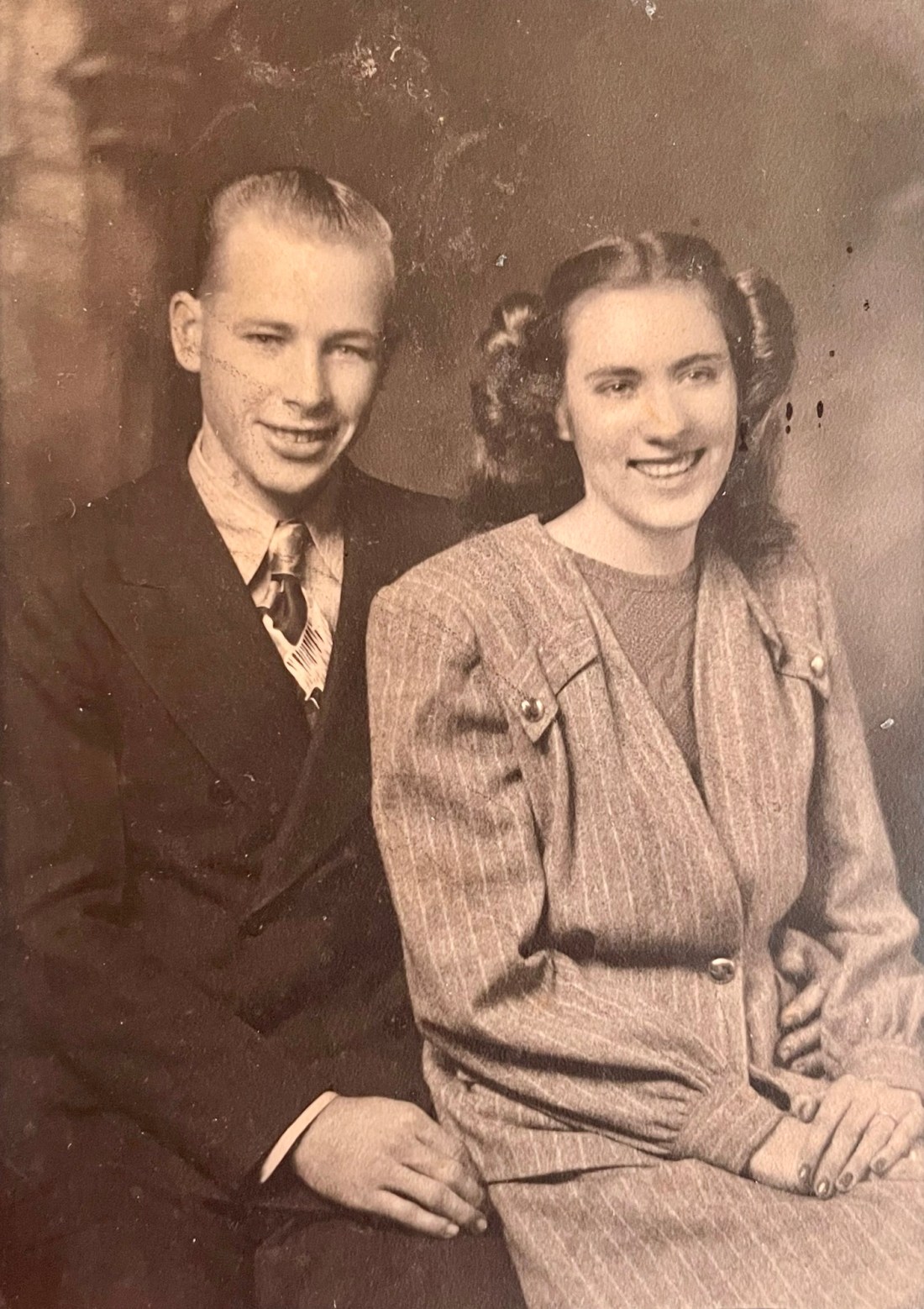
James Raymond Tomlin and Frances Gladine Taylor were born in late Great Depression-era Arkansas. My grandfather grew up with a small army of siblings, an emotionally-distant mother, and an absent father. My grandmother enjoyed the company of her older sister and brother and her kindhearted mother, whom I had the privilege of knowing as “Nana.” My grandmother also grew up without the presence of a father — a fact for both of them not lost on me, a “stay-at-home” dad to kids who also have no relationship whatsoever with their own fathers. To say they did without modern comforts would be an understatement. Like many in their time, they learned to work hard for everything they earned, and, to my knowledge, they didn’t complain that they had to do so. The world was what it was. The reality prompts a pause both for myself and in consideration of the youth of today, many of whom, while worthy of admiration in some ways, are provided with a host of privileges that seem to be accompanied by a host of entitled behaviors. But I digress.

They eventually found one another in their late teens, he having influenced her religiously by taking her with him to church. Over the years, her faith became the stronger of the two. As I’ve mentioned before, unscheduled trips by my siblings or me to the bathroom at their home in the middle of the night often found my grandmother devotedly studying and praying while crouched ascetically on the carpeted floor of their front bedroom, a practice which began following the death of their son. In any event, they married only months after meeting and began what would become the longest marriage I’ve ever known personally, at an almost inconceivable 77 years.
My grandfather’s working life was a matter of pride, as I observed in the handful of times he took the intentional opportunity to share about his first job selling newspapers on street corners as a child still in single-digits. In time, after resettling in the Lone Star State, following a series of jobs, he completed his education as a trade electrician and spent the remainder of his working life with Dow Chemical in Freeport. I still remember weekdays, as a kid, Papaw arriving home promptly at 4:30, Meme dutifully having the table set and ready for what anyone else except for them would consider an early dinner.

“Dutiful” is the best description I could stamp firmly upon the character of my grandmother. Her life was spent, almost iconically in their time, in the devoted care of house and home. She never, in all her years, took on a professional occupation or expressed much of an interest in it. Any task she took on willingly was seldom reimbursed; money, for her, was no motivator. Arriving on Fridays for a weekend visit was a timed arrangement for our family due to her routinely volunteering her time at the local hospital, where, for years, she assisted patients moving from here to there or with various tasks seemingly beneath the responsibilities of paid staff.
Such was their life before my grandfather’s retirement. Following this, their lives remained active, maintaining one of several houses he and my grandmother owned and rented out, tending to their gardens, serving those with various needs at their church, or completing one of many woodworking projects in the shop he and my grandmother built in their backyard.

In short, as dull as it might read to young modern eyes, their life was not full of exceptional YOLO adventures worthy of Instagram or Facebook posts. They did not bury themselves in frenzied busyness, often mistaken today as the hallmark of a meaningful life, but in routine and deliberate occupation, understanding and accepting the purposes of their daily activity. Undistracted, uninterrupted habits of daily life afford moments of reflection that the digital noise of today drowns out, as I’ve often observed myself. My grandparents, however, lived in such regular, clockwork-like routines–disciplines, if you will–and have left me with an observed and admirable example to which I am compelled to return when life becomes too hurried even to hear one’s own thoughts. I have wondered that such careful, hasteless attention to their life and the lives of others was the profound effect of the most prominent milestone in their timeline: a sudden, heartbreaking death that preceded theirs by decades, a death not any sympathetic, caring soul would wish upon any parent.
He coasted into the oncoming lane, thinking the maneuver would allow him to avoid the car that had drifted into his just ahead. The other driver drifted back, however, and then once more as each responded in kind. They collided at the last second, too late to correct.
The police report took longer to read than the event itself, which was a theory, at best, since no witnesses were present. The drifting driver was drunk, and he would languish in the hospital for another week, his life ending ironically on the day my grandparents and mother were to celebrate when my uncle’s began. His life, however, ended instantly that night on the road.
I would never have the privilege of knowing my mother’s brother, who exists for me only in various stories and a few photographs. I’ve thought it odd that he should survive the many deadly perils of the Vietnam War as a marine only to meet his end at the hands of a careless driver once home, and this not long after his return. The best years of his life should have been yet to come, but it was not to be.
My mother had anticipated upon his return a relationship as adults better than that they had shared as children, which was often strained. My grandparents had to endure the tragedy of burying their child, a fate no parent would wish upon themselves or others. For each of them, the grief of the loss became what felt much like a physical affliction, lingering and painful, deep into the marrow. There would be no closure.
(Reprinted from “Hope,” published on July 26, 2022)
The birth of James “Jimmy” Raymond Tomlin, Jr., on August 9, 1949, transitioned my grandparents into the tumultuous experience of parenthood as the “happy days” of the 1950s got underway. Almost four years later, my mother entered the world on May 13, 1953, as their second and final child. I can still see in my mind’s eye hanging on the wall of my grandparents’ master bedroom the large, framed black-and-white portrait of the two of them together as children, happy and smiling, eyes fixed off-camera as if anticipating what lied ahead for each of them. The seemingly idyllic image would belie in a few short years a relationship fraught with tension as childhood gave way to adolescence.
The absence of one parent or another early in life would have an impact on anyone. Though I never recall my grandfather speaking at length about it, I know his father’s absence had to have informed his own style of parenting, which, unfortunately, was as a strict authoritarian. While my mother made it through, reluctantly, her older brother inherited their father’s stubborn resolve, which sustained a palpable, trauma-inducing tension, until my grandfather eventually ordered their son angrily out of the home, once and for all. Soon after, he would join the Marine Corps as an odd act of rebellion, but not until his recruiter issued his first order to him, once he was made aware his parents would not have offered their approval: “Call your mother and tell her what you’re doing.”
The news would devastate my grandmother. No parent wishes to send their child off to war, and Vietnam was the divisive conflict of the day that had claimed the lives of many young men. Such was her fear when they saw him once more before he shipped off to the East, where he was to serve as a forward observer.
I can only imagine what horrors he witnessed on his front-line assignment, which I’ve read from veteran accounts offered a relatively brief life-expectancy. Yet, somehow, he survived, and in 1971 was welcomed back home to return to civilian life. He would never share the details of his experiences, however, nor would he ever have the opportunity. His life would end abruptly on his way to work on a road outside of town just a week shy of his 22nd birthday.
Two moments following his passing permitted them a sense of closure to their grief and allowed them to press on with the business of living. My grandmother shared that she received a vision late one night. Stirring awake, she found her son’s form standing serenely near the end of their bed, and he conveyed to her that, not to worry, he was alright and would be alright. The simple message of comfort was all she needed to begin moving on, and so she did. It would reinforce her growing faith in God and would allow her to make peace with her son’s absence. My mother and her father had no such vision. Theirs, by contrast, was a silent, shared moment. While feelings remained raw, my mother entered their den one day to find her father sitting pensively in his recliner. She sat down next to him and, after a pause, allowed herself to weep for her lost sibling. As she leaned against him, he soon allowed his own repressed tears to flow. It was a rare, vulnerable moment for each of them that would connect them in a way they had not been until then.
“I’ve lived with a lot of regret over my brother,” my mother has said. Never were they afforded sufficient time or opportunity after his return to repair their relationship; nor were my grandparents. This reality informed how she related to her parents thereafter and is one of the reasons her children enjoyed as close a relationship as kids can have with their grandparents, who were altered as a result, and who I remember as kind, generous, and loving souls to the three of us. His death changed them all.
Backyard rides in the wheelbarrow, Friday nights watching television with popcorn and Diet Pepsi, visiting with them on their back patio during a rainstorm, eating Meme’s Jello and whipped cream out of bronze tins, helping Papaw with one of various projects in his shop or at one of his rent houses . . . I will remember many things about them. What I will remember best, however, will not be any of these as a child but a brief and special time I spent with them during my budding years as an adult.
In January of 2004, I relocated from DFW after completing my graduate degree to begin my life’s occupation as a public librarian. This brought me back to Houston, and just under an hour from their house in the blue-collar town of Angleton, where they had spent most of their adult life. They opened their home to me for the time it would take to find a place closer to work, and so I would live with them for a month until I landed in an apartment complex situated directly next to Space Center Houston in the suburb of Clear Lake.
For a brief time, my life would intertwine with their daily rhythms. Although I had every intention of pulling my own weight, hardly intending to mooch or take advantage of the arrangement, my grandmother could not help her homemaking habits during my stay. I would often return at the end of each workday to laundry clean and folded, accompanied by warm, homemade, chocolate chip cookies on the kitchen counter. Dinner would be ready as well, and rarely was I expected to lift a finger. The exception might be weekends, when my grandfather recruited me for a project or two—time and effort I was happy to offer in exchange. Standing on the cusp of the rest of my life, it doesn’t escape me that their own son, whose name I shared, once stood in a similar place years before. I don’t know if either of them made such an observation as well, but by all appearances, it was a second opportunity to send one of their own out into the world, this time with the confidence and assurance of a relationship at peace with them, and vice versa, come what may.
I made regular, weekend visits after that month and for several years following, until foresight and aging suggested that they relocate closer to my parents in DFW so that they could look after them as they anticipated their closing years. And close, they did. As I write, it has been a single week since my grandfather’s passing, and my grandmother is sure to follow in due time, though much of her careworn demeanor has ebbed in the last several days, no doubt from the calm of knowing she no longer has to worry about her partner.
During the final hours, as my grandfather’s body struggled to capture air and he slipped into unconsciousness, she never left his side, pained tremendously at his body’s struggle to hang on, shedding all of her tears here at the last. “You go on ahead,” she would tell him, “but not too fast, because I’ll be right behind you.”
“Guys, I don’t know if I can do this.” My mother kept us updated via text, my brother, sister, and I each with our own families, unable to make the trek up to be present as it transpired. My parents’ final calling in life before retiring was as hospice caregivers, so they were no stranger to death and dying, having attended the waning moments of many, many strangers. My mother’s words, however, were very telling, indicative of how much more painful it is when it involves someone about whom you care very deeply. The process of dying is often unpleasant. The very end can be a peaceful moment, but until that point, the body often fights aggressively, almost clumsily, to stay alive. They asked us to pray that it would end soon for his own sake, and so we did.
As he struggled, I chose, I suppose as a means of honoring him, to engage in an activity he thoroughly enjoyed in life, and in which he seemed to be proud that I had taken an interest. I stepped into the garage and continued working on an oak end table I was building for my wife, its partner having been completed a couple of weeks before. I made my final cuts and fastened the side and top panels patiently and deliberately into place, much as he would have, as I thought about the number of times I had assisted him in the backyard just outside of his shop. One of the last builds I helped him with was a bookshelf, which he constructed for me, and which, incidentally, happened to be made of oak as well. I still have it and will never dispose of it, likely passing it down to my kids before my time is up.

Shortly thereafter, my mother made the call I had long been expecting. It was over.
The day before, I had just picked up our youngest from school when my mother called to share an update. It came in through the van’s speaker, so my son heard it all. After we ended the call, he asked to know what it was about, and I told him that Papaw, whom he had met only a handful of times, was dying. Shortly after his questions ceased, it became unusually quiet as we neared home. As I glanced back at him, silent tears streamed down his cheeks. In spite of his lack of a close relationship with my grandfather, the reality of his imminent death struck a chord, and he wept for him. I did my best to comfort him, but little helped soothe his grief, and it would be several hours before he was consoled.
The following day, again on the drive home from school, I shared with him that Papaw had passed a couple of hours earlier. While still expressing sadness upon hearing the news, his grief expressed the day before was enough to provide him with emotional closure, and so I used it instead as an opportunity to discuss what it all meant, where we, as Christians, believe Papaw was now, and what it meant to be a Christian. Much of it he had heard many times before both in church and in his private school, so he was no stranger to the gospel message, which we had also shared with him personally in the past in an effort to plant a seed.
“Whenever you’re ready to make that decision, buddy, you just let mom and I know,” I said, just as I had on a few different occasions in the past. Whether or not I expected him to respond, I couldn’t say, but I left it there with him. After a brief pause, he decidedly looked at me and said, “Can we do that now?”
We had not yet exited the van and sat parked in the driveway. I called my wife down from upstairs where she was working from home, asking her to meet us where we remained in our seats. And right there, on the very day my grandfather breathed his last, our son began his life anew.
By the time he had said his prayer of confession and acceptance, my grandfather’s body was on its way to its terminal destination, where its form would be reduced to ashes prior to burial, delayed until my grandmother would eventually join him. As I considered the wonder of death and life realized within hours of each, I couldn’t help but think of the ancient, mythical phoenix, a storied creature that, at its own end. consumed itself in flame, leaving naught but a pile of ashes, only to have another miraculously reborn from the same ashes.
I have my own sense of the legacy my grandparents have left behind, just as my siblings each have theirs. Our son’s decision that afternoon, however, left each of us with a shared sense of his legacy of faith. Of all of the ups and downs experienced in parenting, few equal the unique and special joy of having your children willingly accept your chosen faith as their own; even more so for children not born to you, whose personal history began with years of which you were not a part.
Theirs was not a life that others might consider exciting or worthy of popular attention. The vain, ambitious teenagers among us might even classify it as somewhat boring. They did not travel the world, make a million dollars, accumulate thousands of social media followers, nor attain widespread fame. Yet, they meant more to me than almost anyone I could name in the almost 50 years that I’ve been alive, and this simply for their calm and steady dedication to their responsibilities, their faith, and their relationships. Despite a few bumps in the road and imperfections of character, on the whole, they lived and loved what mattered.
None of us need a world of strangers to love us in order to matter. Only a few, even one, I would argue, is enough. They mattered to me, and that’s enough.
I will miss them.