One Turn

“$134,500.”

My jaw hit the floor. At best, I would have guessed a couple thousand, which would itself have been justifiable cause for celebration. But I had long forgotten about the copy of the will that had been sent to the library many months ago and had begun this particular day with no expectations whatsoever. A seemingly routine call would change everything.

“How much?!” My elevated tone must have implied insult on the other end of the call, which couldn’t have been further from the truth.

“Is that not enough?” the executor replied. After reassurances to the contrary, we shared a laugh and then commenced discussing the details of the late Mr. Lee’s bequest to the Clear Lake City-County Freeman Branch Library, which I had been managing for just over a year. I then would do my best to wait patiently for the check in the mail. In other professions, such as my wife’s chosen field of chemical engineering, cash like that is chump change, here and gone in the course of an afternoon. In a public library, it’s a windfall of serious capital. We had just won the lottery.

Nine years previously, I had trepidatiously begun my career as a public librarian at this branch, which was on the cusp of closing the doors to its third architectural iteration, circa 1970s, and reopening in a state-of-the-art facility almost four times larger directly across the parking lot. At the forefront of my mind was my uncertainty from the first day I was placed alone on the reference desk whether having earned the degree would prove time and money well-spent, or if I should have instead opted for choice number two — to be all I could be in the U.S. military. Had I selected the latter, which I nearly did, the following year would have further altered my fortunes in the service of my country after the tragic collapse of a pair of towers on home soil. It’s anyone’s guess where I might have found myself deployed and what fate would have awaited me in some remote corner of a world in conflict. As it would happen, I selected study over soldiering, and so I landed among books instead of a battlefield.

After a year as an entry-level librarian on the front line of public service at this branch in and around the Johnson Space Center community, I nearly threw in the towel and ventured to other less turbulent waters, so to speak, or so I thought. I knew not what to expect after taking a job working for the general populace, and I certainly didn’t expect to be treated so poorly and ungratefully by the everyday folks I was sincerely trying to help. More often than not, the interactions were admittedly positive, and I proved myself capable of pinning down the answers they sought. But it’s true that one bad apple can spoil the bunch, in this case the bunch being the collective patron interactions in a given day. A single, truly negative encounter is a pall over one’s work day if you allow it to be, as I did time and again. I’d had enough of this entitled crowd, and so I would roll the dice and see if I could find better patrons elsewhere.

I was still too green to understand that working directly with the public simply opens yourself to encounters with difficult people. It comes with the territory. Changing the scenery is no solution. They’ll find you. In almost 18 years in the profession, I’ve observed there are many long-time front-liners who remain nervous and perplexed about this reality and who continue searching in vain for a remedy that will never present itself outside of themselves.

In any event, I attempted an escape to another large municipal system and was offered a position. Upon arriving for a day of preliminaries and paperwork, I stepped unwittingly into a HR disaster. At least one of many new-hires was wise to the dysfunction and walked out within the first 15 minutes, expressing her disgust at having wasted a day of vacation for this. I, on the other hand, decided to stick it out. The situation did not improve. By the time the day was done, it was discovered that none of us were informed about documents we were required to bring with us, after repeated inquiries they still had not determined at which of the many branches each of us would be placed (an important detail when searching for a spot nearby to lay your head), and, oh, by the way (as we all were departing in the late afternoon on our long respective routes home), there is one more stop here in town we neglected to tell you about; you’ll have to use additional leave time from your present job in order to return and take care of it. As if this weren’t enough, I was provided one final disappointment — I was not being hired for the position for which I interviewed but a step and pay grade beneath it.

Now, I do believe in providence. The 8th chapter and 28th verse of Romans I often forget to apply duly to any and every circumstance. This was a rare moment when a prayer for direction earlier in the day when circumstances began to deteriorate returned an answer as clear as fine crystal. The inept crew at this particular HR department were hardly working for the good of those they called and, by all appearances, were under the impression they were paid instead to sabotage their employer by repelling new-hires. On the flip side, I left with the bittersweet certainty that I should stay put where I was, and I was fortunate to learn that I would be welcomed gratefully back to the branch in Clear Lake, two-week notice notwithstanding.

______________

How does one determine the will of God? Why, in that moment, did I interpret circumstances as an indication he wanted me to stay where I was? Why could it not, from an agnostic perspective, simply have been what it was on the face of it — an incompetent organization in desperate need of improved hiring practices?
I can’t imagine a scenario in which I could irrefutably prove to anyone that God was indeed guiding me that day. I am not a skilled apologist, I have learned, so I’ll make no attempt here. I do think, however, that if all of us were honest with ourselves, there is plenty that each of us accepts on faith, though the substance of that faith may differ. As for me, I have seen and experienced enough, especially while I was under my parents roof, that convinced me of a good God who is involved in the world, and it has informed and shaped my faith over the years. But I also don’t believe I had no choice in the matter; I wasn’t irresistibly compelled to believe, though it could be argued I would be foolish and stubborn not to. Choice, I find, is still left to us, though God may be sovereign. It is just a part of what it means, I think, to be created in his image.

Dostoyevsky may have said it best in his novel “The Brothers Karamazov,” suggesting that we may willfully apply our preconceptions when interpreting events, personal or not, particularly if one is a realist/unbeliever:

“The genuine realist, if he is an unbeliever, will always find strength and ability to disbelieve in the miraculous, and if he is confronted with a miracle as an irrefutable fact he would rather disbelieve his own senses than admit the fact. Even if he admits it, he admits it as a fact of nature till then unrecognized by him. Faith does not, in the realist, spring from the miracle but the miracle from faith. If the realist once believes, then he is bound by his very realism to admit the miraculous also.”

I wouldn’t say I encountered miracles as much as intervention that day. Nevertheless, it is left to us to choose an interpretation based on the substance of our faith. I could have proceeded with the move, I suppose. The truth was, I was running from a difficult situation in an attempt to make my own life more comfortable, or so I thought. There is value in facing challenges, though many of us are conditioned to interpret them as a sign to seek an easier, more convenient way.

While I believe God was making use of circumstances to influence my decision, there was another hard truth I needed to understand — running from a challenge may involve nothing more than running towards another. Life isn’t always best lived seeking one simple, convenient, and pleasant path after another. If it’s not the frustration of dealing with contentious patrons, it will undoubtedly be something else. And sometimes, one difficult choice, one turn, if you will, is all that’s needed to make a world of difference in your life or mine.

______________

John Lee Hancock, like me, grew up in the blue-collar, chemical refinery town of Texas City. I would venture to guess that our similarities end there, but I have found it curious that there isn’t a movie director in present-day Hollywood whose films I am almost guaranteed to appreciate more consistently than his. In any event, his film “The Highwaymen,” released in 2019 on Netflix, tells the story of the manhunt for notorious killers Bonnie and Clyde from the perspective of the former Texas Rangers commissioned to track them down. Leading the pursuit is Frank Hamer, played convincingly by Kevin Costner, with Woody Harrelson in the role of his partner, Maney Gault.

Midway through the plot, Hamer pays a visit to Clyde’s father in Dallas. Perhaps seeing little to gain from either in the investigation, the pair use the encounter instead to wax philosophic on the nature of choice and fate. “One turn on the trail,” each utters familiarly, suggesting the notion of a course in one’s life set and determined irrevocably once a pivotal choice is made. While the elder Barrow’s imploring for his son takes issue with the idea that the choice reveals one’s inherent, inescapable nature, Hamer illustratively applies the phrase to himself, describing a single moment chosen in his youth that, he believed, dramatically altered and fated his life’s profession. The choice, the one turn, changed everything.

______________

My wife and I were once good friends without a hint of attraction between us. I still believe friendships can evolve into some of the best marriages, but that’s a topic for another time. Over a decade ago, I don’t remember precisely when, she was in the process of purchasing her first home, and I happened to be the friend available to whom she first decided to show it. We turned into the neighborhood, down the street, and then parked alongside the curb in front of the house. She excitedly shared the details with me for a few minutes seated there in her sedan.

Now, at that moment, I had no idea about what the years ahead held for me and how this casual afternoon stop was as much about what was in store for me as for her. Had my future self spontaneously appeared in the back seat to drop unwelcome spoilers, I wouldn’t have bought a thing he was selling; I wouldn’t have been prepared to hear any of it:

“Let me tell you what’s about to go down, Jim. First, this house. Take a good look, because a lot is going to happen right here for you. Your name will eventually be on the title. Yes, you heard that right. You don’t know it yet, but this is also your first home, which leads me to my second surprise. The girl seated next to you is the one you’ve been after for so long. She’ll figure it out before you do, but once you recognize it, you’ll have difficulty imagining anyone else better suited for you. Cue wedding bells. Third, you two will start a family right here. Maybe that’s not surprising, but here’s the kicker — you’re going to forgo the baby stage and acquire three older kiddos in one blow. Oh, also, they will bear absolutely no resemblance to you whatsoever. I’ll just leave it at that. Fourth, that great big library you unsuccessfully tried to escape several years ago? They’re going to put you in charge of it. Yes, you. Moreover, you and the staff will be afforded rare but rewarding opportunities to make significant impacts on the community, impacts that will be publicized even outside of the city and state. Much of it will begin with a phone call you aren’t expecting about the generosity of a man you’ll never meet.”

I never for a second would have believed any of that. But it did, in fact, happen. And it might not have had I ignored how I was being directed and had instead effected my flight a few years previous.

Time and hindsight reinforce anyone’s faith, I find. The downside is, of course, the waiting. I feel as if I daily face doubt about the goodness of God while dealing with one irritating, sometimes disheartening, challenge after another, especially in this stage of life raising kids in the home. Assurance can be long in coming while buried in the grind. But when I pause to look back on that day and see all of the remarkable things that have followed because, I believe, I obediently chose to stay, how could I not believe in a good God?

We’re taught in Scripture that not one of us is beyond the grace of God; not even a single choice can alter that. However, time isn’t returned to us, which makes each choice more valuable as the minutes slip away. It’s the earliest turn that stands the best chance of affecting the greater share of all those that follow. And that’s good news for those who believe in a good God.

Chapter 2: Dalhart

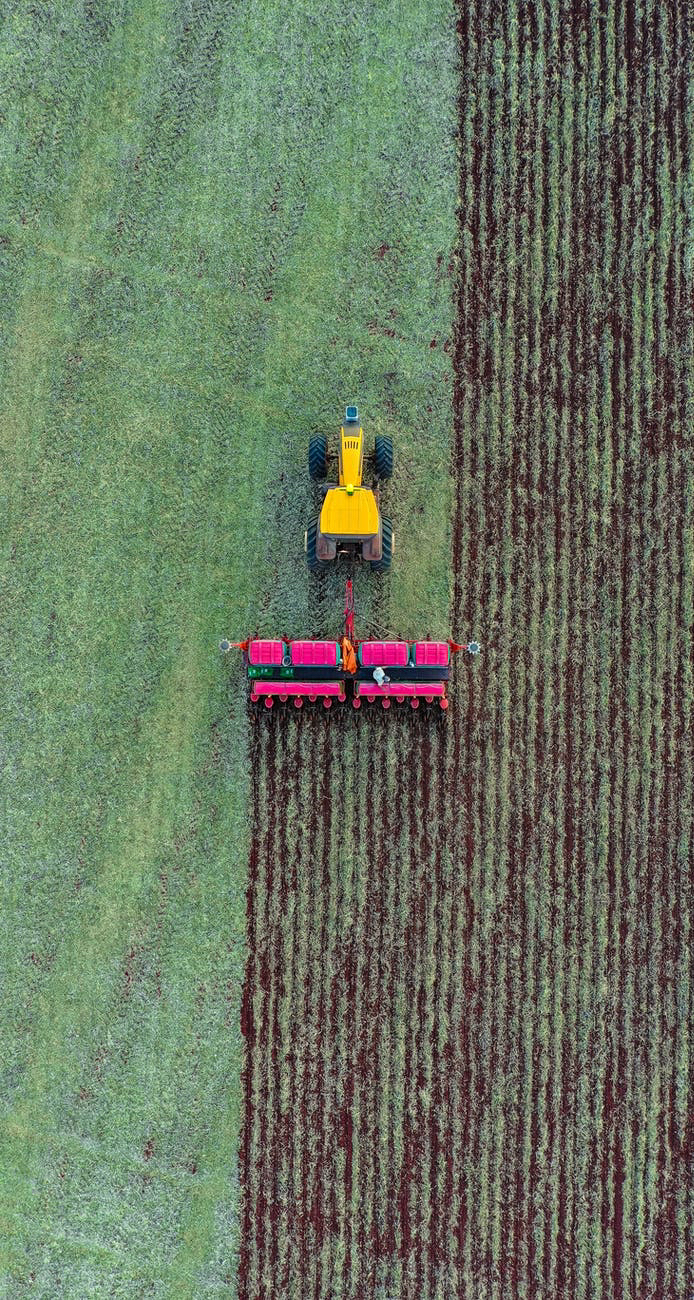
Carving broad lines into the dirt, he circled the tractor at the edge of the field his father farmed as a hired hand, straightened it out, and started anew. Plowing one endless furrow after another, Joel stole a longing glance at the cars speeding past on the adjacent road, each headed anywhere but here. Family duty held him firmly in the driver’s seat of the tractor’s cabin, though he would gladly relinquish it for a ride in the backseat of even the slowest vehicle escaping this dry and dusty patch of land outside of Dalhart. While he would later appreciate the work ethic instilled in him by his father, who expected him and his brothers to do their part by participating in the family trade as long as they remained under his roof, he derived no pleasure in farming and anticipated after graduation a life outside of such a town that offered few, if any, other means of making a living, even to this day.
Granted, there was nothing to discredit the modest, deliberately-paced community of Dalhart, so named for its establishment between Dallam and Hartley counties in the Texas Panhandle. Then again, there was nothing much to its credit either, in Joel’s opinion. Living in a small agrarian town suited men like his father, who had spent his entire life there, was devoted to his trade, and knew as much about the world outside of it as he wanted to and nothing more. In a way, Dalhart was a refuge from the busy, chaotic world beyond beyond its borders. Even my grandfather’s television, a veritable window in one’s living room opened to the wider world, was, as I recall in his later years, rarely tuned to anything other than golf or the weather; there was little else that captured or required his attention, and this by choice. I once asked him if he had ever considered living anywhere else, myself having recently arrived for a visit from the sprawling, noisy metropolis of Houston. “What?!” he exclaimed. “You’d have to be crazy to want to leave this place!”

My father shared no such sentiment, a fact that did not evade the attention of his own father. It isn’t a stretch to say that the numerous years David Johnson had spent working the land as a matter of necessity had become stitched inseparably into his very identity. To have a son who did not find equal meaning in this respectable form of labor was to suffer a personal affront. He was not an emotionally demonstrative man, however, though his departure from his childhood home as a teenager was contentious, to say the least. He made a rebellious escape of his own from a father with whom he didn’t see eye to eye and never once looked back in regret. Exiting the dust-bowl era, he found a way to make life work for him in spite of an unfinished formal education, eloping with his teenage bride, Zola Faye McBrayer, and focusing his life’s labor on tending the land. Five kids were to follow, Joel the fourth in line, preceded by Peggy, Nancy, and Steve, and trailed by Don.

Zola Faye’s fourth was an unplanned pregnancy. To make matters worse, conception was discovered following a procedure his mother had undergone known obstetrically as a “D and C,” which involves clearing tissue from the uterine lining. No viable pregnancy is biologically equipped to withstand such a procedure under the best of circumstances. Upon learning of the mistake, the doctor counseled abortion, convinced the fetus either would not survive or would be born unhealthy or severely disabled. Zola Faye refused. Defying the odds, the baby would be born to term, alive and healthy. She would give him the prophetic Biblical name “Joel,” meaning declaratively “Yahweh (the Lord) is God.” The improbable birth would be documented in medical literature. I would first hear this story many years later in a sermon delivered by my father, who shared of his mother’s conviction that it presaged a life determined for a special purpose or moment.

Whatever that purpose might be, this story would lend Joel a profound sense of God having miraculously intervened in his life long before he possessed a formed mind to perceive it. The words of Psalm 139 might as well had been penned by him, who, incidentally, was given the middle name “David” by his mother and father.

“Your eyes saw my unformed body; all the days were written in your book before one of them came to be.”

Central to this sense of meaning and purpose was the church, and for the Johnson household, attendance was routine and expected for all in the family. His father, David, arrived early every Sunday to open the doors of the First Baptist Church of Dalhart, his deaconly duties extending only insofar as gatekeeper and collector, namely offertory contributions and attendance numbers in Sunday School classes. Aside from this, he characteristically could be relied upon to shutter his eyes during the service not in meditation or prayer but in slumber. Yes, the pastoral message was important; he diligently brought his family each week, after all. It seems, however, he was simply a man who was at his best and most alert when moving, and a sermon afforded little opportunity for that. Zola Faye, by contrast, kept conscious and active attention, teaching the young married’s class, singing in the choir, and occasionally serving as pianist and, for several years, church secretary. As for Joel and his brothers and sisters, they were present and accounted for given the doors were open — Girls in Action, Royal Ambassadors, childrens and youth choir, Sunday evening church training, vacation Bible school, etc. Religious or not, one’s best social opportunities in a small town at that time were often provided by an engaged church, and the Johnsons’ extracurricular activities would imply it was practically a second home for them.

Growing up, Joel’s interests inclined toward literature. His oldest sibling, Peggy, unwittingly practicing for her eventual career in education, taught him to read before he ever set foot in a classroom. Once children’s stories were covered, he moved on to the family encyclopedia, an educational staple of many mid-20th century American homes. Further along than most by the time first grade began, he and another student were permitted in their reading class to occupy a corner of the classroom and lose themselves in any available story that seized their interest. He acquired a library card at the earliest opportunity and pored over every book on the shelves detailing the history of World War II and the Civil War. The daring adventures penned by Alistair MacLean were his favorite. When these were exhausted or unavailable, Readers Digest bound and abridged novels that amply lined his mother’s shelves would do. To this day, my father’s preferred posture is seated comfortably in a recliner with an open book. Conscious of it or not, he was building habits and forming values that would extend to his own children years later. My own career choice of librarianship undoubtedly began its formation during those early reading lessons decades ago between my aunt and father. For those of us led to believe we are the masters of our own fate, I would argue that nurture and influence stretch much further back into our familial past than we might imagine.

At 15, a friend loaned him “The Lord of the Rings” trilogy. “It’s a dangerous business,” Tolkien writes, “going out your door. You step onto the road, and if you don’t keep your feet, there’s no knowing where you might be swept off to.” Joel would spend hours discussing the volumes with his friend, enthralled not only at the exploits of the nine but, more importantly, moved by the spiritual themes undergirding the patient, expansive story, which, like many others he read, depicted places, real or imagined, dissimilar to the one he inhabited, fueling a desire to tread his own path into the unexplored world once given the opportunity. Something greater and deeper than the adventures he had read about continued to stir within, inspiring him soon to begin taking his first steps into a vocational life of faith.

Whether it was the stress of this call that weighed upon him or simple adolescent immaturity, Joel found himself during his senior year succumbing for a season, due to the influence of friends, to more than a passing interest in alcohol, a developing habit that he managed to conceal from his abstinent parents. Late in the academic year, he would pass evenings several times a week with friends overindulging. He didn’t relish the taste, but it did the job and did it well. Certain evenings passed out of memory entirely; the manner in which he made it home on these occasions were left a mystery.

There are few times in life that bear stronger potential to form both our best and worst habits than adolescence, and at his rate, alcoholism could thereafter have grasped and held him captive with relative ease if left unchecked. Had it succeeded, the story told here would read differently or, perhaps, not be read at all. To our great fortune, however, resourcefulness is one of God’s most enduring though often overlooked qualities. Every tool is at his disposal to shape our circumstances and character as he sees fit. He would recognize in due time what awaited him without an adjustment and would, thankfully, quit cold turkey. He would never touch another drop. The lessons learned would be put to good use, as they should for any seasoned minister. There is no shame in possessing a past, especially if it offers a personal education on the meaning of grace. And who better to comprehend and appreciate the lessons of one’s past in humility than those committed to professional ministry in the service of others, each with their own pasts? Christ saves us all from something.

Joel had spent abundant time pondering these and other spiritual matters for much of his brief life thus far, which led him eventually to consider whether it hinted at a call to a career focused wholly on God’s work. But to what, exactly? The works of Scripture, especially in the Old Testament, do not always describe the “call” of God in precisely the way many of us understand it today. Then, the Levites fulfilled the “professional” function, but primarily due to bloodline; it was a “default calling,” if you will. Many of those “called” who we read about were tasked with a very specific job in mind that did not necessarily carry a socially- or culturally-defined title that limited their role and responsibilities: be fruitful, build an ark, father a nation, lead my people, conquer, save my people, be anointed as king, rebuild the city, etc. All were called of God, but to an ordained task, not a defined title. I have met those who pursued a call in seminary who did not belong there, and I have known instructors who shared that observation. While there is no clear fault in following a call in the best way we know with the information we have, it’s wise to consider that we may limit God to think he can work with us only within the confines of professional ministry, though it most certainly has its place.

As best as Joel could surmise, just as many others do, his call should be pursued as a leader and shepherd of a congregation much like the one of which he’d long been a part, so he duly set out to obey prayerfully in the best way he saw fit. Consulting with his church’s pastor as well as select deacons in the body, he was approved and officially licensed into ministry. The duration of his first sermon barely gave listeners time enough to warm their seats after only seven minutes in the pulpit, but the brevity was no discouragement to him. Joel would continue in that direction.

At long last, graduation arrived. He summarily struck out on the road leading from town, blazing past furrowed fields over which he’d once driven. From here, there would be no stolen glances toward the tractors carving the dirt hours on end, though perhaps the metaphorical but fitting words of Christ, to whom he had pledged himself, echoed in his mind as he fixed his gaze forward and forged ahead.

“No one who puts his hand to the plow and looks back is fit for the kingdom of God.”

Just as the plow prepares the ground for the growth it will foster, Joel was unknowingly headed not yet into a life of career ministry but rather one of patient preparation for a task God had designed for him years later, a task which he would share with another. Her story began many miles southeast of the quiet farmlands spread across the Panhandle, nearer the noisy, steam-pluming refineries stretching along the lengthy coasts of the Gulf. Hers was a different hope for the future they would soon inhabit together.

Too Much of a Good Thing

I enjoy the sound of cicadas chirping — a swelling and fading chorus concealed in the surrounding trees. It’s nature’s summertime white noise where I come from. If you’re outdoors and your mind is absent of distractions, it can effortlessly lull you into meditation. I enjoy this most when sitting outside on a shaded patio in a comfortable chair, alone or with the sole company of my wife or someone with the presence of mind not to interrupt their chatter. It’s practical perfection when the weather is just right and you find yourself miles away from the nearest neighbor or the distant, manmade white noise of traffic — a rare brand of solitude that’s afforded only where there’s more evidence of nature than of civilization.

I’m thankful at such times for these fat, ugly insects, whose only other God-given purposes, to be blunt, are to serve as food for fowl or divine amusement as they clumsily and randomly body or head-shot you on their way to who-knows-where, prompting you to drop whatever’s in your hands and, with all the reflexes of a startled chimp, furiously karate chop the air like a Jackie Chan understudy. These seeming unsegmented fliers talk to one another in the packed and populated city as well, their conversations encouraging Zen-like reflection, but it isn’t quite the same for the setting. Inasmuch as the sprawling suburbs try to offer escape, separating themselves from the bustle of the big city, they still can’t hold a candle to the peace and calm of a cabin in the woods.

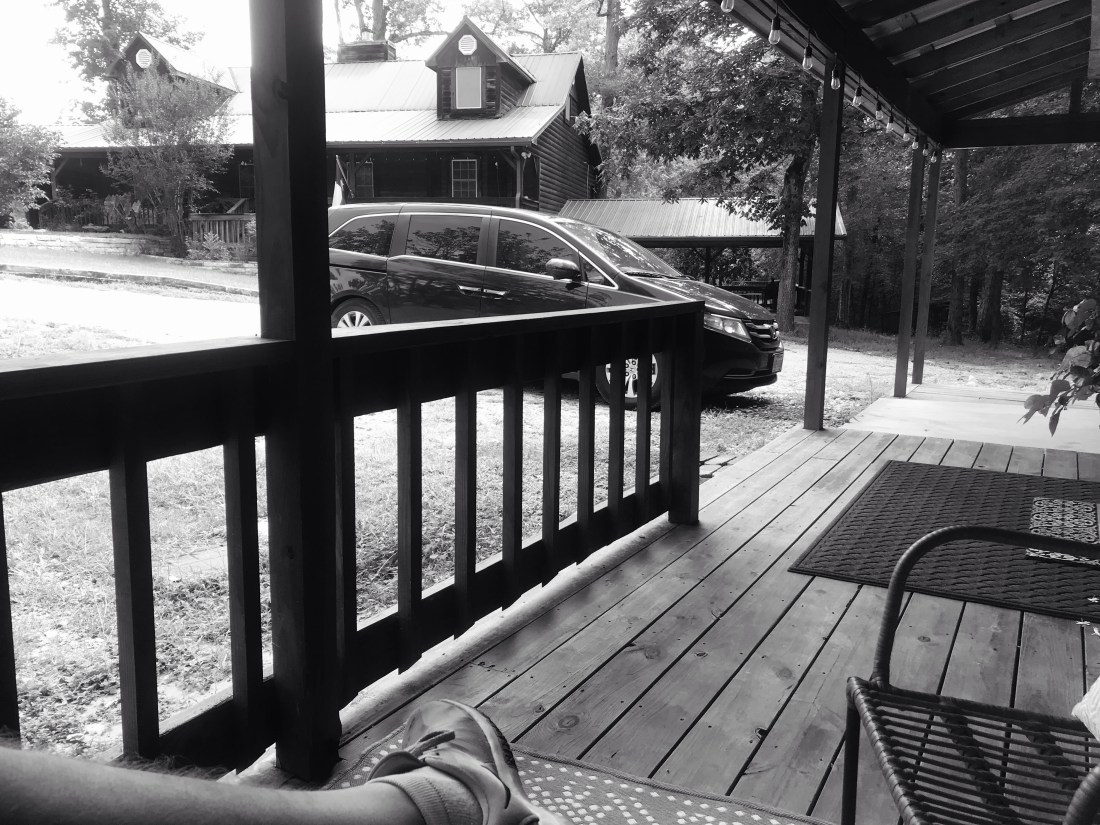
While the kids all spent their time at sleepaway camps for the week, my wife and I chose to spend a day and a night at a sleepaway camp of our own choosing, sans counselors or camp staff. Nestled off a precariously rising and falling dirt road more ambitious to exist as a canyon riverbed than an even stretch of pavement, we arrived at what amounted to a cozy studio apartment next to a residence, the only other one in sight from the front door. We ate takeout, read, and watched the Olympics. We slept very well, woke the next morning at our leisure, exercised, and ate a modest breakfast. After a little work online, I decided to try out the porch. I wasn’t disappointed. I don’t know how long I remained there pleasantly still and silent, but it was long enough to feel inspired by the hidden but chatty bug muses and pound out the first couple of sentences read above.

Long before I was ready, my wife poked her head out of the front door and noted that it was time to go. In truth, I’m doubtful I would have been ready to pack it up even after a weeklong stay. The solitude and take-it-easy pace offered at the end of a long dirt road are always hard for me to leave behind. There’s nothing like it to soothe the introvert or settle the harried soul of a big city dweller.

And leave we did, but not before a couple of drive-bys to scout out properties on the market. One of my wife’s many dreams is to own a vacation home, though it’s not presently in the budget, which she manages with the precision and attentiveness of an air traffic controller — she knows exactly where everything is and where it’s supposed to be. Not to sound redundant, but her organizational skills are off the chart in an organization that prides itself on organization, which should tell you something. She loves creating spreadsheets the way some are thrilled by a trip to Disney World.

In any event, we hopped in the van and headed out. We had time to spare for just a couple of property stops before the two-hour trek to retrieve two of our three kids and return to responsibility. While I don’t necessarily share the dream with my wife, I fully appreciate the wish to have one’s own personal retreat from the world. I feel it more as we drive and the road on the return widens, the frenzy and rush of traffic growing closer as we approach the heart of the city. The building speed and press of cars starts to feel like the pressure and stress of a race I have to win. I wish I were instead gingerly testing the shocks on the dirt road we left behind and resting on the modest, quiet porch rather than in the driver’s seat.

We’ve all binged on “House Hunters.” I tease my wife that each episode is essentially identical to the last, and it doesn’t take an uninitiated viewer more than an hour to see that I’m right. There are several rebranded versions you may also have enjoyed — “Beachfront Bargain Hunt,” “Caribbean Life,” etc. Though the same runtime and formula, these variants feature couples who possess a disposable income most of us would envy and who, more importantly, endeavor to utilize their resources to make tropical vacation realty their permanent reality. As much as it makes for good TV, it’s difficult not to watch and wonder that what they’re veritably attempting to capture is a feeling, not a place.

I’m often curious about what a visit a year or two later to those who’ve purchased a piece of paradise would yield; I have a hunch they aren’t as satisfied as they initially were with their beachside acquisition. I could certainly be wrong, but I’m guessing that the novelty has worn off, that the dream now realized has lost much of it’s luster. Vacation can be be virtually anywhere. While we all prefer varied locations, the feeling of escape from responsibility — from jobs, bills, relationships — is near the top of the list of reasons that we depart in the first place.

But vacation made permanent is less a retreat than a surrender. I recognize this anytime I step away from the solace proffered at the end of a dirt road. I don’t want to leave, but the fact that it’s temporary makes it so much sweeter. I would lose my taste and interest in cake if I made a meal of it every moment of every day. It’s the business of toiling six days that makes the seventh so sacred and desired.

“Peter said to Jesus, ‘Lord, it is good for us to be here. If you wish I will put up three shelters — one for you, one for Moses, and one for Elijah.’” Hard not to hear in Peter’s request a wish to remain there on the mountain, far above the troubles they faced routinely closer to sea level. Matthew records no rebuke from Jesus, and it seems they descended shortly thereafter and got back to the business of living. I have to wonder what Peter was thinking as they made their way down, but it is clear that he moved on with his life and mission, no doubt never relinquishing the memory.

I wouldn’t object at all if one day we had our getaway. I don’t expect I would receive any more rebuke that Peter did; nothing reprehensible for simply having it. However, it is possible to have too much of a good thing, especially if, as an escape, it transforms into its own inescapable distraction and, ultimately, a surrender from the life I’m meant to lead. The next time I find myself reluctantly driving away, I can instead be grateful that it was afforded in the first place. The rarer the pleasure, the better the flavor.