Dying Well

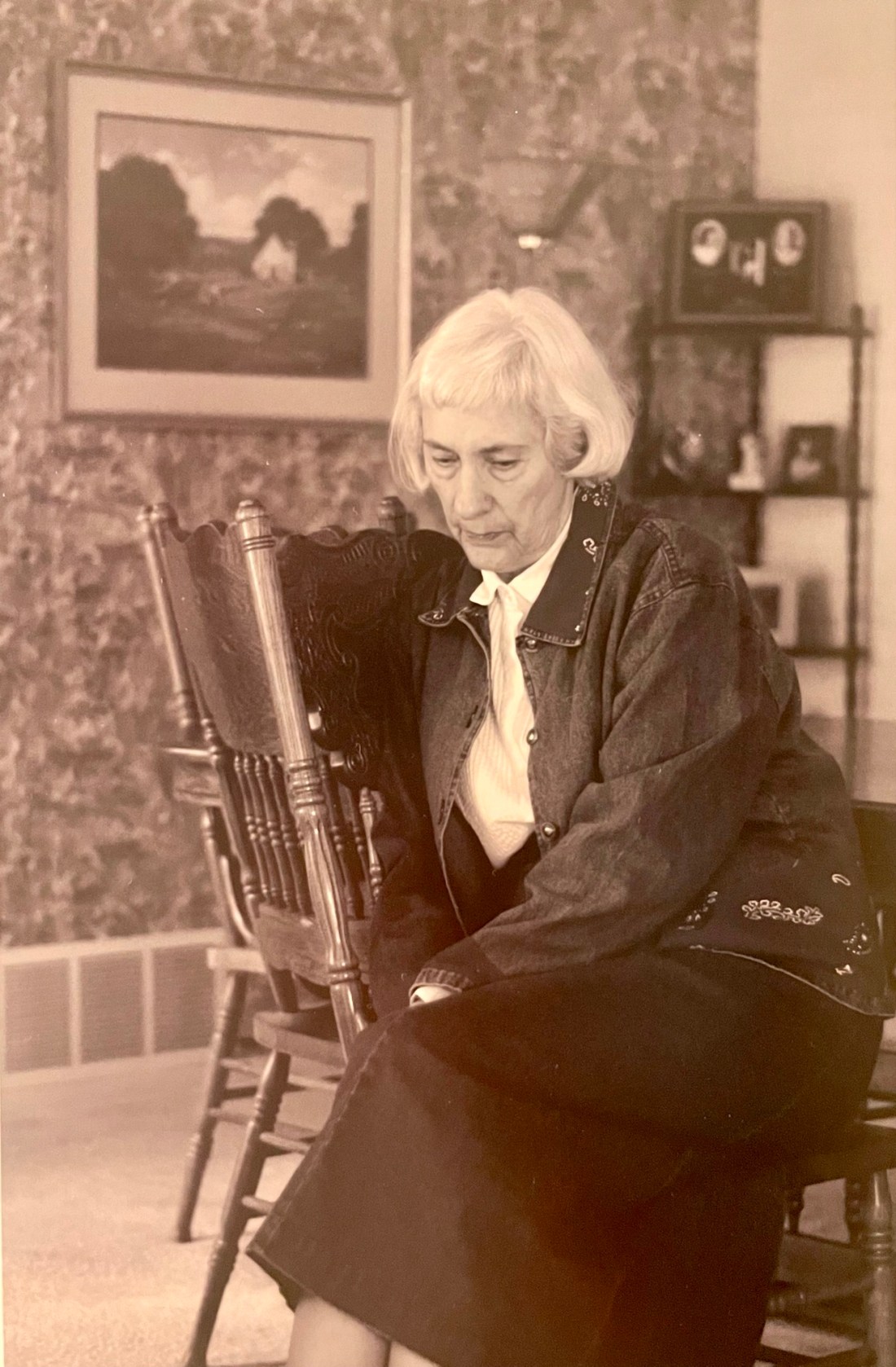
I’ve sought to say something poignant and meaningful about my grandmother’s passing at 95 yesterday evening, yet I’ve struggled to do so. I’ve thought at length about my grandfather’s death a few months ago, and I admit most of my tears were shed then, in part for both of them in anticipation of hers as well as she continued to decline. So, the deepest grief has, in a sense, given way instead to observation of how she chose to finish her final hours.

My college philosophy professor, arguably the most challenging instructor on campus from which to earn an ‘A,’ said to each of his students at the outset concerning the subject, “I intend to teach you two things: 1) how to live with people, and 2) how to die alone.” My fellow students and I likely pretended to understand what he meant, though we wouldn’t have guessed that would have been the way to begin such a course. I have a better appreciation for it, however, 25 years since, and I think my grandmother, who was not a student of philosophy, probably had a better understanding at the end than almost anyone I know.

I’ve already written about the memories and the legacy she left to me. These last few weeks and months, however, she left behind something quite different. Contrasted with many of us who do our best to avoid the subject of death or thoughts of it, especially the inevitability of our own, my grandmother faced it bravely, even with anticipation. This isn’t to say it was rooted in a depressive state of mind. No, it was born of hope, built for decades upon a solid foundation of what she believed, that this isn’t the end, that all was simply preparation for these final days and what awaited her after.
My parents, both having finished their working life in the care of others in hospice, know well when the end is near, having sat at the bedsides of innumerable individuals. They know well that not all welcome the end, that it can be a time of great anguish for the dying, and not merely for any physical pains. Fear is most powerful for those who have distracted their thoughts, consciously or not, far from any considerations of the end. Witnessing this can be just as troubling for any observer as it is for the one forced, finally, to face it.

Not so for my grandmother. And I’m glad for this and for what my parents have shared with me, since I was not able to be present. Not only did she share feebly from her bed that both her partner of 77 years, my Papaw, and her son, Jimmy, were present, but expressed joy — yes, joy — when hearing that she would probably become unresponsive before too much longer, indicating to her that she was close. The only comparison I have is our children in anticipation of a trip, just prior to stepping onto a plane for departure. She couldn’t wait. Her faith in God and the promises she cherished all her life prepared her for the transition.

I have no idea when my own end will arrive. I have significant doubts I’ll make it to 95, if for no other reason than I don’t believe I’ve taken quite as good care of myself as my grandmother. But I do hope, in the years to come, I would have learned as well as her how to live with others and how to die not simply alone but well.

Death does not have to be a fearful event. It can, and, I might argue, should be beautiful and meaningful. This was the final legacy my grandmother left me.

Baptism

When I survey each decade of my life, my 40s will, unquestionably, be all about parenting. Whether I did it poorly or well remains to be seen once they attempt to launch post-graduation. Our first attempt at a “launch” is just around the corner with our oldest at the close of next school year, and preparations and plans are currently underway. I certainly hope the mission isn’t scrubbed multiple times for various reasons, though, with kids, few things work perfectly the first time every time. “Flexibility is key,” someone told me prior to parenting, and I have found, for the most part, they were right.

I’d say our experience has been unique with three adopted kiddos and no biological, but I have nothing else personally to which to compare it. Our experience has been our experience, and so there it is. They’ve willingly come “home” after school at the end of each day for the last several years and they still call us “mom” and “dad” despite having a history prior to us, so we must be doing something right, though I often feel I’m doing it wrong. Parenting has been the one thing I’ve earnestly attempted in my life at which I’ve felt I haven’t excelled, though, I admit and have learned, results aren’t entirely up to you.

Nonetheless, there are moments you may permit that you must be doing something right. One of those moments is when they willingly make a decision to accept your faith as their own. This bears even greater significance for an adoptive parent since, again, they have a history prior to you and are clearly aware of it. For each of them to make such a choice is to align themselves further with you and your influence upon them as parents. The meaningfulness behind such a choice can’t be overstated.

This evening, our youngest, Calib, will be baptized here at Pine Cove family camp at Crier Creek, a place he, like us, has grown to cherish after seven summers. He made his own decision to follow the very day my grandfather passed away, and we all agreed to make it even more special by immersing him here. Each day, he has reminded us with an eager smile how many days are left until then, and now the day is here.

I have the privilege as his adoptive father to baptize him, as I did our oldest. The scriptural imagery of being adopted into the fold by a Heavenly Father doesn’t escape me. I’m about as imperfect a father as it gets, but how fortunate I am that they each grasped the meaning behind it and allowed the unique creation of a family and spiritual memory.

“I have no greater joy than to hear that my children are walking in the truth,” said John in his third epistle to his “spiritual” children. But it’s an easy fit for parents.
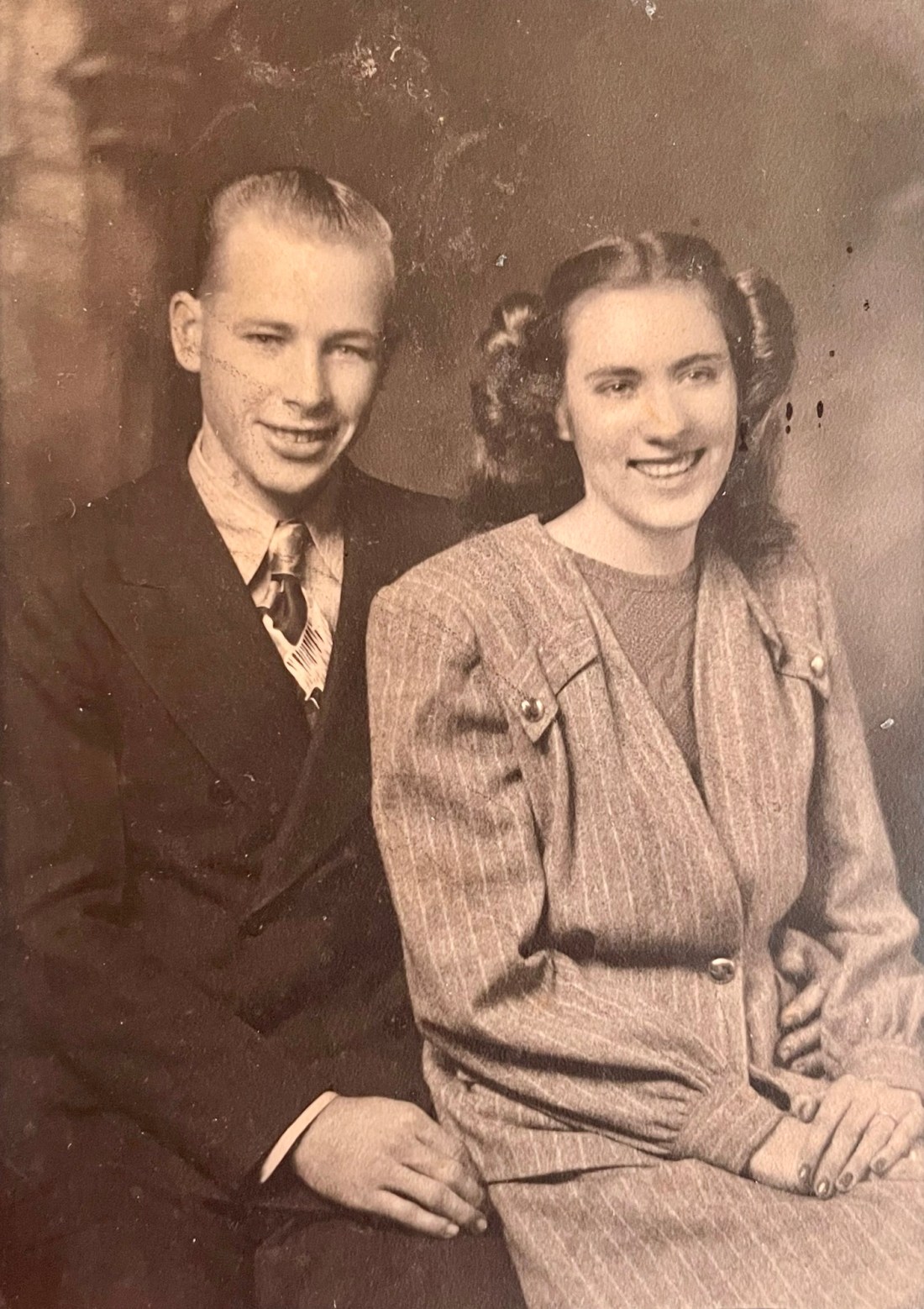
Let’s be clear: This kid knows how to drive me crazy, and I often find my patience tested. He knows this, and so do I. But today, he is most excited about one thing, and that is being baptized by his dad.

Offer me riches or fame to give it up if you like, but I’ll pass. The memory, much more valuable, will last a lot longer — into eternity, in fact.

Ashes

“This is probably going to be it guys.”

My mother’s text to my brother, sister, and me, we had been anticipating for at least a year, though what we couldn’t foresee was whether it would first concern our grandfather or grandmother. In their mid-90s and each declining steadily in different ways, it was impossible to tell whose body would be the first to fail. The early afternoon of May 7th, 2024, while seated in his living room recliner, my grandfather’s heart, subject to several attacks over his late but full life, began to struggle once more, this time, however, resisting any and all remedies. By the time the following day dawned, he would be unresponsive, my weak and frail grandmother doing her best to comfort him through her tears as his chest heaved violently and mechanically, the body doing its best to survive even in absence of consciousness.

After innumerable messages and calls as time slipped away, I would answer the final call from my mother 24 hours after it had begun. Relief commingled with grief choked in my throat, as I held back the bitter emotions when she spoke the long-expected yet unwelcome words.

“It’s over. He’s gone.”


My earliest memory of my maternal grandparents is a regrettable scene in which I brought my grandmother to tears. I’m not more than 3 or 4 years old and seated in her recliner in the room they long referred to as the “den.” Her chair is adjacent to the television at an angle plainly unsuited for comfortable viewing, an arrangement that implies little interest for her in what the box has to offer. The armrests of the recliner are fashioned of polished wood rather than cushioned upholstery. In my hand is a small, die-cast, jet airplane toy.

Why I did what I did next, I can’t excuse to anything other than idle, childish curiosity. Like a hammer driving a nail, I point the nose of the toy plane in my hand down and poke the surface of the armrest. Instantly, an indentation is left in the formerly smooth, glossy wood. The thought that I’ve permanently damaged something that belongs to someone else never crosses my impressionable toddler mind. Instead, there is only youthful interest. So, naturally, like a busy woodpecker, I drop the nose again and again and get to work, experimenting dutifully with the phenomenon of cause and effect. Before long, the armrest is blanketed with a sea of tiny depressions.

I don’t recall precisely what may have happened next, but what I do remember, accurate or not, is my grandfather trying his best to console my grandmother upon surveying the irreparable damage. Whether or not I was reprimanded, I can’t say. What is clear to me, though, is that this final scene is what made the deepest impact upon me. I could see my actions had made an emotional dent, so to speak, on an adult, no less, much like the physical dents left in the armrest. I learned an unexpected, more poignant lesson about causality; and I would consequently not make that particular mistake again.

Memories are curious things. I’m sure there was more to this one, and it’s likely my grandparents would have told it differently. But the details just described that have remained in my mind all these years, real or imagined, would seem to be most important and, moreover, critically formative in learning respect for the feelings of others. Fortunately, the tenor of this first memory is not representative of the vast collection I have of my grandparents or their personal history.

We all start with a name, and the oldest grandchild bears the distinct privilege of determining what new moniker grandparents will assume. You may argue that it’s parents who introduce them to the child and refer to them in one way or the other. This may be true. However, I would argue that no matter what you articulate, a child will pronounce whatever it is they think they hear. For my part, I heard “Meme” and “Papaw.” And so they are to this day.

The closing decade of their lives found them, as many in their 80s and 90s, having lost general interest in common things and common pursuits. The world was reduced, willingly, to their living space, a modest, single-level, duplex apartment a few short miles from my parents. Freedoms that our oldest children were beginning to enjoy had been in steady retreat for them. Time and frailty forced them to give ground days, months, and years at a pace until naught was left to them but to survey their past and make peace with it or take pleasure in it. I would contest the scales of their life tipped decidedly toward the latter.


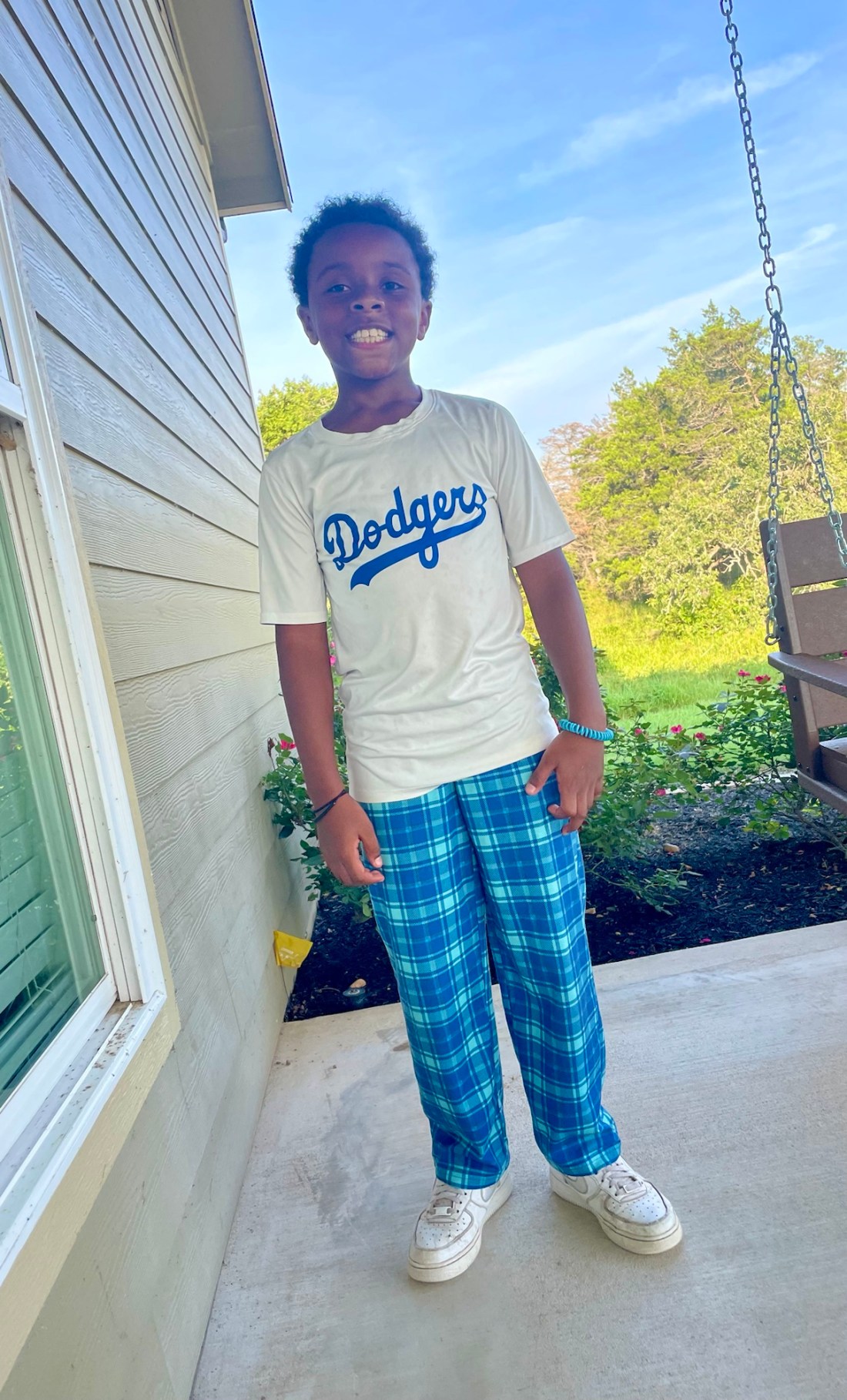
James Raymond Tomlin and Frances Gladine Taylor were born in late Great Depression-era Arkansas. My grandfather grew up with a small army of siblings, an emotionally-distant mother, and an absent father. My grandmother enjoyed the company of her older sister and brother and her kindhearted mother, whom I had the privilege of knowing as “Nana.” My grandmother also grew up without the presence of a father — a fact for both of them not lost on me, a “stay-at-home” dad to kids who also have no relationship whatsoever with their own fathers. To say they did without modern comforts would be an understatement. Like many in their time, they learned to work hard for everything they earned, and, to my knowledge, they didn’t complain that they had to do so. The world was what it was. The reality prompts a pause both for myself and in consideration of the youth of today, many of whom, while worthy of admiration in some ways, are provided with a host of privileges that seem to be accompanied by a host of entitled behaviors. But I digress.

They eventually found one another in their late teens, he having influenced her religiously by taking her with him to church. Over the years, her faith became the stronger of the two. As I’ve mentioned before, unscheduled trips by my siblings or me to the bathroom at their home in the middle of the night often found my grandmother devotedly studying and praying while crouched ascetically on the carpeted floor of their front bedroom, a practice which began following the death of their son. In any event, they married only months after meeting and began what would become the longest marriage I’ve ever known personally, at an almost inconceivable 77 years.

My grandfather’s working life was a matter of pride, as I observed in the handful of times he took the intentional opportunity to share about his first job selling newspapers on street corners as a child still in single-digits. In time, after resettling in the Lone Star State, following a series of jobs, he completed his education as a trade electrician and spent the remainder of his working life with Dow Chemical in Freeport. I still remember weekdays, as a kid, Papaw arriving home promptly at 4:30, Meme dutifully having the table set and ready for what anyone else except for them would consider an early dinner.

“Dutiful” is the best description I could stamp firmly upon the character of my grandmother. Her life was spent, almost iconically in their time, in the devoted care of house and home. She never, in all her years, took on a professional occupation or expressed much of an interest in it. Any task she took on willingly was seldom reimbursed; money, for her, was no motivator. Arriving on Fridays for a weekend visit was a timed arrangement for our family due to her routinely volunteering her time at the local hospital, where, for years, she assisted patients moving from here to there or with various tasks seemingly beneath the responsibilities of paid staff.

Such was their life before my grandfather’s retirement. Following this, their lives remained active, maintaining one of several houses he and my grandmother owned and rented out, tending to their gardens, serving those with various needs at their church, or completing one of many woodworking projects in the shop he and my grandmother built in their backyard.

In short, as dull as it might read to young modern eyes, their life was not full of exceptional YOLO adventures worthy of Instagram or Facebook posts. They did not bury themselves in frenzied busyness, often mistaken today as the hallmark of a meaningful life, but in routine and deliberate occupation, understanding and accepting the purposes of their daily activity. Undistracted, uninterrupted habits of daily life afford moments of reflection that the digital noise of today drowns out, as I’ve often observed myself. My grandparents, however, lived in such regular, clockwork-like routines–disciplines, if you will–and have left me with an observed and admirable example to which I am compelled to return when life becomes too hurried even to hear one’s own thoughts. I have wondered that such careful, hasteless attention to their life and the lives of others was the profound effect of the most prominent milestone in their timeline: a sudden, heartbreaking death that preceded theirs by decades, a death not any sympathetic, caring soul would wish upon any parent.


He coasted into the oncoming lane, thinking the maneuver would allow him to avoid the car that had drifted into his just ahead. The other driver drifted back, however, and then once more as each responded in kind. They collided at the last second, too late to correct.

The police report took longer to read than the event itself, which was a theory, at best, since no witnesses were present. The drifting driver was drunk, and he would languish in the hospital for another week, his life ending ironically on the day my grandparents and mother were to celebrate when my uncle’s began. His life, however, ended instantly that night on the road. 

I would never have the privilege of knowing my mother’s brother, who exists for me only in various stories and a few photographs. I’ve thought it odd that he should survive the many deadly perils of the Vietnam War as a marine only to meet his end at the hands of a careless driver once home, and this not long after his return. The best years of his life should have been yet to come, but it was not to be.

My mother had anticipated upon his return a relationship as adults better than that they had shared as children, which was often strained. My grandparents had to endure the tragedy of burying their child, a fate no parent would wish upon themselves or others. For each of them, the grief of the loss became what felt much like a physical affliction, lingering and painful, deep into the marrow. There would be no closure.

(Reprinted from “Hope,” published on July 26, 2022)

The birth of James “Jimmy” Raymond Tomlin, Jr., on August 9, 1949, transitioned my grandparents into the tumultuous experience of parenthood as the “happy days” of the 1950s got underway. Almost four years later, my mother entered the world on May 13, 1953, as their second and final child. I can still see in my mind’s eye hanging on the wall of my grandparents’ master bedroom the large, framed black-and-white portrait of the two of them together as children, happy and smiling, eyes fixed off-camera as if anticipating what lied ahead for each of them. The seemingly idyllic image would belie in a few short years a relationship fraught with tension as childhood gave way to adolescence.

The absence of one parent or another early in life would have an impact on anyone. Though I never recall my grandfather speaking at length about it, I know his father’s absence had to have informed his own style of parenting, which, unfortunately, was as a strict authoritarian. While my mother made it through, reluctantly, her older brother inherited their father’s stubborn resolve, which sustained a palpable, trauma-inducing tension, until my grandfather eventually ordered their son angrily out of the home, once and for all. Soon after, he would join the Marine Corps as an odd act of rebellion, but not until his recruiter issued his first order to him, once he was made aware his parents would not have offered their approval: “Call your mother and tell her what you’re doing.”

The news would devastate my grandmother. No parent wishes to send their child off to war, and Vietnam was the divisive conflict of the day that had claimed the lives of many young men. Such was her fear when they saw him once more before he shipped off to the East, where he was to serve as a forward observer.

I can only imagine what horrors he witnessed on his front-line assignment, which I’ve read from veteran accounts offered a relatively brief life-expectancy. Yet, somehow, he survived, and in 1971 was welcomed back home to return to civilian life. He would never share the details of his experiences, however, nor would he ever have the opportunity. His life would end abruptly on his way to work on a road outside of town just a week shy of his 22nd birthday.

Two moments following his passing permitted them a sense of closure to their grief and allowed them to press on with the business of living. My grandmother shared that she received a vision late one night. Stirring awake, she found her son’s form standing serenely near the end of their bed, and he conveyed to her that, not to worry, he was alright and would be alright. The simple message of comfort was all she needed to begin moving on, and so she did. It would reinforce her growing faith in God and would allow her to make peace with her son’s absence. My mother and her father had no such vision. Theirs, by contrast, was a silent, shared moment. While feelings remained raw, my mother entered their den one day to find her father sitting pensively in his recliner. She sat down next to him and, after a pause, allowed herself to weep for her lost sibling. As she leaned against him, he soon allowed his own repressed tears to flow. It was a rare, vulnerable moment for each of them that would connect them in a way they had not been until then.

“I’ve lived with a lot of regret over my brother,” my mother has said. Never were they afforded sufficient time or opportunity after his return to repair their relationship; nor were my grandparents. This reality informed how she related to her parents thereafter and is one of the reasons her children enjoyed as close a relationship as kids can have with their grandparents, who were altered as a result, and who I remember as kind, generous, and loving souls to the three of us. His death changed them all.


Backyard rides in the wheelbarrow, Friday nights watching television with popcorn and Diet Pepsi, visiting with them on their back patio during a rainstorm, eating Meme’s Jello and whipped cream out of bronze tins, helping Papaw with one of various projects in his shop or at one of his rent houses . . . I will remember many things about them. What I will remember best, however, will not be any of these as a child but a brief and special time I spent with them during my budding years as an adult.

In January of 2004, I relocated from DFW after completing my graduate degree to begin my life’s occupation as a public librarian. This brought me back to Houston, and just under an hour from their house in the blue-collar town of Angleton, where they had spent most of their adult life. They opened their home to me for the time it would take to find a place closer to work, and so I would live with them for a month until I landed in an apartment complex situated directly next to Space Center Houston in the suburb of Clear Lake.

For a brief time, my life would intertwine with their daily rhythms. Although I had every intention of pulling my own weight, hardly intending to mooch or take advantage of the arrangement, my grandmother could not help her homemaking habits during my stay. I would often return at the end of each workday to laundry clean and folded, accompanied by warm, homemade, chocolate chip cookies on the kitchen counter. Dinner would be ready as well, and rarely was I expected to lift a finger. The exception might be weekends, when my grandfather recruited me for a project or two—time and effort I was happy to offer in exchange. Standing on the cusp of the rest of my life, it doesn’t escape me that their own son, whose name I shared, once stood in a similar place years before. I don’t know if either of them made such an observation as well, but by all appearances, it was a second opportunity to send one of their own out into the world, this time with the confidence and assurance of a relationship at peace with them, and vice versa, come what may.

I made regular, weekend visits after that month and for several years following, until foresight and aging suggested that they relocate closer to my parents in DFW so that they could look after them as they anticipated their closing years. And close, they did. As I write, it has been a single week since my grandfather’s passing, and my grandmother is sure to follow in due time, though much of her careworn demeanor has ebbed in the last several days, no doubt from the calm of knowing she no longer has to worry about her partner.


During the final hours, as my grandfather’s body struggled to capture air and he slipped into unconsciousness, she never left his side, pained tremendously at his body’s struggle to hang on, shedding all of her tears here at the last. “You go on ahead,” she would tell him, “but not too fast, because I’ll be right behind you.”

“Guys, I don’t know if I can do this.” My mother kept us updated via text, my brother, sister, and I each with our own families, unable to make the trek up to be present as it transpired. My parents’ final calling in life before retiring was as hospice caregivers, so they were no stranger to death and dying, having attended the waning moments of many, many strangers. My mother’s words, however, were very telling, indicative of how much more painful it is when it involves someone about whom you care very deeply. The process of dying is often unpleasant. The very end can be a peaceful moment, but until that point, the body often fights aggressively, almost clumsily, to stay alive. They asked us to pray that it would end soon for his own sake, and so we did.

As he struggled, I chose, I suppose as a means of honoring him, to engage in an activity he thoroughly enjoyed in life, and in which he seemed to be proud that I had taken an interest. I stepped into the garage and continued working on an oak end table I was building for my wife, its partner having been completed a couple of weeks before. I made my final cuts and fastened the side and top panels patiently and deliberately into place, much as he would have, as I thought about the number of times I had assisted him in the backyard just outside of his shop. One of the last builds I helped him with was a bookshelf, which he constructed for me, and which, incidentally, happened to be made of oak as well. I still have it and will never dispose of it, likely passing it down to my kids before my time is up.

Shortly thereafter, my mother made the call I had long been expecting. It was over.


The day before, I had just picked up our youngest from school when my mother called to share an update. It came in through the van’s speaker, so my son heard it all. After we ended the call, he asked to know what it was about, and I told him that Papaw, whom he had met only a handful of times, was dying. Shortly after his questions ceased, it became unusually quiet as we neared home. As I glanced back at him, silent tears streamed down his cheeks. In spite of his lack of a close relationship with my grandfather, the reality of his imminent death struck a chord, and he wept for him. I did my best to comfort him, but little helped soothe his grief, and it would be several hours before he was consoled.

The following day, again on the drive home from school, I shared with him that Papaw had passed a couple of hours earlier. While still expressing sadness upon hearing the news, his grief expressed the day before was enough to provide him with emotional closure, and so I used it instead as an opportunity to discuss what it all meant, where we, as Christians, believe Papaw was now, and what it meant to be a Christian. Much of it he had heard many times before both in church and in his private school, so he was no stranger to the gospel message, which we had also shared with him personally in the past in an effort to plant a seed.

“Whenever you’re ready to make that decision, buddy, you just let mom and I know,” I said, just as I had on a few different occasions in the past. Whether or not I expected him to respond, I couldn’t say, but I left it there with him. After a brief pause, he decidedly looked at me and said, “Can we do that now?”

We had not yet exited the van and sat parked in the driveway. I called my wife down from upstairs where she was working from home, asking her to meet us where we remained in our seats. And right there, on the very day my grandfather breathed his last, our son began his life anew.

By the time he had said his prayer of confession and acceptance, my grandfather’s body was on its way to its terminal destination, where its form would be reduced to ashes prior to burial, delayed until my grandmother would eventually join him. As I considered the wonder of death and life realized within hours of each, I couldn’t help but think of the ancient, mythical phoenix, a storied creature that, at its own end. consumed itself in flame, leaving naught but a pile of ashes, only to have another miraculously reborn from the same ashes.

I have my own sense of the legacy my grandparents have left behind, just as my siblings each have theirs. Our son’s decision that afternoon, however, left each of us with a shared sense of his legacy of faith. Of all of the ups and downs experienced in parenting, few equal the unique and special joy of having your children willingly accept your chosen faith as their own; even more so for children not born to you, whose personal history began with years of which you were not a part.


Theirs was not a life that others might consider exciting or worthy of popular attention. The vain, ambitious teenagers among us might even classify it as somewhat boring. They did not travel the world, make a million dollars, accumulate thousands of social media followers, nor attain widespread fame. Yet, they meant more to me than almost anyone I could name in the almost 50 years that I’ve been alive, and this simply for their calm and steady dedication to their responsibilities, their faith, and their relationships. Despite a few bumps in the road and imperfections of character, on the whole, they lived and loved what mattered.

None of us need a world of strangers to love us in order to matter. Only a few, even one, I would argue, is enough. They mattered to me, and that’s enough.

I will miss them.

Picture of a Pandemic

“Was that during COVID?”

The question arises from time to time as we swipe through personal photos on the phone, suggesting that it’s a broad, encompassing experience in our collective distant past, and thank God it is. Hearing now the occasional news of the day that so-and-so just contracted it no longer carries with it the alarm and concern it once did. In many ways, it’s been reduced to the severity of the common cold as new strains’ potency has waned even as our own constitutions have become better conditioned through vaccinations or previous exposure. One family member of mine recently learned he had been infected yet found himself able to carry on capably with the tasks of the day. How easy it’s been to forget what changes were wrought both near and far in our lives once the virus took hold.

Routines were radically altered in a moment. The way we interacted with others, the way we spent our money, the way we traveled, whether across borders or the short drive to the store — all of it changed, and caught in the middle of this were our kids, who relied on us, as always, for a sense of safety and security in spite of the panic and fear that existed beyond the front yard. Many children found themselves irreversibly altered, faced with new anxieties their parents still struggle to alleviate.

Daily thrown-together, makeshift homeschooling — it’s own unique, fresh hell for parents such as us who were not trained as educators — tested our nerves and patience. One friend of ours said it best over a phone conversation at the time, excusing himself from the call as it was that cherished time of day to endure “rage math” with his grade-schooler. Lessons with our youngest were typically characterized as such and were actually tag-team matches between my wife and me, desperately tapping out once voices were elevated and tears of frustration began flowing freely for both of us.

For all of the uncomfortable realities created, the year of COVID also fostered a wealth of pleasant experiences and memories for many families, ours included. We as parents were compelled within the forced isolation to explore and implement new routines to keep our progeny engaged and distracted from the stresses presented by a 24-hour pandemic news cycle. We were no different. Our breaks between dreaded school assignments involved trips to a local park, followed by drinks from Sonic and “name-that-Disney-tune” on the drive back home.

Following a game of hide-and-seek in the park during one of these homeschool breaks, I captured a casual selfie of the kids and me, unaware that it would become my favorite picture of the four of us. It would later sit framed on my work desk prior to exiting the professional world, and it now sits on a shelf in our bedroom beside my favorite photo of my wife in her flowing white dress on our wedding day. Not to brag, but, as far as pictures go, to me, it’s perfect and is in need of no editing or correction.

As I’ve mentioned in the past, for a period of time, I dabbled in photography as a hobby. Time spent in study and practice taught me a thing or two specifically about composition, which isn’t necessarily aided with the use of high-priced, high-tech equipment. The most priceless purchase I ever made while engaged in the hobby was a simple, inexpensive, overlooked book with the banal title How to Take Good Pictures, published by Kodak, which had much to say about the subject of composition with little use of the word itself. I still recommend it to any budding enthusiast. Contained within the ten tips are two this favored picture employs, notably, “move in close/fill the frame,” and “use a plain background.” I would argue that these two points alone remarkably improve almost any picture captured with any camera.

Technical aspects aside, there is much to be divined from each of the kids’ personalities and character in this frozen, candid moment. Deztinee, our oldest, stands apart but otherwise upbeat in the background, willingly included but happily reserved. Dezira sits almost inconspicuously in the corner of the frame, careful not to forget Charlie, the diminutive family pet, who joined us reluctantly, I’m sure, on a few of these trips to the park. Her natural, felt kinship of cute, furry creatures is on full display. Calib, our youngest, appears prepared to tumble exuberantly over me and into the lens. The most closely connected of our children to my wife and me, he comfortably presses tight against my shoulder, clueing the viewer in to his unequivocal attachment to us.

It’s all there, and I’m sure much more could be said. The smiles are genuine. There’s no unpleasant subtext lurking behind the subjects, no hint of misery due to a global pandemic. The happiness is real and palpable.

More than a picture, I realize, it’s a critical lesson for times of trouble or misfortune. Joy is present and available if you choose it. Maybe this is another, perhaps subconscious, reason I cherish the photograph. God knows how I can feel beleaguered by the stresses of the day. Yet, here is proof positive that even I can feel differently, in spite of the fact that the entire world itself, at that very moment in time, was drenched in uncertainty and fear. I pray it serves as a stark reminder to my kids as well in the unknown future that awaits each of them.
Immanuel

“There’s an app for that.”

We all remember this common slogan as the smartphone gradually infiltrated every aspect of our lives less than two decades ago, as if to suggest it, or the apps for which it served as a vehicle, could provide answers to almost any of our problems.

Equally prevalent, or so it would seem from the abundance of pharmaceutical commercials targeting specific demographics in between your favorite shows, is the suggestion that “there’s a pill for that.”

I personally don’t hold fast to such an idea, but I am more of a believer than I once was when it comes to the condition of ADHD, which afflicts our youngest. After we tackled the problem with behavioral techniques and strategies, it was evident after a grade level or two that he simply needed help we couldn’t provide in order to get him successfully through the school day. So, we took the medicinal plunge, and the results were clear and immediate. We were pleased to witness a calm and poised version of himself as he found the ability to maintain focus as academic success was soon to follow.

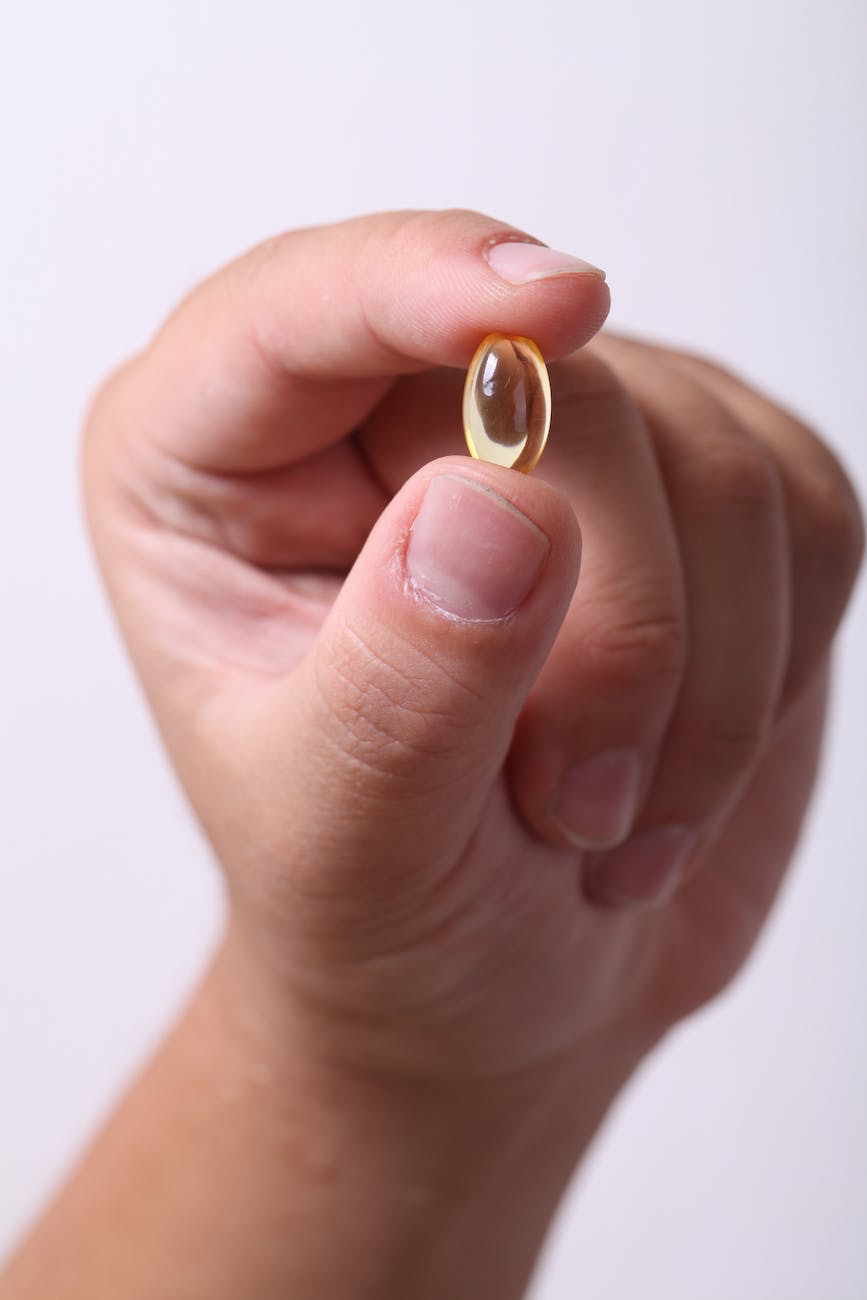
Most early pediatric drugs assume liquid form and are typically tasty and easy to swallow. Pills in any shape or form, however, are a challenge for children, as any parent could tell you as their own come of age. It’s not uncommon for capsules to travel swiftly back up little throats for no other reason than the fear or sensation of choking. Swallowing a tablet is a learned skill. Some grow into adulthood still uncomfortable with the effort.

Our son recently graduated to the pill form of his medication, and pinpointing the correct dosage during the transition was its own special problem, requiring a brief time away from school till the doctor got it right. He simply couldn’t help functioning as a classroom distraction without it, much to his teachers’ consternation, though we, and they, would gladly refer to him at least as a “happy” mess. Once the dosage puzzle was solved, he returned, and all seemed right once again with the world.

Until it wasn’t, that is. Not too terribly long after, we began to notice inconsistencies with the medication, which he routinely took before school. Periodically, his teachers informed us of the same, tired behavioral issues in class, none of which were major but nonetheless required addressing. We called the doctor and waited for a follow-up to discuss alternatives. In the meantime, I made sure to observe our son taking his pill each morning just to be sure. And sure enough, I watched him ingest it and move on with the morning.

Kids are crafty, however. Our son, I discovered, craftier still. Transferring his laundry from the washer to the dryer one afternoon, I observed what appeared to be a few empty capsule shells that bore a striking resemblance to the size and shape of his pills. I resolved to watch him like a hawk thereafter and check above and beneath his tongue, baffled at how he could possibly fool me while I observed him swallowing it each morning. I didn’t have to wait long for an answer.

Another morning, another pill. Seated at the table after finishing his breakfast sandwich, he places it in his mouth and swallows it with the juice I provided. I ask if he got it down, and he nods. For only a moment I turn in the opposite direction but then quickly pivot my attention back, catching him in the act of slipping his fingers up to his lower lip in a surreptitious attempt to remove the pill and discard it in a secret corner elsewhere in the house. The little sneak had been hiding them randomly in his cheek rather than swallowing, which explained the medication’s bizarre inconsistency. Mystery solved.

“Fool me twice . . .,” as the saying goes. I wouldn’t be shamed again. Having had no success with threats of consequences or demands up to that point, I impatiently relinquished command of the ensuing drama as mom took a turn and sat down directly across from him at the breakfast table to ensure gently that he got the job done. “But it’s hard!” was the incessant, tortured refrain as he objected with each failed swallow, risking us all, including his older sister, to be tardy to each of our morning destinations.

Mom’s time managing the situation came to an end as her job required her to get herself on the road and to the office. As she exited, our son motioned me to the now empty chair opposite his. We weren’t finished and he simply wanted me to stay with him as he suffered through it.

I resolved to try a different, more patient approach and reasoned with him. It wasn’t as if the pill was larger than anything else he’d downed before; quite the contrary. By his own admission, he was afraid of choking, and despite gulp after endless gulp, the pill remained because he was still telling the pill with his tongue to remain exactly where it was. “Don’t be afraid. You’re not going to choke.” After 30 long minutes, my reassurances finally made headway, and down it went, his expression at long last relaxing. I pried both under tongue and around cheeks “like a dentist,” he later described to mom, ensuring there was nowhere else to hide, and off he went to school. Eight hours later I would pick him up and hear him proudly share that his teachers praised him as the best behaved student in class that day. I inquired to him as to why he thought that might be, and his knowing smirk gave him away as he remembered the difficult but necessary ordeal of the morning. Sometimes, you just have to swallow that pill.

___________________

Hematidrosis, it’s called, a very rare medical condition in which one sweats drops of blood. It seems only fitting, then, that the gospel of Luke, ostensibly the only physician of the bunch, would be the one both to observe and document this phenomenon in his account of Christ’s agonized prayer in the Garden of Gethsemane. “Father, if you are willing, take this cup from me,” he says, as we are allowed a unique glimpse into his humanity, asking, as many of us often do, that God simply remove a difficulty from our lives rather than, more nobly, provide us with the strength and fortitude to endure it. Even Jesus, it appears, had a moment when he just wanted God to remove the problem. Forget how I might grow spiritually from this experience; just be the doting father that you are and take this pain away, dad.

I think had my son exhibited symptoms of hematidrosis that morning at the breakfast table, I would most certainly have ceased altogether from sheer alarm that the intense stress was causing him an actual physiological loss of blood. Christ had no such luck, however. His “pill” was his to swallow and his alone. And his Father stood by to hear his request while retaining the requirement.

I find it curious that Christ chose the image of a cup to describe what awaited him. His was a challenge to ingest, to consume something inside of himself, not merely outside of him, as in a temporal passing from one moment to the next, quickly forgotten as the next moment arrives. Though we would argue theologically that God never changes, his trial would alter things both without and within. It had to if we were to receive redemption ourselves.

God, his Father, was with him, however, even as he himself was prophesied as Immanuel — God with us — while he lived and acted in the here and now.

Presently, I have found myself struggling with the reality of “God with us,” especially when it’s the only answer you receive to your trouble, great or small as it may be. It can feel like a cheap non-answer until you understand and grasp that Christ himself in the garden didn’t get a better deal either.

I and my wife have dealt with a unique parenting challenge for much longer than we would prefer, and I’ve lost count of the number of times my faith has faltered just for the fact that the problem remains and an easy solution fails to present itself. I just want to feel better. I want God to swoop in and fix it, just as instantaneously as baptismal waters fashion a “new creation” after one rises from the surface. But the change has yet to come, and we remain years now into the cup still before us with no promise of a favorable end, or an end at all.

When my son pointed me to the empty chair in front of him, however, God used the “inconvenient” situation to teach me a thing or two. Though he continued to complain and struggle, his gesture communicated, “If I really must do this, then at least just be here with me while I endure it.” As I sat down, I shifted my own approach and told him not to be afraid, knowing, as his father, he had nothing really to be afraid of. Once he chose to believe me, it wasn’t long thereafter that the pill slid comfortably down his throat and began the work of change.

I have to imagine it’s little different with our often unwanted, divinely-ordained circumstances. I am admittedly afraid at times of what is or is not to come, and my imagination casts no shortage of worst-case scenarios. But as I sat there reassuring him of what he knew he needed to do, my mind casted no shortage of scriptural reminders of “fear not” and “I am with you.” The reminders themselves, no doubt, were evidence of his presence even then.

One of my favorite songs of my youth bears more meaning to me 30 years later. A gentle tune titled “Higher Ways,” by Steven Curtis Chapman, the lyrics tell of the singer’s wish to understand God’s higher purpose in circumstances both great and small and the hope of one day, on the other side, learning of the elusive bigger picture. It finishes:

But until I’m with you
I’ll be here
with a heart that is true
and a soul that’s resting on
your higher ways.

Simple solutions and quick answers can be hard to come by in the kingdom of God. We all want it, but we seldom get it. Maturity and trust within a relationship are the goal; not merely my comfort and ease. There is no app or pill for it. But God help me to remember that there is a prayer for it.

Trouble

“Life is difficult.”

This is how M. Scott Peck begins his acclaimed book, The Road Less Traveled, and I would argue it may be one of the best openings to any nonfiction work past or present. It’s neither poetic nor eloquent, as you might expect of a bestseller. It is, however, inspired, and many readers, myself included, have found their attention arrested by its simple truth due, no doubt, to considering the difficulties in their own lives, be they great or small. Anyone who reads these few elementary words can relate, and so anyone reads on.

As I punch these letters out on my smartphone, I find myself in an unplanned, forced exile away from home due to exposure to that irritating illness we’ve all become familiar with over the last few years. My first venture into the blogosphere found me in identical circumstances, perhaps fertile ground for written thoughts. In any case, I’m not yet showing signs of infection, but I don’t want to risk it for others in my family should it start to present itself. There is, after all, a family trip planned pre-Christmas, at this point just barely inside the 10-day window recommended for those exposed. So, dad is trying hard not to ruin the long-anticipated holiday party by getting everyone else sick.

Around, within, and beneath this misfortune are several others intertwined that led, in part, to this one. I have neither the space nor the interest in sharing it all here, but it brings to mind another brief remark, equally honest but measurably more eloquent: “When it rains, it pours.” Sometimes massive troubles can’t help but bring a friend, or two, or three, to your door. Regardless, they always rudely arrive, never having been offered an invitation.

At least one of these many troubles has lingered longer than the others, enough to feel like an eternity, ebbing and flowing in intensity from one day, week, month, year to the next. Each exhausting, unwelcome moment it reappears, it does so with seemingly greater force. Each time it arrives, a single question persistently comes to mind, both for the short and long-term: “How will this end?”

Oh, how I want it to end.

As time drags on and resolutions remain absent, the wish for a satisfying conclusion can easily give way to just an end — any end — good or bad. Let’s just get this over with, please.
If I also want God genuinely involved in my life, however — and this is a very hard truth to learn — I can’t have it both ways.

I have never been comfortable with tension. I’ve said so before, and it will likely be true until the day I die. I naturally expect that it is something to be avoided for the sake of peace. And I have expected that God looks favorably on my efforts to make peace. We are instructed as believers, after all, to seek peace and pursue it. But a verse I often overlook struck me this past Sunday, a verse that ought to alter my well-intentioned expectations.

“I did not come to bring peace, but a sword.”

While we regard him, among other things, as the “Prince of Peace,” his words are a stark reminder that he did not avoid tension. In fact, he created it where necessary. Christ was accepting of it in a way I simply am not. In short, while many things, he was also a troublemaker.

By extension, God himself is a troublemaker.

Plenty of things for which I have only myself to blame. Plenty. I acknowledge this. Same goes for others whose choices, good or evil, affect me. But, man, how God shows up in the middle of it to take the blame or credit from us. And how our impatience for resolution causes us to lose hope and misperceive that we’ve reached the bitter, unpleasant end to our trouble, failing to see that it’s just the trouble of the day.

“That which doesn’t kill me makes me stronger.”

It’s always struck me that such a staunch, unapologetic unbeliever as Nietzsche not simply coined this statement but that it has such authentic application to the life of a believer. I might make one slight alteration, however, exchanging “me” for “my faith.” I’m not going to pretend here that I’ve reached that goal in current troubles. That’s where hope comes in, which, ironically, is often based on faith bolstered by past troubles resolved.

So, for now, “Life is difficult.” I pray I can learn to exchange this statement in time for another: “Trust the Troublemaker.”

Hope

“Be joyful in hope, patient in affliction, faithful in prayer.” – Romans 12:12
He rose feebly from his elevating recliner and shuffled deliberately out the back door with the help of his walker, in spite of my insistence that my daughter and I could handle it. You don’t argue with your 91-year-old grandfather, however, especially one as headstrong as mine. While visiting my parents for a few days in the DFW area one summer, my oldest and I found a moment one afternoon to drive to my grandparents’ house and retrieve a lawnmower they no longer could use due, of course, to their age, and she and I were happy to load it ourselves into the van to transport it to my parents’ place a brief 5-minutes away; if not, that is, for his resolve first to teach me a thing or two.

As if my years of practical experience with this simple machine counted for naught, he scooted hastily out the back door and into the driveway, released his grip on the walker, grabbed the handlebar of the mower with his left hand, and with awkward elderly aggression repeatedly yanked the pullstring with his right in order to demonstrate for my benefit how to start the motor. I gave up on my insistence and resigned myself to the likelihood that my teenage daughter was about to suffer the indelible trauma of Papaw cranking a lawnmower and collapsing violently and fatally to the pavement from overexertion. To my surprise, it started, he survived, and I thanked him for the unnecessary lesson as he shuffled back inside.

I have little desire to live to 100, as many do. Maybe I’ll sing a different tune the closer it approaches, but from my vantage point on the timeline, old age is no picnic. We all think we want a long life, but what I suspect is what we actually want is to put off the reaper for as long as possible. Though we all have our beliefs about it, death is largely an unknown, and the unknown is a source of fear for us all, especially those of us with little faith. The Bard put it best: “But that the dread of something after death, the undiscovere’d country, from whose bourn no traveller returns, puzzles the will, and makes us rather bear those ills we have than fly to others that we know not of?”

In any event, my grandparents, now 93, find scant strength or energy to do much more than gingerly transition from one seat to another inside their modest home, and this very seldom. Trips outside of the house are rare, and for good reason. The world is built for a pace that often exhausts even me; how much more so for them, exceeding the capabilities of both their minds and bodies.

It would seem an accomplishment to have reached their age. The only fact as impressive might be the number of years they have been together: 75. Their marriage has nearly outlived the CDC’s researched average life expectancy of most Americans, which they plot at 78 years, give or take. A few months ago, they celebrated this milestone in their own quiet and understated way, satisfied with a fried chicken dinner with my parents, my wife and I, and our youngest. No gifts were requested or exchanged. There is nothing on God’s green earth nor among man’s manufactured creations they either want or need any longer other than a good meal and the company of family. They have both given and taken much of what one is able to of life and have exhausted their interest in the common wants and pursuits of younger men and women who have many years stretched ahead of them.

Our visit in celebration of their anniversary concluded on Saturday, and we left the following Sunday morning. My wife and I and our son began the 4-hour trek back to Houston, departing bright and early in order to pick up our daughters, who had spent the weekend at a church youth retreat. Timing ourselves to arrive at noon, we grabbed on the way out of town our son’s favorite sugar-saturated breakfast — donuts and chocolate milk — and were on our way.

Scarcely an hour into the drive, my wife’s phone rang. She answered familiarly, though I could only guess at who was on the other end. The comfortable greeting segued jarringly into an expressively ambiguous “What?!” as I wondered at both who might have died and who was thoughtful enough to share the tragic news. Instead, she turned to me and exclaimed with unabashed delight that our oldest was calling from church to tell us she was getting baptized that morning during the service. She had made a “confession of faith in Christ,” as we Baptists like to call it, and was performing her first act of obedience as a new Christian.

We all bear hopes for our children as they mature, some of them very specific and unique. For parents such as my wife and I, our Christian faith is an inseparable aspect of our identity, in no small part due to our parents’ influence, both of whom were ministers. The decision our oldest made that weekend remained at the top of our list of hopes for her and her siblings from day one, even more so as adoptive parents, considering we often feel as if we’re making up for lost time in their early upbringing. The relief, satisfaction, and joy of learning that they have independently embraced your faith, making it their own, cannot be understated. There are few decisions they will make in life that will have a greater impact on how they will choose both to see the world and to act upon it, a world that increasingly pushes faith to the margins or dismisses it altogether.

As ecstatic as we were to hear the news, we pled with her to wait until the following Sunday when we could attend along with her grandparents. Moreover, I asked her for the privilege of baptizing her myself, still technically a licensed minister, though I did not pursue it as a career as I once had planned. She gladly agreed, and we ended the call. Though the decision was her own, my wife and I in silence and welling tears took each other’s hand, a knowing gesture expressing a sense and gratitude that we are, after all, having an impact upon them.

Pre-baptism

Though the role of parenting never truly ends, Paul’s exhortation to his Roman readers centuries ago — “Be joyful in hope, patient in affliction, faithful in prayer” —seemed fitting for where we found ourselves up to the moment she shared the news. It’s an ideal verse for parenting in general, as it is for the life of faith. And as much as I could retrieve my college toolbox of rusty hermeneutical implements to plumb its meaning, I find ample clarity on the surface to see through to its depths.

“Be joyful in hope”

“Are you okay?”

I heard this question from my wife more times than I can count during the first year of our marriage. The fact is, I hail from a family whose emotions are generally subdued. We’d make great poker players, if only for our lack of facial ticks or cues (though I am told I have made a recent habit of talking to myself). Wearing one’s heart on one’s sleeve, as the expression goes, is just as risky emotionally as it is physiologically for my ilk. Not so with her kin. As couples do, we learned a few things about one another once we were under the same roof, one of many about how we do/don’t express our feelings. My answer to her question was typically that I was fine, which was true, but after a month or so of this, it left me with the impression that one of the implications of our marital vows was that I turn cartwheels across the living room if I were even moderately pleased in the moment.

While I am generally “fine,” it might surprise those with whom I’m acquainted that if there is a yin and yang in every relationship, it is I who bears the honorific of “sourpuss.” I lean towards the negative end of the spectrum in our partnership, though, perhaps, not to the extreme. With only moderate influence, my confidence may be sapped and feelings tipped easily to the pavement by the difficulty of the moment, especially when it regards the frequent ups and downs in the lives of one’s children. My wife, by contrast, is characteristically optimistic and positive about life and all that it presents. It is one of her many attractive qualities as well as a reason, I would argue, I often hear another loaded string of words from her that instantly elevates my anxiety: “I have an idea.” Such ideas as hers, furthermore, tend not to be small in stature and carry the expectation that I find a way happily to get on board. They are big and bold, and this, I believe, because she is “joyful in hope,” as Paul wrote. She generally expects the best of wherever she focuses her efforts, and even if such expectations are dashed, she merely picks herself up and moves on to the next idea.

While we both agreed to it and believe (on most days) we were called to it, parenting by way of adoption was one of these big ideas. If I had thought the 1-2 years of training was hard, I was in for a shock once the kids were placed. “They have no idea what they’re getting into,” my mother expressed to my siblings, each already in the thick of parenting for several years. Prior to parenting, the endpoint of my various “hopes” often landed at the end of the week, month, or year; in other words, at a distant point in the future. The phrase, “take it a day at a time,” however, took on startlingly new meaning with kids. The object of my hopes shrunk temporally — Let’s see if we can make it to bedtime without incident. Currently, we are finding ourselves in the thick of the teen and preteen years.

I will admit, though, that I have felt little joy in hope, as Paul encourages, even in the smaller day-to-day portions. The fact that he does encourage it, however, indicates that we have a choice. How hard a choice it is to make. We hope especially for big change and progress in our kids, but it is often slow in coming, if or when it does.

When I lowered and raised our oldest in the cold water that morning at church, I felt a hope fulfilled. It was easy to find joy in that moment, and, not to mention, to wish that I had chosen to be joyful in my hope until then. My mother was recently asked what advice she would offer her younger self given the opportunity. “Don’t worry so much.” Likewise with hope and the attitude we choose towards it. As much a high it was in that moment with her in the baptistry, there would be a down just around the corner, to be certain. Such is life with children.

“Be joyful in hope,” Paul says. Choose joy as you wait, as he segues into the manner in which we should do so under unfavorable circumstances.

“[be] patient in affliction”

He coasted into the oncoming lane, thinking the maneuver would allow him to avoid the car that had drifted into his just ahead. The other driver drifted back, however, and then once more as each responded in kind. They collided at the last second, too late to correct.

The police report took longer to read than the event itself, which was a theory, at best, since no witnesses were present. The drifting driver was drunk, and he would languish in the hospital for another week, his life ending ironically on the day my grandparents and mother were to celebrate when my uncle’s began. His life, however, ended instantly that night on the road.

I would never have the privilege of knowing my mother’s brother, who exists for me only in various stories and a few photographs. I’ve thought it odd that he should survive the many deadly perils of the Vietnam war as a marine only to meet his end at the hands of a careless driver once home, and this not long after his return. The best years of his life should have been yet to come, but it was not to be.

My mother had anticipated upon his return a relationship as adults better than that they had shared as children, which was often strained. My grandparents had to endure the tragedy of burying their child, a fate no parent would wish upon themselves or others. For each of them, the grief of the loss became what felt much like a physical affliction, lingering and painful, deep into the marrow. There would be no closure.

The “affliction” my grandparents were forced to endure patiently following his death was not for a hope that he would return to life but the absence of an answer to the overwhelming sorrow they would feel in their remaining days, months, and years. They would live in the unexpected reality of an unshared life with their only son. How does one ever overcome such an affliction?

I can’t imagine how one could ever arrive at peace after such a devastating loss. What good is patience if my child will never return in this life? One either wallows in bitterness, or allows the years and one’s faith to reward patience instead with one’s grief. I am happy to say they opted for the latter, finding other joys in life while preserving in gratitude the memory of their son.

I still have my children, and, hence, hope for my patience with the “afflictions,” if you will, that they bring home. If my grandparents were able to move past a grief that threatened to drown them, surely I can find the patience to deal with the day-to-day.

“[be] faithful in prayer.”

My grandparents’ home was modest by today’s standards, but it sufficed, and it was a safe and comfortable place we enjoyed visiting during our childhood. We learned to love and cherish what we saw and experienced there. The backyard garden full of vegetables, my grandfather’s workshop walls lined with all manner of tools, a batch of homemade chocolate chip cookies cooling on a sheet of wax paper in the kitchen — all became welcome and familiar sights as the years wore on. But it wasn’t only the daylight hours in their home that left an impression on me.

Rising in the middle of the night, a step or two was all it took to traverse from the guest bedroom for a quick trip to the bathroom. At the end of the short hallway was another bedroom, though used as such only when all three of us siblings were visiting. Without fail, if the time was right, I would catch a glimpse of our grandmother crouched on the floor, Bible spread in front of her, studying and praying. This, we learned, was her private routine each and every night. Well after midnight and into the earliest hours, she would rise from bed and take advantage of the stillness and silence to study and to pray for all those she cherished. I never learned how long she spent up in this posture before returning to bed, but what was certain is that she was faithful in this practice for all the times I spent in their home.

I wonder if this verse ever crossed my grandmother’s mind in the midst of her despair at losing her only son, a pain — an affliction — that would never fully be alleviated. There is no pill to swallow that would restore the loss. One learns to live with it and, in their case, lean on the words, even if it is a circumstance for which there will be no change. How one could chose to remain faithful in prayer rather than bitterness is beyond me, but she did, habitually rising for an intermission in slumber to pray.

I also wonder that the reason God has allowed her to live as long as she has is because he knows me and mine still require the faithful prayers of spiritual stalwarts such as her. God knows I allow myself far too many distractions to practice this discipline as well as her. Then again, it’s difficult to find many nowadays who do. I’m thankful, nonetheless, that I have one in my bloodline who has never failed to continue praying for me. I can only hope to live up to the example she has set.

Yes, hope. Seated behind each of these admonitions from Paul is, I believe hope. Without it, I have no motivation to be joyful, no cause to be patient with my troubles, no reason to pray faithfully. Hope is a foundational Christian virtue, and I find I need more than a heavy dose of it, especially with the bad news and negativity circling us daily in the world out there.

But it’s often more a choice rather than a feeling, especially for those of us not engaged in the conscious practice of choosing it. The more any attitude is chosen, the more readily it becomes our nature.

My grandmother had no hope of ever seeing her son again in this life after that fateful night. There was seemingly nothing left in which to hope for him and every reason to cease caring about a cruel and unfair world in which all your hopes, in her case for her child, evaporate in an instant. And yet, she somehow managed to continue to try and live out this verse day after day in the first and earliest hours of each and every day.

That, I realize, was because she learned not to center her hope in her child and his future but in the one to whom she was offering her prayer.

I admit to despairing from time to time over my inability to maintain good personal habits, in the behaviors my kids may or may not exhibit, or in the pitiful state of the world at large. But it occurs to me, considering my grandmother, that the reason may lie in the fact that my faith, my hope, may be misplaced. No wonder I remain disappointed.

My grandmother has never instructed me to rise in the middle of the night to pray. This has been her discipline, not mine. But, unbeknownst to her, I’ve observed it enough to admire it gratefully, not just in the knowledge that I have been and remain one of the subjects of her prayers, but in the example of unwavering hope such a secret practice she has unwittingly left as a legacy to me. It is joyful hope that prompts her to rise, patiently and selflessly sacrificing time that could be spent in sleep, faithfully offering her prayers. I’m not sure to this day she knew I was watching, but I was.

Would that I would learn to demonstrate hope through such steadfast discipline, and that my children, perhaps my grandchildren, would be left an example of hope that would likewise sustain them in the lives they have yet to lead.

IDK

“I don’t know.”

I’ve lost count the number of times I’ve spoken these words to my son in response to his endless questions about the world he is still discovering at almost 9 years. While sometimes the questions are anxiety-driven (he has a deep need to know about what’s coming up), most often he is simply curious about the world. I appreciate his healthy curiosity, but it can be exhausting.

I’ve become comfortable, nonetheless, with not having all the answers to all the questions, perhaps because they are questions that, for me, are incidental or trivial and simply don’t keep me up at night. I don’t have an interest in knowing whether or not a Great Dane is a friendly dog (canines being his latest interest) or fudging an answer just to settle his wish for one. “I don’t know, buddy.”

Existentially, this drove a lot of searching in college, as it does for many, to find one’s own faith or meaning, no longer able to fall entirely back on your parents’ raison d’etre. The unsettled feeling prompted by the words “I don’t know” was enough to keep one intellectually searching for answers, even if it ultimately brought you back around to the same or a similar place. “I know enough.”

But parenting a kid from trauma, a kid who had other caregivers — maybe a number of them — before finally landing with you, can prompt such a crisis statement when left with the realization once in the deep end of the pool that “I don’t know” what to do, what will work, or how to move forward. As I remarked to someone recently, it’s not that the bar is set lower. The bar is in an entirely different location, somewhere over there beyond traditional parenting, where consequences, rewards, etc., may or may not matter in the least, precluding any leverage at all for correction. To say it’s exhausting is to use the word in its purest sense; it’s draining, both physically and emotionally, and hopelessness is right there waiting for you to join it in the depths.

There is nothing like this kind of parenting to inform you how we may take both too much credit and too much blame for the way they turn out. We do, of course, bear great responsibility, but much as well is out of our control with them, and some things are simply to be endured (or enjoyed) with prayer and hope.

My most basic but sincere prayer of late is nothing more than, “Please help. I don’t know what to do.” And I have to believe he answers, even if it’s just with an extra supply of patience or grace to handle a kid that neither knows nor cares any better. I want the problem to be solved, the difficulty to go away — we all do — but it occurred to me, with a little inner guidance, that there’s no growth without challenge, even if it comes in the form of a small person who didn’t begin with the same benefits as me. God help us all when we just don’t know.

Checklist

Seven-elevens. I and my brother frequented corner gas stations named as such in our youth on a mission to purchase sour-powers, as they were called, or pop a few quarters in whatever video game cabinet, nestled at the back of the store, happened to be available at the time. Many a Saturday were spent biking with friends to one or another of these stations around town in between outdoor play to purge our pockets of coins offered by our parents. So, we exited the house and occupied ourselves elsewhere to while away a warm spring or summer afternoon. Good times.

My paternal grandfather, however, employed this chosen term in a very unique and wholly different way. “Seven-elevens,” by contrast, were, for him, a disparaging reference to contemporary church praise choruses as opposed to the old, traditional four-stanza hymns, to which he was most accustomed for decades during Sunday morning worship service until a younger crowd began to lead the proceedings. “Seven words, repeat it eleven times,” he shared in his brief and to-the-point manner. While such songs certainly have their place, and I wouldn’t begrudge their power to move and inspire, I find I’m cut from similar cloth as my grandfather and often miss and prefer the old hymns, if for no reasons other than their familiarity, having grown up routinely singing them in church, and since I can’t help but observe and appreciate the very meticulous, thoughtful care the songwriters placed in their deliberate choice and arrangement of words. There is as much theology to be gleaned from the verses as one might in a seminary course if you’re paying careful attention. While there are many I could name, “It is Well” is one of my personal favorites. Since we’re on the subject, I wouldn’t object to a four-part acapella harmony of said title at my funeral, though I hope we’re years away from arranging such a somber performance.

I broke with custom at a recent church service, however, and found myself struck poignantly by the opening verse of a familiar tune I’d heard many times before in recent years but never gave a second thought. It opens:

“When all I see is the battle, you see the victory.”

The song continues, themed around the belief that God will tackle our most daunting problems on our behalf, problems that feel insurmountable, providing reassurance for the present moment that things will work out in the end due to his patient yet direct involvement, if only we trust. I was instantly moved by these words as soon as they were sung. As I continued listening, I felt as if my soul reached out desperately to the hope the verses attempted to offer both to encouraged listeners and faithful participants, even finding myself fighting back tears that spoke of the hopelessness I had been feeling regarding parenting, notably one of our trio.

For those who have not yet started a family, there are more than a few loose ideas out there about the most ideal number of children to have. What’s most important to remember however, is that there is indisputably a dynamic that governs the relationships, and it changes and is inseparably related to the number of children in your brood. That being said, while there are many theories, three is often without question, I hear, considered the oddest and most challenging dynamic to manage. “It’s always two against one,” as a sage acquaintance summed it up for us.

I can’t say whether or not this is true, but I personally grew up in a three-kid household, as did my wife, and we are well aware of the noteworthy dynamics of birth order, though both strictly from the vantage point of the oldest in the bunch. I have no doubt this phenomenon plays into the relationships in our own household, often one or another lodging protests regarding alleged favoritism. One of our three, in particular, is most vocal with this grievance, with the added challenge of acting out deep, personal issues stemming from early trauma.

Though we’re only 5-6 years into the adoption experience, the road has been long and hard with our child, and the struggle with this trauma to raise a well-adjusted kid in spite of it wears on you in a way nothing else does. You lose count the number of times you feel like giving up, or at least easing up. If you’re not careful, you can cease to care the way you should, the emotional drain feeling meaningless and far too great to bear.

These concerns tossed and turned in my head that morning the verse was sung, and they were words I longed to hear and believe. Parenting of any given flavor, I have learned, is so unlike anything else one undertakes. It is a long and difficult process with no guarantees, especially with kids who had a rough start, even if you’re doing the best you can with the tools, skills, and resources at your disposal, be they plenty or few. You can easily feel outmatched, as I often do and did that morning, wishing for more than a share of divine assistance. It is, regrettably, never so easy as flipping a switch, pressing a button, or checking a box.

___________________

I’ve remarked before that my wife and I have more than a bit of the achiever bent in each of us, which plays well into our firstborn birth order placement. This is manifested best in the pleasure we take in checklists; rather, I should say the delight we take in crossing out a task on our various to-do lists. There’s nothing quite like it for its simplicity and satisfaction.

Recently, we embarked on one of my ambitious wife’s many life goals to invest in real estate, specifically in the short-term vacation rental game. We have stayed in quite a few “Airbnb” homes over the years with both family and just the two of us, and we find the experience both pleasant and preferable to a hotel stay. While the cost can be slightly steeper than standard lodging, you’re offered more of an experience, many homes tailored to the community in which they are found.

Staying, however, is hardly identical to staging. Seated on the opposite side of a property experience is a mortgage, repairs, renovation, furnishing, and amenities — less to be enjoyed by you than by guests hopefully charmed by the photographs you’ve provided online of your special getaway. After a long year or two of searching, we found ours in the comfy, historic, and amiable town of Brenham, famed home of Blue Bell ice cream. After minor wrangling with the sellers over a month or so via our respective agents, we signed the papers, and the newly-renovated, 60s-era 3-bedroom 2-bath was ours. Check.

Supplies, maintenance, upgrades, and furnishings all make the list, and the expenses begin to mount. “You have to spend money to make money,” they say, and it’s true, though as of this writing, we remain in anticipation of the “making” part, only days since our project was made available for rent. In any event, the “to-do” list is as long as a CVS receipt and is frequently updated and altered. If you’ve watched any home-improvement show, you should be aware of those unforeseen and unwelcome problems that crop-up (cue dramatic background music and carefully edited clips of pained facial expressions), be it rotted flooring, corroded pipes in the walls, outdated electrical, termites, etc. We were fortunate not to have too many heart-stopping surprises, the flippers previous to us handling the majority of the big stuff, though first on our list was the outdated AC condenser, replaced by a genial, salt-of-the-earth local professional very well-connected to this humble town and who was a friendly and helpful first-contact, providing me additionally with the opportunity to use with frequency thereafter the saying, “I’ve got a guy.” Check.

You wouldn’t think it, but installing blinds on windows can take the better part of a day, though one can become a quick study of such a repetitive task. This was first on the list of personal jobs I could handle on my own around the place and considered essential since it “blinded” any potential peeping-toms from all that thereafter took place inside. Next came bedframe and box spring assembly in the bedrooms, unpacking mattresses, putting together anything that arrived in a box, and then moving the big stuff in a Uhaul on a designated Saturday. My lovely wife did an outstanding job of acquiring innumerable furnishings and appliances via auctions stationed at every corner of the sprawling metropolis of Houston, allowing us to purchase at bargain prices otherwise new items, given one’s willingness to sustain the chance of a minor ding here or there. Our favorite story among these was a new Ashley Furniture sleeper sofa that we acquired for a ridiculously low price, only to discover after we brought it home that it was missing two cushions — our mistake for failing to read the fine-print. No matter, however, as we discovered. After identifying and contacting the furniture retailer’s repair line, they asked only for the serial number and our mailing address and shipped replacements free-of-charge, in spite of the fact that we admittedly did not purchase it new in-store. They arrived in time for moving day, as we hauled everything up and into the new home. Check, check, check, all the way to our eventual listing of the property a full month later.

How rewarding it is to finish a job, to mark off a task, to bring closure to something through honest hard-work and effort. Study for the test, submit your answers, and get the “A”; turn the screw, one after another, and assemble the bedframe; think your thoughts, type the words, and post your blog. Check, check, check. The task may take time, but it’s straightforward and unequivocal: your will to work is likely the only thing standing between you and the satisfaction of completion.

This works best against things in life that have no clear will of their own. I failed to observe this until children came along. In this, I was woefully unprepared, in spite of training. It was rapidly apparent and unmistakable to me that one of the chief aspects that was going to make parenting so challenging was the fact that I couldn’t address them like a task on a to-do list. They have little wills and emotions of their own, perhaps more potent than you might imagine, driven sometimes by issues that they cannot fully understand or explain. The dryer doesn’t skitter away from you when you step into the laundry room, refusing to do its one and only chore by accepting the wet clothes. A nail doesn’t scream in pain, shedding bitter tears, screaming “No!” at you when you strike it with a hammer. No, these objects are indifferent to the job and allow you to edge ever closer to that “check,” as long as you move your own will. You and maybe the static, dispassionate laws of the physical universe and/or mother nature are your only obstacle.
___________________

Bathtime was a traumatic experience both for our youngest and my wife and me soon after he arrived with his oldest sister. The first time, when they were simply paying us a visit for the weekend, he was too shy and uncertain of us to choose to resist with any measurable effort. Thereafter, once they moved in permanently, you would think it was pure primal torture for all involved. You wouldn’t expect a 2-year-old to be the cause of so much fear and uncertainty in a couple of seemingly mature and responsible adults, but it was as if we were coaxing him to step into a puddle of acid. Wiry and unmanageable as he could choose to be with his chunky toddler frame, we gave up and tried a wet, soapy rag outside of the bathtub, which proved just as Sisyphean of a task. We nearly resigned ourselves to the possibility that failure to properly bathe this child might do us in and disqualify us as adoptive parents, until we were offered the down-home advice from seasoned child-wranglers, “You just gotta do it.” So, we dug deep and, with time and tough-love, powered-through until getting our toddler clean was no longer an unpleasant chore for either party.

First successful bath

I could say that we eventually checked this challenge off of a list, but it didn’t feel quite so simple as that, not in the least. Here we were, two adults running headlong into the will of another, diminutive as he may be, and we initially couldn’t get it done. Enveloped protectively around this will were emotions, experiences, and fears, and suddenly a “simple” task felt like the delicate and dangerous art of brain surgery. We didn’t want to further damage this child, but it felt as if we were. The visceral resistance genuinely baffled us and was a job unworthy of placement on a casual, dispensable checklist.

Raising children, certainly adopted children, doesn’t transpire with an easy checklist. It didn’t take long at all for me to figure this out and feel a claustrophobic unease of realizing the job would stretch out in duration much further and was more complex than I anticipated. On the flip side, the brand of satisfaction one experiences where kids and “completion” of parenting jobs is involved is less a “check,” I find, than seamless movement past an obstacle. It’s more often just progress as you continue traveling past the next mile marker, and the next, etc.

And sometimes, maybe more frequently than we’d like, it’s also, “Didn’t we just pass this way?” or, “Are we going in circles?” More often than I’d like to admit, this is where I feel like we are with our child, whose challenges rolled through my head that morning in church as we sang of such battles that belong to God, whose confident perspective I wish I was more prone to seeing.

___________________

As we left the morning doctor appointment, something I was able to mark off the day’s to-do list, our youngest fretted in the back seat, concerned that I would not return him to school in time for P.E., his favorite “class” of the day. Multiple times he questioned me, in spite of my assurances that we would arrive ahead of schedule. It gave me pause, prompting me to consider how often I feel hopeless in spite of received promises and reassurances offered by God regarding circumstances, in our case, seemingly endless frustrations with our child. I just want to be done and finished with it, to mark it off the list.

Instead, I hear, and have heard more than once, “My grace is sufficient for you . . .” Unwelcome words, I confess. But there you have it. Parenting, especially parenting with the additional challenges of adoption, is rarely a simple, emotionless daily task to be completed. It’s a slog sometimes, a battle, as the song mentions. The victory promised feels long in coming. Will it ever arrive?

I certainly hope it will. And that often may, in fact, be the sole “task” I need to place on the list, after all, each morning as the day begins again. In that respect, all that is left “to do” may be more simple and straightforward than I imagine, but nonetheless motivating. Maybe I can’t change my kid right now, but I can certainly try and, if all else fails, today pencil-in only “hope” at the top of the list.

Check.

Spring Broken

“The happiest place on earth” is one of the most brilliant marketing slogans ever created.

It’s also a lie, as most advertising is.

Before the devoted Mouseketeers among you take offense, let me explain.

If you’re willing to ask any parent who’s bought the slogan hook, line, and sinker, they would likely regale you with tales of bitter unhappiness in their ranks upon visiting one of the prohibitively expensive houses Walt built. My wife and I took a brief trip to the east coast version prior to parenthood and were witness to no shortage of tantrums and meltdowns. The kids in their charge were also challenging. In fact, they were the sole source of their parents’ grief. One indelible image burned into my memory took place at the Tomorrowland Speedway, where children have the opportunity to sit in the driver’s seat and practically demonstrate to mom and dad just how thoroughly unprepared they are to handle the family sedan. While my wife and I each waited in our designated spots for a repurposed riding mower with a paint job (I have no idea why we thought we wanted to do this in the first place), I was prevented from entering the vehicle due to a toddler with a death-grip on the steering wheel, mother’s arms wrapped tightly around his legs, awkwardly pulling him forcefully in the opposite direction, full-horizontal. Mom, of course, ultimately won this battle of wills, and I can only guess at what awaited him as they exited. My wife and I then hopped happily into our respective rides, pondering smugly how we would never tolerate such behavior in our own kids, if or when they arrived.

It had escaped my memory as I puttered along the guided track that my siblings and I had provided our own parents a decent share of frustration years before as children after they had saved scrupulously to bring us to this very magic, only to be met with timid reluctance to enjoy ourselves. The five of us were bunched together outside of the entrance to Big Thunder Mountain Railroad, my mother wondering what the hold-up was. The noise and speed of the coaster as it roared past paralyzed the three of us. My mother would later tell us she grew up a fearful child, and, by God, she wasn’t about to allow that to transpire with her own. We were boarding the literal crazy train whether we liked it or not. My younger sister’s tear ducts began gushing with anxiety as our fate was decided, and so, we marched into the snaking line as if dead men walking. We sat down, we coasted, and my sister continued wailing (it never stopped) as we exited. Once she was able to quell her sobs sufficiently to form intelligible words, she shared our joint sentiments through tears now transformed: “I want [sniff] to [sniff] ride it again!” Mom’s dogged determination paid off, though it wouldn’t be the last time a carefully-planned family vacation was met with momentary misery.

The further along I move in parenting, the more I come to believe that kids will never meet all of our expectations, not even when it comes to the “fun” we plan for them. Likewise, we can be a source of disappointment as parents if we aren’t paying attention. I don’t know when exactly it occurs, but we forget at some point along the way what it’s like to be a kid in a world constructed and managed by adults. I tend to believe the best parents keep this truth at the forefront of interactions with their children, and, consequently, that such kids stand the best chance of adapting well to adulthood.

I often forget this truth as a parent, however, as I’m sure some of you would echo for yourselves. The stress of a given moment can bring out the worst in all of us, and sometimes our kids may be the closest target, though they may clearly have a part in the resulting strain on our nerves. Vacations are an excellent opportunity to test such scenarios, and ours are no exception.

As I’ve mentioned in the past, my wife is a planner and organizer to the nth degree. She’s assembled massive, complex spreadsheets and itineraries both for work and home that would make your head spin. Another talent I regrettably don’t share is her ability to summon an inexhaustible supply of ideas to serve as the content of said spreadsheets and itineraries.

This year’s idea for our annual spring break family vacation had us abandoning what was swiftly becoming a Disney tradition after three years. A couple of the kiddos wanted a change, so my wife went to work researching and preparing, settling on an experience they would never enjoy at the balmy sea-level climate of Gulf Coast Texas. And so, packing an additional large suitcase to carry winter apparel, we left the sunny, crowded beaches of Galveston behind for the white but equally crowded slopes of Beech Mountain, North Carolina.

For those unaware, as we were, Beech Mountain rises to an elevation of 5,506 feet above sea-level. The average high in March sounds more like the average low for what passes in Houston as winter: 47 degrees. Access to the resort involves weaving deliberately in and out of a seemingly endless series of hairpin turns that will challenge otherwise eager travelers prone to carsickness. My wife, a characteristically nervous passenger, chose to maneuver the airport rental herself due, no doubt, to the fact that I’ve carelessly rear-ended one too many strangers in the last six-years, and nobody needs that complication miles from home in a vehicle that doesn’t belong to you.

As we made the twisting ascent, the sun hid itself behind the accumulating clouds as the temperature plummeted in the space of less than an hour from a moderately comfortable 50 degrees down to a bone-chilling single-digit. Green gave way to white as snow collected in the passing surroundings. By the time we reached the summit resort village of Beech Mountain and stepped out of the van with the intention of paying in advance for the following day’s access to the slopes, the gusty, frigid wind hit our faces like a hammer. Seconds was all it took for the muscles to feel the icy pain of cheeks frozen in place. The trip up and then down the snow-covered stairs to the resort booth for tickets proved fruitless as we learned we would have to make our purchases the following day. My wife’s spirits gradually fell with the temperature, as did our youngest’s as they gingerly made their way back on the slick steps to the van in the frozen air. “I wish we had gone to Disney!” he lamented.

Once back in the van, the plan had been to make our way to the Walmart in the nearby town of Boone for a curbside order of basic provisions and to grab a bite for dinner before returning to the mountain and settling in to the Airbnb. The roads and weather precluded the likelihood of making it out of town, or back, for that matter, so we altered the plan and attempted what should have been a brief drive to the house to wait it out and simply get off the roads and into shelter. My wife relinquished the wheel and allowed me behind it this time as we set out.

The short distance to the house lasted twice as long on the steep, slick neighborhood inclines and declines. We unwittingly passed it by due to the absence of posted numbers and had to shift in reverse, precariously backing up until facing the driveway. Ascending it without snow/ice-treaded tires was out of the question, so the van would remain at the base of the driveway, just out of the way of passing vehicles.

My wife’s visible but unjustified regret over planning what was shaping up to be a miserable family vacation was about to get worse. As she and the kids attempted to gain footing up the driveway followed by two flights of stairs to the front door, I began grabbing seven pieces of luggage, one at a time, up the same ascent. I stepped inside to a warmer climate, thankful for an escape from the bitter cold outside. After a few passing minutes, one of us, I don’t recall who, observed that the lights didn’t seem to be working. In fact, nothing requiring electricity seemed to be functioning.

No power. Wonderful.

The weather outside is frightful . . .

Now, here I must pause a moment to observe the state of attitudes among our party, which I have glossed-over until now. Needless to say, my sweet wife was on the verge of tears at this point. I was intensely stressed on her behalf but was doing my utmost to remain upbeat, but the strain of the effort was wearing my nerves thin. Our children were, for the most part, faring better, save one, who will remain nameless. This one, I regret to say, often has an irritating tendency to offer needless, sarcastic commentary during almost any circumstance, be it positive, negative, or otherwise neutral, merely, it would seem, for its own sake, or for the delight of simply being a drag. We’re really not sure after six years. In any event, there is a time when it’s tolerable, and there is a time when mom and dad’s patience can no longer bear it. This was one of those times.

After returning with another piece of luggage, I stepped across the threshold, but to my consternation, my feet found only a slippery surface on the wet linoleum. It took only a second as my legs flung clumsily into the open air, and like a circus clown, I fell flat on my behind with a “thud.” No laughter was heard from our brood. Cue, instead, yet another dry, sarcastic comment from said child about how amazing a vacation this was shaping up to be. As I regained my footing and rose to my height, my anger broke like a dam, having heard one too many such unhelpful comments over the last hour of the journey. Before I knew it, the brief but cutting words shot out of my mouth like a cannon, aimed squarely and unequivocally in our child’s direction.

And just like that, I had uttered bitter, divisive words to one of my children, words I’ve admonished the kids never themselves to say to anyone.

I’d like to say I immediately regretted it, but, we all know, this kind of anger doesn’t step aside easily, at least not immediately. I wanted to be angry. I nevertheless moved on to the next task, which was comforting my wife and then trying to solve the power problem. I stepped outside searching for a breaker/junction box but found no identifiable issue there. Unthinkingly neglecting to inform my wife of plan B and having left my phone in the house, I began walking up the street to neighboring residences, hoping to either acquire assistance or information. Again, the air was a brisk and breezy 9 degrees. Not until climbing to house number four did I encounter another “survivor,” who told me power was likely to return before the evening, in his experience. This didn’t fix the food problem, since we had no inclination to die driving off the edge of an icy mountain, but I did acquire his cell number to update me, or, I thought, to plead for rescue.

I made it back to the house, where I found my wife beside herself with worry. I had not, as I mentioned, shared with her where I was going, leaving only her imagination to toy with her as to why I had not returned from the base of the stairs or why I was not answering her literal calls into the woods surrounding. Wrapping my arms around her as she sobbed, afraid she had been left alone to face this debacle, I apologized, doing my best to reassure her. I don’t remember when, but not long after, the neighbor-stranger became a God-sent friend, and he graciously invited us via text to share the warmth of his fireplace along with a hot meal cooked with care on his gas stove, if we were so inclined. We gladly accepted, but did not make the climb until dad, anger subsided, chose to make amends.

Though my words were directed carelessly at one of our children, I realized I needed to apologize to each of them. I did so in turn, and it appeared to improve matters. We made our way to the home of our new friend in much better spirits. As he cooked and conversed with us, after no more than half an hour, the familiar electric hum of appliances was heard suddenly as light bulbs above burst back into bright existence. The day was saved, our bellies were full, and our temporary home, upon returning after a couple of hours, was now warm and inviting. We would all get a good-night’s sleep, only to have another adventure or two the following day. It would, at the end of it all, be a vacation to remember, with several more ups and downs we wouldn’t soon forget.

_______________

Parents, we know, are expected to exercise patience with their kids, but some kids, I’ve observed, appear to hold fast to the conviction that it is their sworn, conscious duty to test the limits of their overseers. We have just such a child, and the effort to remain calm but firm often feels impossibly Herculean, even for someone like myself who, prior to kids, was known for longsuffering with difficult people, notably in the professional realm. Library patrons, however, are not one’s children, though they clearly may act like them, to which I can attest.

There are many days I wake up nervous and uncertain of whether the Doctor Jekyll or Mister Hyde version of our child will rise to meet the day, ready either to challenge the world at large or to cooperate with it. More often than I care to admit, it’s often the former, at least with us at home. My wife and I have searched and prayed for an answer as to why one would actively work to antagonize those closest to you rather than seek peace and pursue it, but we have yet to find a reason, other than the lingering scars of an unstable, painful past, of which we, regrettably, had no part.

They say you have to love the child you have, as they are, and not the child you hope to have. This can be tough when it feels there is so, so much in them that needs to change. With adoption, there is no guarantee that you will make an impression, especially if you were absent from a child’s most formative early years, as we were with ours. It’s hard to know how to approach parenting under the circumstances when it often appears that nothing is effective in the way that it should be. Some kids are that eager for a fight. I’ve consequently lost count of the number of times I have felt like giving up, like we’re simply biding our time until graduation, when the house may return to us and a consistent peace will reign once again.

But we don’t give up, though I often am compelled to. And we’re not called to. I’m reminded of the words of Paul to the Romans, as he closes his letter: “Be joyful in hope, patient in affliction, faithful in prayer.” Implied in these words is a truth about the life of faith, if not life in general. Behind the hope, patience, and faithfulness encouraged is an understanding that life will not be easy, no matter what’s before you. How much more so for those of us doing something we believe He’s called us to, even though we might feel we’re doing it all wrong or that there seems little evidence on a daily basis that He’s behind it?

Among those three, I struggle most with “joy.” It’s a chosen attitude, and I tend to allow the appearance of circumstances to drag me down, unlike my wife, who, to me, can find within her the capability to be endlessly positive — unless, that is, a spring break trip she has planned for the family is rapidly transforming into an episode of “Survivor.” We continue to plan them, nonetheless, which, I suppose, is good evidence that we aren’t giving up and continue to provide the kids with memories. Regardless of attitudes, struggles, or misfortune, or the appearance of little personal change among one’s charges, we press on, and we do best when joyful in hope, patient in affliction, faithful in prayer.

“Life is difficult.” That’s how M. Scott Peck opens his esteemed work The Road Less Traveled, and I love it, though I struggle, as we all do, to accept it. Truer words have never been spoken. We all want relief, ease, and convenience. You could make an argument that it’s the American way. But, no matter how many “just a touch of a button” solutions technology fashions for us, we’ll still have children to raise, as difficult as they may be, we’ll still lose our cool with them on occasion, and we’ll still have forgiveness to seek. God help each of us to choose joy, whether in the middle of family business at home or a spring break trip gone awry.