Chapter 2: Dalhart

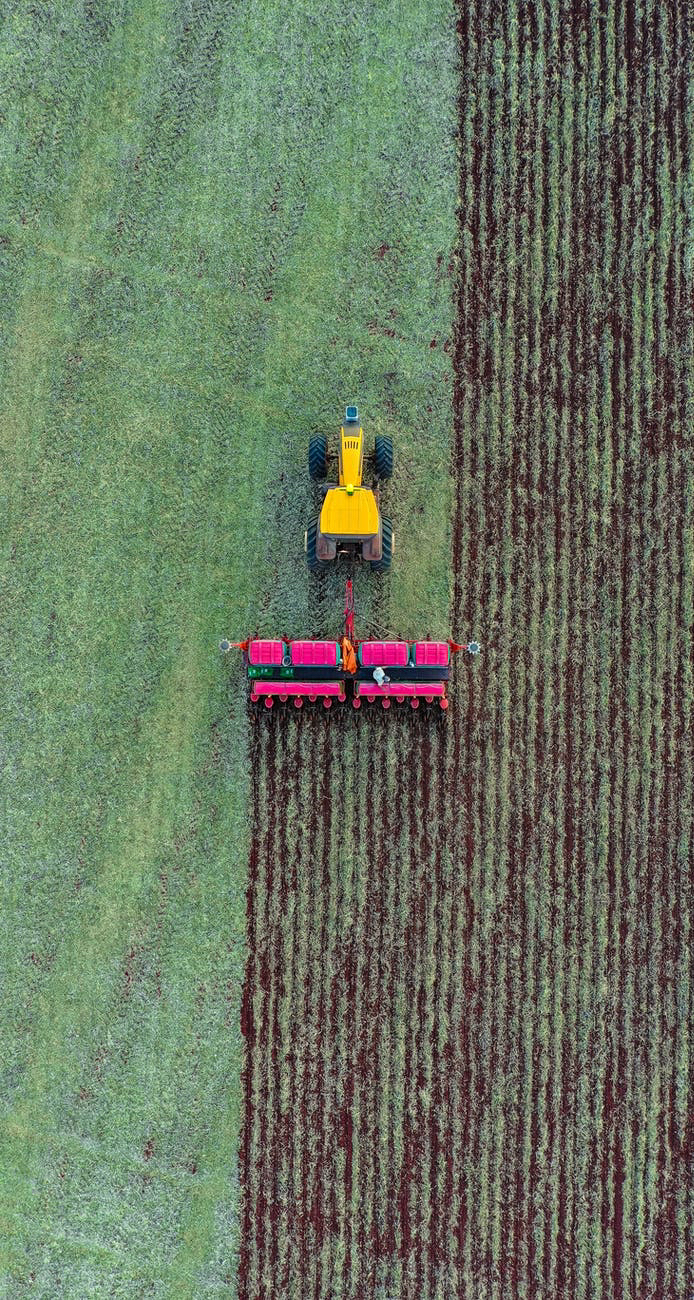
Carving broad lines into the dirt, he circled the tractor at the edge of the field his father farmed as a hired hand, straightened it out, and started anew. Plowing one endless furrow after another, Joel stole a longing glance at the cars speeding past on the adjacent road, each headed anywhere but here. Family duty held him firmly in the driver’s seat of the tractor’s cabin, though he would gladly relinquish it for a ride in the backseat of even the slowest vehicle escaping this dry and dusty patch of land outside of Dalhart. While he would later appreciate the work ethic instilled in him by his father, who expected him and his brothers to do their part by participating in the family trade as long as they remained under his roof, he derived no pleasure in farming and anticipated after graduation a life outside of such a town that offered few, if any, other means of making a living, even to this day.
Granted, there was nothing to discredit the modest, deliberately-paced community of Dalhart, so named for its establishment between Dallam and Hartley counties in the Texas Panhandle. Then again, there was nothing much to its credit either, in Joel’s opinion. Living in a small agrarian town suited men like his father, who had spent his entire life there, was devoted to his trade, and knew as much about the world outside of it as he wanted to and nothing more. In a way, Dalhart was a refuge from the busy, chaotic world beyond beyond its borders. Even my grandfather’s television, a veritable window in one’s living room opened to the wider world, was, as I recall in his later years, rarely tuned to anything other than golf or the weather; there was little else that captured or required his attention, and this by choice. I once asked him if he had ever considered living anywhere else, myself having recently arrived for a visit from the sprawling, noisy metropolis of Houston. “What?!” he exclaimed. “You’d have to be crazy to want to leave this place!”

My father shared no such sentiment, a fact that did not evade the attention of his own father. It isn’t a stretch to say that the numerous years David Johnson had spent working the land as a matter of necessity had become stitched inseparably into his very identity. To have a son who did not find equal meaning in this respectable form of labor was to suffer a personal affront. He was not an emotionally demonstrative man, however, though his departure from his childhood home as a teenager was contentious, to say the least. He made a rebellious escape of his own from a father with whom he didn’t see eye to eye and never once looked back in regret. Exiting the dust-bowl era, he found a way to make life work for him in spite of an unfinished formal education, eloping with his teenage bride, Zola Faye McBrayer, and focusing his life’s labor on tending the land. Five kids were to follow, Joel the fourth in line, preceded by Peggy, Nancy, and Steve, and trailed by Don.

Zola Faye’s fourth was an unplanned pregnancy. To make matters worse, conception was discovered following a procedure his mother had undergone known obstetrically as a “D and C,” which involves clearing tissue from the uterine lining. No viable pregnancy is biologically equipped to withstand such a procedure under the best of circumstances. Upon learning of the mistake, the doctor counseled abortion, convinced the fetus either would not survive or would be born unhealthy or severely disabled. Zola Faye refused. Defying the odds, the baby would be born to term, alive and healthy. She would give him the prophetic Biblical name “Joel,” meaning declaratively “Yahweh (the Lord) is God.” The improbable birth would be documented in medical literature. I would first hear this story many years later in a sermon delivered by my father, who shared of his mother’s conviction that it presaged a life determined for a special purpose or moment.

Whatever that purpose might be, this story would lend Joel a profound sense of God having miraculously intervened in his life long before he possessed a formed mind to perceive it. The words of Psalm 139 might as well had been penned by him, who, incidentally, was given the middle name “David” by his mother and father.

“Your eyes saw my unformed body; all the days were written in your book before one of them came to be.”

Central to this sense of meaning and purpose was the church, and for the Johnson household, attendance was routine and expected for all in the family. His father, David, arrived early every Sunday to open the doors of the First Baptist Church of Dalhart, his deaconly duties extending only insofar as gatekeeper and collector, namely offertory contributions and attendance numbers in Sunday School classes. Aside from this, he characteristically could be relied upon to shutter his eyes during the service not in meditation or prayer but in slumber. Yes, the pastoral message was important; he diligently brought his family each week, after all. It seems, however, he was simply a man who was at his best and most alert when moving, and a sermon afforded little opportunity for that. Zola Faye, by contrast, kept conscious and active attention, teaching the young married’s class, singing in the choir, and occasionally serving as pianist and, for several years, church secretary. As for Joel and his brothers and sisters, they were present and accounted for given the doors were open — Girls in Action, Royal Ambassadors, childrens and youth choir, Sunday evening church training, vacation Bible school, etc. Religious or not, one’s best social opportunities in a small town at that time were often provided by an engaged church, and the Johnsons’ extracurricular activities would imply it was practically a second home for them.

Growing up, Joel’s interests inclined toward literature. His oldest sibling, Peggy, unwittingly practicing for her eventual career in education, taught him to read before he ever set foot in a classroom. Once children’s stories were covered, he moved on to the family encyclopedia, an educational staple of many mid-20th century American homes. Further along than most by the time first grade began, he and another student were permitted in their reading class to occupy a corner of the classroom and lose themselves in any available story that seized their interest. He acquired a library card at the earliest opportunity and pored over every book on the shelves detailing the history of World War II and the Civil War. The daring adventures penned by Alistair MacLean were his favorite. When these were exhausted or unavailable, Readers Digest bound and abridged novels that amply lined his mother’s shelves would do. To this day, my father’s preferred posture is seated comfortably in a recliner with an open book. Conscious of it or not, he was building habits and forming values that would extend to his own children years later. My own career choice of librarianship undoubtedly began its formation during those early reading lessons decades ago between my aunt and father. For those of us led to believe we are the masters of our own fate, I would argue that nurture and influence stretch much further back into our familial past than we might imagine.

At 15, a friend loaned him “The Lord of the Rings” trilogy. “It’s a dangerous business,” Tolkien writes, “going out your door. You step onto the road, and if you don’t keep your feet, there’s no knowing where you might be swept off to.” Joel would spend hours discussing the volumes with his friend, enthralled not only at the exploits of the nine but, more importantly, moved by the spiritual themes undergirding the patient, expansive story, which, like many others he read, depicted places, real or imagined, dissimilar to the one he inhabited, fueling a desire to tread his own path into the unexplored world once given the opportunity. Something greater and deeper than the adventures he had read about continued to stir within, inspiring him soon to begin taking his first steps into a vocational life of faith.

Whether it was the stress of this call that weighed upon him or simple adolescent immaturity, Joel found himself during his senior year succumbing for a season, due to the influence of friends, to more than a passing interest in alcohol, a developing habit that he managed to conceal from his abstinent parents. Late in the academic year, he would pass evenings several times a week with friends overindulging. He didn’t relish the taste, but it did the job and did it well. Certain evenings passed out of memory entirely; the manner in which he made it home on these occasions were left a mystery.

There are few times in life that bear stronger potential to form both our best and worst habits than adolescence, and at his rate, alcoholism could thereafter have grasped and held him captive with relative ease if left unchecked. Had it succeeded, the story told here would read differently or, perhaps, not be read at all. To our great fortune, however, resourcefulness is one of God’s most enduring though often overlooked qualities. Every tool is at his disposal to shape our circumstances and character as he sees fit. He would recognize in due time what awaited him without an adjustment and would, thankfully, quit cold turkey. He would never touch another drop. The lessons learned would be put to good use, as they should for any seasoned minister. There is no shame in possessing a past, especially if it offers a personal education on the meaning of grace. And who better to comprehend and appreciate the lessons of one’s past in humility than those committed to professional ministry in the service of others, each with their own pasts? Christ saves us all from something.

Joel had spent abundant time pondering these and other spiritual matters for much of his brief life thus far, which led him eventually to consider whether it hinted at a call to a career focused wholly on God’s work. But to what, exactly? The works of Scripture, especially in the Old Testament, do not always describe the “call” of God in precisely the way many of us understand it today. Then, the Levites fulfilled the “professional” function, but primarily due to bloodline; it was a “default calling,” if you will. Many of those “called” who we read about were tasked with a very specific job in mind that did not necessarily carry a socially- or culturally-defined title that limited their role and responsibilities: be fruitful, build an ark, father a nation, lead my people, conquer, save my people, be anointed as king, rebuild the city, etc. All were called of God, but to an ordained task, not a defined title. I have met those who pursued a call in seminary who did not belong there, and I have known instructors who shared that observation. While there is no clear fault in following a call in the best way we know with the information we have, it’s wise to consider that we may limit God to think he can work with us only within the confines of professional ministry, though it most certainly has its place.

As best as Joel could surmise, just as many others do, his call should be pursued as a leader and shepherd of a congregation much like the one of which he’d long been a part, so he duly set out to obey prayerfully in the best way he saw fit. Consulting with his church’s pastor as well as select deacons in the body, he was approved and officially licensed into ministry. The duration of his first sermon barely gave listeners time enough to warm their seats after only seven minutes in the pulpit, but the brevity was no discouragement to him. Joel would continue in that direction.

At long last, graduation arrived. He summarily struck out on the road leading from town, blazing past furrowed fields over which he’d once driven. From here, there would be no stolen glances toward the tractors carving the dirt hours on end, though perhaps the metaphorical but fitting words of Christ, to whom he had pledged himself, echoed in his mind as he fixed his gaze forward and forged ahead.

“No one who puts his hand to the plow and looks back is fit for the kingdom of God.”

Just as the plow prepares the ground for the growth it will foster, Joel was unknowingly headed not yet into a life of career ministry but rather one of patient preparation for a task God had designed for him years later, a task which he would share with another. Her story began many miles southeast of the quiet farmlands spread across the Panhandle, nearer the noisy, steam-pluming refineries stretching along the lengthy coasts of the Gulf. Hers was a different hope for the future they would soon inhabit together.

Prelude to Risk, pt. 2 (or Final Chapter)

“We have to make a decision today.”

I’ve been stalling for at least a month. 

January 2017. Earlier in the previous year, my wife and I took in two siblings and will, in a few weeks, adopt them as our own. It has been a long and laborious process up to this point. The adjustment to parenting is the only thing, for me, that has been more trying. From zero to two is an almost imperceptible change if you’re talking about the speed of a vehicle. If, however, you’re referring to the number of older children in your home versus only moments ago, no adjustment I’ve experienced in 40 years compares.

I’ve just begun to settle into the new routines, priority changes, loss of “me” time, etc., that parenting brings with it, not to mention the difficulties raising kids from trauma. If I’m honest with myself, I’m still not sold on the approaching adoption day and terrified that this is a mistake. There’s no turning back after that.  Now we’re being asked to take in a third — their sister. While my wife’s answer was a resounding, knee-jerk “Yes!”, she dialed-back her open-hearted enthusiasm when it was clear I hadn’t yet arrived there with her. We would, instead, think about it. She would pray and hope earnestly that I would change my mind.

A month later, and the new year has barely begun, as has my day. Waking up to get myself ready for work, I answer a call from my wife, who has already begun her workday. The time to make a decision had come, our caseworker informed her. She needed an answer today. 

I do not want to do this. 

It’s been hard enough becoming an instant parent of two. More than once, I’ve felt like quitting. I can’t imagine taking on yet another, who, we learn, will bring her own set of challenges. In short, we would be the fifth primary caregivers in her brief seven years of life — a fact to which I can’t relate to any of my own life experiences.

Overwhelmed at the thought, I tell my wife I need some time. I call work to tell them I won’t be coming.  Instead, I face the inevitable and prepare to wrestle with God.

I want an answer, and I’d like it to come unmistakably from Him. 

_________________

It’s long been easy for me to read the stories in Scripture, especially those in the early Old Testament books, as if God speaks to the key characters in direct, grandiose ways just as frequently as we might pick up the phone and text or call one another today. It takes only a few seamless moments to read many of these accounts as if one divine interaction follows the next, as routine or as common as walking from here to there. Such a belief can further lead to the self-critical idea that I don’t hear quite so often as that from God, and certainly not in such grand fashion, so I can hardly consider myself as intimate with Him as an Adam, a Noah, or a Moses.

Read-time is not real-time, however. Between punctuation, paragraphs, and chapters, especially in the Old Testament accounts, there is the undocumented drudgery of the day to day; there are actual days, months, years, sometimes decades or longer, between “burning bush” kinds of moments. Instead, there is the silence of God. I would argue, in fact, that we overlook the abundance of His silence in these characters’ stories. Granted, this doesn’t mean He wasn’t acting or speaking in these segues.  The writers, inspired of God, only tell us what we most need to know. Yes, he may speak to me in many simple, quiet ways on a daily basis, if I’m attentive, but many of the monumental divine intercessions or pronouncements writ large in Scripture are fewer and farther between if you stretch them out into actual time. 

This I find reassuring, and it adjusts my expectations of God. My faith in Him and confidence that He is ever-present to me shouldn’t depend on whether or not I experience frequent moments in which He parts the clouds for a special revelation. Many, many more times than we read, I am certain, Moses, for example, got up, went about his day, and eventually retired for the night, only to do the same the following day and the day after that. On almost all of those days, I am certain water acted like water does and neither parted across a sea nor sprang from a rock. It’s not exciting, but much of the time we spend in our lives isn’t. It’s simply life as it is.

Nevertheless, God is still present in the day-to-day routines, and it’s often in these periods that our faith is most tested. He will speak to us in the manner he chooses when he chooses to do so, or He may not. Sometimes, however, we hope and pray that He does so in such an intimate and direct way as we read in Scripture so that we are forever changed, our life altered. 

Sometimes, He may give us just that, even when what He has to say may not be what we want to hear.

______________

I decide to change my surroundings and venture to a local park. I turn off my phone. Maybe a little dose of nature and evasion of distractions will persuade God that I’m serious, that I’m holding my calls for Him, so to speak. 

I find a picnic table and sit down, read a few verses here and there, meditate, journal, say exactly what’s on my mind. I wait. I listen. I repeat.

Nothing.

After what feels like an eternity, I impatiently get up, move around, and take a walk. A few scattered times in my adulthood, I’ve imagined Christ by my side on one of my strolls, keeping pace with me, just being present, if for no other reason than to be a comfort, a reassurance in a world characteristically more chaotic than ordered. After a while, though, I sense it’s just me. 

Dejected and impatient, I change direction and walk to the van. God may have nothing to say to me about this. What’s more likely is that I’m simply not very good at listening to Him.  I shouldn’t expect Him to speak to me as He has in so many ways to my parents. I need to accept it, make a decision about this, and move on with life.

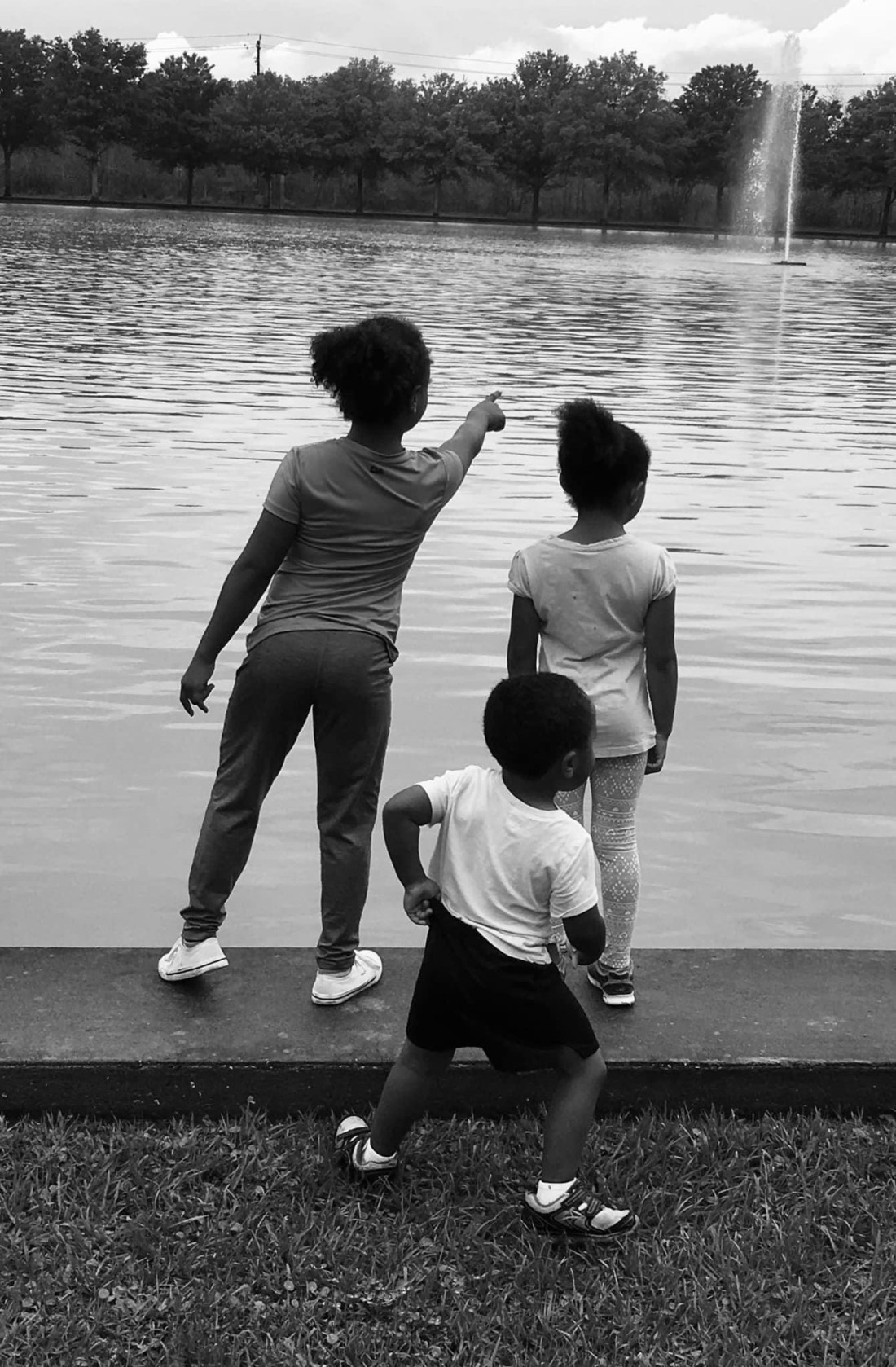
I get in, decide to clear my head, and just drive. I head south on the freeway. About 20 minutes in, I drift off the exit towards my childhood hometown. I’m soon coasting past old familiar places down the main thoroughfare. The car eventually makes a left turn, then another left. It stops along the curb behind a park where my siblings, neighborhood friends and I often played.  I don’t know why I’ve come here.

Across the field in the park, I see our old backyard at my childhood home. The architecture hasn’t changed after 24 years, but the paint and landscaping have. Someone else calls it home now. I wonder what memories they’ve made there.

I get out of the car and stroll to a bench. I take nothing with me.  Arms stretched across the back, I just sit and take it in. I stare at the back of the house across the short distance. I’m not sure I’m really listening for anything anymore. I relax, sit back, and remember what was, back when life was simpler and I was blissfully unaware. 

After an hour or two, a little bored and unenlightened, I get up and head back to the car. I don’t know what I’ll do or where I’ll go from here, but it seems God doesn’t want to show up. I’ve invited Him, but He has no interest in offering even a meager shred of advice on how to proceed. Forget it, then. I’ll figure this out on my own.  Maybe He did, after all, just wind this universe up at the beginning and casually amble away to pursue other interests, leaving us with the mess we’ve made. 

I sit down and shut the door. Reaching for the ignition, I press the button and start the car.

______________

“It’s time.”

I’m 15 again, sitting on the floor of my empty room. My mother’s words echo as the tears start to flow. She sits down beside me and wraps her arms around me. I’m saying goodbye to my home once more, the only home I’ve ever known.

Then I hear Him.

“You left your home once at 15. Your family left with you. I brought you to this place specifically to remember that. 

“This child is the fragile age of 7. By the time she makes her way to you, it will be her fourth departure in her brief life from places that only resemble a home. Her family is not with her. She doesn’t understand it all, can’t process it, and is otherwise alone. I’m giving you this opportunity to change her reality, to give her a home that’s truly a home, one that she will never have to leave again.

“It’s time — time for you to take a risk. Your parents had theirs, but this is uniquely yours. I’m not asking you to venture to the other side of the world; that was for them, not for you. 

“I will not promise you that taking this child — these children — as your own will be easy. In fact, you know it won’t be. I will not even tell you how it all will end, whether it will seem worth it. It is, however, what I want you to do.”

______________

Scripture tells us that God is sovereign. If I believe this, then I know His purposes will be accomplished. Moreover, I believe He chooses to use us as vessels to do His work. With or without us, He will do what He says. 

Nevertheless, I can’t help but wonder — what if my parents had said “no”?  What if they had turned their backs to their call, though doubtless about what they had been told and who had spoken to them?  

What if they stayed?

Would God, as with Jonah, have bore down on them to any and every corner of the earth to which they fled, using whatever means at His disposal to exhaust them until they obeyed, albeit reluctantly? Or would He have simply changed His mind, searched, and found another to finish the job, leaving them to puzzle in their final remaining years, filled with regret about what might have been?

Maybe, just maybe, after all, they had a choice even then, notwithstanding God’s sovereignty. I can’t search it out, and it isn’t long before I find I don’t want to. Of all for which I have to be grateful in my life, I’m relieved I do not have to linger or obsess on what would have been had they remained where they were.  As with Frost’s less-traveled road, their choice to go has made all the difference. 

___________

I’m back in my car, tears streaming down my face, just like the 15 year old about to leave his home on a journey not of his choosing. I now know what I have to do, but it doesn’t feel inevitable. I have to choose. 

I’m afraid and uncertain. I feel inadequate, unprepared, and ill-equipped. My parents once felt this way as well, on the edge of a risk, but much greater than this. This time, however, I’m in the driver’s seat as I prepare to leave this place once again.

“Go from your country, your people, and your father’s household to the land I will show you.”

I think it is no accident that the story of Abram has found itself placed near the beginning of Scripture. It is a simple yet relatable story to which many thereafter found and still find themselves directed by God as an encouragement to take the first step. As one author put it in his own famed, world-building story, “It’s a dangerous business . . . going out your door. You step onto the road, and if you don’t keep your feet, there’s no knowing where you might be swept off to.”

Abram’s faith journey begins anew each time we receive a call from Him and choose to obey. The call isn’t the same for each of us, but He calls us each to something. Reflecting on this, I make my decision.

I put the car in gear.

“So Abram went, as the Lord had told him.”