A Thousand Words

“Photography has nothing to do with cameras.”

– Lucas Gentry

Once upon a time, I was searching for a hobby. Graduate school alone was insufficient to sustain my attention or fill my free hours. Time spent casually on TV, reading, and exercise still left space to fill. Smartphones had also not yet made their commercial debut, so there wasn’t the persistent and often irritating distractions they encourage. I knew I could make more productive and satisfying use of my free time and wanted to learn how to do something and enjoy the effort it would take to do so.

As I circled high above the hobby landscape, I found photography as good as anyplace to land. Being a curious and conscientious reader (I was studying to be a librarian, after all), I found several old Time-Life hardbound volumes on the subject and read up on shutter speed, exposure, depth of field, etc. Unlike other topics I had made efforts to wrap my brain around, I found it simply made sense to me. I dove headfirst and chose to learn the hard way, purchasing a student camera — a fully-manual Nikon SLR — along with ample rolls of film. This was a conscious choice considering that digital cameras were just beginning to come into their own and were expected to advance in the approaching years just as exponentially as the computer processor. Even then in digital’s nascent stage, one could still validly debate whether it or film proved the better medium. I selected the latter, believing such a costlier trial-and-error method would foster a firmer grasp of the fundamentals.

We take for granted the privilege of carelessly snapping away with our digital devices at no cost to us other than loss of storage, which is scarcely a concern any longer. No such luxury with film. As I discovered, one learns swiftly the importance of precision with chosen settings and the need to document each and every shot since it requires a trip to the drug or camera store and at least an hour wait for prints to divine whether or not exposure corrections are necessary.

At any rate, opting to learn the old-fashioned way, I gained a grasp of the basics that I otherwise wouldn’t have were I to have taken digital shortcuts. Over time, I became especially skilled at and appreciative of composition, which, I believe, is one of the most difficult aspects to teach. Either you have an eye for how to frame an image of everyday life, or you don’t, which leads me to Mr. Gentry’s words above.

Photography is, among many things, about abstraction. It offers the photographer an opportunity with the easy press of a button to place a frame around a single moment in time, shutting out all other visual distractions. It is simply a way of communicating to a viewer, “Focus on this. See what I see.” The photographer’s eye and mind perceive the images before him or her long before the shutter slides open and shut. The camera itself, though fascinatingly complex, is merely a tool for capturing what the photographer already perceives with his or her own eyes.

This thought came to mind recently at, of all places, a funeral, which serves at least a couple of purposes. First, there is the obvious intent to honor formally and memorialize in the company of others the life of someone you loved, even though they are not present to receive the appreciation. Second, it provides a moment to stop and remember that we all will find ourselves at life’s end one day, and to consider how we are living ours and what kind of legacy we will leave to those who remain.

In this case, it was a man who left a positive and lasting impression on his circle of family and friends, who movingly shared their thoughts and remembrances of his fruitful 70 years. As the service drew to a close, a slide presentation of personal photographs was shared, layered over carefully chosen songs that emoted both his beliefs and the time he spent in life.

As the pictures transitioned from one cherished, frozen moment to the next, I thought of my own parents, who were seated with me, and how I might remember them once the time came. I was reminded of the quote above and a fleeting image my eyes alone captured 30 years ago without the aid of a camera, though stamped upon my mind to this day. The image speaks volumes over a critical moment in their relationship and life, and it remains, for me, one of the most indelible impressions I have or ever will possess of the two of them.

__________________

The closest I’ve ever personally experienced a genuine medical emergency was as a kid in the small East Texas town of Crockett during the late-80s. Our family spent a brief vacation there in a modest cabin next to a lake, where we splashed and played recklessly in a designated, roped area of the murky water, one side of the squared space a pier extending only so far as an average adult could toe the muddy bottom. My brother, sister, and I took turns dashing over the planks and leaping feet first into the natural pool, far too trusting, I now know, of what we couldn’t see beneath the surface. Not long into this activity came my turn. I made my way to the front of the pier, took off like a rocket, and jumped blissfully over the edge.

A jolt of excruciating pain instantly radiated from my left foot throughout the rest of my body after I hit the water, my heel having pierced deeply something sharp on the lake floor. The shock sucked the air out of my lungs as I turned slowly towards everyone behind me, my expression registering only silent horror as my grandfather, nearest to me, immediately discerned my distress and lifted me out of the water. Blood poured from my heel as an agonized howl finally escaped. Long story short, my parents carried me to a local ER, where I was sewn up with three stitches and bandaged. I spent the remainder of the trip seated on the pier, sulkily watching everyone else enjoy themselves, none now daring to jump heedlessly into the water due to the lesson I provided in risk vs. reward.

If the worst physical pain ever experienced were a competition, my mother would win the gold medal uncontested among the five of us in our family. Aside from delivering three children, of which I understand I gave her considerable trouble as the first, she’s endured collapsed lungs, shattered wrists, and a ruptured colon, to name a few. The latter bore the misfortune of taking place in a foreign country under dreadful hospital conditions unsuited to treat properly the affliction, which only prolonged and intensified her suffering. As one local informed them at the time, “One doesn’t go to the hospital here to get well; one goes there to die.”

The plight of the Ukrainian people has dominated the news over the majority of the year, but there was a time when it seemed their independent future was not about conflict and instead was bright and hopeful, following the collapse of the Soviet Union in the early 1990s. This is where our family found ourselves beginning in the summer of 1992 until the beginning of the same season the following year after my parents surrendered to the ministry and gave up a comfortable American life to provide food for the soul and body to the poorest Ukrainians in most desperate need of it. Though they had received their freedom nationalistically, many ordinary people found themselves in dire straits as the economy tumbled rapidly downhill over the months to come, and my parents, as representatives of the faithful back home, shared what they could to ease their suffering.

After a year of living among them, we had begun to feel more at home there than in our own country, we discovered, after a brief furlough back in the States a couple of months previous. For my part, eagerly approaching 17, I had gained a decent grasp of the language and could maneuver from here to there on my own, learning to manage independence differently than most teenagers. Memorializing another year, whether it be a birthday, an anniversary, or a major life transition, in our case, should be a happy occasion, but our moment almost exactly a year since we had arrived would be marked not by celebration but a crisis of faith, wondering if we would need one fewer ticket for the eventual return home.

On an otherwise uneventful evening drawing to a close, the front door to our small two-bedroom flat swung open. It was mom, returning later than expected after shopping for essentials, a task which was carried out on foot without the convenience of a vehicle. Arms laden with bags full of purchases, she stumbled in physically anguished. While ascending the stairs at a nearby underground crosswalk, we would learn, a crippling pain in her abdomen suddenly forced her to the ground. She would labor the remaining distance merely to move, crawling on hands and knees the final stretches toward the residential high-rises with no means to communicate her distress to us and come to her aid.

Like a spent and exhausted marathoner crossing the long-awaited finish for the first time, she collapsed into the flat and found her way to the bed she and my father shared. As she lay still and quiet in abject misery, the next several hours were spent by my father and the Christians, another couple who had been our companions on this adventure over the last year, to determine our next move. She desperately needed help for whatever this was, but the poor reputation of the hospitals and available medical care loomed large in our minds. Urgency discouraged a day-long, emergency trip back home across the ocean.

Witnessing an adult in distress — one’s parents, no less — forms a deep impression on a child, even if that child is a late teen on the cusp of adulthood. As much as we’re tempted to roll our naive adolescent eyes, we nevertheless trust them and their grasp on life in general. We have to, after all, because we know we certainly aren’t confident of ourselves at our age, in spite of our efforts to conceal it. With some exceptions, they are the ones who have made us feel safe. But what happens when we observe in a moment of crisis that they themselves don’t feel safe? What changes in us in a given circumstance when there is no assurance from them that everything will be alright?

In the dining and living area, the Christians waited with my brother, sister, and me, prayed, and considered unwanted options as my father did his best to comfort my mother in their bedroom. We instinctively gave her the space she needed and kept our distance, not feeling helpful or useful under the circumstances. Restless and curious, I rose and moved toward the hallway under the guise of retrieving something from the far bedroom. As I walked past their bedroom, the open doorway functioned as a veritable camera shutter, my eyes permanently imprinting on my mind and memory, like film exposed to light, a poignant scene that spoke volumes.

Click.

What light remained of the day shone dimly through the far window. On a bed composed only of a sparse frame and a mattress wanting for comfortable cushioning, my mother lay on her left side, facing the doorway. Eyes shuttered tight, her expression betrayed only literal gut-wrenching pain. A wastebasket rested on the floor at the edge of the bed, prepared to catch anything her stomach expelled. Beside her, my father sat solemn and silent, holding her hand, offering his presence alone as he stared vacantly and uncertainly ahead.

The mental picture captured in the brief second it took me to pass, I then retrieved whatever it was I was after in the other bedroom and returned to the living room. During the next several days, she would enter one of the local hospitals, the doctors learning only after opening her up that scar tissue from a surgery years prior had shifted and created in her colon a blockage that intensified until it burst, resulting in peritonitis. The experience before, during, and after left her life in peril and deserves its own story. In any event, once able to travel following emergency surgery and insufficient treatment, we were forced home and found our experience as missionaries summarily brought to a swift and decided close with little time for goodbyes to all those we would leave behind.

__________________

I’ve revisited this bedside scene many times over the last 30 years, processed and reprocessed its meaning to me and the emotions I couldn’t adequately express then. It remains a photograph framed and exhibited nowhere but on the walls of my mind, an image I’m able to share only with the visual limitations of words. As a photograph, albeit mental, however, it has much to share.

Years of preparation, of planning, of feeling led to abandon the safety of their life in America and take the risk of a dramatic — some said “crazy” — move across the other side of the world into a country taking its first independent steps culminated in this single moment. Far from home, from the care that could rapidly be provided potentially to save a life, one wondered whether, only a year in, the decision would prove a fool’s errand, and a fatal one at that. “Perhaps it wasn’t God who sent you,” as the doubts might have stirred. “You wanted for purpose, meaning, so you left, and instead you find yourself putting God needlessly to the test. That is, if God is in it at all.”

I don’t know what thoughts may have been circling my parents’ minds in that moment, but in my mind’s eye, I still see the pain in my mother’s face, eyes tightly shutting out the world and wishing desperately for relief, even if it came in the form of death. I see my father’s vacant stare, one of the first and only times in my young life when I witnessed utter helplessness written in his expression. Nothing but faith to which they could cling, nothing but hope to assuage a sense of despair. As mentioned, my mother would spend several torturous days in the hospital thereafter, which is a harrowing story all on its own, but if I remember anything of them and this time in our lives, it is this single image that will survive.

__________________

“Though the fig tree does not bud
and there are no grapes on the vines,
though the olive crop fails
and the fields produce no food,
though there are no sheep in the pen
and no cattle in the stalls,
yet I will rejoice in the Lord,
I will be joyful in God my Savior

Habakkuk 3:17-18

I recently was reminded of this verse during a routine reading. Depending on my mood or circumstances, I either appreciate it or I prefer to be cynical about its attitude and perspective. When life isn’t living up to my expectations, when I am disappointed in myself and my sins or shortcomings, when the kids can’t seem to get it together with their ongoing issues (which can be deep, exhausting, and never-ending with adoptive parenting), I genuinely feel the urge to reject it. I just want to feel better, I don’t at the moment, and the words are of little comfort. Yet, it is for moments such as this that the words are intended. My circumstances, it infers, shouldn’t determine my posture, which, it would seem, is merely a matter of choice. It should be noted that the surrounding verses don’t suggest Habakkuk is ignoring the fact that life could and should be better than it is presently, but he doesn’t wholly blame God for it, and he chooses not to allow it to crush his faith irreparably.

This single, still image of my parents ought to instruct me more often than I have allowed it rather than serve merely as a meaningful picture worthy of a frame, were a camera available at the time. I know they felt desperation, doubt, and profound pain. While my mother languished in the hospital, my father, characteristically contained and controlled with his emotions, found himself unable to finish a simple blessing over a family meal — an observation that was the first genuinely to unsettle me throughout the ordeal. Even my parents’ faith, on which I relied up to that point, was vulnerable and could be tested.

I do wonder what might have been different about each of us had mom’s life ended. We all, ultimately, do not receive a favorable answer to prayer that we retain those we love. I do know that the experience bolstered their confidence and their faith. Remembrance of all that they endured and overcame does not always ease today’s pain, but it does inspire them here and now to choose hope over despair.

So, I will keep this picture tucked away in my mind, recalling it, if I am wise, as needed in moments of doubt or disappointment. It has much to teach me without the help of a thousand words. Yes, a camera might have been a useful tool to employ as I passed the pale doorway, but useful only insofar as it would have allowed me to share what I witnessed. In the end, this is all a camera actually allows us to do — to share what we already see and will be imprinted on our minds. If I’m honest, however, I suppose there are some things that are not to be shared, that are meant for each of us alone. If so, how rare are those moments, those memories, and, therefore, all the more precious and valuable, especially in an overshared age such as ours.

First Leg

At 15 years of age, the farthest west I had ever traveled was Colorado for a family trip to Estes Park, where I remember trail riding on horses (always a go-to activity on family vacations my mother planned) and taking in the beautiful elevated natural sights. The farthest east was Florida for one of three trips to Disneyworld, two with family and one as a high school sophomore for a band competition and performance at Epcot Center. Anything beyond these boundaries I was forced to explore in one of the sundry, yellow-spined issues of National Geographic filling out my father’s bookshelves in our living room. During my freshman year, I sat through World Geography, memorizing each and every country’s capital and discovering customs, cuisines, and landmarks around the globe, all detailed vividly in textbooks or in full, moving color on a television screen. These places existed where I had never been and might as well had been the stuff of fiction, since I was just as likely to visit the other side of the earth as I was to “explore strange, new worlds” in a starship.

On the cusp of my 16th birthday, however, that was all about to change. Here, at the edge of my 46th as I pound this out, I recently reminded my family that it had been 30 years this month since my parents took a leap of faith and brought us all across the ocean into what had been a formerly communist country only a few short months before. In the course of our text exchange, mom asked what we remembered about our exit, the first for any of us outside of the U.S., not for a mere visit but to change our residence. We each teased out snippets here and there, but a text conversation is rarely adequate for detailing personal events that deserve greater space. So, I felt compelled to take the time to stretch my own recollection of our initial departure further. What follows are my own sequenced but scattered memories of those first few days of travel.

For the sake of context, it might help to recall the world as it was in early 1992. The internet had not yet moved in to the majority of U.S. homes, and smartphones still might as well have been the stuff of science fiction. No one carried a mini-computer, much less a phone, in their pockets or purses. The average price of gas was in the neighborhood of $1.13/gallon. Johnny Carson hosted his last episode of The Tonight Show, and 60 Minutes was among the most popular programs on television. Police officers accused of beating Rodney King were acquitted, sparking riots thereafter in L.A., and Bush and Yeltsin declared a formal end to the Cold War, the Soviet Union having disbanded the year previous.

This was the general state of things as we rolled up for the first time to Houston’s Intercontinental Airport in June of 1992. It wouldn’t be renamed for the standing president for another 5 years. Dad was already making his way to Ukraine by land in Europe, having traveled with mom there the month before. She had returned after a brief visit to retrieve my brother, sister, and me. We had been staying with our maternal grandparents, who were experiencing one of the most difficult separations of their lives with our departure. We were their only grandchildren, and our mother was their only surviving child. Moving indefinitely to a country that until only recently was a Cold War enemy and taking the grandkids as well was breaking their hearts. Communication would be neither routine nor convenient; letters delayed by international postal services would have to suffice the majority of the time. We didn’t know when, or if, we would return.

As we waited to board, friends and family lingered with us at our gate in the terminal, taking for granted what post-9/11, still a blissful nine years distant, would strip away when airport and traveler security would become a priority, excluding all but passengers. Tears are what I remember as we stood by waiting for the announcement. Tears, hugs, and a deep sadness, some among us still wondering why my parents had picked this path, though they would say it was picked for them, and why they were taking us with them. The world was much bigger then, made so by the inability to connect instantly with one another in a variety of ways, as it is today due to the ubiquity and convenience of technology. When connection is scarce and limited, distances between those we love, especially physical distances, feel impossibly far away, as we would find.

The time had come, and we began the process of boarding, saying our final goodbyes and producing our tickets at the gate for the long flight to Germany, our first stop. I remember little of the flight itself, but a few details stick out. First, it was long. Up to that point in my young life, a puddle jumper to the Panhandle summed up the bulk of my flight experience as a passenger. The duration was just long enough to recognize that taking off and landing were the most exciting sections of the trip. Internationally, however, these maneuvers were a mere fraction of airtime, and, by the way, kids (and, come to think of it, adults), there were no iPads or screens to occupy us. So put that in your pipe and smoke it. Speaking of, and second, smoking, though recognized even then as an unhealthy habit, still had a foothold in most public places, including flights, though with some limitations. You’re all breathing the same encapsulated air, however, so you’re bound to take it in. My brother recalls receiving more than his unwanted share of it where he found himself seated. In any event, it’s a wonder there were not the irate passenger incidents we hear so frequently about today in the news. Easy to make a case of how spoiled and entitled we are; we put up with so much more then.

At long last, we landed in Frankfurt, still a hub for European air travel, and, to this day now as a more experienced traveler, one of my least favorite stops/layovers for its confusing sprawl. Exhausted but soldiering on, we waited with our group for the following flight that would take us in to Moscow for a day or two before our final destination — Lugansk, in far eastern Ukraine. We were traveling with a party of church-goers who were on mission not simply to escort us in but conduct a couple of weeks of mission work and evangelizing. I complained to my mother of my stomach — a tell-tale sign of anxiety I would become well-acquainted with at that age. My mother, with as much empathy as she could muster in her fatigue both emotional and physical, dismissed my pains to nerves, duly so, though it was little comfort.

In due time, we boarded the next flight bound for Moscow. Strangely, I remember absolutely nothing about this leg of the journey. Maybe I slept, maybe I didn’t. I assume my brain was too worn out to make a meager effort to file away what must have been an inconsequential experience. At any rate, we landed, we exited, and whatever was lacking in the previous few unremarkable hours of travel would be compensated for with impressions that planted their roots deep and have never escaped my memory.

It’s difficult to describe what it’s like stepping the very first time out of the familiarity of your own country and into another so unlike your own, one you have seen only on a screen or in pictures. Both fear and anticipation mingle together as you move along, sharing in common only your experience as a human being. All the rest has to be felt and experienced; you’re a kid once more, learning about the world, or at least a different part of it, and everything old is new again, so to speak.

Stepping out of the plane, I followed our group down the stretch until we each were expected to pause at a customs booth. My turn arrived, and I stepped before it, my eyes meeting those of a young uniformed Russian soldier, complete with the storied hammer and sickle pinned to the front of his military-issue hat atop his stern, no-nonsense head. His expression betrayed nothing except discipline and an expectation not to be trifled with. I produced my passport in silence as he took it, studied it, looked up, and studied me. Here, now, was my genuinely first experience of someone foreign in a foreign land. I felt a mixture of dread and excitement as his gaze lingered. This soldier, who resembled an authentic version of the enemy we had been educated to believe in, stood before me now in judgment. My fate was literally in his hands as I waited, alone, one solitary thought passing my mind: “This may be the coolest thing that’s ever happened to me.”

I’m certain I detected a subtle smirk as he returned my passport and sent me on my way, satisfied he had produced the desired and intended psychological effect. As we moved on, after collecting our luggage, we waited inside the airport for transportation to the hotel. As other travelers passed us by, none of them American, I caught not only glimpses of my fellow foreign man but also his/her odors, I’m sorry to say. This sense impression is, of course, nontransferable in a picture, moving or still, and can only be experienced in person. Near us were, I recall, a couple, disheveled but clearly traveling. Accompanying them along with their luggage was a smell I had never encountered, but was unmistakably body odor on a level I can only describe euphemistically as “otherworldly.” It was there I’m sure I learned to hold my nose without actually holding it, closing off my nasal passages indiscreetly so as not to appear rude.

On the heels of this was my first encounter with an alcoholic, ranting and gesturing incoherently, I can only guess, though I could not understand the language as of yet. At some point in his tirade, he stumbled in our direction as one of our interpreters intervened and headed him off, redirecting him elsewhere. This disease, we would learn, was, and, for all I know, may still be an epidemic problem in Russia. More than once over the course of the following year we would encounter such persons, one of them I distinctly recall belly-up in the mid-day sun adjacent to railroad tracks as we were on our way on foot into town. We had to pause a moment to be sure we were not witnessing instead a fresh corpse. Fortunately, we observed his chest rising and falling ever so slightly as to indicate signs of life, and so we chose to move on, finding him absent from his improvised grassy bed as we passed by upon our return that way.

Our pastor had joined us for this trip, and I was paired with him in one of our two-person rooms at the hotel. Waking the next morning for a little sightseeing with the group, I discovered I needed only to roll over in bed to observe the first of many new sights that day. There he was, seated at the edge of his bed, Bible in hand, marveling and remarking to me about a passage in Scripture, clothed merely in an undershirt and “whitey-tighties.” Nothing inappropriate took place, mind you, but needless to say, I was not feeling as inspired by the lofty passage as he, and I never again saw him quite the same way when stepping into the pulpit.

Red Square was my first taste of a famed, truly foreign location, and it didn’t disappoint. I’m sure I was a sight to behold as well dressed as I was, sticking out like a sore-thumb in threads one would acquire solely in the U.S. Prior to leaving the States, I had earned my high school letter as a sophomore via band, so I was afforded a letterman’s jacket, which I wore proudly on the trip. I foolishly accessorized this with a Confederate Army soldier’s cap, which I purchased in Frontierland at Disneyworld before they, and I, “woke” to the inappropriateness of such a souvenir and what it represented to many, thereby discontinuing it.

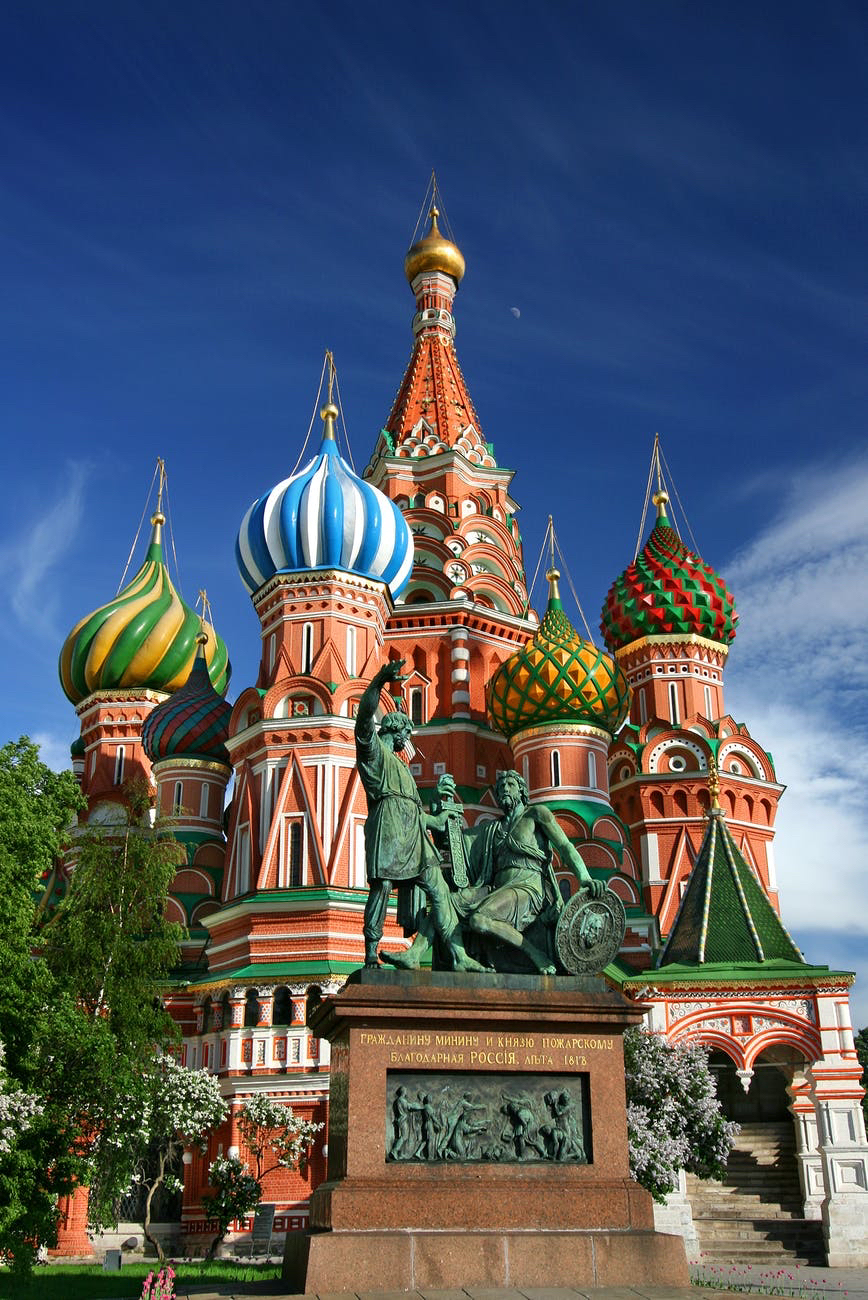
The ornate, colorful domes of St. Basil’s Cathedral to our left, we stood in the center of the Square facing the tomb of Lenin, revered founder of the U.S.S.R. Upon his death in 1924, Soviet leaders built the mausoleum soon after and laid him permanently in state, where his body remains eerily preserved to this very day. While I can’t verify it, it is rumored that nails and hair are regularly trimmed when the body is not on display.

After a brief discussion, we determined who among us was brave enough to venture into the tomb. There was no question about it for me, having heard about this very monument and having learned a thing or two about Lenin and his role in Soviet history. It was an opportunity I couldn’t pass up.

So, we queued up and began the slow, deliberate shuffle toward the entrance. As we neared admittance, we understood that we were to remain silent, were to capture no photographs, and were to remove our hats. I dutifully complied as we began to make our way past the guards, one posted on each side of the threshold. As I began to cross, the guard to my right reached out his arm in front of me, I assumed to look me over first for photographic equipment. He then lowered his arm, allowing me to pass, and so I did. Placing my hands in my jacket pockets, I proceeded to move forward only to be jerked backwards by my right arm. I turned and found the same soldier angrily address me in his native tongue. I never determined what he said, but his incensed tone communicated everything — take your hands out of your pockets. I failed to receive these instructions beforehand, but I was nonetheless allowed to pass once I demonstrated I understood. Once again, I was left with the harsh impression that there are no comedians in the ranks of the Russian military.
Recovering from this shock and reprimand, I stepped inside and wound around the inner perimeter. There, in the center of the marbled, rectangular room, was the body of Vladimir Ilyich Ulyanov, a.k.a. “Lenin,” lying protectively in a glass-encased container the size of a coffin. Guards stood stoically posted at all corners of the interior, ensuring respect was maintained by all who entered. The palpable silence, armed military presence, and dim atmosphere endeavored to communicate to all exiting that you have been in the presence of a god, albeit a dead god. While a day never transpired before or after in which Lenin crossed my mind, it nonetheless made an impression on me, not for the importance of this man but for the misplaced reverence of those following who paid sustained posthumous respect to him — a man whose Revolution that birthed a “united” country fell apart in less than a century.

The following day, we departed Moscow and boarded a dual-propeller Aeroflot passenger plane, bound for our final destination and new home — Lugansk, Ukraine. The noise and jarring revolutions of the engines, I discovered, ensured that conversations were maintained at a minimum of 90 decibels and that the fuselage alarmingly creak under the strain before, during, and after the flight. Somehow, we arrived intact and made our last few kilometers into town, uncertain of the stories we hoped to tell one day to those we left behind.

The news of late has shared no shortage of stories tragic and unsettling of this region over the course of the year. The stories, however, that we have been able to tell of that year in our lives there have remained with us and became an inseparable part of our identities. This first leg of the journey, lasting only a few days, left me with more than my share of impressions. I hope and expect to say more about all that followed in the future as time an inspiration permit. In the meantime, I simply pray that peace will once again find its way to Ukraine, a place we once gladly called home.

Prelude to Risk, pt. 1 (or Chapter 1)

May 1992. I sit down on the floor of my empty bedroom, legs in front of me, arms folded across my knees. I’ll celebrate 16 years in roughly a month’s time, but it won’t be here. My mother, brother, and sister are somewhere else in this imminently vacant house. It is, at this moment, the only home I’ve ever known. The next one is waiting for us on the other side of the world.

The late afternoon sun pours through the window ahead to my right. I see the west side of Mr. and Mrs. Woody’s house. A couple of years earlier, my siblings and I raced outside in the night through a category 1 hurricane and sought shelter next door with them to escape an appliance fire in our home after a power surge. From there, wet in our bedclothes from the rain, we watched the fire trucks roll up to our driveway in the darkness and heavy wind. We lived to tell the tale of a house that didn’t burn down, which, admittedly, would have been a far more interesting story.

I look to my left through the long, narrow window running along the upper quarter of the wall, an architectural oddity seldom featured on any current home improvement show. The inner shade of a tree my siblings and I named “The Jungle” years ago is all that’s visible. We and our neighborhood friends spent many afternoons hidden inside its branches, concealed from the world outside, imagining ourselves in any number of places but here. 

Life is said to flash before your eyes in a moment that may be your last. As I sit here still and silent — house empty, memories full —  my brief life flashes before me in a matter of minutes. I’ll still be breathing in a moment, but it feels like an ending, and I’m not prepared for it. I don’t know it yet, but this moment will indelibly be seared on my mind in the years to come. 

“It’s time.”

I look to my right and see my mother leaning against the doorframe. Until I entered the bedroom for the last time, I thought this departure would be uneventful and gave it barely a second thought. Few of us, however, especially the youngest among us, have the foresight to anticipate a moment that will impact us for the rest of our lives. 

Her words land like a gunshot. Without warning, the tears start to flow like a bleeding wound and express what I won’t be able to in words until years from now, after the maturity of hindsight — this place, this home, has unwittingly been a sixth member of the family. Within it, I’ve felt safe and secure. Now I have to leave that safety, these memories, and the only life I’ve known.

My mother walks toward me and sits down on the floor. She puts her arms around me as I sob. She will tell me years later that until then, she didn’t know how hard this change would be for my siblings and me. 

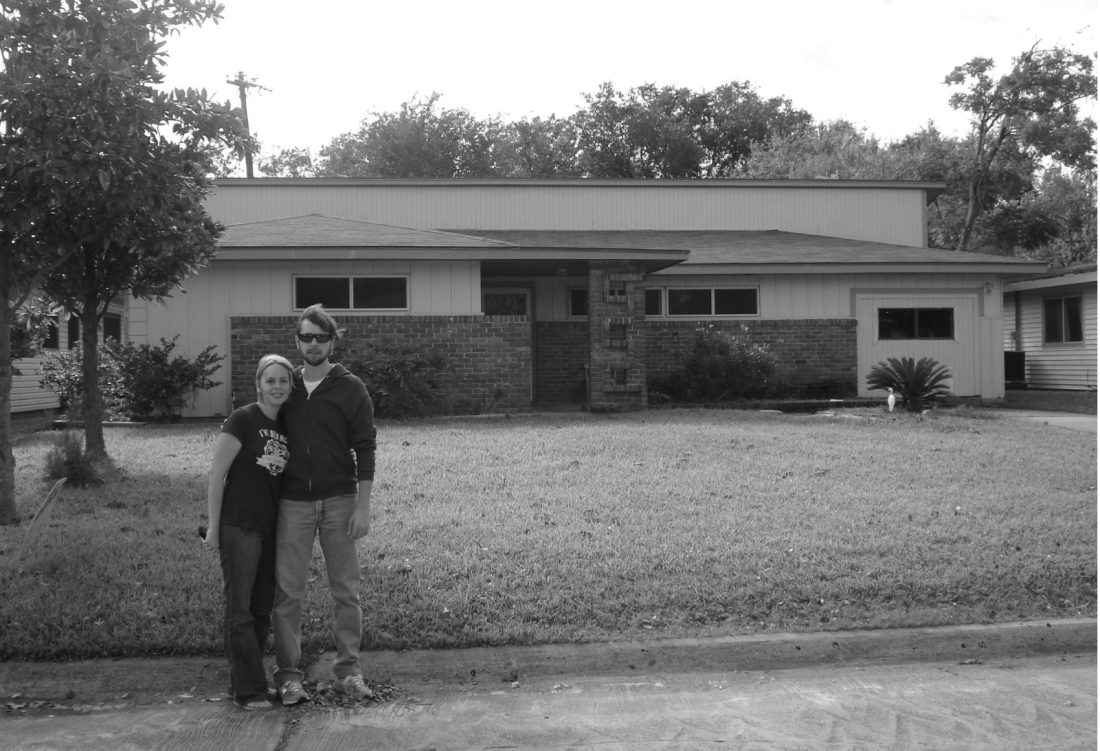
I soon collect myself and we get up to leave. I take a few last looks at the empty rooms before we exit and pile into the car.  Many years from now, I will have the opportunity to revisit this place, without understanding why, to find the guidance to make a decision that will impact a child, much as my parents’ decision now impacts me. 

As we drive away, I find myself unable to imagine what lies ahead of us thousands of miles away in what was long a Cold War country until only months ago. For our family, the wider world is a place we’ve seen only in pictures or on TV.  The farthest east we’ve traveled is Florida; the farthest west, Colorado. Where we are going, the news of the world describes turmoil and unrest. “Safety” and “security” are no bywords, and my parents appear to friends and family to be recklessly abandoning both, along with their sanity. They’ve quit jobs, sold the house and our possessions, and have prepared to move themselves and their three older children to this place in faith that God spoke and commanded them to do so.  

“Go from your country, your people, and your father’s household to the land I will show you.”

They are taking a leap of faith, and time will soon tell if these words spoken to another sojourner thousands of years ago are, for them, deeper and more direct than a mere inspiration, as they believe, or if they are out of their minds, taking a desperate mid-life gamble that will, in the end, leave them more confused and uncertain of their purpose in the world God has made. 

“So Abram went, as the Lord told him.”

Visiting our former home with my sister years later.