Graduation

The only thing I recall with middle-aged clarity about my high school graduation is stepping outside of the gym following the ceremony and finding no one waiting to congratulate me in front of the school. As I drove home in our faded-yellow Cavalier, I wondered what was so important that I couldn’t have at least been extended that minor courtesy. My answer arrived once I pulled into our driveway and stepped into the house to find family and friends waiting to celebrate the accomplishment in more comfortable surroundings. I quickly abandoned my disappointment and enjoyed the rest of the evening. My memory also fails me as to anything I might have been gifted, but what I haven’t forgotten is who was present with me. That would not be the last time such a significant detail instructed me about what’s most important overall about life’s milestones — who has been willingly present with you.

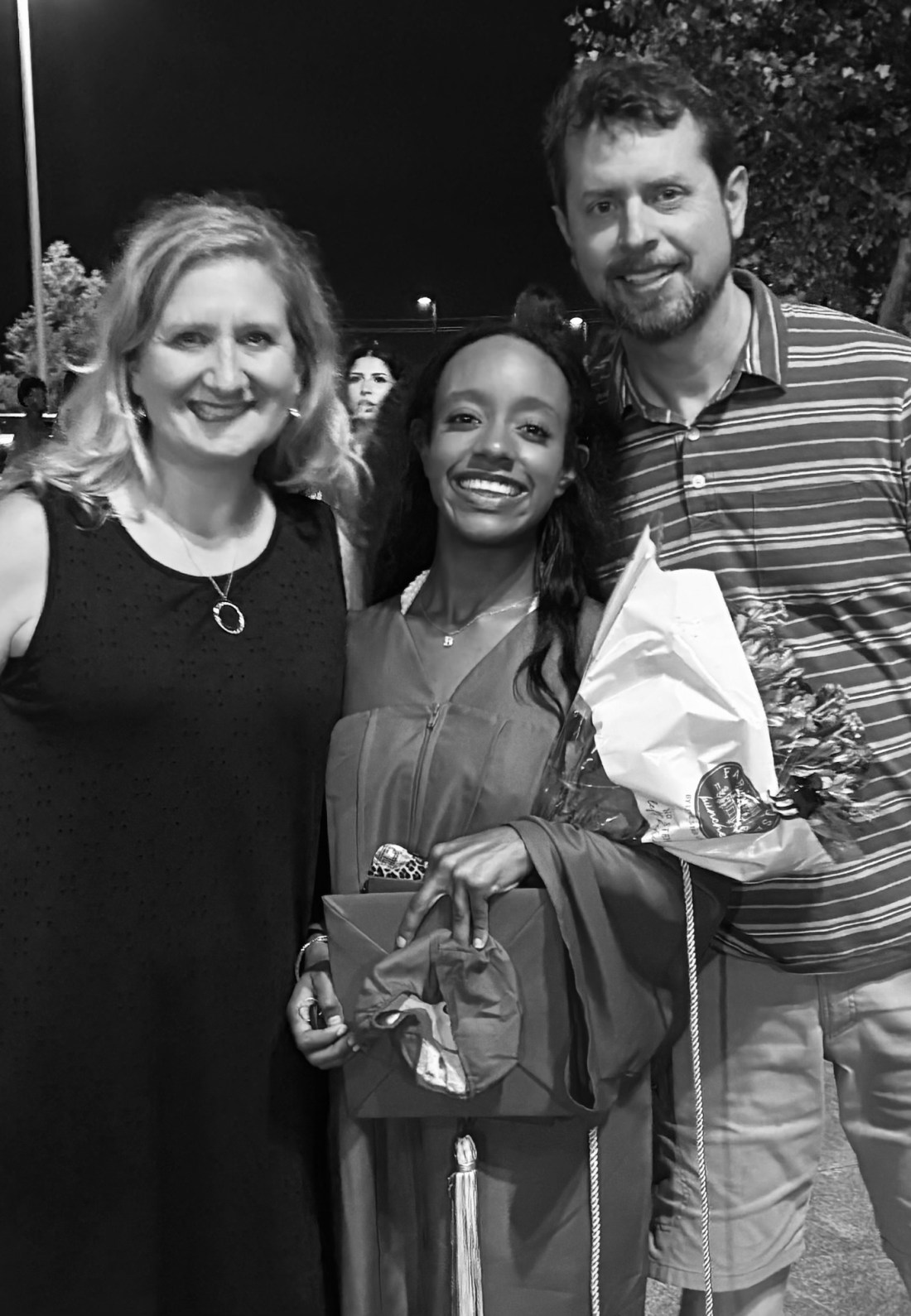
Our oldest graduated from high school yesterday. It’s her accomplishment, of course, and we have fully celebrated with her in a number of ways. I look forward to what’s to come for her and plan on being present for the road ahead as well, understanding a little better the day after, as I think about the next steps, the truth that parenting is indeed a lifelong commitment. As I held her face in my hands, kissed her forehead, and told her I was proud of her, any frustrations I bore up to that point over the last several years since she came to us at the impressionable age of eight didn’t matter so much anymore. The often expressed notion from seasoned parents that it’s all worth it began to materialize in a very new and fulfilling way for me, as did appreciation for the task of parenting and my own parents’ sacrifices to raise me.

Any parent would echo that your kids’ accomplishments feel, to an extent, like your own. You understand the extensive efforts and support that went into bringing them to this point, even if they don’t, at least not completely enough to appreciate. That impression can feel more pronounced if their life before you entered it was less than ideal and stood to take a very different, potentially unfortunate course.

The other half of the truth, however, is that they have to accept what you provide and make a conscious, grateful effort over the days, months, and years, even if an imperfect effort. Progress, not perfection, as they say. I’m happy to say last night is evidence that she has made such an effort, if the genuine smile on her face is any evidence of the attitude she has chosen.

So, I pray and expect she, like me, will remember best in these moments not what but who was a part of them.

Congratulations to our oldest, our kid in every sense of the word.

London

Once upon a time, my wife and I were DINKs. For those who don’t know, that stands for “Dual Income No Kids.” It’s a very comfortable life, I will admit, and a very appealing option. I judge no couple for choosing it, but do note how vastly different it is from the choice to have or bear children.

Once upon a time, Jenny and I also had the opportunity to do one of our favorite things, which is travel together abroad. This coincided with our DINK lifestyle, prior to children. She periodically continued to travel for work after the kids, but it wasn’t quite so much fun since one of us (i.e., me) had to stay behind with them. C’est la vie.

One of our last trips abroad as DINKs was to London, right before the kids entered our home and altered our status forever, back in the spring of 2016. We thoroughly enjoyed it, even as we had no idea how thoroughly life was about to change.

And here we are again, providing the kids with one of their first sojourns across an ocean, once again in London. It feels full-circle, especially when we consider that our oldest is potentially leaving the nest here in her last year of public school. It feels like an accomplishment, not only for her but for us as well, when you think about where they began.

I acknowledge you’re never really finished with the job of parenting, but there are a few satisfying stages I still hope to cross, this being one of them. All the more meaningful when you consider, even if they don’t yet, where they’ve been and how it could easily have been a different outcome for them.

Kids are a form of chaos. It’s true — don’t try to deny it. Navigating the critical stages may feel like a cakewalk, or more likely a turbulent off-road adventure. It depends on the kid. Regardless, it will require effort on your part, not to mention sacrifices on your part, which they may or may not acknowledge. Lack of recognition is part of the job, unfortunately, that I daily try to swallow and simply move past.

But here and now, seemingly full-circle in a country with all the kids we once were about to take on, I feel a glimmer of accomplishment and hope, which is fleeting and temporary at best in the day to day job of parenting. They may have no idea about either in the ignorance of adolescence, but I can see it clearly 9 years into the job, as one of them happily prepares to move on, and seemingly happy to be here with us, still calling us mom and dad.

The satisfaction of completing challenges take many forms. Parenting, adoptive or otherwise, is its own special form, I will tell you. We’re still in the thick of it, but I think I will remember the two trips to this specific place as a couple of bookends, from the uncertainty of the task ahead, to a stage of the task fulfilled, regardless of whether or not it looks exactly like I imagined.

Before and after

Perseverance

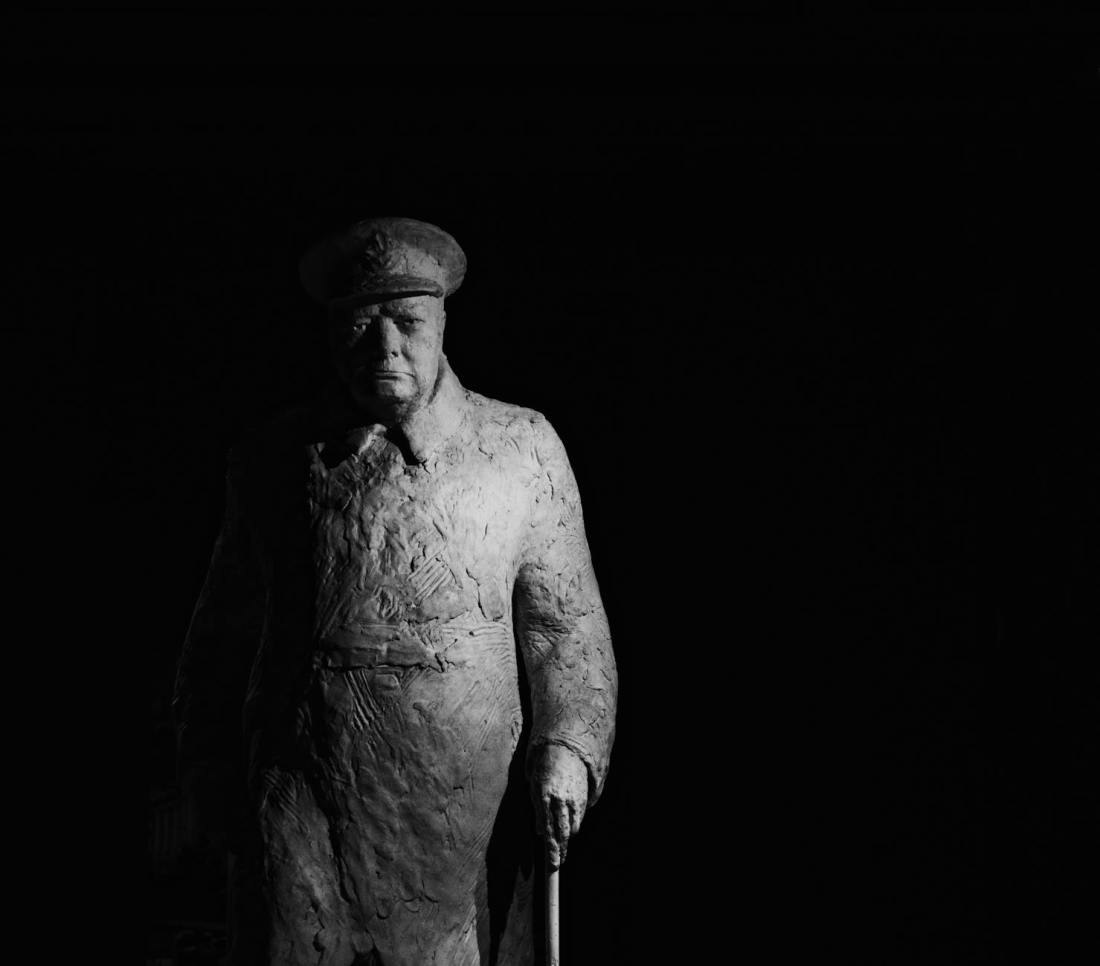
“If you’re going through hell, keep going.” – Winston Churchill

Churchill knew a thing or two about adversity and perseverance. His dogged resolve and determination effectively halted the advance of the Germans across Europe until allies joined the fight to push them back into the heart of the continent, ultimately ending the war that had consumed that part of the world. Although he would lose his political position of influence at the close of the war, his legacy remains that of persistence in the face of incredible odds. Even today, his bulldog-like visage is all it takes to conjure such feelings and find inspiration to carry on.

Perseverance implies adversity, struggle, conflict. If not against something, it is against someone, individually or collectively. For those of us who characteristically avoid conflict, it could be argued that we, likewise, avoid perseverance in general, whatever the cause may be. I might have included myself among such shrinking violets, if not for the confidence that others have often had in me. We all know how we feel about ourselves. We often forget how others actually see us, however. “Perception versus reality,” as it’s typically framed. In my case, it was, lately, one of our children who offered a change in perspective.

In a recent group counseling session, we were given the opportunity at the close of our time for each of us to share one thing we genuniely appreciated about one another. We made the rounds, as did our oldest, and when it came her turn to direct her grateful observation concerning me, she fumbled at first to find the words to describe what she felt. What she eventually got across, after hinting at the significant challenges we’ve had with our unique experience of parenting via adoption, is that she is grateful, in short, that we have not given up.

Not what I was expecting to hear.

“As the body goes, so goes the mind,” it’s said. Here in my late 40s, my shell, so to speak, has begun its deliberate, gradual decline brought on by none other than time, which waits for no man. I’ve felt in recent months I’m now fighting a losing battle with my physiology more than ever before in my life, and knowledge of such has drawn my mind to follow suit and give ground, reflecting the “posture,” if you will, of retreat, frequently posing the question, “What’s the use?” There are other factors in play, but within, my mind is lately choosing to follow the flesh rather than vice versa. I have no fatal illness — don’t misunderstand — other than aging itself, but it’s begun to rear its ugly head and, well, affect my head as much as the rest of me.

The change frequently manifests itself as a poor attitude overall, and while there are pharmaceutical remedies, I’m told, which I may ultimately allow, I see there is no going back. I admit I’m having a hard time with it, though I had imagined I would welcome growing older. It seems, however, that I didn’t take into account the actual effects, and my fickle feelings, more often that not these days, counsel surrender, and I shuffle through the day as if a beaten foe.

Yet, here was our oldest pointedly appreciating perseverance, and in none other than me.

“The kids are watching.” Yes, they are. I shouldn’t have to say to any parent out there that they aren’t listening, or, at least, they rarely appear to be. We all experience this sad and exasperating reality daily with them, though a word or two occasionally takes root and is recalled. We, though, are a “watching” culture, if you will, and on select occasions their eyes drift away from one of the multitude of screens in their line of sight, and they land on us, consciously or unconsciously, unwittingly setting an example.

Feelings often translate into action, one way or another. But if our oldest’s expressed observation of a character trait in me bears any truth, then my defeatist feelings were overshadowed by someting else entirely, which, to her, resembled determination.

Maybe, just maybe, perseverance, for those of us who are parents, is less the poetic and stirring “Charge of the Light Brigade,” facing reckless odds under peril, inspiring as it may be. Perhaps it’s more just the simple act of getting out of bed each morning, again and again, to fix them breakfast and get them to school, banal and endless as the routines can honestly feel. Granted, parenting has its share of battles. I often find myself “Stormed at with shot and shell” on a daily basis by adolescence, and I fall easily into the laughable trap of believing that I’m the only one sustaining the barrage and being treated as the enemy. Nevertheless, rousing the troops out of bed and marching them out the door both fed and dressed, we know, is its own special form of victory. It may not always be “hell,” as Churchill understood it, but the kids will observe and report in the years to come whether or not you kept going. They’ll most certainly notice if you didn’t.

Anarchy

“I never was fond of teenagers, even when I was one.”

My beloved cousin’s candid observation resonated with me and put words to what I felt during my mid to late-adolescence, though both of us were in our 20s for this particular conversation. I would never forget it; neither, maybe unfortunately, would I find this personal sentiment changing as I grew older.

What has changed is that I’ve been a parent to teenagers for the last four years. And not just teenagers, mind you, but a couple of the female variety. What’s the difference, you ask? Go ask another parent with two or more. They get it. As further proof that it’s a “thing,” my wife once came across a t-shirt with the bold words emblazoned across the front, “You don’t scare me. I have two teenage daughters.” Nobody creates a t-shirt unless there’s a sizeable market out there who identify with the message.

The only thing potentially worse than the raging hormones and insufferable emotions are, perhaps, the foolish decisions they have a tendency to, or not to, make. And this, more often than not, is what keeps me up at night or wakes me early in the morning. Some of these decisions have a way of impacting one’s immediate and even distant future, and for whatever reason, teenagers tend to regard poorly consequences either near or far due to their undercooked brains. Waiting around for this to change can feel endless, as if they will always be this way. The stress is enough to drive you to despair, if you don’t recall that you were once a teenager yourself. Moreover, you made plenty of regrettable mistakes, in word or in deed, and you likely recovered from all of them, leaving them far into the past.

Which brings me to the curious tale of William Powell.

Once upon a time, young William was a teenager, like the rest of us, but uniquely erudite. He also possessed a bit of angst about the society in which he found himself in the late 1960s/early 1970s, and thought that he ought to apply his talents to addressing the problems of government. So, at 19 years of age, he decided it would be a great idea to research and write what would become one of the most infamous and subversive texts both then and now, cherished only by those who have the most pronounced distrust of the law of the land and are thereby inspired to act nefariously: “The Anarchist Cookbook.”

The book would find an audience and enjoy reputable sales, though most in possession would admit it would remain idle on their dusty bookshelves. A select disreputable few, however, in the decades to follow, found the misguided courage to employ its “recipes” and commit violence upon innocent parties, either as the last act of an alienated school shooter or in the “cause” to upset corrupt government, as they perceived it. By this time, however, William had moved on with his life, which resembled anything but the extreme views and instructions professed in its pages.

A few short years after its publication in 1971, William would find faith, pursue formal studies, and eventually, along with his wife, embrace a passion for educating children with learning disabilities. He would sell the rights to the publisher and then spend the remainder of his life doing his best to distance himself from the book, advocating at times for its removal from publication, even going so far as to declare it “rubbish.” His association with the book would cost him employment on more than one occasion, in spite of his demonstrated expertise and the fact that he never, once, performed any of the researched “recipes” in his book.

While more can be said about the unfortunate William Powell, there is in his story a ray of hope, I think, for the careworn parents of foolish teenagers. That is, even a teenage anarchist of the highest order can effect a turnaround. Teens would seem anarchists at heart, in spite of their often unrecognized subconscious need for security. Young William had a depth of understanding of its concepts and a remarkable facility with words at 19 years of age, enough so that his book continues, regrettably, to influence others today. Yet, there he is at the end of his life, having positively affected many more lives than his book would seem to have claimed in blood.

Few of us now resemble who we were at 19. No need to prove it; we all know it. That’s good news for us parents. The teenager we love, we also find ourselves prepared occasionally to shove out of a moving vehicle for their enfuriating impertinence, laziness, and/or brazen stupidity. And as much as these unpleasant characteristics stubbornly stick around day-to-day, it’s not likely to last forever. They just might turn into decent human beings, though there still may be a few bumps in the road to endure on the way there.

So, let’s take heart, parents. I need to hear this as much as anyone else. Even the little punk who penned, as a teenager, the veritable textbook on sowing discord can, in fact, change for the best. There’s hope for us all.

20 Years

Aging sharpens perspective even as it dulls the mind.

Age may also just be a number, they say, and I’m sure there is some truth to that, but the body has a way of reminding you that it’s a meaningful number, as much as you might try to ignore it.

20 years ago, I had moved back to Houston and began my professional career, independent, uncertain of the future, and single without a prospect. Today, I’m 12 years into marriage with three adopted children, attempting a second career, and doing my best to punch these words out without grabbing the cheap yet admittedly useful reading glasses I recently purchased. 20 years from now, I can’t project where I’ll be or what I’ll be doing, but I will be on the cusp of my 70s and all that entails for one’s health and personal pursuits.

It’s a sobering thought.

I know 50 is approaching, but it seems to me it’s still going to feel as if it snuck up on me. I’m neither afraid nor anxious about it (my wife even less so), but what strikes me most lately is how 20 years doesn’t feel at all like it used to. I can remember the very day I stepped out as a professional, as vividly as I can see everything in this room right now, and yet, it was two full decades ago. There was so much time ahead, it seemed, yet here we are now, as if it swiftly and imperceptibly sped along with no regard for our consideration, and there are no signs of slowing.

My grandparents’ passing this year and my parents’ last and final move to a new home has done much to alter my perspective. The fact alone that my grandparents’ were roughly my age when I was born, or the still lucid memory of celebrating my father’s 50th, for that matter, is enough to do it.

At 20, it can already feel as if you’ve lived a lifetime. Up until that point, you’ve been through so many developmental changes to have a sense of having been a different person at different times. So much has happened, yet so little relative time has actually passed.

When 40 arrived, I barely noticed. For many, if not most, of us, it’s the “busy season of life,” as they call it. Kids, career, marriage—everything is rolling along with its own relentless momentum, and you don’t (at least, I didn’t) purposefully take the time to ponder where you actually are.

At 60 — well, I can’t speak to that as of yet, but I’m starting to get an idea of what to expect. Somewhere between 40 and 60, your body, if nothing else, rudely reminds you of the score, in case you weren’t paying attention. This, I find, is also roughly when your attitude and perspective on the passage of time shifts, if you have allowed yourself any opportunity to be undistracted and observant. The time you’ve spent is just that — the time you’ve spent, and it isn’t coming back. Moreover, it didn’t take nearly as long to spend it as you carelessly imagined at 20. With hope, you have few regrets.

My kids are on the cusp of everything, and I desperately want them to understand all of this, as any parent does, as I look ahead to the future along with them, though with different eyes. Yet, there is truth in the saying that “youth is wasted on the young.” I hope this is not the case for them over the next rapid 20 years, but there are some things only experience can provide. I hope it teaches them sooner rather than later.

In the meantime, may I make the meantime meaningful. Time is a gift, and not a second to be wasted, I discover more each day. I pray the next 20 pass with hope and satisfaction.

Baptism

When I survey each decade of my life, my 40s will, unquestionably, be all about parenting. Whether I did it poorly or well remains to be seen once they attempt to launch post-graduation. Our first attempt at a “launch” is just around the corner with our oldest at the close of next school year, and preparations and plans are currently underway. I certainly hope the mission isn’t scrubbed multiple times for various reasons, though, with kids, few things work perfectly the first time every time. “Flexibility is key,” someone told me prior to parenting, and I have found, for the most part, they were right.

I’d say our experience has been unique with three adopted kiddos and no biological, but I have nothing else personally to which to compare it. Our experience has been our experience, and so there it is. They’ve willingly come “home” after school at the end of each day for the last several years and they still call us “mom” and “dad” despite having a history prior to us, so we must be doing something right, though I often feel I’m doing it wrong. Parenting has been the one thing I’ve earnestly attempted in my life at which I’ve felt I haven’t excelled, though, I admit and have learned, results aren’t entirely up to you.

Nonetheless, there are moments you may permit that you must be doing something right. One of those moments is when they willingly make a decision to accept your faith as their own. This bears even greater significance for an adoptive parent since, again, they have a history prior to you and are clearly aware of it. For each of them to make such a choice is to align themselves further with you and your influence upon them as parents. The meaningfulness behind such a choice can’t be overstated.

This evening, our youngest, Calib, will be baptized here at Pine Cove family camp at Crier Creek, a place he, like us, has grown to cherish after seven summers. He made his own decision to follow the very day my grandfather passed away, and we all agreed to make it even more special by immersing him here. Each day, he has reminded us with an eager smile how many days are left until then, and now the day is here.

I have the privilege as his adoptive father to baptize him, as I did our oldest. The scriptural imagery of being adopted into the fold by a Heavenly Father doesn’t escape me. I’m about as imperfect a father as it gets, but how fortunate I am that they each grasped the meaning behind it and allowed the unique creation of a family and spiritual memory.

“I have no greater joy than to hear that my children are walking in the truth,” said John in his third epistle to his “spiritual” children. But it’s an easy fit for parents.

Let’s be clear: This kid knows how to drive me crazy, and I often find my patience tested. He knows this, and so do I. But today, he is most excited about one thing, and that is being baptized by his dad.

Offer me riches or fame to give it up if you like, but I’ll pass. The memory, much more valuable, will last a lot longer — into eternity, in fact.

Sweet Sixteen

My first day of kindergarten was an attached child’s nightmare. While the vividness of the anxious memory has faded appreciably over the years, a trace of the feelings associated with the experience have lingered. I was the firstborn, and my parents duly spent plenty of their willing effort and time in my formative years to ensure that I felt fully connected to the two of them. Few others felt as safe as they did, so, naturally, to expect that I would take to the supervision of another as happily as a bird freed from a cage was pure folly. So it is with most birth parents and children, I expect. At any rate, as mom departed, leaving me in the care of this elder, pale, otherwise sweet raven-haired stranger called a schoolteacher, I wept bitterly as if I’d just become an orphan. It was as close as I’d ever truly understand such a sensation, so the nascent trauma likely registered imperceptibly on the scale, especially once mom faithfully arrived several hours later in the afternoon, along with each weekday after that, and I learned to trust that I was not, in fact, nor would I ever be, abandoned.

In the developing years to follow, I always believed kids would be a part of my future, given that I found the right partner. While I wouldn’t say I viscerally longed for it the way some do, I knew parenthood was an experience I would always regret not choosing. I simply could not have foreseen, however, that I would pursue it as late as I did with my chosen spouse in the manner that we did.

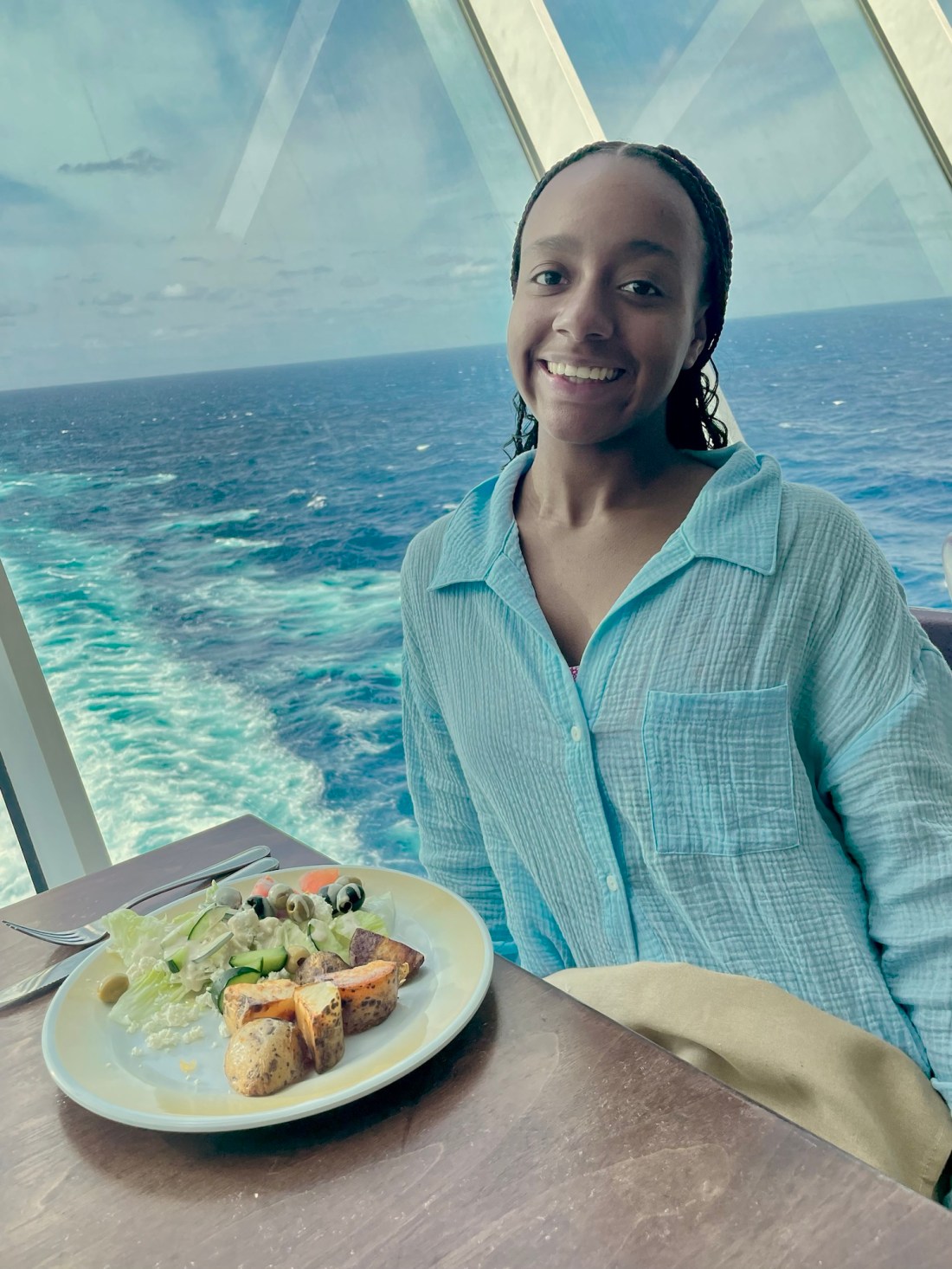
As I recline here on a beach lounge chair next to my wife in the adults-only section of a cruise ship, our children, old enough to wander safely about on their own (to both our independent delight and theirs), the horn sounds and the ship thrusts laterally from the pier to begin the journey home from Cozumel. It’s the kids’ first cruise, and they have, by most accounts, thoroughly enjoyed it. Two of our three have enjoyed every rich, new minute, our youngest only upset when we have to remove him from the fun, while one out of three hasn’t yet had her moment of self-discovery to learn how much of a homebody she is at heart and that fatigue does not always make her the most pleasant company. Such are annual family vacations in our diverse company.

We spent the day on an excursion at a nearby “dolphin encounter.” While the activists among us, I thought, might see the darker side of the smartest of sea animals performing interactive tricks for food in several ample seaside pens, albeit while being treated perceptibly well, it seemed fun for fish and footwalkers alike by all involved. While mom and I did not fare quite so gracefully with either the dorsal-fin pull or the snout “foot-push” ride provided by both Olivia and Miranda, our esteemed waterborne mammals, our oldest, Deztinee, easily the most athletic among us, rode like a seasoned pro. Equally stellar has been both her company and overall attitude on the trip, which, as any parents out there would echo, is not always the case when traveling with your children, even more so with your teen.

Now 16 and in her junior year of school, Deztinee has come around to a late adolescent stage in which one’s parents are not necessarily the uncool companions they once were thought to be, and the two of us couldn’t be more delighted about it; not that we were ever treated very poorly by her, but, again, the parents among us know how teenagers can be. It’s a rocky road at times, but we’re in as good a place now as we could have hoped. And the places in which she had once been could just as easily shaped her character negatively, as I’m sure it would have mine under similar circumstances.

Our introduction to our oldest, other than a photograph, was at a CPS agency on the west side of town in the spring of 2016. Jenny and I arrived both nervous and excited, like any parent meeting their child for the first time. The staff person charged with transporting both her and her younger brother, Calib, arrived after we did. Soon enough, the two of them ambled cautiously in, Deztinee an 8-year-old in a pretty yellow dress holding the hand of chunky toddler Calib, hair braided tight to his forehead. We were guided to a room for our first interaction with each other, and while Calib had little understanding of what was going on but played along, Deztinee’s emotions mirrored our own, and she comprehended fairly well the likelihood of the two of us becoming her new parents. The brief visit left us all anticipating the months to come, and as the two of them returned to their respective foster homes until placement, our next stop was the dealership, where we immediately traded my compact, zippy Honda Fit for the first family van — an eager push of our chips all-in for the next big play in our lives.

I’ve written once before about the day she and Calib arrived in our home. Their sister, Dezira, would join them, unbeknownst to all of us, the following year. Her arrival would not quite reflect their experience of the transition, though just as welcome, but that’s a story for another time. Calib, being the youngest, would take the shortest road to bonding with the two of us over the coming months, while Deztinee, though willingly calling us “mom” and “dad” from day one, would travel a little longer, over the years protectively holding a part of herself in reserve.

I distinctly remember one of my early impressions about the attempt to connect, which is the penultimate goal of adoption. We were visiting another couple friends of ours one pleasant afternoon, and I couldn’t help but observe how he interacted so comfortably with Deztinee, like a father should. I felt very little confidence about my own similar attempts, lacking assurance that I would ever successfully bond with her, a child who looked nothing like me and whose early experience of growing up I couldn’t identify with. It plagued my mind and worries over the days to come to the point that I wondered if we had made a mistake, if I was, as it were, the wrong person for the job.

It’s said that time heals all wounds, though this is no guarantee. While I was not the wounded party, we could only hope this would hold true for the trauma our children might have experienced, even as we learned to become the parents they needed, albeit imperfectly. There is much in Deztinee’s history prior to us that testifies to her now living in a better place, but I still must respect it as her own, not to be shared publicly until such time as she would permit. Suffice it to say, she would quickly learn soon under our roof how her previous circumstances were less than ideal rather than simply just the way life was.

The unofficial rule-of-thumb regarding the time needed for a child to feel connected to their adoptive parent, or so we’ve heard, is the same age at which they arrived. So, at almost 3 years of age, our youngest would feel fully bonded at 6, though we know it happened much, much sooner for him. For Deztinee, it should have been ostensibly somewhere around the 16-18 year mark. Based on the status of our relationship, this loose rule seems to hold up. It doesn’t hurt that she’s been characterized as an “old soul,” either.

Another lesser but still helpful and important target with adoption is the ability to facilitate conversations about your child’s history before you entered the picture. Such conversations can be tricky and have to be handled delicately depending on the level of trauma. Accepting and/or coming to terms with one’s past and present history is critical for anyone, and all the more so for an upbringing that changed from at least one primary caregiver to the next. Discussing the majority of the past with Deztinee has become rather effortless, attesting to her growing maturity. One might find it hard to hear your adopted child use the same terms of “mom” and “dad” when speaking of those who held the title between then versus now, as if it’s a judgment of your current role or attachment, yet somehow, I’ve learned, it isn’t. I can’t imagine what it’s like to form an identity with such a splintered personal history of caregivers and yet live fully connected to both, yet she’s managing it, as with many other things, like a pro, which, though ultimately up to her, I hope provides me at long last with some confidence that maybe one becomes the right parent for the job.

Adoption can be felt as an unwelcome stigma for some kids, especially among friends and classmates who remain with their biological parents. A couple of years ago, we learned that during introductions in such an environment, Deztinee had shared that she was adopted, which elicited a plaintive “Aww,” from someone present. The reaction, she shared, confused her, because she herself didn’t feel similarly about it. I’d like to imprint a self-serving “Adoption: You’re doing it right” under this word picture, but, again, it takes two to tango. Both child and parent have to choose placid, calmer waters, and Deztinee has elected to sail along.

I realize I may sound as if I’m painting a picture of perfection, and that would be plainly unfair and inaccurate. Like a good photographer or artist, you prefer to show only your best work. Ups and downs are packaged with any experience of parenting. But it’s difficult not to feel merely hopeful but also expectant of good things to come for your child, even more so for one who had a rough start for which you were not present.

College is just around the corner, and many conversations of late have danced around this exciting transition. The fact that this is not only a possibility but an impending reality for her is a reminder of how different things could have been. I shared with Deztinee roughly a year ago how impressed I am with her, that her overall attitude and outlook remains positive in spite of her early circumstances, for which none of us have a choice. And thank God for that. I was once acquainted with a kindergartner who could hardly have adjusted as well.

Sisyphus

If you’re not familiar with the name “Sisyphus,” you’re certainly familiar with his plight. In ancient Greek mythology, this ill-fated individual was punished by Hades for twice cheating death with the task of endlessly rolling a boulder up a hill only, through enchantment, for it to tumble back down to the bottom mere inches from reaching the apex. It’s an apt metaphor for any task that seems or is, in fact, ultimately futile or pointless, as in a “Sisyphean” effort.

Matthaus Loder, Sisyphus engraving, 1st half of the 19th century, engraved by Friedrich John

Now, I’m what’s called a “stay-at-home dad.” I am not a fan of this term, however. If you use it to describe me during the first conversation you and I may be having after you ask me what I do, and I characteristically respond that “I take care of the house/kids,” I’m likely to correct you with, “Well, there isn’t necessarily a lot of ‘staying at home.’” You would courteously laugh or smile, and I, and perhaps even you, subconsciously, wouldn’t be sure if I had lost a little of your respect. Yes, it’s a brave new world of redefined gender roles, but there still lingers with some of us out there the idea that men are the breadwinners and women are the caregivers, even if we don’t announce it openly.

That nasty little year that was 2020 altered the landscape of work location, among many things. Those of us who only needed a computer, a chair, and a WiFi connection to do our jobs, to be fair, did not suddenly become “stay-at-home” engineers, “stay-at-home” teachers, or “stay-at-home” stockbrokers, though they probably should have. Enveloped within the term is the mental image, if we’re brutally honest, of said individual literally sitting around, idling away at home. And I know of few “stay-at-home” parents who do much sitting around. So, I say, let’s get rid of the term and its implications entirely for something more fitting. I’m partial to something along the lines of “pro-bono caregiver.”

I digress. We were discussing futility, as I recall.

Of the many tasks of a parent, instilling good habits in our children requires the utmost patience and persistence. The earlier you start, the better. Usually. Maybe. I think I read that somewhere. Anyway, this can be a special challenge with children who have been adopted in later years, but it isn’t necessarily impossible.

“Clean your room.” This one has been as constant as it gets, inspiring in recent years eye-rolls or grunts of exasperation at our nagging. My own parents did a pretty good job with my siblings and me. We still make our beds and prefer to have personal things each in their orderly and designated locations, and I’ve tried my best to do the same with ours, but often, at the end of the day, observing a mess that has experienced a miraculous rebirth only an hour since its extinction, I think of the ancient king of Ephyra, pause for a moment of silence, and share his pain.

I feel you Sisyphus. I feel you.

Our son could often be described as an ADHD-fueled comic whirlwind surfing on a sprinkled-donut across a rainbow, and it wouldn’t surprise us if he one day gives the late, great Robin Williams a run for his money. He has a very sweet, loving, and generous disposition when he isn’t bouncing like a pinball off the walls, ceiling, minivan interior, whatever, but, God help him, for all his endearing qualities, he can’t keep a clean room to save his life. He is also a “collector” (my wife prefers the term “hoarder”), and decluttering can cause an emotional reaction, so to speak. We have in the past “freed” select items surreptitiously and in small, inconspicuous doses, as if cat burglars who toss rather than keep their stolen trophies. Such secret missions have been a success, for the most part, but the mess still returns minutes later.

I’m convinced I could handily persuade FEMA to provide us emergency assistance. It’s often a disaster, by my observation, and his middle sister isn’t much better, though she is periodically inspired to purge with much stopping and starting over, say, several months. With her, random items of unknown function or purpose may wash up in clusters around the rest of the house as if carried by the tides. In recent days, the reality of the endlessly returning chaos of things hit me like Sisyphus, and I’ve consequently almost begun to overlook it, as parents learn to ignore the noise of children, though not without a sense of complete despair of ever helping them care about or notice the mess they create.

My wife recently returned from a trip with our oldest while I was away on a trip with our middle after dropping off our youngest for trip with his grandfather (Yes, our summers can be a bit much; then again, so is the school year). While all were away, she was inspired to tackle his room before overnight guests arrived and found, after two-hours, she had barely scratched the surface. Undaunted, she planned on regrouping and plunging in once again after an 8-hour work day to address how to clean it up. “Have you tried a good, strong, weapons-grade blowtorch?” I thought to myself. She had her own strategy, and, she decidedly pointed out, after I shared my despondency over any change in our children or interest in it, that we just have to keep after them, plain and simple.

If there is an optimist and a pessimist in every relationship, I think you can intuit where each of us land. It isn’t difficult to work it out. I can get stuck in a muddy rut of negative thoughts if I’m not careful with my head. And after our phone call, I found my thoughts shifting from my despairing attitude regarding our children’s poor organizational habits to one of the many purposes of marriage.

We recently attended Pine Cove family camp, as we have for six years now. It’s a priceless experience for innumerable reasons, all of which I can’t share here, but one of the opportunities we had this year was to publicly share what you appreciate about your spouse. I selected hers easily with little consideration and happily offered it to the audience, interrupting another couple in the process.

My wife seeks out challenges, as I stated. She doesn’t shy away from them or rest long on her laurels. On to the next. I, on the other hand, while characteristically an achiever, often need a nudge out the door, but then I’m off and running. I can lose steam, however, as many of us can, and especially lately, I’ve learned, when it comes to the never-ending job of full-time parenting kids who don’t yet see the importance of good, lifelong habits. You can’t give up, and she doesn’t. I often want to, though, and I certainly would if she wasn’t my partner.

Marriage has many functions and purposes, and different couples likely emphasize certain of them more than others. But chief among them isn’t, I would argue, fun, or sex, or happiness, or whatever. The leisure-saturated world around us suggests that those options are in the running. No, I think marriage, companionship aside, does its best when it encourages us to be better persons. Iron sharpens iron, as Scripture reads. We wed for many reasons, but I believe marriage makes us better images of God overall. He fashioned a “helper” for Adam, and so they learned to help each other. Help makes us grateful, improves us and our circumstances, inspires us to love. It changes us, in short, to be better, to do better.

I don’t know where you think you’d be without your partner, but I know I would remain in a funk forever were I doing this job alone. God forgive me when I’m determined to stay there in spite of her efforts. I’m not one to alter a meaningful myth, but if Sisyphus had a partner to help him push, he stood a much better chance to overcome. And if not, they at least would have each other to appreciate the shared struggle.

Immanuel

“There’s an app for that.”

We all remember this common slogan as the smartphone gradually infiltrated every aspect of our lives less than two decades ago, as if to suggest it, or the apps for which it served as a vehicle, could provide answers to almost any of our problems.

Equally prevalent, or so it would seem from the abundance of pharmaceutical commercials targeting specific demographics in between your favorite shows, is the suggestion that “there’s a pill for that.”

I personally don’t hold fast to such an idea, but I am more of a believer than I once was when it comes to the condition of ADHD, which afflicts our youngest. After we tackled the problem with behavioral techniques and strategies, it was evident after a grade level or two that he simply needed help we couldn’t provide in order to get him successfully through the school day. So, we took the medicinal plunge, and the results were clear and immediate. We were pleased to witness a calm and poised version of himself as he found the ability to maintain focus as academic success was soon to follow.

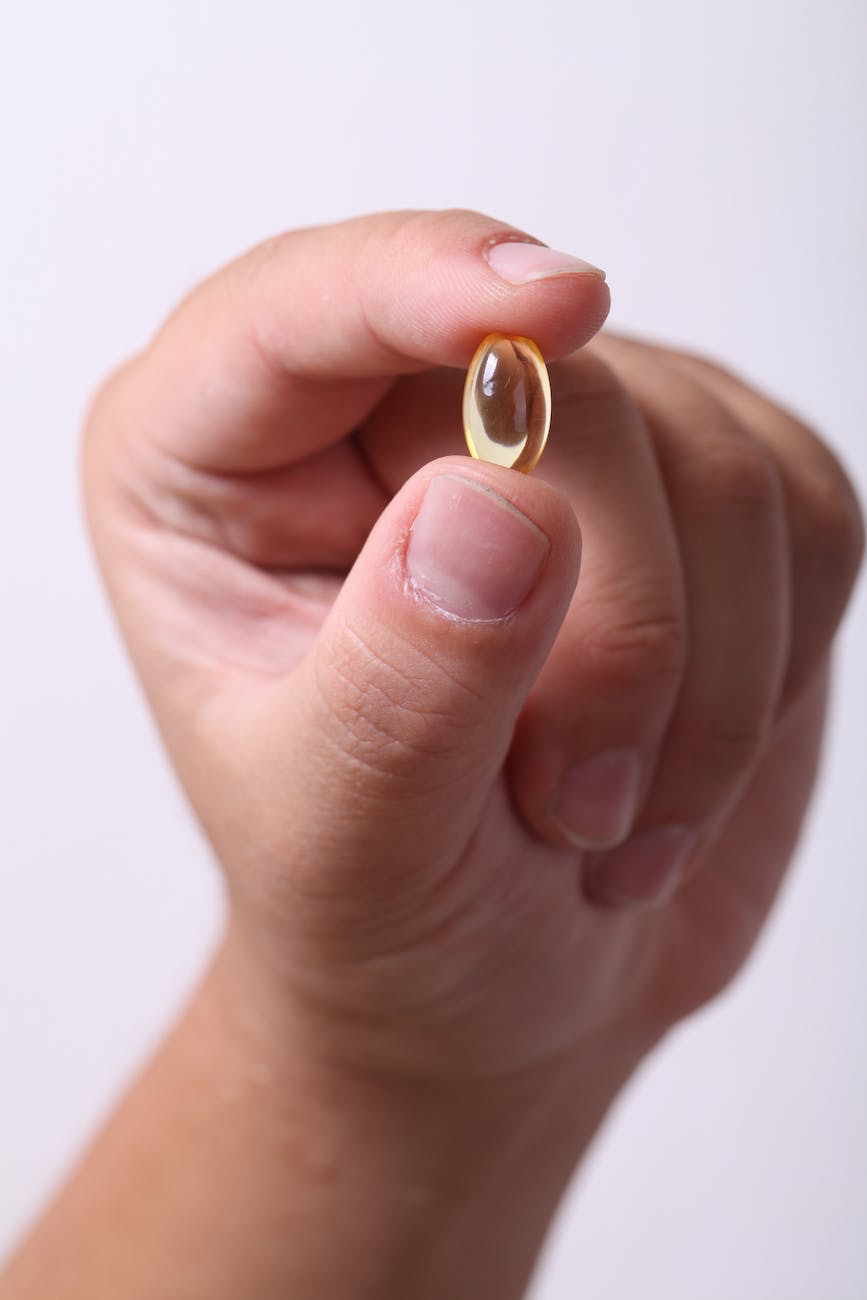
Most early pediatric drugs assume liquid form and are typically tasty and easy to swallow. Pills in any shape or form, however, are a challenge for children, as any parent could tell you as their own come of age. It’s not uncommon for capsules to travel swiftly back up little throats for no other reason than the fear or sensation of choking. Swallowing a tablet is a learned skill. Some grow into adulthood still uncomfortable with the effort.

Our son recently graduated to the pill form of his medication, and pinpointing the correct dosage during the transition was its own special problem, requiring a brief time away from school till the doctor got it right. He simply couldn’t help functioning as a classroom distraction without it, much to his teachers’ consternation, though we, and they, would gladly refer to him at least as a “happy” mess. Once the dosage puzzle was solved, he returned, and all seemed right once again with the world.

Until it wasn’t, that is. Not too terribly long after, we began to notice inconsistencies with the medication, which he routinely took before school. Periodically, his teachers informed us of the same, tired behavioral issues in class, none of which were major but nonetheless required addressing. We called the doctor and waited for a follow-up to discuss alternatives. In the meantime, I made sure to observe our son taking his pill each morning just to be sure. And sure enough, I watched him ingest it and move on with the morning.

Kids are crafty, however. Our son, I discovered, craftier still. Transferring his laundry from the washer to the dryer one afternoon, I observed what appeared to be a few empty capsule shells that bore a striking resemblance to the size and shape of his pills. I resolved to watch him like a hawk thereafter and check above and beneath his tongue, baffled at how he could possibly fool me while I observed him swallowing it each morning. I didn’t have to wait long for an answer.

Another morning, another pill. Seated at the table after finishing his breakfast sandwich, he places it in his mouth and swallows it with the juice I provided. I ask if he got it down, and he nods. For only a moment I turn in the opposite direction but then quickly pivot my attention back, catching him in the act of slipping his fingers up to his lower lip in a surreptitious attempt to remove the pill and discard it in a secret corner elsewhere in the house. The little sneak had been hiding them randomly in his cheek rather than swallowing, which explained the medication’s bizarre inconsistency. Mystery solved.

“Fool me twice . . .,” as the saying goes. I wouldn’t be shamed again. Having had no success with threats of consequences or demands up to that point, I impatiently relinquished command of the ensuing drama as mom took a turn and sat down directly across from him at the breakfast table to ensure gently that he got the job done. “But it’s hard!” was the incessant, tortured refrain as he objected with each failed swallow, risking us all, including his older sister, to be tardy to each of our morning destinations.

Mom’s time managing the situation came to an end as her job required her to get herself on the road and to the office. As she exited, our son motioned me to the now empty chair opposite his. We weren’t finished and he simply wanted me to stay with him as he suffered through it.

I resolved to try a different, more patient approach and reasoned with him. It wasn’t as if the pill was larger than anything else he’d downed before; quite the contrary. By his own admission, he was afraid of choking, and despite gulp after endless gulp, the pill remained because he was still telling the pill with his tongue to remain exactly where it was. “Don’t be afraid. You’re not going to choke.” After 30 long minutes, my reassurances finally made headway, and down it went, his expression at long last relaxing. I pried both under tongue and around cheeks “like a dentist,” he later described to mom, ensuring there was nowhere else to hide, and off he went to school. Eight hours later I would pick him up and hear him proudly share that his teachers praised him as the best behaved student in class that day. I inquired to him as to why he thought that might be, and his knowing smirk gave him away as he remembered the difficult but necessary ordeal of the morning. Sometimes, you just have to swallow that pill.

___________________

Hematidrosis, it’s called, a very rare medical condition in which one sweats drops of blood. It seems only fitting, then, that the gospel of Luke, ostensibly the only physician of the bunch, would be the one both to observe and document this phenomenon in his account of Christ’s agonized prayer in the Garden of Gethsemane. “Father, if you are willing, take this cup from me,” he says, as we are allowed a unique glimpse into his humanity, asking, as many of us often do, that God simply remove a difficulty from our lives rather than, more nobly, provide us with the strength and fortitude to endure it. Even Jesus, it appears, had a moment when he just wanted God to remove the problem. Forget how I might grow spiritually from this experience; just be the doting father that you are and take this pain away, dad.

I think had my son exhibited symptoms of hematidrosis that morning at the breakfast table, I would most certainly have ceased altogether from sheer alarm that the intense stress was causing him an actual physiological loss of blood. Christ had no such luck, however. His “pill” was his to swallow and his alone. And his Father stood by to hear his request while retaining the requirement.

I find it curious that Christ chose the image of a cup to describe what awaited him. His was a challenge to ingest, to consume something inside of himself, not merely outside of him, as in a temporal passing from one moment to the next, quickly forgotten as the next moment arrives. Though we would argue theologically that God never changes, his trial would alter things both without and within. It had to if we were to receive redemption ourselves.

God, his Father, was with him, however, even as he himself was prophesied as Immanuel — God with us — while he lived and acted in the here and now.

Presently, I have found myself struggling with the reality of “God with us,” especially when it’s the only answer you receive to your trouble, great or small as it may be. It can feel like a cheap non-answer until you understand and grasp that Christ himself in the garden didn’t get a better deal either.

I and my wife have dealt with a unique parenting challenge for much longer than we would prefer, and I’ve lost count of the number of times my faith has faltered just for the fact that the problem remains and an easy solution fails to present itself. I just want to feel better. I want God to swoop in and fix it, just as instantaneously as baptismal waters fashion a “new creation” after one rises from the surface. But the change has yet to come, and we remain years now into the cup still before us with no promise of a favorable end, or an end at all.

When my son pointed me to the empty chair in front of him, however, God used the “inconvenient” situation to teach me a thing or two. Though he continued to complain and struggle, his gesture communicated, “If I really must do this, then at least just be here with me while I endure it.” As I sat down, I shifted my own approach and told him not to be afraid, knowing, as his father, he had nothing really to be afraid of. Once he chose to believe me, it wasn’t long thereafter that the pill slid comfortably down his throat and began the work of change.

I have to imagine it’s little different with our often unwanted, divinely-ordained circumstances. I am admittedly afraid at times of what is or is not to come, and my imagination casts no shortage of worst-case scenarios. But as I sat there reassuring him of what he knew he needed to do, my mind casted no shortage of scriptural reminders of “fear not” and “I am with you.” The reminders themselves, no doubt, were evidence of his presence even then.

One of my favorite songs of my youth bears more meaning to me 30 years later. A gentle tune titled “Higher Ways,” by Steven Curtis Chapman, the lyrics tell of the singer’s wish to understand God’s higher purpose in circumstances both great and small and the hope of one day, on the other side, learning of the elusive bigger picture. It finishes:

But until I’m with you
I’ll be here
with a heart that is true
and a soul that’s resting on
your higher ways.

Simple solutions and quick answers can be hard to come by in the kingdom of God. We all want it, but we seldom get it. Maturity and trust within a relationship are the goal; not merely my comfort and ease. There is no app or pill for it. But God help me to remember that there is a prayer for it.

Heart Racing

Perched atop his elevated station, he attentively scans the distant, deeper waters with his binoculars for any signs of beachgoers in mortal peril. To say he is attractive is an understatement; the actor portraying a hyper-vigilant lifeguard was chosen for this very reason. His eyes soon land upon a shark closing fast upon a flailing, bikini-clad woman. Wasting no time or effort, he leaps from his chair and sprints toward the shore, plunging into the water, bravely heading off the deadly predator as he rains blows upon its head and body before it retreats, hungry and defeated. Victorious, he lifts and carries the exhausted, distressed damsel in his arms back to the safety of the sandy shore and gently sets her down. She regains her composure, sits up and gazes into her rescuer’s eyes as the two begin to lean in dramatically for a kiss. The message is clear: What woman wouldn’t fall instantly in love with such a man?

Not so fast. This is a super bowl commercial, after all, so, naturally, we’re waiting for the punchline in this million-dollar mini-drama.

And here it comes. Distracted, she glances to her right, and with as little hesitation displayed by her rescuer’s dash after her into the dangerous waters, she makes a beeline further into land, but for whom or for what? The camera pans as we catch a glimpse of an astronaut enveloped in a spacesuit, prepared not for a swim but for a spacewalk, strolling casually onto the sand as if this is typical attire for a day in the blistering summer sun. He removes his helmet as the enthralled woman pauses before him. The marketing slogan then appears on the screen, advertising a new line of “Apollo” themed body spray:

“Nothing beats an astronaut. Ever.”

As ridiculous as this scene is, I’m inclined to agree. After 18 years of living in and around the Johnson Space Center community of Clear Lake, you encounter enough astronauts, or those who work among them, to recognize that, in spite of all the promises and encouragement that the “American dream” is attainable if we simply work hard, believe, and hang on to said dream, virtually none of us will actually ever have the opportunity to reach for the stars. There is the “cream of the crop,” the “elite,” the top 10 percent, etc.; and then and only then, there are astronauts. Among the first class of recent Artemis candidates was a relatively young fella who had not only been a soldier in the U.S. military but had scavenged enough time as well to become a doctor, soon after having NASA agree to take him into the fold. As one politician put it, speaking at the first Artemis group introduction to the public, “This guy could kill you, bring you back to life, and do it all in space.”

If nothing beats an astronaut, I would venture to say that nothing beats Neil Armstrong. Back when test pilots were the pool from which the “right stuff” was summoned, Neil was the picture of quiet, capable discipline, unlike many of his colleagues, who, though equally qualified, were neither shy nor humble about their skills. There arguably was a reason he was the first to land and to set foot on the lunar surface, if it wasn’t due merely to being in the right place at the right time. He was there not to chase fame and fortune but simply to do his job, and he did it well, staying cool under pressure as the entire world watched. Both his accomplishments and his character easily suggest to anyone that this is someone whose words are worth heeding. He did, after all, have the distinction of uttering a few of the most memorable ever spoken with an audience larger than that of anyone previously in history.

A lesser-known moment in Armstrong’s history records a few more words once spoken, though decidedly more personal and candid: “I believe every human has a finite number of heartbeats. I don’t intend to waste mine running around doing exercises.”

It should be noted that for all his accomplishments, Armstrong, though living to the respectable age of 82, died post-surgery to correct coronary artery disease, which, it is known, can be prevented, or at least kept at bay, through regular exercise. One has to wonder how many more years it may have added to his life, if any, had he held a different opinion and adjusted accordingly. It certainly could have improved its quality, if not it’s length. In any event, something did, in fact, beat the most recognizable astronaut, and not even a difference of opinion could change it.

While Armstrong’s words were not founded in solid medical science, many of us live with poor daily habits that might imply we’re true believers, though I would guess it has less to do with bogus convictions about an allotted number of heartbeats and more to do with the lack of a quaint virtue lost to many of us in the comfortable lives we casually choose to lead: discipline.

In recent years, I admit to losing more than a smidge when it comes to food or finances, and especially exercise. I don’t know if it’s an effect of age or gaining greater privileges as one moves upwards in career, resources, and accomplishments, and I could blame parenting, but I do that enough as it is. It’s a tired excuse after awhile that even I bore of hearing to blame it on the kids, though they do demand the lion’s share of your time — time previously at your disposal. It’s clear to me, regardless, that I’ve practiced less discipline than I used to.

Each of these facets of personal management typically inform the habits practiced in the others. During my brief sojourn in seminary, my scant income derived as a part-time baker at Great American Cookie Co. dictated my caloric intake, consisting often of beans and rice and $1 store-bought pizzas. Sundays post-church, I permitted a little indulgence and purchased myself a cheap chicken dinner, which has sustained my love of Popeye’s since. Otherwise, finances informed diet informed weight/portion control. Most of us are working for a little more, but, reflectively, it seems there is something beneficial to the habits we’re forced to form by having less.

The greatest physical discipline I ever imposed upon myself was around the time I first met my wife-to-be, long before either of us had an inkling that we would become each other’s most-important-persons. Two or three years into my time as a professional and after having become acquainted, I learned that she and another mutual friend would be running in the Austin half-marathon shortly after the new year in 2007. Running had become my exercise-of-choice following college, though typically no more than a couple of miles in the neighborhood or on a treadmill. Jenny, however, began taking the hobby much more seriously some years before.

Not long after her niece was born, she began taking an interest in her health, as many of us are wont to do when we understand the value of being at our best for others we love. Walking briskly around a local track one day as part of her regimen, the thought occurred to her, “You know, I could finish this much sooner if I ran.” And so, she did. Over time, the distances stretched farther, and she found a new hobby that fit like a glove with her goal-oriented personality. By the time we met, she had more than one completed half- and full-marathon to her credit, and I was persuaded to join her and another friend to train with them for my first 13.1.

_________________

If you’re a runner, you’ve no doubt come across the odd, ancient name of “Philippides,” who bears the distinction of being human history’s first marathoner. If you’ve ever asked yourself, “Why are marathons 26 miles?” his story provides the answer. It’s the stuff of legend, which is to say that there is and has been ample room for debate. As it’s been traditionally recorded, Phil, a Greek messenger, ran from the battle of Marathon to Athens and into an assembly of compatriots declaring “we have won!” He then, tragically, breathed his last. Attempts to trace his route place it somewhere in the neighborhood of this distance. The rebirth of the Olympics in 1896 incorporated the first modern marathon as an event in recognition of his accomplishment, and the rest, as they say, is history.

I have never had even a remote interest in pushing my body to travel a similar distance. It has always been striking to me that runners stubbornly choose to forget that the end of Phil’s story is, well, the end of Phil’s story. There is nothing else to tell because the overexertion did him in. I continue to receive this as a lesson that the body has its limits. If you delve further into the details of the tale, you’d find that there is, nobly, more than a little selflessness in his physical feat, unlike today’s devoted imitators, who, although they still impress, participate almost solely as a personal challenge. Such a conclusion, however, falls on the deaf ears of the achievement-driven. After all, many since have finished, and, so, they welcome the pain — the discipline, if you will — as they imagine crossing the finish.

For my part, I was happy to give 13 a try. I bore no need to identify with Phil’s accomplishment and thereby risk heart failure. My unwitting future bride-to-be organized our training regimen, involving regular, shorter routine runs, often alone, during the week and longer runs, gradually increasing a mile at a time, on the weekends. To train for the hills of Austin, the closest we had in the southeast sea-level corner of Houston was the shoulder of the Kemah bridge, up and down, back and forth. Never in my life had I physically trained for something so hard, and it nearly cost me when I developed a mild but uncomfortable case of plantar fasciitis one day on a routine weekday run on the treadmill. Fortunately, there was enough time to take it easy enough for it to pass in time for the big day in January, which arrived soon enough.

Long-distance running events were not designed with night owls in mind. They instead favor the early birds among us, many participants arriving before the break of dawn to check items in at designated stations for safe-keeping and to find a decent spot in the crowded field ahead of the starting line. We arrived in downtown Austin in the cold black of a Texas winter, myself having carbo-loaded on pasta the evening before, though I feared I might spend the stored energy shivering from the bitter chill prior to the race. I knew better, though, having trained enough to understand the frigid air is effective natural air conditioning to any runner once you’re a mile or two in and the body starts to warm up.

The pistol soon sounded, and we were off. Well, I should say, we would soon be off. The tight, enormous, cramped field of runners, arranged in descending order from fastest to slowest, in reality, shuffled impatiently towards the start line, like a scrum of elderly pedestrians who forgot their walkers. Fortunately, technology long ago equipped participants with a chip/tracker on one’s person that detects when and where you are progressing with acceptable precision, even if you begin long after the gun fires. We eventually found our way across the line, and away we went.

Pacing may be the most important skill to master when running any distance. I learned through the course of the race that as long as I wasn’t gasping for air but still exercising my lungs, my legs must be pumping at just the right pace. All three of us began together, though our friend soon had to pull aside to one of many port-o-john’s along the course for obvious reasons. Jenny and I continued, and I took her cues to walk periodically so as not to overexert ourselves too soon. After a few miles in, however, I turned to her and expressed my intention to continue without the walk, and so I did.

I can’t recall exactly when the pain set in, as it does for most runners, but it was likely around mile 7 or so for me. It may be different for others, but there is a point for everyone when psychology rather than physiology seizes precedence. While one certainly needs to train one’s body for such an extreme event, the mind must at a given point wrest and then maintain control over matter if you hope to finish well.

For the remainder of the race, I learned a couple of important mental lessons. First, I found that maintaining my pace in spite of the pain was overall easier than were I to stop or slow down, even if only for a moment, and then attempt to restart and reset the pace. The break offers relief, but once taken, the satisfaction of muscles relaxed thereafter create a temptation to forgo restarting. It was better to avoid that feeling altogether and just continue with the effort, placing one aching foot in front of the other. Second, as long as I clung to this thought, I also discovered I was less inclined to consider how far I’d come, thereby persuading me to slacken, and instead to observe what little I had remaining, spurring me on to the finish. Upon reaching mile 10, my mental capacity to perform basic mathematical problems remained intact, and I thought to myself, “3 miles left. I can do 3 miles,” as if I had just stepped out my door, fresh and well-rested, for a simple, routine daily run, forgetting that I had already forced my legs to travel 10. Crazy or not, it worked, for I soon reached the straightaway, spectators and strangers cheering everyone on along either barrier, as I shifted into top gear to squeeze the remaining drops of fuel I had left in my limbs to carry me across the finish.

As satisfying as the accomplishment was to cross the line, I decided one was enough for me and was never again compelled to run more than a routine 3 miles. Since the kids arrived 6 years ago, I quit running and in exchange gained 40 pounds and shortness of breath when climbing a flight of stairs. While I can’t necessarily blame parenting for the trend, the act of raising children naturally has a way of shifting your priorities from yourself and instead toward others. If it doesn’t, then you’re probably not doing it right. That doesn’t, however, mean you can’t at least try to take care of yourself, though it’s certainly harder for some of us than others. Of late, I’ve found inspiration from others to make just such a change and have every hope that it sticks.

_________________

It had long been thought my paternal grandfather, David Johnson, would “die in the saddle,” as the saying goes. Whoever first casually predicted it, I couldn’t say, but he proved them right, though not in the manner any of us expected. In his retirement from farming, his only true hobby was golf, though there weren’t too many quality courses from which to choose in the arid atmosphere of the Texas Panhandle. This didn’t stop him, however, and he made as much time as he could, whereas most octogenarians had given up all viable interests other than a comfortable recliner and a television.

Observing a party ahead of theirs ready to tee off, he returned to the cart he and his acquaintances were using and decided to wait seated in its shade rather than standing in the sun. Once the hole was available, his fellow golfers approached to rouse him, eyes shut tight and head leaning back in apparent slumber. Vain attempts to wake him swiftly transformed into alarm as it appeared his breathing was either dangerously shallow or entirely absent. Paramedics were called, and, upon their arrival, frantic efforts revived his heart, but he would never regain consciousness. He had suffered a massive stroke, it was learned, and his body would languish in hospice care for several more days as family were left only with a prolonged and painful goodbye as his heaving chest gradually slowed and finally ceased its labored breathing.

James Tomlin, my maternal grandfather, underwent a triple-bypass in his early 60s and is now very late in his life surviving solely with the aid of a pacemaker. My father undergoes routine treatment for atrial fibrillation, which can be fatal if left undiagnosed. All this to say, it has inspired me in my mid-40s to stay ahead of the potential cardiac issues my progenitors have left to me as an inheritance. A recent visit to a cardiologist who subjected me to a battery of tests fortunately found me with little or no blockage to speak of and a rhythm seemingly as in sync as a high school drum line. Pulse rate and blood pressure could use a little work, but are acceptable, though the one thing on which Neil refused to waste his energy could indisputably improve both.

But, truth be told, like Neil, I hate exercise. Weightlifting, push-ups, sit-ups, aerobics — I’ve tried them all at various periods, but I never stick with it. It gets old and, honestly, boring, and I rarely have the patience required to enjoy the physical results of consistency and discipline.

However, as I write, I’m waiting on emailed instructions detailing how to pick up a new treadmill my wife and I bid on and won from a local auction house. When I was single, running a couple of miles on a treadmill each weekday was my preferred choice of exercise, and I recall it was enough to keep me interested and my health in check. I’ve felt motivated recently to return to this habit, and it seems the only thing stopping me now is simply the will to do it. I’m hoping as well this habit reacquired will likewise regain the satisfaction I lost in the activity itself.

You could make a convincing argument that all of us die of heart failure. It is, after all, the sole organ that receives any and all attention after everything ceases to function, and its eventual silence is the determinant for one’s official time of death. Without the heart, nothing works. I’m sure there’s an apt metaphor there, and you’re welcome to fill it in. At any rate, I pick up the machine tomorrow and hope it’s the beginning of at least a better quality of life. And, discipline permitting, maybe I’ll prove something does, in fact, beat an astronaut.