Hope

“Be joyful in hope, patient in affliction, faithful in prayer.” – Romans 12:12

He rose feebly from his elevating recliner and shuffled deliberately out the back door with the help of his walker, in spite of my insistence that my daughter and I could handle it. You don’t argue with your 91-year-old grandfather, however, especially one as headstrong as mine. While visiting my parents for a few days in the DFW area one summer, my oldest and I found a moment one afternoon to drive to my grandparents’ house and retrieve a lawnmower they no longer could use due, of course, to their age, and she and I were happy to load it ourselves into the van to transport it to my parents’ place a brief 5-minutes away; if not, that is, for his resolve first to teach me a thing or two.

As if my years of practical experience with this simple machine counted for naught, he scooted hastily out the back door and into the driveway, released his grip on the walker, grabbed the handlebar of the mower with his left hand, and with awkward elderly aggression repeatedly yanked the pullstring with his right in order to demonstrate for my benefit how to start the motor. I gave up on my insistence and resigned myself to the likelihood that my teenage daughter was about to suffer the indelible trauma of Papaw cranking a lawnmower and collapsing violently and fatally to the pavement from overexertion. To my surprise, it started, he survived, and I thanked him for the unnecessary lesson as he shuffled back inside.

I have little desire to live to 100, as many do. Maybe I’ll sing a different tune the closer it approaches, but from my vantage point on the timeline, old age is no picnic. We all think we want a long life, but what I suspect is what we actually want is to put off the reaper for as long as possible. Though we all have our beliefs about it, death is largely an unknown, and the unknown is a source of fear for us all, especially those of us with little faith. The Bard put it best: “But that the dread of something after death, the undiscovere’d country, from whose bourn no traveller returns, puzzles the will, and makes us rather bear those ills we have than fly to others that we know not of?”

In any event, my grandparents, now 93, find scant strength or energy to do much more than gingerly transition from one seat to another inside their modest home, and this very seldom. Trips outside of the house are rare, and for good reason. The world is built for a pace that often exhausts even me; how much more so for them, exceeding the capabilities of both their minds and bodies.

It would seem an accomplishment to have reached their age. The only fact as impressive might be the number of years they have been together: 75. Their marriage has nearly outlived the CDC’s researched average life expectancy of most Americans, which they plot at 78 years, give or take. A few months ago, they celebrated this milestone in their own quiet and understated way, satisfied with a fried chicken dinner with my parents, my wife and I, and our youngest. No gifts were requested or exchanged. There is nothing on God’s green earth nor among man’s manufactured creations they either want or need any longer other than a good meal and the company of family. They have both given and taken much of what one is able to of life and have exhausted their interest in the common wants and pursuits of younger men and women who have many years stretched ahead of them.

Our visit in celebration of their anniversary concluded on Saturday, and we left the following Sunday morning. My wife and I and our son began the 4-hour trek back to Houston, departing bright and early in order to pick up our daughters, who had spent the weekend at a church youth retreat. Timing ourselves to arrive at noon, we grabbed on the way out of town our son’s favorite sugar-saturated breakfast — donuts and chocolate milk — and were on our way.

Scarcely an hour into the drive, my wife’s phone rang. She answered familiarly, though I could only guess at who was on the other end. The comfortable greeting segued jarringly into an expressively ambiguous “What?!” as I wondered at both who might have died and who was thoughtful enough to share the tragic news. Instead, she turned to me and exclaimed with unabashed delight that our oldest was calling from church to tell us she was getting baptized that morning during the service. She had made a “confession of faith in Christ,” as we Baptists like to call it, and was performing her first act of obedience as a new Christian.

We all bear hopes for our children as they mature, some of them very specific and unique. For parents such as my wife and I, our Christian faith is an inseparable aspect of our identity, in no small part due to our parents’ influence, both of whom were ministers. The decision our oldest made that weekend remained at the top of our list of hopes for her and her siblings from day one, even more so as adoptive parents, considering we often feel as if we’re making up for lost time in their early upbringing. The relief, satisfaction, and joy of learning that they have independently embraced your faith, making it their own, cannot be understated. There are few decisions they will make in life that will have a greater impact on how they will choose both to see the world and to act upon it, a world that increasingly pushes faith to the margins or dismisses it altogether.

As ecstatic as we were to hear the news, we pled with her to wait until the following Sunday when we could attend along with her grandparents. Moreover, I asked her for the privilege of baptizing her myself, still technically a licensed minister, though I did not pursue it as a career as I once had planned. She gladly agreed, and we ended the call. Though the decision was her own, my wife and I in silence and welling tears took each other’s hand, a knowing gesture expressing a sense and gratitude that we are, after all, having an impact upon them.

Pre-baptism

Though the role of parenting never truly ends, Paul’s exhortation to his Roman readers centuries ago — “Be joyful in hope, patient in affliction, faithful in prayer” —seemed fitting for where we found ourselves up to the moment she shared the news. It’s an ideal verse for parenting in general, as it is for the life of faith. And as much as I could retrieve my college toolbox of rusty hermeneutical implements to plumb its meaning, I find ample clarity on the surface to see through to its depths.

“Be joyful in hope”

“Are you okay?”

I heard this question from my wife more times than I can count during the first year of our marriage. The fact is, I hail from a family whose emotions are generally subdued. We’d make great poker players, if only for our lack of facial ticks or cues (though I am told I have made a recent habit of talking to myself). Wearing one’s heart on one’s sleeve, as the expression goes, is just as risky emotionally as it is physiologically for my ilk. Not so with her kin. As couples do, we learned a few things about one another once we were under the same roof, one of many about how we do/don’t express our feelings. My answer to her question was typically that I was fine, which was true, but after a month or so of this, it left me with the impression that one of the implications of our marital vows was that I turn cartwheels across the living room if I were even moderately pleased in the moment.

While I am generally “fine,” it might surprise those with whom I’m acquainted that if there is a yin and yang in every relationship, it is I who bears the honorific of “sourpuss.” I lean towards the negative end of the spectrum in our partnership, though, perhaps, not to the extreme. With only moderate influence, my confidence may be sapped and feelings tipped easily to the pavement by the difficulty of the moment, especially when it regards the frequent ups and downs in the lives of one’s children. My wife, by contrast, is characteristically optimistic and positive about life and all that it presents. It is one of her many attractive qualities as well as a reason, I would argue, I often hear another loaded string of words from her that instantly elevates my anxiety: “I have an idea.” Such ideas as hers, furthermore, tend not to be small in stature and carry the expectation that I find a way happily to get on board. They are big and bold, and this, I believe, because she is “joyful in hope,” as Paul wrote. She generally expects the best of wherever she focuses her efforts, and even if such expectations are dashed, she merely picks herself up and moves on to the next idea.

While we both agreed to it and believe (on most days) we were called to it, parenting by way of adoption was one of these big ideas. If I had thought the 1-2 years of training was hard, I was in for a shock once the kids were placed. “They have no idea what they’re getting into,” my mother expressed to my siblings, each already in the thick of parenting for several years. Prior to parenting, the endpoint of my various “hopes” often landed at the end of the week, month, or year; in other words, at a distant point in the future. The phrase, “take it a day at a time,” however, took on startlingly new meaning with kids. The object of my hopes shrunk temporally — Let’s see if we can make it to bedtime without incident. Currently, we are finding ourselves in the thick of the teen and preteen years.

I will admit, though, that I have felt little joy in hope, as Paul encourages, even in the smaller day-to-day portions. The fact that he does encourage it, however, indicates that we have a choice. How hard a choice it is to make. We hope especially for big change and progress in our kids, but it is often slow in coming, if or when it does.

When I lowered and raised our oldest in the cold water that morning at church, I felt a hope fulfilled. It was easy to find joy in that moment, and, not to mention, to wish that I had chosen to be joyful in my hope until then. My mother was recently asked what advice she would offer her younger self given the opportunity. “Don’t worry so much.” Likewise with hope and the attitude we choose towards it. As much a high it was in that moment with her in the baptistry, there would be a down just around the corner, to be certain. Such is life with children.

“Be joyful in hope,” Paul says. Choose joy as you wait, as he segues into the manner in which we should do so under unfavorable circumstances.

“[be] patient in affliction”

He coasted into the oncoming lane, thinking the maneuver would allow him to avoid the car that had drifted into his just ahead. The other driver drifted back, however, and then once more as each responded in kind. They collided at the last second, too late to correct.

The police report took longer to read than the event itself, which was a theory, at best, since no witnesses were present. The drifting driver was drunk, and he would languish in the hospital for another week, his life ending ironically on the day my grandparents and mother were to celebrate when my uncle’s began. His life, however, ended instantly that night on the road.

I would never have the privilege of knowing my mother’s brother, who exists for me only in various stories and a few photographs. I’ve thought it odd that he should survive the many deadly perils of the Vietnam war as a marine only to meet his end at the hands of a careless driver once home, and this not long after his return. The best years of his life should have been yet to come, but it was not to be.

My mother had anticipated upon his return a relationship as adults better than that they had shared as children, which was often strained. My grandparents had to endure the tragedy of burying their child, a fate no parent would wish upon themselves or others. For each of them, the grief of the loss became what felt much like a physical affliction, lingering and painful, deep into the marrow. There would be no closure.

The “affliction” my grandparents were forced to endure patiently following his death was not for a hope that he would return to life but the absence of an answer to the overwhelming sorrow they would feel in their remaining days, months, and years. They would live in the unexpected reality of an unshared life with their only son. How does one ever overcome such an affliction?

I can’t imagine how one could ever arrive at peace after such a devastating loss. What good is patience if my child will never return in this life? One either wallows in bitterness, or allows the years and one’s faith to reward patience instead with one’s grief. I am happy to say they opted for the latter, finding other joys in life while preserving in gratitude the memory of their son.

I still have my children, and, hence, hope for my patience with the “afflictions,” if you will, that they bring home. If my grandparents were able to move past a grief that threatened to drown them, surely I can find the patience to deal with the day-to-day.

“[be] faithful in prayer.”

My grandparents’ home was modest by today’s standards, but it sufficed, and it was a safe and comfortable place we enjoyed visiting during our childhood. We learned to love and cherish what we saw and experienced there. The backyard garden full of vegetables, my grandfather’s workshop walls lined with all manner of tools, a batch of homemade chocolate chip cookies cooling on a sheet of wax paper in the kitchen — all became welcome and familiar sights as the years wore on. But it wasn’t only the daylight hours in their home that left an impression on me.

Rising in the middle of the night, a step or two was all it took to traverse from the guest bedroom for a quick trip to the bathroom. At the end of the short hallway was another bedroom, though used as such only when all three of us siblings were visiting. Without fail, if the time was right, I would catch a glimpse of our grandmother crouched on the floor, Bible spread in front of her, studying and praying. This, we learned, was her private routine each and every night. Well after midnight and into the earliest hours, she would rise from bed and take advantage of the stillness and silence to study and to pray for all those she cherished. I never learned how long she spent up in this posture before returning to bed, but what was certain is that she was faithful in this practice for all the times I spent in their home.

I wonder if this verse ever crossed my grandmother’s mind in the midst of her despair at losing her only son, a pain — an affliction — that would never fully be alleviated. There is no pill to swallow that would restore the loss. One learns to live with it and, in their case, lean on the words, even if it is a circumstance for which there will be no change. How one could chose to remain faithful in prayer rather than bitterness is beyond me, but she did, habitually rising for an intermission in slumber to pray.

I also wonder that the reason God has allowed her to live as long as she has is because he knows me and mine still require the faithful prayers of spiritual stalwarts such as her. God knows I allow myself far too many distractions to practice this discipline as well as her. Then again, it’s difficult to find many nowadays who do. I’m thankful, nonetheless, that I have one in my bloodline who has never failed to continue praying for me. I can only hope to live up to the example she has set.

Yes, hope. Seated behind each of these admonitions from Paul is, I believe hope. Without it, I have no motivation to be joyful, no cause to be patient with my troubles, no reason to pray faithfully. Hope is a foundational Christian virtue, and I find I need more than a heavy dose of it, especially with the bad news and negativity circling us daily in the world out there.

But it’s often more a choice rather than a feeling, especially for those of us not engaged in the conscious practice of choosing it. The more any attitude is chosen, the more readily it becomes our nature.

My grandmother had no hope of ever seeing her son again in this life after that fateful night. There was seemingly nothing left in which to hope for him and every reason to cease caring about a cruel and unfair world in which all your hopes, in her case for her child, evaporate in an instant. And yet, she somehow managed to continue to try and live out this verse day after day in the first and earliest hours of each and every day.

That, I realize, was because she learned not to center her hope in her child and his future but in the one to whom she was offering her prayer.

I admit to despairing from time to time over my inability to maintain good personal habits, in the behaviors my kids may or may not exhibit, or in the pitiful state of the world at large. But it occurs to me, considering my grandmother, that the reason may lie in the fact that my faith, my hope, may be misplaced. No wonder I remain disappointed.

My grandmother has never instructed me to rise in the middle of the night to pray. This has been her discipline, not mine. But, unbeknownst to her, I’ve observed it enough to admire it gratefully, not just in the knowledge that I have been and remain one of the subjects of her prayers, but in the example of unwavering hope such a secret practice she has unwittingly left as a legacy to me. It is joyful hope that prompts her to rise, patiently and selflessly sacrificing time that could be spent in sleep, faithfully offering her prayers. I’m not sure to this day she knew I was watching, but I was.

Would that I would learn to demonstrate hope through such steadfast discipline, and that my children, perhaps my grandchildren, would be left an example of hope that would likewise sustain them in the lives they have yet to lead.

IDK

“I don’t know.”

I’ve lost count the number of times I’ve spoken these words to my son in response to his endless questions about the world he is still discovering at almost 9 years. While sometimes the questions are anxiety-driven (he has a deep need to know about what’s coming up), most often he is simply curious about the world. I appreciate his healthy curiosity, but it can be exhausting.

I’ve become comfortable, nonetheless, with not having all the answers to all the questions, perhaps because they are questions that, for me, are incidental or trivial and simply don’t keep me up at night. I don’t have an interest in knowing whether or not a Great Dane is a friendly dog (canines being his latest interest) or fudging an answer just to settle his wish for one. “I don’t know, buddy.”

Existentially, this drove a lot of searching in college, as it does for many, to find one’s own faith or meaning, no longer able to fall entirely back on your parents’ raison d’etre. The unsettled feeling prompted by the words “I don’t know” was enough to keep one intellectually searching for answers, even if it ultimately brought you back around to the same or a similar place. “I know enough.”

But parenting a kid from trauma, a kid who had other caregivers — maybe a number of them — before finally landing with you, can prompt such a crisis statement when left with the realization once in the deep end of the pool that “I don’t know” what to do, what will work, or how to move forward. As I remarked to someone recently, it’s not that the bar is set lower. The bar is in an entirely different location, somewhere over there beyond traditional parenting, where consequences, rewards, etc., may or may not matter in the least, precluding any leverage at all for correction. To say it’s exhausting is to use the word in its purest sense; it’s draining, both physically and emotionally, and hopelessness is right there waiting for you to join it in the depths.

There is nothing like this kind of parenting to inform you how we may take both too much credit and too much blame for the way they turn out. We do, of course, bear great responsibility, but much as well is out of our control with them, and some things are simply to be endured (or enjoyed) with prayer and hope.

My most basic but sincere prayer of late is nothing more than, “Please help. I don’t know what to do.” And I have to believe he answers, even if it’s just with an extra supply of patience or grace to handle a kid that neither knows nor cares any better. I want the problem to be solved, the difficulty to go away — we all do — but it occurred to me, with a little inner guidance, that there’s no growth without challenge, even if it comes in the form of a small person who didn’t begin with the same benefits as me. God help us all when we just don’t know.

Checklist

Seven-elevens. I and my brother frequented corner gas stations named as such in our youth on a mission to purchase sour-powers, as they were called, or pop a few quarters in whatever video game cabinet, nestled at the back of the store, happened to be available at the time. Many a Saturday were spent biking with friends to one or another of these stations around town in between outdoor play to purge our pockets of coins offered by our parents. So, we exited the house and occupied ourselves elsewhere to while away a warm spring or summer afternoon. Good times.

My paternal grandfather, however, employed this chosen term in a very unique and wholly different way. “Seven-elevens,” by contrast, were, for him, a disparaging reference to contemporary church praise choruses as opposed to the old, traditional four-stanza hymns, to which he was most accustomed for decades during Sunday morning worship service until a younger crowd began to lead the proceedings. “Seven words, repeat it eleven times,” he shared in his brief and to-the-point manner. While such songs certainly have their place, and I wouldn’t begrudge their power to move and inspire, I find I’m cut from similar cloth as my grandfather and often miss and prefer the old hymns, if for no reasons other than their familiarity, having grown up routinely singing them in church, and since I can’t help but observe and appreciate the very meticulous, thoughtful care the songwriters placed in their deliberate choice and arrangement of words. There is as much theology to be gleaned from the verses as one might in a seminary course if you’re paying careful attention. While there are many I could name, “It is Well” is one of my personal favorites. Since we’re on the subject, I wouldn’t object to a four-part acapella harmony of said title at my funeral, though I hope we’re years away from arranging such a somber performance.

I broke with custom at a recent church service, however, and found myself struck poignantly by the opening verse of a familiar tune I’d heard many times before in recent years but never gave a second thought. It opens:

“When all I see is the battle, you see the victory.”

The song continues, themed around the belief that God will tackle our most daunting problems on our behalf, problems that feel insurmountable, providing reassurance for the present moment that things will work out in the end due to his patient yet direct involvement, if only we trust. I was instantly moved by these words as soon as they were sung. As I continued listening, I felt as if my soul reached out desperately to the hope the verses attempted to offer both to encouraged listeners and faithful participants, even finding myself fighting back tears that spoke of the hopelessness I had been feeling regarding parenting, notably one of our trio.

For those who have not yet started a family, there are more than a few loose ideas out there about the most ideal number of children to have. What’s most important to remember however, is that there is indisputably a dynamic that governs the relationships, and it changes and is inseparably related to the number of children in your brood. That being said, while there are many theories, three is often without question, I hear, considered the oddest and most challenging dynamic to manage. “It’s always two against one,” as a sage acquaintance summed it up for us.

I can’t say whether or not this is true, but I personally grew up in a three-kid household, as did my wife, and we are well aware of the noteworthy dynamics of birth order, though both strictly from the vantage point of the oldest in the bunch. I have no doubt this phenomenon plays into the relationships in our own household, often one or another lodging protests regarding alleged favoritism. One of our three, in particular, is most vocal with this grievance, with the added challenge of acting out deep, personal issues stemming from early trauma.

Though we’re only 5-6 years into the adoption experience, the road has been long and hard with our child, and the struggle with this trauma to raise a well-adjusted kid in spite of it wears on you in a way nothing else does. You lose count the number of times you feel like giving up, or at least easing up. If you’re not careful, you can cease to care the way you should, the emotional drain feeling meaningless and far too great to bear.

These concerns tossed and turned in my head that morning the verse was sung, and they were words I longed to hear and believe. Parenting of any given flavor, I have learned, is so unlike anything else one undertakes. It is a long and difficult process with no guarantees, especially with kids who had a rough start, even if you’re doing the best you can with the tools, skills, and resources at your disposal, be they plenty or few. You can easily feel outmatched, as I often do and did that morning, wishing for more than a share of divine assistance. It is, regrettably, never so easy as flipping a switch, pressing a button, or checking a box.

___________________

I’ve remarked before that my wife and I have more than a bit of the achiever bent in each of us, which plays well into our firstborn birth order placement. This is manifested best in the pleasure we take in checklists; rather, I should say the delight we take in crossing out a task on our various to-do lists. There’s nothing quite like it for its simplicity and satisfaction.

Recently, we embarked on one of my ambitious wife’s many life goals to invest in real estate, specifically in the short-term vacation rental game. We have stayed in quite a few “Airbnb” homes over the years with both family and just the two of us, and we find the experience both pleasant and preferable to a hotel stay. While the cost can be slightly steeper than standard lodging, you’re offered more of an experience, many homes tailored to the community in which they are found.

Staying, however, is hardly identical to staging. Seated on the opposite side of a property experience is a mortgage, repairs, renovation, furnishing, and amenities — less to be enjoyed by you than by guests hopefully charmed by the photographs you’ve provided online of your special getaway. After a long year or two of searching, we found ours in the comfy, historic, and amiable town of Brenham, famed home of Blue Bell ice cream. After minor wrangling with the sellers over a month or so via our respective agents, we signed the papers, and the newly-renovated, 60s-era 3-bedroom 2-bath was ours. Check.

Supplies, maintenance, upgrades, and furnishings all make the list, and the expenses begin to mount. “You have to spend money to make money,” they say, and it’s true, though as of this writing, we remain in anticipation of the “making” part, only days since our project was made available for rent. In any event, the “to-do” list is as long as a CVS receipt and is frequently updated and altered. If you’ve watched any home-improvement show, you should be aware of those unforeseen and unwelcome problems that crop-up (cue dramatic background music and carefully edited clips of pained facial expressions), be it rotted flooring, corroded pipes in the walls, outdated electrical, termites, etc. We were fortunate not to have too many heart-stopping surprises, the flippers previous to us handling the majority of the big stuff, though first on our list was the outdated AC condenser, replaced by a genial, salt-of-the-earth local professional very well-connected to this humble town and who was a friendly and helpful first-contact, providing me additionally with the opportunity to use with frequency thereafter the saying, “I’ve got a guy.” Check.

You wouldn’t think it, but installing blinds on windows can take the better part of a day, though one can become a quick study of such a repetitive task. This was first on the list of personal jobs I could handle on my own around the place and considered essential since it “blinded” any potential peeping-toms from all that thereafter took place inside. Next came bedframe and box spring assembly in the bedrooms, unpacking mattresses, putting together anything that arrived in a box, and then moving the big stuff in a Uhaul on a designated Saturday. My lovely wife did an outstanding job of acquiring innumerable furnishings and appliances via auctions stationed at every corner of the sprawling metropolis of Houston, allowing us to purchase at bargain prices otherwise new items, given one’s willingness to sustain the chance of a minor ding here or there. Our favorite story among these was a new Ashley Furniture sleeper sofa that we acquired for a ridiculously low price, only to discover after we brought it home that it was missing two cushions — our mistake for failing to read the fine-print. No matter, however, as we discovered. After identifying and contacting the furniture retailer’s repair line, they asked only for the serial number and our mailing address and shipped replacements free-of-charge, in spite of the fact that we admittedly did not purchase it new in-store. They arrived in time for moving day, as we hauled everything up and into the new home. Check, check, check, all the way to our eventual listing of the property a full month later.

How rewarding it is to finish a job, to mark off a task, to bring closure to something through honest hard-work and effort. Study for the test, submit your answers, and get the “A”; turn the screw, one after another, and assemble the bedframe; think your thoughts, type the words, and post your blog. Check, check, check. The task may take time, but it’s straightforward and unequivocal: your will to work is likely the only thing standing between you and the satisfaction of completion.

This works best against things in life that have no clear will of their own. I failed to observe this until children came along. In this, I was woefully unprepared, in spite of training. It was rapidly apparent and unmistakable to me that one of the chief aspects that was going to make parenting so challenging was the fact that I couldn’t address them like a task on a to-do list. They have little wills and emotions of their own, perhaps more potent than you might imagine, driven sometimes by issues that they cannot fully understand or explain. The dryer doesn’t skitter away from you when you step into the laundry room, refusing to do its one and only chore by accepting the wet clothes. A nail doesn’t scream in pain, shedding bitter tears, screaming “No!” at you when you strike it with a hammer. No, these objects are indifferent to the job and allow you to edge ever closer to that “check,” as long as you move your own will. You and maybe the static, dispassionate laws of the physical universe and/or mother nature are your only obstacle.
___________________

Bathtime was a traumatic experience both for our youngest and my wife and me soon after he arrived with his oldest sister. The first time, when they were simply paying us a visit for the weekend, he was too shy and uncertain of us to choose to resist with any measurable effort. Thereafter, once they moved in permanently, you would think it was pure primal torture for all involved. You wouldn’t expect a 2-year-old to be the cause of so much fear and uncertainty in a couple of seemingly mature and responsible adults, but it was as if we were coaxing him to step into a puddle of acid. Wiry and unmanageable as he could choose to be with his chunky toddler frame, we gave up and tried a wet, soapy rag outside of the bathtub, which proved just as Sisyphean of a task. We nearly resigned ourselves to the possibility that failure to properly bathe this child might do us in and disqualify us as adoptive parents, until we were offered the down-home advice from seasoned child-wranglers, “You just gotta do it.” So, we dug deep and, with time and tough-love, powered-through until getting our toddler clean was no longer an unpleasant chore for either party.

First successful bath

I could say that we eventually checked this challenge off of a list, but it didn’t feel quite so simple as that, not in the least. Here we were, two adults running headlong into the will of another, diminutive as he may be, and we initially couldn’t get it done. Enveloped protectively around this will were emotions, experiences, and fears, and suddenly a “simple” task felt like the delicate and dangerous art of brain surgery. We didn’t want to further damage this child, but it felt as if we were. The visceral resistance genuinely baffled us and was a job unworthy of placement on a casual, dispensable checklist.

Raising children, certainly adopted children, doesn’t transpire with an easy checklist. It didn’t take long at all for me to figure this out and feel a claustrophobic unease of realizing the job would stretch out in duration much further and was more complex than I anticipated. On the flip side, the brand of satisfaction one experiences where kids and “completion” of parenting jobs is involved is less a “check,” I find, than seamless movement past an obstacle. It’s more often just progress as you continue traveling past the next mile marker, and the next, etc.

And sometimes, maybe more frequently than we’d like, it’s also, “Didn’t we just pass this way?” or, “Are we going in circles?” More often than I’d like to admit, this is where I feel like we are with our child, whose challenges rolled through my head that morning in church as we sang of such battles that belong to God, whose confident perspective I wish I was more prone to seeing.

___________________

As we left the morning doctor appointment, something I was able to mark off the day’s to-do list, our youngest fretted in the back seat, concerned that I would not return him to school in time for P.E., his favorite “class” of the day. Multiple times he questioned me, in spite of my assurances that we would arrive ahead of schedule. It gave me pause, prompting me to consider how often I feel hopeless in spite of received promises and reassurances offered by God regarding circumstances, in our case, seemingly endless frustrations with our child. I just want to be done and finished with it, to mark it off the list.

Instead, I hear, and have heard more than once, “My grace is sufficient for you . . .” Unwelcome words, I confess. But there you have it. Parenting, especially parenting with the additional challenges of adoption, is rarely a simple, emotionless daily task to be completed. It’s a slog sometimes, a battle, as the song mentions. The victory promised feels long in coming. Will it ever arrive?

I certainly hope it will. And that often may, in fact, be the sole “task” I need to place on the list, after all, each morning as the day begins again. In that respect, all that is left “to do” may be more simple and straightforward than I imagine, but nonetheless motivating. Maybe I can’t change my kid right now, but I can certainly try and, if all else fails, today pencil-in only “hope” at the top of the list.

Check.

Spring Broken

“The happiest place on earth” is one of the most brilliant marketing slogans ever created.

It’s also a lie, as most advertising is.

Before the devoted Mouseketeers among you take offense, let me explain.

If you’re willing to ask any parent who’s bought the slogan hook, line, and sinker, they would likely regale you with tales of bitter unhappiness in their ranks upon visiting one of the prohibitively expensive houses Walt built. My wife and I took a brief trip to the east coast version prior to parenthood and were witness to no shortage of tantrums and meltdowns. The kids in their charge were also challenging. In fact, they were the sole source of their parents’ grief. One indelible image burned into my memory took place at the Tomorrowland Speedway, where children have the opportunity to sit in the driver’s seat and practically demonstrate to mom and dad just how thoroughly unprepared they are to handle the family sedan. While my wife and I each waited in our designated spots for a repurposed riding mower with a paint job (I have no idea why we thought we wanted to do this in the first place), I was prevented from entering the vehicle due to a toddler with a death-grip on the steering wheel, mother’s arms wrapped tightly around his legs, awkwardly pulling him forcefully in the opposite direction, full-horizontal. Mom, of course, ultimately won this battle of wills, and I can only guess at what awaited him as they exited. My wife and I then hopped happily into our respective rides, pondering smugly how we would never tolerate such behavior in our own kids, if or when they arrived.

It had escaped my memory as I puttered along the guided track that my siblings and I had provided our own parents a decent share of frustration years before as children after they had saved scrupulously to bring us to this very magic, only to be met with timid reluctance to enjoy ourselves. The five of us were bunched together outside of the entrance to Big Thunder Mountain Railroad, my mother wondering what the hold-up was. The noise and speed of the coaster as it roared past paralyzed the three of us. My mother would later tell us she grew up a fearful child, and, by God, she wasn’t about to allow that to transpire with her own. We were boarding the literal crazy train whether we liked it or not. My younger sister’s tear ducts began gushing with anxiety as our fate was decided, and so, we marched into the snaking line as if dead men walking. We sat down, we coasted, and my sister continued wailing (it never stopped) as we exited. Once she was able to quell her sobs sufficiently to form intelligible words, she shared our joint sentiments through tears now transformed: “I want [sniff] to [sniff] ride it again!” Mom’s dogged determination paid off, though it wouldn’t be the last time a carefully-planned family vacation was met with momentary misery.

The further along I move in parenting, the more I come to believe that kids will never meet all of our expectations, not even when it comes to the “fun” we plan for them. Likewise, we can be a source of disappointment as parents if we aren’t paying attention. I don’t know when exactly it occurs, but we forget at some point along the way what it’s like to be a kid in a world constructed and managed by adults. I tend to believe the best parents keep this truth at the forefront of interactions with their children, and, consequently, that such kids stand the best chance of adapting well to adulthood.

I often forget this truth as a parent, however, as I’m sure some of you would echo for yourselves. The stress of a given moment can bring out the worst in all of us, and sometimes our kids may be the closest target, though they may clearly have a part in the resulting strain on our nerves. Vacations are an excellent opportunity to test such scenarios, and ours are no exception.

As I’ve mentioned in the past, my wife is a planner and organizer to the nth degree. She’s assembled massive, complex spreadsheets and itineraries both for work and home that would make your head spin. Another talent I regrettably don’t share is her ability to summon an inexhaustible supply of ideas to serve as the content of said spreadsheets and itineraries.

This year’s idea for our annual spring break family vacation had us abandoning what was swiftly becoming a Disney tradition after three years. A couple of the kiddos wanted a change, so my wife went to work researching and preparing, settling on an experience they would never enjoy at the balmy sea-level climate of Gulf Coast Texas. And so, packing an additional large suitcase to carry winter apparel, we left the sunny, crowded beaches of Galveston behind for the white but equally crowded slopes of Beech Mountain, North Carolina.

For those unaware, as we were, Beech Mountain rises to an elevation of 5,506 feet above sea-level. The average high in March sounds more like the average low for what passes in Houston as winter: 47 degrees. Access to the resort involves weaving deliberately in and out of a seemingly endless series of hairpin turns that will challenge otherwise eager travelers prone to carsickness. My wife, a characteristically nervous passenger, chose to maneuver the airport rental herself due, no doubt, to the fact that I’ve carelessly rear-ended one too many strangers in the last six-years, and nobody needs that complication miles from home in a vehicle that doesn’t belong to you.

As we made the twisting ascent, the sun hid itself behind the accumulating clouds as the temperature plummeted in the space of less than an hour from a moderately comfortable 50 degrees down to a bone-chilling single-digit. Green gave way to white as snow collected in the passing surroundings. By the time we reached the summit resort village of Beech Mountain and stepped out of the van with the intention of paying in advance for the following day’s access to the slopes, the gusty, frigid wind hit our faces like a hammer. Seconds was all it took for the muscles to feel the icy pain of cheeks frozen in place. The trip up and then down the snow-covered stairs to the resort booth for tickets proved fruitless as we learned we would have to make our purchases the following day. My wife’s spirits gradually fell with the temperature, as did our youngest’s as they gingerly made their way back on the slick steps to the van in the frozen air. “I wish we had gone to Disney!” he lamented.

Once back in the van, the plan had been to make our way to the Walmart in the nearby town of Boone for a curbside order of basic provisions and to grab a bite for dinner before returning to the mountain and settling in to the Airbnb. The roads and weather precluded the likelihood of making it out of town, or back, for that matter, so we altered the plan and attempted what should have been a brief drive to the house to wait it out and simply get off the roads and into shelter. My wife relinquished the wheel and allowed me behind it this time as we set out.

The short distance to the house lasted twice as long on the steep, slick neighborhood inclines and declines. We unwittingly passed it by due to the absence of posted numbers and had to shift in reverse, precariously backing up until facing the driveway. Ascending it without snow/ice-treaded tires was out of the question, so the van would remain at the base of the driveway, just out of the way of passing vehicles.

My wife’s visible but unjustified regret over planning what was shaping up to be a miserable family vacation was about to get worse. As she and the kids attempted to gain footing up the driveway followed by two flights of stairs to the front door, I began grabbing seven pieces of luggage, one at a time, up the same ascent. I stepped inside to a warmer climate, thankful for an escape from the bitter cold outside. After a few passing minutes, one of us, I don’t recall who, observed that the lights didn’t seem to be working. In fact, nothing requiring electricity seemed to be functioning.

No power. Wonderful.

The weather outside is frightful . . .

Now, here I must pause a moment to observe the state of attitudes among our party, which I have glossed-over until now. Needless to say, my sweet wife was on the verge of tears at this point. I was intensely stressed on her behalf but was doing my utmost to remain upbeat, but the strain of the effort was wearing my nerves thin. Our children were, for the most part, faring better, save one, who will remain nameless. This one, I regret to say, often has an irritating tendency to offer needless, sarcastic commentary during almost any circumstance, be it positive, negative, or otherwise neutral, merely, it would seem, for its own sake, or for the delight of simply being a drag. We’re really not sure after six years. In any event, there is a time when it’s tolerable, and there is a time when mom and dad’s patience can no longer bear it. This was one of those times.

After returning with another piece of luggage, I stepped across the threshold, but to my consternation, my feet found only a slippery surface on the wet linoleum. It took only a second as my legs flung clumsily into the open air, and like a circus clown, I fell flat on my behind with a “thud.” No laughter was heard from our brood. Cue, instead, yet another dry, sarcastic comment from said child about how amazing a vacation this was shaping up to be. As I regained my footing and rose to my height, my anger broke like a dam, having heard one too many such unhelpful comments over the last hour of the journey. Before I knew it, the brief but cutting words shot out of my mouth like a cannon, aimed squarely and unequivocally in our child’s direction.

And just like that, I had uttered bitter, divisive words to one of my children, words I’ve admonished the kids never themselves to say to anyone.

I’d like to say I immediately regretted it, but, we all know, this kind of anger doesn’t step aside easily, at least not immediately. I wanted to be angry. I nevertheless moved on to the next task, which was comforting my wife and then trying to solve the power problem. I stepped outside searching for a breaker/junction box but found no identifiable issue there. Unthinkingly neglecting to inform my wife of plan B and having left my phone in the house, I began walking up the street to neighboring residences, hoping to either acquire assistance or information. Again, the air was a brisk and breezy 9 degrees. Not until climbing to house number four did I encounter another “survivor,” who told me power was likely to return before the evening, in his experience. This didn’t fix the food problem, since we had no inclination to die driving off the edge of an icy mountain, but I did acquire his cell number to update me, or, I thought, to plead for rescue.

I made it back to the house, where I found my wife beside herself with worry. I had not, as I mentioned, shared with her where I was going, leaving only her imagination to toy with her as to why I had not returned from the base of the stairs or why I was not answering her literal calls into the woods surrounding. Wrapping my arms around her as she sobbed, afraid she had been left alone to face this debacle, I apologized, doing my best to reassure her. I don’t remember when, but not long after, the neighbor-stranger became a God-sent friend, and he graciously invited us via text to share the warmth of his fireplace along with a hot meal cooked with care on his gas stove, if we were so inclined. We gladly accepted, but did not make the climb until dad, anger subsided, chose to make amends.

Though my words were directed carelessly at one of our children, I realized I needed to apologize to each of them. I did so in turn, and it appeared to improve matters. We made our way to the home of our new friend in much better spirits. As he cooked and conversed with us, after no more than half an hour, the familiar electric hum of appliances was heard suddenly as light bulbs above burst back into bright existence. The day was saved, our bellies were full, and our temporary home, upon returning after a couple of hours, was now warm and inviting. We would all get a good-night’s sleep, only to have another adventure or two the following day. It would, at the end of it all, be a vacation to remember, with several more ups and downs we wouldn’t soon forget.

_______________

Parents, we know, are expected to exercise patience with their kids, but some kids, I’ve observed, appear to hold fast to the conviction that it is their sworn, conscious duty to test the limits of their overseers. We have just such a child, and the effort to remain calm but firm often feels impossibly Herculean, even for someone like myself who, prior to kids, was known for longsuffering with difficult people, notably in the professional realm. Library patrons, however, are not one’s children, though they clearly may act like them, to which I can attest.

There are many days I wake up nervous and uncertain of whether the Doctor Jekyll or Mister Hyde version of our child will rise to meet the day, ready either to challenge the world at large or to cooperate with it. More often than I care to admit, it’s often the former, at least with us at home. My wife and I have searched and prayed for an answer as to why one would actively work to antagonize those closest to you rather than seek peace and pursue it, but we have yet to find a reason, other than the lingering scars of an unstable, painful past, of which we, regrettably, had no part.

They say you have to love the child you have, as they are, and not the child you hope to have. This can be tough when it feels there is so, so much in them that needs to change. With adoption, there is no guarantee that you will make an impression, especially if you were absent from a child’s most formative early years, as we were with ours. It’s hard to know how to approach parenting under the circumstances when it often appears that nothing is effective in the way that it should be. Some kids are that eager for a fight. I’ve consequently lost count of the number of times I have felt like giving up, like we’re simply biding our time until graduation, when the house may return to us and a consistent peace will reign once again.

But we don’t give up, though I often am compelled to. And we’re not called to. I’m reminded of the words of Paul to the Romans, as he closes his letter: “Be joyful in hope, patient in affliction, faithful in prayer.” Implied in these words is a truth about the life of faith, if not life in general. Behind the hope, patience, and faithfulness encouraged is an understanding that life will not be easy, no matter what’s before you. How much more so for those of us doing something we believe He’s called us to, even though we might feel we’re doing it all wrong or that there seems little evidence on a daily basis that He’s behind it?

Among those three, I struggle most with “joy.” It’s a chosen attitude, and I tend to allow the appearance of circumstances to drag me down, unlike my wife, who, to me, can find within her the capability to be endlessly positive — unless, that is, a spring break trip she has planned for the family is rapidly transforming into an episode of “Survivor.” We continue to plan them, nonetheless, which, I suppose, is good evidence that we aren’t giving up and continue to provide the kids with memories. Regardless of attitudes, struggles, or misfortune, or the appearance of little personal change among one’s charges, we press on, and we do best when joyful in hope, patient in affliction, faithful in prayer.

“Life is difficult.” That’s how M. Scott Peck opens his esteemed work The Road Less Traveled, and I love it, though I struggle, as we all do, to accept it. Truer words have never been spoken. We all want relief, ease, and convenience. You could make an argument that it’s the American way. But, no matter how many “just a touch of a button” solutions technology fashions for us, we’ll still have children to raise, as difficult as they may be, we’ll still lose our cool with them on occasion, and we’ll still have forgiveness to seek. God help each of us to choose joy, whether in the middle of family business at home or a spring break trip gone awry.

Animal House

“Hey, I want to show you something.”

My mother whispered the words, shaking me awake a few minutes earlier than usual on a school day, doing her utmost not to disturb my brother in the adjacent bed. I never knew her to disappoint in her eagerness to share surprises with me and my siblings, so I stumbled out of bed willingly. She was notorious during our upbringing for her inability to await anything in which her children might find pleasure, even going so far as to allow us to open a gift, or two, or three, prior to Christmas, and this without any of our relatively patient, young trio begging to do so.

She led me from the bedroom through the fading darkness, past the kitchen, out the back door, and into the garage.

“Look!” she uttered softly with a wide-eyed grin.

Following her extended finger, my eyes landed on a deep, ample pot roast pan, serving in its retirement as our black cocker spaniel’s water bowl. Sissy, the family canine, did not figure prominently in this scene, at least not in my memory, which is surprising considering what I saw next. The truth was, her instinctive rage against other living things who dared to cross her territory seemed to belie a desperate need to compensate for her poorly-chosen moniker. More about that later.

In any event, swimming vigorous laps around the inner perimeter of the pot, as if training solo for the rodent summer Olympics, was a large, common, mangy rat. Clearly, his tiny arms were ill-equipped to extricate himself out of the pot and over the edge of this unlikely critter-sized pool to effect an escape. How he found himself trapped in this watery prison in the first place was anyone’s guess.

I knew not what to make of this scene, certainly not at this early hour or at such an impressionable age. My mother, on the other hand, found it uniquely amusing. There is, however, a time for everything, as Ecclesiastes reminds us, including mirth and extermination, as I would soon discover. As disappointingly as this random rat’s day had begun, it was about to get much, much worse.

After a moment or two, my mother — my sweet, gentle, loving mother — resourcefully reached for one of my father’s thick-soled flip-flops and leaned over the pan. With one narrow end of the rubber foot-piece, she pressed down firmly upon its body, held it under as it struggled desperately for air, and didn’t release until the water stilled. And so, I began my day witness to the torturous execution of one of God’s precious living creatures.

Have a good day at school.

My siblings and I would be party to this scene at least once more when another rat found its way later into our backyard. My mother, now well-versed in the dark art of drowning small mammals, decided to make a memory of the moment and, in the spirit of doing things together as a family, had us dutifully empty a trash can, grab a hose, and, with the assistance of my brother, corner the unlucky animal and drop him into the waiting container. As the waters rose, the descent of a broomstick upon his tapered snout would be his last and final vision.

15 years later, having begun my first year of grad school and living on my own for several years, I decided, at long last, it was time for a pet. Perhaps guiltily remembering the misfortune of the two rodents’ watery graves at my childhood home, I settled on not a dog, not a cat, but — you guessed it — a rat. And not just one, but two. Rex and Ed, whom I acquired domesticated from a local schoolteacher, were treated to a 4-foot tall, multilevel cage and occasional forays around the apartment (I had a “thing” then about pets and space). I am certain management would not have looked favorably upon this arrangement, but I wouldn’t have them long enough to learn. In less than a year, I found them more trouble than they were worth and sold them off to another. My time living solo would see me also adopt a dog, Fred, whom I had to relinquish after a brief span due to a move, as well as a string of betta fish that managed to expire prematurely each in remarkably different and tragic ways.

We Americans love our pets. This is most evident when you spend time with citizens of other corners of the world, where such devotion is hardly lavished upon animals of any size or variety. The same year I acquired Rex and Ed, I supervised a computer lab in a medical school library while working on my library science degree. Most of the part time staff were students from India, doctors in their own country but living in the U.S. earning a simple public health degree in order to allow them simultaneously to study for the MCAT and qualify for residency here. Discussions once turned to pets, and they all shared how astounded they were not only at the time and attention focused on pets but also in the existence of superstores capitalizing on their care and maintenance.

We had no such superstores in my youth, but we had more than our share of pets. Lest I leave the impression all creatures great and small trembled at the sound of my mother’s name, to the contrary, she was the reason we learned to love them and enjoyed the privilege of caring for almost all but the farm animal variety, which was my father’s experience, though more of necessity than pleasure. In any event, there are a notable few of our diminutive companions I remember with fondness.

_______________

Snuggles the rabbit wore a salt-and-pepper gray pelt. I remember nothing of how we acquired him or how long he shared residence in our home, but he had free-reign of the backyard and was as domesticated, friendly, and trusting as any common family pet — that is, until my mother thought better and attempted to realize a version of Eden in which lion lies down with the lamb, so to speak. So, we got a dog. We “adopted” Sissy the cocker spaniel from a family in town and brought her home expecting . . . well, I’m not sure what. Amiable and happy as dogs come, Sissy warmed-up to us immediately. Snuggles, however, was not afforded such courtesy. A single glance, and Sissy flew blindly at Snuggles with murder instinctively on her mind. Alas, there would be no Edenic animal paradise here. Never before or since have I heard a rabbit scream in abject terror as he fled as fast as his legs would carry him. Fortunately for Snuggles, we found ourselves nimble enough to come between them before Sissy captured her prey.

I have no theories as to the relations between beasts prior to the Fall, but if they existed in relative harmony, such theology had never crossed our spaniel’s mind, nor was it likely to be pondered. Someone had to go, it was decided. One would think Snuggles’s seniority and status as the offended plaintiff would secure her a favorable verdict, but it was determined she would stand a better chance of survival in exile. So, in a cruel twist of fate, the defendant won the day. We carried him to the edge of an overgrown acreage of brush, set him down, and watched and waited as he cautiously wandered into the wild unknown. I long imagined that he found himself an untamed, feisty partner and raised a warren of bunnies. The more likely scenario pictures him, curiosity sated, hopping back to the recently vacated grassy entrance, wondering where we were and when lunch would be served.

_______________

Gary Larson’s “The Far Side” was among my favorite comic strips growing up. A single-frame was all he required to convey his quirky perspective on the humor he found in the world. Among the most memorable for me was one in which a professor dons his latest invention designed to interpret what dogs are, in fact, communicating through their incessant barking. As he ambles patiently through a neighborhood much like mine or yours with clipboard in hand, dogs scattered about behind backyard fences or chasing cars yip and yap, as they are prone to do. The domed machine resting atop his head tuned meticulously to receive and return understandable thoughts from the various dogs in proximity, the professor anticlimactically hears nothing but a single, simple word escaping their muzzles: “Hey!”

Our canine friends throughout the world may speak the same primitive language purposed merely to gain another’s attention, but they uniquely understand our own and only our own, especially if we have trained them to do so. We found this to be true while living in Ukraine briefly in the early 90s. There, once our family was settled into our own place, my mother once again found a way to introduce a pet into our home. “Wookie,” she called her — a small, unattractive mutt with a wispy, stringy black and white coat that traveled in all directions of the compass. Her sweet, affectionate character made up for her lack of beauty, and we fell in love with her. Her favorite places were seated atop your lap or lying down with her head nestled contentedly on your shoulder with her body in the crook of your arm.

Though she was birthed in Eastern Europe, she soon departed her litter and was gifted to us, having little or no time to learn the local dialect. Living with us instructed her ears to comprehend basic English and English only. Once we did give her over to the care of other nationals the following year after returning to the U.S. for a two-month furlough, we learned later that her most common posture soon after resembled the confused, blank stare of a Western tourist anytime Ukrainians issued commands in her general direction. She hadn’t a clue what she was being told. When we returned after furlough, we visited the village at which we had left her to attend a service. Toward the hour’s end, an animal cautiously entered the auditorium nearest stage left. It was Wookie, investigating, no doubt, after hearing her first language spoken and sung. We were greeted with wild delight once she saw us, though she was to remain under the care of her second family.

Her penchant for demonstrative affection was matched only by her generosity as a gift-giver. I never before would have imagined that an animal could express such a human characteristic, but she did so on more than one occasion, though in her own misunderstood fashion. One otherwise typical morning comes to mind.

My brother and I slept on couches that doubled as beds in a space that quadrupled in function as bedroom, dining room, schoolroom, and living room. Soon after the sun rose, Wookie would routinely wander in, hop onto each of our beds, and excitedly soak our faces with puppy licks and awful breath — the latter potent enough to knock us out a bit longer. She would trot off back to the kitchen to rejoin my mother, satisfied with a job well-done.

Now, in places like eastern Ukraine at that time and earlier, one did not purchase groceries indoors at a store but often in an “open-air” market outdoors. You brought your own bags and loaded them up with produce. A cut of meat came not in a package but was placed in wrappings after indicating to the butcher the size of the cut, in much the same way one would extend one’s hands prevaricating about the size of the fish you caught over the weekend. Chicken was typically acquired whole, de-feathered and headless but organs intact. What you didn’t use could be discarded or fed to the dog.

You may see where I’m going with this.

Mom would sometimes get an early start on lunch or dinner in the morning, and Wookie was all too happy to serve as her audience in hopes of receiving scraps, which she often did. Having the kind and generous heart she possessed, there was no question as to whether or not to share. In this regard, she was notorious for regifting.

She arrived in the morning as was her custom, hopped onto our beds to say “good morning” in her own special way, and quietly departed. Stirring several minutes later, I sat up and observed something on the blanket that could only be described as small, round, purple, and, after a touch that inspired a reflexive, disgusted recoil of my hand . . . squishy. Baffled as to what this clearly organic substance might be and how it found its way to my bed, I soon received an answer from my brother’s end of the room.

Leaping out of his sheets as if struck by lightning, my brother yelped, startled, he said, by something cold and wet against his skin. Pulling aside the covers, there we discovered, likewise, formerly living matter, though quite dissimilar to the mysterious soft sphere atop my sheets. There beneath the covers, as if slumbering peacefully beside her partner, were the remnants of an entire, intact chicken carcass.

Mystery solved, Wookie revealed the answer to yet another we had no interest in solving. If size matters, our compassionate, foreign pet had a clear favorite, though it would seem she possessed a remarkable emotional intelligence. She concealed, after all, the larger of the two gifts, I can only assume in an effort to protect my feelings. In any case, all I got was a measly purple organ.

_______________

Dad had little interest in pets. Cats, even less. So it was no surprise when my sister begged to take one in from a litter left at the stable where she took riding lessons that his first and unequivocal response was a curt “no.” That should have been the end of it, except that daughters often have their fathers wrapped around their little fingers, as we all know. That, and my mother is both persuasive and persistent. She quickly warmed to the idea of a feline — an animal we had not yet auditioned for the role of family pet — so dad never really had a chance, though he did have the final say.

“Smudge” arrived at our home in north country New York, squarely in the brief adolescent stage of his life. Solid white save the small, almost indiscernible “smudge” of gray/black hairs on his forehead, he was a beautiful cat with plenty of personality to spare.

I will admit I often treated him like a younger sibling one loves to harmlessly pester, just to get a reaction. I recall running him up and down the stairs endlessly chasing a ball made of aluminum foil simply for the pleasure of laughing at the sight of a cat panting like a dog. When I wasn’t wearing him out on the stairs for this purpose, the same ball was employed to launch him into the air like a rocket. Let me explain.

Smudge might be, say, in the kitchen, around the corner and out of sight. I would squat on the floor of the den, leaning forward with my elbows touching the floor, face forward and low to the ground, the ball held in my right hand and directly in front of my face. I would wait, still and quiet, for him to unsuspectingly enter the room. Once he did, as soon as his eyes met mine, he would quickly assume the same posture, eyes wide as saucers, eagerly waiting to pounce on his spherical prey. After a moment or two, I would throw the ball high into the air, and he would launch himself from the ground no less than five to six feet to intercept. We still have a photograph of this scene, and I swear it isn’t a doctored pic. If you didn’t know any better, you might be persuaded our cat hailed from Krypton, preferring to fly from room to room in the house.

I could tell many more stories of Smudge, such as the time he caught a mouse in the basement and, being an indoor denizen, didn’t know what to do with it except bring it upstairs and stare at it, terrified as it was to move a muscle; or when, at the suggestion of a veterinarian, my parents dosed him with Benadryl to make him a more compliant traveler as they prepared to move. If you’ve ever wondered what it looks like to get a cat drunk, well, use your imagination.

In the end, Smudge found himself with only my parents, long after all of us had left the house and moved on with our lives. Ironically, the one family member most resistant to form an attachment was the one he attached to most stubbornly, as if he loved a challenge. Each morning, for as long as Smudge remained the family pet, my father could barely maneuver from one place to another without tripping over him as he snaked affectionately around his legs.

The day eventually arrived — the unwelcome visit to the vet — and my parents carried him there. With no options left, the decision was made to help him pass. It remains the only pet for which my father shed tears.

_______________

These days, our kids woefully regret that my wife and I have little or no interest in pets. She grew up with none, and I grew up with all of them, enough to know that, while I enjoy them, I no longer have interest in taking care of them. We have allowed a guinea pig that goes by the name of Charlie, maintained (with many reminders) by our middle. While it has persuaded me that it may be one of the easiest pets to manage, there remain minor annoyances. Its greatest talents, I’ve discovered, are depositing innumerable droppings wherever our daughter has placed her unwillingly, or, if she manages an escape, instinctively hiding in the closest, darkest corner of the house, most often in a location impossible from which to remove her without an hour’s worth of coaxing or heavy lifting, if it happens to be beneath a piece of furniture.

Chillin’ with the G-Pig

In any event, unless our kids bring home a stray (they’d make a zoo of the house if we would allow it), I’d say my days of pet care and maintenance are done. But I’m thankful for the stories I can tell and the experiences of caring for them. I think pets can help us, especially in our most tender years, learn the virtue of compassion, and, hopefully, apply the characteristic to all living things. “Pets are humanizing,” said James Cromwell. “They remind us we have an obligation and responsibility to preserve and nurture and care for all life.”
Paradox

My unease rose steadily with each word read. The little old church ladies of my youth never once shared this information with us in any conservative Sunday School curriculum, or at least none that I could recall. This was a Christian university, was it not? Here I was, a freshman, barely a week or two immersed in the college experience, absorbing from the Old Testament survey textbook the erudite, and seemingly apostate, opinions of a Ph.D. from the rarefied world of Biblical scholarship. It was a new, foreign experience for me, and I uncomfortably felt my faith unmooring.

The space devoted to the argument, laced with meticulous logic, filled barely a page, as if to suggest it required little defense. The plagues of Egypt, he implied, could, in fact, be explained through the lens of naturalism when considering phenomena known to have existed in that region of the globe and at that period in history. With that, he sequenced one cataclysmic event after another, detailing the manner in which each created the natural, physical conditions for all those following that befell the unfortunate citizenry under Pharaoh’s rule. Not once were the terms “God” or “miracle” interspersed within the paragraphs, as I would have expected. It was, admittedly, convincing, and I was dumbstruck. I had run headlong into my first, genuine intellectual challenge to my faith, and I knew not how to respond.

It wouldn’t be the last time I encountered what felt like a rebuke of my beliefs, but I learned, over time, to appreciate such challenges. The value of being raised in a Christian home cannot be overstated, in my opinion, but there comes a time when we can no longer lean upon our parents’ faith. We each have to take a good, honest look at our foundation, which is often revealed, soon after we escape the nest to meet the world face-to-face, to consist not of our own experiences and personal convictions but of those who have lovingly expended the painstaking effort and time to influence us day after day.

As for the successive natural catastrophes that were the bane of the Egyptians’ existence, I began learning to trust a little more, though not exclusively, in the grey-matter God provided me and allowed him to help me begin reasoning my way from solely “either/or” kinds of thinking to “both/and.” Each type of philosophical framework has its place in the proper context, and in this case, I arrived at an acceptable paradox, of sorts. So, what if there were a natural cause and effect relationship between one plague and the next? Does this necessarily preclude God’s involvement or the interpretation provided therein, the author’s exclusion of him from his version notwithstanding? Do you believe God created the natural world and, as such, its natural laws? If so, how could he not be credited with involvement, and, hence, the meaning behind such events? As such, I found my way through, not around, this crisis of belief, able to accept the seeming paradox of both the natural and supernatural perspectives.

Merriam-Webster defines “paradox” as “something (such as a situation) that is made up of two opposite things and that seems impossible but is actually true or possible.” I have found myself recently returning to this word and concept, though I long ago left my cherished college years and the thoughtful debates there encouraged. A couple of eventful decades down the road, I find myself now in middle-age and neck-deep in the travails of parenting — adoptive parenting, to be more precise. And while it is in many ways no different from parenting biological children, there are ways in which it is not. Distinguishing the differences can be difficult if you have not had the experience of both.

Nevertheless, this word — paradox —came to mind of late. More about that later.

Adoptive parents tend to flinch at the question from well-meaning folks when asked, “Do you have any kids of your own?” The children we have taken in, we know, are our own kids, and they always will be. What they mean to say, we understand, is, “Do you have any biological children?” We will usually forgive the unintended offense and may offer a gentle correction. Regardless, I have grown to recognize that there exist differences between the two experiences of parenting, especially from those who have accepted the daunting task of attempting both. Without fail, they share that it is not the same, regardless of how young your children were when brought into their “forever home,” as it’s termed, or how similar their upbringing. The difficulties of either experience are hardly identical across the board. This is ever true for children adopted later than the newborn stage and who had their own, often troubling, history prior to inclusion into the family.

Our kids will always be our kids. There was a time, however, when they were not. Their experiences are something my wife and I will never be able to fully-comprehend; the best we can ever offer for those years we were absent from their lives is the sincerest empathy from hearts bent towards a God who spiritually adopted each of us, as we read, through the work of Christ. Those experiences will, nonetheless, always be a part of them, and remind us at certain times that, as much as they belong to us, there are pieces of them that we will never be able to share with them. As unfortunate as their past may be, it still may feel to them like an irretrievable loss. The adopted child, consequently, may often live with the paradox of wanting both you while at the same time longing for something they have left behind.

_____________________

I had, at this point, wished to share an extensive narrative of the known, documented details of their lives before they entered our home, specifically from the perspective of our oldest, but discretion counseled otherwise. This remains their personal history, and this outlet here is, for all intents and purposes, public. My own intent was to convey through this narrative the enormous challenge it is to begin parenting in a foster child’s later life, due in no small part to the many disruptions they tragically endure before they (hopefully) land with a home and with parents who will love them as they should have been from the start.

Maybe someday I will share it, when the kids feel more comfortable with it. There is much of their early history that we have only read about in redacted files and reports. What their lives were before is scarcely ever shared by them in acute detail. Innocent bits and pieces appear occasionally: reminders of pets from their past, a random trip in the car with birth mom and siblings, etc. The grittier memories, however, are almost never revealed. I have expressed to my wife that I hope one day, when they are able to perceive themselves from an adult point-of-view, that they will be able to discuss with us their early experiences, including adoption, openly and freely. Even though we have become a part of their lives, even though we were once children ourselves, we will never be able to fully appreciate or comprehend what they experienced during the same formative years. Although they found themselves ultimately placed with willing, loving parents, time lost will never allow them to know what it is like to be nurtured consistently from conception on and find soothing assurance in the safety of a single set of caregivers.

Instead, I would say, imagine every way in which you nurtured your child until the age of, say, 7 or 8. Your connection with them began, I would argue, from the moment of conception, not when they exited the womb. You spoke to them, and they learned, even then, to identify the gentle timbre of your voice. You were conscientious about your diet, careful not to ingest anything that could harm the development of your child. After birth, you held them frequently; your touch regulated their vitals and fostered their physical development. You were responsive to their fundamental needs of eating, sleeping, changing — simply connecting. They further identified with and were responsive to your face, your voice, your presence, as they grew. They were safe with you and in their home. The stress they dealt with was minimal.

They grew older and matured with you by their side. They learned to talk, to read, to tie their shoes, ride a bike. They developed relationships with grandma, grandpa, cousins, uncles and aunts. They learned to socialize, share, play with siblings. They started school, made friends, learned about the world. You completed homework together, encouraged their progress, celebrated their successes.

Through all of this, the one constant was you — their parents. You had been with them before they even had the capacity to remember. Your loving and calming presence alone settled them, helped them learn to manage their emotions. They develop trust. Home is less a place than persons, though they may perceive it as a place. You are there, and you always have been. This is enough.

Now, the adopted child’s experience.

First, remove the constant, loving caregiver, who would not enter your life until later, if at all. Prior to this, you may have remembered your parents, but instead there are others, maybe many others, during that span who have acted in that role. You are moved more frequently than you’d like. Some caregivers were kind, some were not. It became difficult to trust adults. You still learned to ride a bike, tie your shoes, etc. You still went to school. But the nurturing, consistent presence of a true parent through all of this was conspicuously absent. Home was neither a place nor a person, at least not for long, if at all. You bounced around from one place to the next, and the rules and expectations changed practically every time. If you had siblings — your only other hope of connection to home — they may or may not have remained with you wherever and with whomever you ended up. It’s as if you entered the world on your own a decade too early, unprepared and afraid. You’re in control of nothing.

If or when you finally did land in a “forever home,” as they referred to it, there may have been relief, maybe happiness, but it was difficult at times to believe it. You don’t know who these grown-ups are and never have known them, though they seem kind and loving. The social worker dropped you off, once again, except now there is the expectation to become a family. How you do that is anybody’s guess. The grown-ups that you’re now meant to call “mom” and “dad” seem just as unsure about their role, though they try not to show it. Though this feels different, better, in a way, it also feels just as unsettling as any other placement you’ve experienced so far. There are new rules, new relationships, new expectations. The stress of it, though this is supposed to be the best thing you could have hoped for, is too much sometimes. You may act out, not fully understanding why. You want love, and here it is offered, but you may also feel compelled to recoil from it. You’re in a good place, but this is hard. It’s a fresh start, but the pain of the past arrived along with you.

Now, to put this into perspective, imagine for a moment that this was the experience of your child. Knowing what you know about who they are, how your relationship has shaped them, how you have nurtured them — imagine how such an experience would have had an effect on them.

Take a moment.

In the HBO documentary “Foster,” social worker and foster parent Earcylene Beavers accurately expresses how such a change affects a child, regardless of the circumstances surrounding removal from their home: “Once a kid is taken from their parent, if they didn’t have an issue before, they got one now.”

_____________________

They arrived at our doorstep mid-April. Our oldest, 8 years, and one of her younger brothers, 2 years, entered our previously childless home as the social worker covered a few formalities and then made her exit. And that was it. There we were, just the four of us, nervously but expectantly eyeing one another, wondering what happens next, faced with the seemingly simple yet daunting task of becoming a family.

My wife decides we should make a meal together, and spaghetti is about as easy as it gets. While she and our oldest head to the store for the ingredients, I lie on the floor and push a toy school bus back and forth with our youngest. This would be our first bonding moment, and he appears, in spite of his subtle trepidation, to be happy for the interaction. I’m as much a nervous wreck as a parent bringing home a newborn from the hospital.

On their way to the store, my wife and our oldest make conversation. She risks the question and cuts straight to the chase:

“Can I call you ‘mom’?”

And just like that, we became parents. One of their sisters would join us several months later, unbeknownst to us at the time. If life hadn’t changed significantly enough for us with two, it would, most undoubtedly, with a third.

I have no idea what it is like to parent biological children, and it’s likely I never will. It’s just as well. My wife and I tend to believe that the manner in which we pursued a family was destined, perhaps a calling, though, for my part, I frequently sense I’m falling short of the mark as a father. Adoptive parenting is, first and foremost, we have learned, about establishing and nurturing a connection, something that is commonly taken for granted with one’s biological children.

The adoptive parent, by contrast, often must live with the disparity of children who both want your love at the same time they may feel and act upon the impulse to push you away. Their early history and your absence from it will never change. This reality and the way in which it manifests itself in the home can feel as if they are both with you and without you, no matter how much love you share. It is parenting with a kind of paradox, though in hope and prayerful expectation that there will come a day when there are no conflicting realities, that there is only you and the unbreakable connection with your children, forged through years of struggle and patient healing from their past.

Adoptive parenting is hard and heartbreaking. When we share our struggles with a fellow parent and hear the words, “I understand,” it can, admittedly, be difficult to believe, though spoken with the best of intentions. A recent post I read along these lines recommended instead the response, “How can I help?” Many of us would welcome such help, even if only a sincere prayer.

Of course, it is not all struggle. There are plenty of unique rewards and pleasures, as there are for parenting in general. One of our favorite pictures was taken on the very day I mentioned. Upon returning from the store, mom and our oldest got to work together on dinner. I took the opportunity to freeze the moment and have never regretted it. Written on her face is pure delight about where she is, what she is doing, and with whom.

She is, in the photo, at long last, home. These created, captured moments we cherish, where no paradox exists.

One Turn

“$134,500.”

My jaw hit the floor. At best, I would have guessed a couple thousand, which would itself have been justifiable cause for celebration. But I had long forgotten about the copy of the will that had been sent to the library many months ago and had begun this particular day with no expectations whatsoever. A seemingly routine call would change everything.

“How much?!” My elevated tone must have implied insult on the other end of the call, which couldn’t have been further from the truth.

“Is that not enough?” the executor replied. After reassurances to the contrary, we shared a laugh and then commenced discussing the details of the late Mr. Lee’s bequest to the Clear Lake City-County Freeman Branch Library, which I had been managing for just over a year. I then would do my best to wait patiently for the check in the mail. In other professions, such as my wife’s chosen field of chemical engineering, cash like that is chump change, here and gone in the course of an afternoon. In a public library, it’s a windfall of serious capital. We had just won the lottery.

Nine years previously, I had trepidatiously begun my career as a public librarian at this branch, which was on the cusp of closing the doors to its third architectural iteration, circa 1970s, and reopening in a state-of-the-art facility almost four times larger directly across the parking lot. At the forefront of my mind was my uncertainty from the first day I was placed alone on the reference desk whether having earned the degree would prove time and money well-spent, or if I should have instead opted for choice number two — to be all I could be in the U.S. military. Had I selected the latter, which I nearly did, the following year would have further altered my fortunes in the service of my country after the tragic collapse of a pair of towers on home soil. It’s anyone’s guess where I might have found myself deployed and what fate would have awaited me in some remote corner of a world in conflict. As it would happen, I selected study over soldiering, and so I landed among books instead of a battlefield.

After a year as an entry-level librarian on the front line of public service at this branch in and around the Johnson Space Center community, I nearly threw in the towel and ventured to other less turbulent waters, so to speak, or so I thought. I knew not what to expect after taking a job working for the general populace, and I certainly didn’t expect to be treated so poorly and ungratefully by the everyday folks I was sincerely trying to help. More often than not, the interactions were admittedly positive, and I proved myself capable of pinning down the answers they sought. But it’s true that one bad apple can spoil the bunch, in this case the bunch being the collective patron interactions in a given day. A single, truly negative encounter is a pall over one’s work day if you allow it to be, as I did time and again. I’d had enough of this entitled crowd, and so I would roll the dice and see if I could find better patrons elsewhere.

I was still too green to understand that working directly with the public simply opens yourself to encounters with difficult people. It comes with the territory. Changing the scenery is no solution. They’ll find you. In almost 18 years in the profession, I’ve observed there are many long-time front-liners who remain nervous and perplexed about this reality and who continue searching in vain for a remedy that will never present itself outside of themselves.

In any event, I attempted an escape to another large municipal system and was offered a position. Upon arriving for a day of preliminaries and paperwork, I stepped unwittingly into a HR disaster. At least one of many new-hires was wise to the dysfunction and walked out within the first 15 minutes, expressing her disgust at having wasted a day of vacation for this. I, on the other hand, decided to stick it out. The situation did not improve. By the time the day was done, it was discovered that none of us were informed about documents we were required to bring with us, after repeated inquiries they still had not determined at which of the many branches each of us would be placed (an important detail when searching for a spot nearby to lay your head), and, oh, by the way (as we all were departing in the late afternoon on our long respective routes home), there is one more stop here in town we neglected to tell you about; you’ll have to use additional leave time from your present job in order to return and take care of it. As if this weren’t enough, I was provided one final disappointment — I was not being hired for the position for which I interviewed but a step and pay grade beneath it.

Now, I do believe in providence. The 8th chapter and 28th verse of Romans I often forget to apply duly to any and every circumstance. This was a rare moment when a prayer for direction earlier in the day when circumstances began to deteriorate returned an answer as clear as fine crystal. The inept crew at this particular HR department were hardly working for the good of those they called and, by all appearances, were under the impression they were paid instead to sabotage their employer by repelling new-hires. On the flip side, I left with the bittersweet certainty that I should stay put where I was, and I was fortunate to learn that I would be welcomed gratefully back to the branch in Clear Lake, two-week notice notwithstanding.

______________

How does one determine the will of God? Why, in that moment, did I interpret circumstances as an indication he wanted me to stay where I was? Why could it not, from an agnostic perspective, simply have been what it was on the face of it — an incompetent organization in desperate need of improved hiring practices?
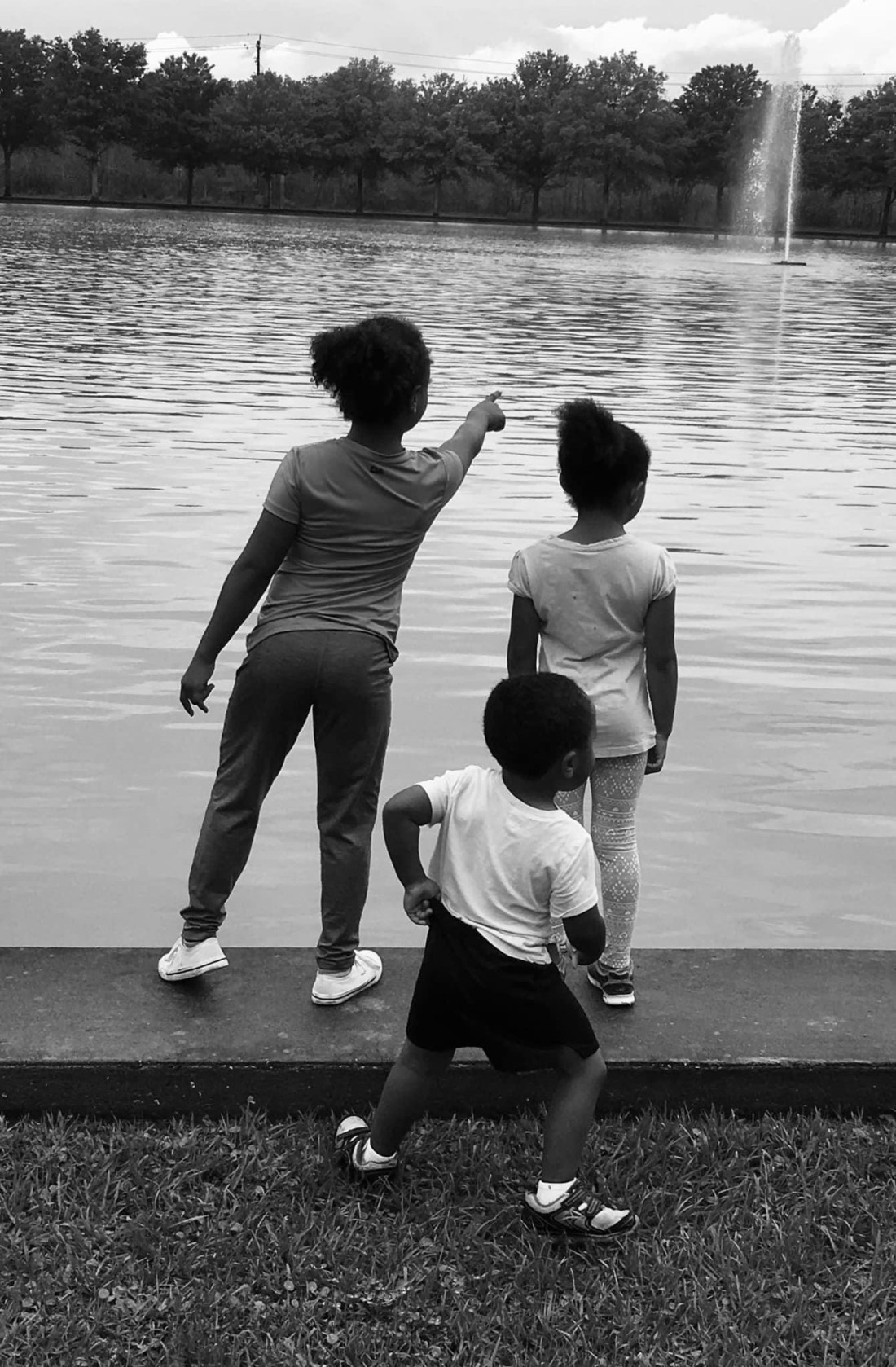
I can’t imagine a scenario in which I could irrefutably prove to anyone that God was indeed guiding me that day. I am not a skilled apologist, I have learned, so I’ll make no attempt here. I do think, however, that if all of us were honest with ourselves, there is plenty that each of us accepts on faith, though the substance of that faith may differ. As for me, I have seen and experienced enough, especially while I was under my parents roof, that convinced me of a good God who is involved in the world, and it has informed and shaped my faith over the years. But I also don’t believe I had no choice in the matter; I wasn’t irresistibly compelled to believe, though it could be argued I would be foolish and stubborn not to. Choice, I find, is still left to us, though God may be sovereign. It is just a part of what it means, I think, to be created in his image.

Dostoyevsky may have said it best in his novel “The Brothers Karamazov,” suggesting that we may willfully apply our preconceptions when interpreting events, personal or not, particularly if one is a realist/unbeliever:

“The genuine realist, if he is an unbeliever, will always find strength and ability to disbelieve in the miraculous, and if he is confronted with a miracle as an irrefutable fact he would rather disbelieve his own senses than admit the fact. Even if he admits it, he admits it as a fact of nature till then unrecognized by him. Faith does not, in the realist, spring from the miracle but the miracle from faith. If the realist once believes, then he is bound by his very realism to admit the miraculous also.”

I wouldn’t say I encountered miracles as much as intervention that day. Nevertheless, it is left to us to choose an interpretation based on the substance of our faith. I could have proceeded with the move, I suppose. The truth was, I was running from a difficult situation in an attempt to make my own life more comfortable, or so I thought. There is value in facing challenges, though many of us are conditioned to interpret them as a sign to seek an easier, more convenient way.

While I believe God was making use of circumstances to influence my decision, there was another hard truth I needed to understand — running from a challenge may involve nothing more than running towards another. Life isn’t always best lived seeking one simple, convenient, and pleasant path after another. If it’s not the frustration of dealing with contentious patrons, it will undoubtedly be something else. And sometimes, one difficult choice, one turn, if you will, is all that’s needed to make a world of difference in your life or mine.

______________

John Lee Hancock, like me, grew up in the blue-collar, chemical refinery town of Texas City. I would venture to guess that our similarities end there, but I have found it curious that there isn’t a movie director in present-day Hollywood whose films I am almost guaranteed to appreciate more consistently than his. In any event, his film “The Highwaymen,” released in 2019 on Netflix, tells the story of the manhunt for notorious killers Bonnie and Clyde from the perspective of the former Texas Rangers commissioned to track them down. Leading the pursuit is Frank Hamer, played convincingly by Kevin Costner, with Woody Harrelson in the role of his partner, Maney Gault.

Midway through the plot, Hamer pays a visit to Clyde’s father in Dallas. Perhaps seeing little to gain from either in the investigation, the pair use the encounter instead to wax philosophic on the nature of choice and fate. “One turn on the trail,” each utters familiarly, suggesting the notion of a course in one’s life set and determined irrevocably once a pivotal choice is made. While the elder Barrow’s imploring for his son takes issue with the idea that the choice reveals one’s inherent, inescapable nature, Hamer illustratively applies the phrase to himself, describing a single moment chosen in his youth that, he believed, dramatically altered and fated his life’s profession. The choice, the one turn, changed everything.

______________

My wife and I were once good friends without a hint of attraction between us. I still believe friendships can evolve into some of the best marriages, but that’s a topic for another time. Over a decade ago, I don’t remember precisely when, she was in the process of purchasing her first home, and I happened to be the friend available to whom she first decided to show it. We turned into the neighborhood, down the street, and then parked alongside the curb in front of the house. She excitedly shared the details with me for a few minutes seated there in her sedan.

Now, at that moment, I had no idea about what the years ahead held for me and how this casual afternoon stop was as much about what was in store for me as for her. Had my future self spontaneously appeared in the back seat to drop unwelcome spoilers, I wouldn’t have bought a thing he was selling; I wouldn’t have been prepared to hear any of it:

“Let me tell you what’s about to go down, Jim. First, this house. Take a good look, because a lot is going to happen right here for you. Your name will eventually be on the title. Yes, you heard that right. You don’t know it yet, but this is also your first home, which leads me to my second surprise. The girl seated next to you is the one you’ve been after for so long. She’ll figure it out before you do, but once you recognize it, you’ll have difficulty imagining anyone else better suited for you. Cue wedding bells. Third, you two will start a family right here. Maybe that’s not surprising, but here’s the kicker — you’re going to forgo the baby stage and acquire three older kiddos in one blow. Oh, also, they will bear absolutely no resemblance to you whatsoever. I’ll just leave it at that. Fourth, that great big library you unsuccessfully tried to escape several years ago? They’re going to put you in charge of it. Yes, you. Moreover, you and the staff will be afforded rare but rewarding opportunities to make significant impacts on the community, impacts that will be publicized even outside of the city and state. Much of it will begin with a phone call you aren’t expecting about the generosity of a man you’ll never meet.”

I never for a second would have believed any of that. But it did, in fact, happen. And it might not have had I ignored how I was being directed and had instead effected my flight a few years previous.

Time and hindsight reinforce anyone’s faith, I find. The downside is, of course, the waiting. I feel as if I daily face doubt about the goodness of God while dealing with one irritating, sometimes disheartening, challenge after another, especially in this stage of life raising kids in the home. Assurance can be long in coming while buried in the grind. But when I pause to look back on that day and see all of the remarkable things that have followed because, I believe, I obediently chose to stay, how could I not believe in a good God?

We’re taught in Scripture that not one of us is beyond the grace of God; not even a single choice can alter that. However, time isn’t returned to us, which makes each choice more valuable as the minutes slip away. It’s the earliest turn that stands the best chance of affecting the greater share of all those that follow. And that’s good news for those who believe in a good God.

Prelude to Risk, pt. 2 (or Final Chapter)

“We have to make a decision today.”

I’ve been stalling for at least a month. 

January 2017. Earlier in the previous year, my wife and I took in two siblings and will, in a few weeks, adopt them as our own. It has been a long and laborious process up to this point. The adjustment to parenting is the only thing, for me, that has been more trying. From zero to two is an almost imperceptible change if you’re talking about the speed of a vehicle. If, however, you’re referring to the number of older children in your home versus only moments ago, no adjustment I’ve experienced in 40 years compares.

I’ve just begun to settle into the new routines, priority changes, loss of “me” time, etc., that parenting brings with it, not to mention the difficulties raising kids from trauma. If I’m honest with myself, I’m still not sold on the approaching adoption day and terrified that this is a mistake. There’s no turning back after that.  Now we’re being asked to take in a third — their sister. While my wife’s answer was a resounding, knee-jerk “Yes!”, she dialed-back her open-hearted enthusiasm when it was clear I hadn’t yet arrived there with her. We would, instead, think about it. She would pray and hope earnestly that I would change my mind.

A month later, and the new year has barely begun, as has my day. Waking up to get myself ready for work, I answer a call from my wife, who has already begun her workday. The time to make a decision had come, our caseworker informed her. She needed an answer today. 

I do not want to do this. 

It’s been hard enough becoming an instant parent of two. More than once, I’ve felt like quitting. I can’t imagine taking on yet another, who, we learn, will bring her own set of challenges. In short, we would be the fifth primary caregivers in her brief seven years of life — a fact to which I can’t relate to any of my own life experiences.

Overwhelmed at the thought, I tell my wife I need some time. I call work to tell them I won’t be coming.  Instead, I face the inevitable and prepare to wrestle with God.

I want an answer, and I’d like it to come unmistakably from Him. 

_________________

It’s long been easy for me to read the stories in Scripture, especially those in the early Old Testament books, as if God speaks to the key characters in direct, grandiose ways just as frequently as we might pick up the phone and text or call one another today. It takes only a few seamless moments to read many of these accounts as if one divine interaction follows the next, as routine or as common as walking from here to there. Such a belief can further lead to the self-critical idea that I don’t hear quite so often as that from God, and certainly not in such grand fashion, so I can hardly consider myself as intimate with Him as an Adam, a Noah, or a Moses.

Read-time is not real-time, however. Between punctuation, paragraphs, and chapters, especially in the Old Testament accounts, there is the undocumented drudgery of the day to day; there are actual days, months, years, sometimes decades or longer, between “burning bush” kinds of moments. Instead, there is the silence of God. I would argue, in fact, that we overlook the abundance of His silence in these characters’ stories. Granted, this doesn’t mean He wasn’t acting or speaking in these segues.  The writers, inspired of God, only tell us what we most need to know. Yes, he may speak to me in many simple, quiet ways on a daily basis, if I’m attentive, but many of the monumental divine intercessions or pronouncements writ large in Scripture are fewer and farther between if you stretch them out into actual time. 

This I find reassuring, and it adjusts my expectations of God. My faith in Him and confidence that He is ever-present to me shouldn’t depend on whether or not I experience frequent moments in which He parts the clouds for a special revelation. Many, many more times than we read, I am certain, Moses, for example, got up, went about his day, and eventually retired for the night, only to do the same the following day and the day after that. On almost all of those days, I am certain water acted like water does and neither parted across a sea nor sprang from a rock. It’s not exciting, but much of the time we spend in our lives isn’t. It’s simply life as it is.

Nevertheless, God is still present in the day-to-day routines, and it’s often in these periods that our faith is most tested. He will speak to us in the manner he chooses when he chooses to do so, or He may not. Sometimes, however, we hope and pray that He does so in such an intimate and direct way as we read in Scripture so that we are forever changed, our life altered. 

Sometimes, He may give us just that, even when what He has to say may not be what we want to hear.

______________

I decide to change my surroundings and venture to a local park. I turn off my phone. Maybe a little dose of nature and evasion of distractions will persuade God that I’m serious, that I’m holding my calls for Him, so to speak. 

I find a picnic table and sit down, read a few verses here and there, meditate, journal, say exactly what’s on my mind. I wait. I listen. I repeat.

Nothing.

After what feels like an eternity, I impatiently get up, move around, and take a walk. A few scattered times in my adulthood, I’ve imagined Christ by my side on one of my strolls, keeping pace with me, just being present, if for no other reason than to be a comfort, a reassurance in a world characteristically more chaotic than ordered. After a while, though, I sense it’s just me. 

Dejected and impatient, I change direction and walk to the van. God may have nothing to say to me about this. What’s more likely is that I’m simply not very good at listening to Him.  I shouldn’t expect Him to speak to me as He has in so many ways to my parents. I need to accept it, make a decision about this, and move on with life.

I get in, decide to clear my head, and just drive. I head south on the freeway. About 20 minutes in, I drift off the exit towards my childhood hometown. I’m soon coasting past old familiar places down the main thoroughfare. The car eventually makes a left turn, then another left. It stops along the curb behind a park where my siblings, neighborhood friends and I often played.  I don’t know why I’ve come here.

Across the field in the park, I see our old backyard at my childhood home. The architecture hasn’t changed after 24 years, but the paint and landscaping have. Someone else calls it home now. I wonder what memories they’ve made there.

I get out of the car and stroll to a bench. I take nothing with me.  Arms stretched across the back, I just sit and take it in. I stare at the back of the house across the short distance. I’m not sure I’m really listening for anything anymore. I relax, sit back, and remember what was, back when life was simpler and I was blissfully unaware. 

After an hour or two, a little bored and unenlightened, I get up and head back to the car. I don’t know what I’ll do or where I’ll go from here, but it seems God doesn’t want to show up. I’ve invited Him, but He has no interest in offering even a meager shred of advice on how to proceed. Forget it, then. I’ll figure this out on my own.  Maybe He did, after all, just wind this universe up at the beginning and casually amble away to pursue other interests, leaving us with the mess we’ve made. 

I sit down and shut the door. Reaching for the ignition, I press the button and start the car.

______________

“It’s time.”

I’m 15 again, sitting on the floor of my empty room. My mother’s words echo as the tears start to flow. She sits down beside me and wraps her arms around me. I’m saying goodbye to my home once more, the only home I’ve ever known.

Then I hear Him.

“You left your home once at 15. Your family left with you. I brought you to this place specifically to remember that. 

“This child is the fragile age of 7. By the time she makes her way to you, it will be her fourth departure in her brief life from places that only resemble a home. Her family is not with her. She doesn’t understand it all, can’t process it, and is otherwise alone. I’m giving you this opportunity to change her reality, to give her a home that’s truly a home, one that she will never have to leave again.

“It’s time — time for you to take a risk. Your parents had theirs, but this is uniquely yours. I’m not asking you to venture to the other side of the world; that was for them, not for you. 

“I will not promise you that taking this child — these children — as your own will be easy. In fact, you know it won’t be. I will not even tell you how it all will end, whether it will seem worth it. It is, however, what I want you to do.”

______________

Scripture tells us that God is sovereign. If I believe this, then I know His purposes will be accomplished. Moreover, I believe He chooses to use us as vessels to do His work. With or without us, He will do what He says. 

Nevertheless, I can’t help but wonder — what if my parents had said “no”?  What if they had turned their backs to their call, though doubtless about what they had been told and who had spoken to them?  

What if they stayed?

Would God, as with Jonah, have bore down on them to any and every corner of the earth to which they fled, using whatever means at His disposal to exhaust them until they obeyed, albeit reluctantly? Or would He have simply changed His mind, searched, and found another to finish the job, leaving them to puzzle in their final remaining years, filled with regret about what might have been?

Maybe, just maybe, after all, they had a choice even then, notwithstanding God’s sovereignty. I can’t search it out, and it isn’t long before I find I don’t want to. Of all for which I have to be grateful in my life, I’m relieved I do not have to linger or obsess on what would have been had they remained where they were.  As with Frost’s less-traveled road, their choice to go has made all the difference. 

___________

I’m back in my car, tears streaming down my face, just like the 15 year old about to leave his home on a journey not of his choosing. I now know what I have to do, but it doesn’t feel inevitable. I have to choose. 

I’m afraid and uncertain. I feel inadequate, unprepared, and ill-equipped. My parents once felt this way as well, on the edge of a risk, but much greater than this. This time, however, I’m in the driver’s seat as I prepare to leave this place once again.

“Go from your country, your people, and your father’s household to the land I will show you.”

I think it is no accident that the story of Abram has found itself placed near the beginning of Scripture. It is a simple yet relatable story to which many thereafter found and still find themselves directed by God as an encouragement to take the first step. As one author put it in his own famed, world-building story, “It’s a dangerous business . . . going out your door. You step onto the road, and if you don’t keep your feet, there’s no knowing where you might be swept off to.”

Abram’s faith journey begins anew each time we receive a call from Him and choose to obey. The call isn’t the same for each of us, but He calls us each to something. Reflecting on this, I make my decision.

I put the car in gear.

“So Abram went, as the Lord had told him.”

Peace on Earth

“The truth is out there.”

I wonder if any devoted “X-Files” fans found it curious, during the forgettable year that was 2020, that when the government itself acknowledged in long-awaited declassified reports that they had, in fact, collected and documented evidence for decades of UFOs, the world generally took little notice or interest. Maybe it speaks to the incapacity of many of us to be truly impressed or surprised by anything anymore. It seems the truth was, in fact, out there, as the show once pitched weekly following the opening credits, but we moved on, treating the news no differently than if we had exited the theater, venturing from fiction writ large on a screen only to return to mundane reality. Maybe it’s just as well. It seems the official evidence presents nothing more than harmless, flashing objects evading pursuit and performing bizarre aeronautical feats before vanishing from sight. It’s possible to enjoy similar entertainment at the annual air show. Watching agents Mulder and Scully uncover the mysteries of the paranormal or investigate closely-guarded government secrets of alien existence in the space of an hour is, arguably, much more intriguing.

Many episodes diverged from this overarching storyline and had a bit of fun as stand-alones. While I didn’t spend time with the series from start to finish, one of my personal favorites is a season seven tale titled “Je Souhaite.” Long story short, the agents investigate a centuries-old jinniyah (i.e., genie) in the form of a woman who appears just as human as you or me. Hijinks ensue. A more memorable moment towards the end of the episode finds Agent Mulder chanced with a turn to offer three wishes of his own. Pausing a moment so as not to squander this rare opportunity, he opts for the high-road with his first wish, nobly and altruistically requesting peace on earth. The jinniyah routinely and disinterestedly complies. The wish is answered not with a bang but a whimper as an unsettling silence descends. The white noise of traffic and city bustle is eerily and suddenly absent. Peering out of the window, Mulder observes that all living things, with the exception of him and the jinniyah, have vanished from existence. Her vast years of experience with humankind have afforded her interpretive privilege, and the outcome of the wish clarifies her position: You can’t have both peace on earth and people, whose hearts are what they are. Pick one or pick the other.

If you were to ask me on any given day what I want most out of the forthcoming 24 hours, if I dug deep, I would likely respond with the word “peace” or some version of it. Peace in the schedule, peace at work, and, most of all, peace in relationships. I wasn’t bred well for conflict, but I wouldn’t dare attribute that to a failure on the part of my parents. I’m less critical of parents generally since I’ve been one.

In any event, I have been know to pursue harmony in tense encounters at times the same way an addict will cut corners to sate a craving and settle his mind and body. It’s a fault of mine, I know, but there you have it. I’ve managed to make it in life agreeably with most I encounter, though the character flaw has, ironically, been the cause of tension in a handful of moments in spite of efforts to avoid it. It seems some aren’t afraid of it but actually seek and create opportunities for conflict. My children, or at least one of them, are just such persons, though they are good kids overall. Nonetheless, I find God must have a sense of humor when I consider that he’s paired the three of them with me.

My perspective since having children has broadened significantly as to what is at one’s disposal about which to disagree passionately. Clothes, food, toys or other cherished possessions, you name it, they’ll argue over it. I once listened to a long, anguished, tear-stained altercation develop in the backseat of our van between two of ours over the rightful owner of a commonwait for it — rock. Yes, you read that right. They were both committed to dying on that hill, doubtless made of innumerable figurative stones equally as common. It was at that moment I knew I had now heard it all, and it remains the only time in my life I’ve felt the impulse to throw myself out of a moving vehicle.

Recent battles between our oldest and middle have assumed the form of a blame-game I would refer to as “Who Ate the Last of the _______?!” The winner is typically our oldest, who couldn’t care less about her alleged victories but is forced to play by our middle, who, of late, has taken to labeling items and carefully crafting and depositing notes in various locations around the kitchen and pantry to serve as reminders of what she is convinced is hers. She still hasn’t caught on that she makes no actual food purchases herself and has no rights or claims on what is or isn’t consumed, in spite of our own reminders, though I will admit our teenager, like many adolescents gifted with rapid metabolisms, has a unique talent for disposing of communal food as if it were a sworn duty. Nonetheless, we find notes like the one I discovered on the stovetop after rising early to get myself ready along with the other two (see below), who head to school at least an hour before her. It was the first note in my memory that made an attempt at polite acknowledgement of who owns what, merely, I should say, by virtue of the included words “please” and “thank you.” The rest was a blessing, of sorts, juxtaposed with a subtle, almost hidden warning, signified by a smiley-face and not-so-smiley face each deliberately placed next to two specific names in judgment. Apparently, one does not gracefully forgive and forget the previous month’s ice cream “theft.”

This is relatively mild by comparison. Early interactions overall at the beginning of our adoption journey were exhausting and challenging, to say the least. It’s hard becoming a family formed by adoption, especially if your kids have memories of life before you. Not too long ago, the movie “Instant Family” was released, and while my wife and I rarely take the time alone to go to the theater, we found space for this one. For those unaware, the story tells of a couple who choose to adopt three older siblings, ranging from preschooler to teenager. It fashions itself as a comedy, but the two of us viewed it almost as if someone had been reading our mail. Yes, much is exaggerated, but much also felt uncomfortably close to home. For a span, my 15-second elevator-pitch when someone asked what it was like to foster-to-adopt three children, I would refer them to this movie and tell them to catch up with me later if they had any further questions. While the conflicts depicted there are not as focused on what happens between the siblings, the tension and struggles are just as palpable. “We didn’t train for this!” Mark Wahlberg’s character exclaims during the chaotic dinner table scene. Such a sentiment I’ve felt time and again for the gamut of adoptive family-building, especially when navigating moments of sibling rivalry and conflict. Fortunately, my faith has provided a little transformative help.

If you’re a parent and a believer, you likely witnessed that the way you read Scripture altered significantly after kids came along. The stories in Exodus alone, for example, often read like stubborn, spoiled children who simply can’t quit complaining on a long road trip. They’re pleased to accept the benefits, but they’re also soft and ungrateful, unable to endure discomfort in any form. In the few spaces when Moses steps in to stay God’s hand on the disgruntled Israelites’ behalf, the parent in me is anticipating and hoping for a thorough smiting and wants to shove Moses aside to let Dad take care of it.

Take a step back to the book before it — the very first in Scripture, I might add — and after reading you might find one could make a convincing argument that the narrative of Genesis and, by extension, the purposes of God, were largely driven by sibling rivalry. Maybe you haven’t noticed, parent, but it may provide you a hint of hope to know that it all started right there at the very beginning, and it happened time and again. You’re far from alone in the human experience of bringing up bickering babies. What you deal with, what you referee day in and day out, has been going on since recorded history began, and, it seems, was the impetus for moving many things along.

Of the 1,189 chapters in Scripture, we’re barely getting started when we come across the story of Cain and Abel in the fourth. Like many conflicts, jealousy and the attention and approval of a parent (i.e., God) are at the center. The result of the bitterness, as we know, is the first murder. “Well,” I think to myself, “mine haven’t avenged themselves in such a violent manner; perhaps I have little to complain about, after all.” And I wouldn’t be wrong; but let’s keep reading.

Isaac may have been the promised child of Abraham and Sarah, but it’s easy to forget about Ishmael, his literal brother from another mother. If we believe Sarah and our translators, Ishmael, the older of the two, saw fit to “mock” the younger half-sibling on the day he was weaned. Sarah was none too pleased, and when mom ain’t happy, ain’t nobody happy, as the saying goes. The first parent in known history to establish an anti-bullying campaign, she coldly issued Abraham orders to cast mother and son out of his household, to which he assented only after assurance from God that they would be taken care of. The Ishmaelites would later become the early tribes of the Muslim faith and would quietly live out their days to the present in relative peace and harmony with the rest of the world . . . except that they haven’t. It’s as if the youthful fraternal animosity that served as cause to be cast out would thereafter characterize a people and faith in their relations with their cultural brothers and neighbors.

Then we meet Jacob and Esau. Now, this is a classic rivalry for the ages. These twins exited their mother’s womb veritably as discord defined, though, to be fair, Jacob duly bore much of the credit for that, especially throughout their early relational history. For those of us who blame our lack or misapplication of nurture as parents for the negative traits our kids exhibit, here is an example of nature trumping nurture. Jacob was granted the name “supplanter” or “deceiver” as soon as the curtain rolled up by virtue of the odd obstetric fact that he “grasped the heel” of his brother on the way out, as if to presage his methods would hereafter involve the unwilling and forced assistance of others in order to get his way. We know the story of Jacob stealing both his brother’s birthright and later “pulling the wool” over his own father’s eyes to swipe his brother’s blessing. This guy later had the gall to wrestle with God himself and stubbornly refuse to let go after they encountered a stalemate until he got what he wanted. I wonder that clinicians today might diagnose that as a penultimate case of oppositional defiant disorder, which, nonetheless, was the spark that resulted in the birth of Israel itself.

Then there’s Leah and Rachel, lest we forget it’s not only about the boys. Prior to his wrestling match, Jacob fled the wrath of his brother, decided to settle down, and was forced to toil a number of years for these two sister wives as a result of duplicitous tables turned upon him for a change. And in case we needed a demonstration as to why polygamy is a terrible idea, here we’re treated to a vigorous birthing competition between the sisters. When they ran out of steam, so to speak, they threw other women in their charge at him, and this all for the sake of “winning.” Throughout this narrative, Jacob/Israel becomes less the progenitor of a nation and more of a prop for the sisters’ bitter rivalry. Such a twisted tale nevertheless produced the nation’s twelve tribes, which would serve as the basis for Israel’s multi-faceted identity throughout the rest of its history.

Finally, we have Joseph and his brothers, whose story is given the greater share of space in Genesis. Our children accuse us of having favorites, though the truth, or at least what I tell myself, is that we relate to them differently based on their personalities. These siblings, however, knew full well the little runt was dad’s favorite. Consumed but united by their jealousy and incense at his arrogant dreams, they went so far as to throw him down a well and then sell him into slavery to strangers, though their original plan involved ending him once and for all. Unbeknownst to dad, they brought back false evidence of an animal attack and let him believe the lie that cruel nature had claimed his life.

One of my cherished observations about Scripture is that it doesn’t whitewash human shortcomings and failures. It’s ugly, unpleasant, and heartbreaking, and in my opinion, serves as strong and persuasive testimony that it’s telling the truth. It doesn’t over-employ the best qualities of its characters to convince you. To the contrary, we see the best and and the worst together, much like our own lives, and we find we can relate. My kids and yours may not have committed quite so atrocious acts against one another, but we’ve personally witnessed the same feelings motivating them to do whatever it is they do to or for each other.

I want my kids to do well, but I more often pray that they choose to be kind. If such things start at home, frankly, it’s difficult to tell where we might be in the process. Just last night there were bitter, vicious words exchanged over simple drinks spills, whereas days before they were happily sharing their devices because they “love each other.” I’ll happily take the latter, but more often than I’d like, I see the former. On the other hand, they haven’t stooped to murder in the first, mocked each other to the point of forced exile from the home, fled the house in fear because of deception, birthed a bunch of babies to earn a man’s favor, or conspired to sell one of the others off to strangers but tell us and God that he/she died. So, I guess we’ve dodged a bullet. So far.

We still worry, though, each time we see less than what we hope for in their characters. But here’s the beautiful thing about this first book and the reason Joseph’s story was deliberately reserved for the end, I think. After all that — and I don’t mean his story alone — after all that was endured in almost 50 chapters prior, after every instance of siblings threatening not only each other but the plans of God himself and, I would argue, their parents’ deepest hopes for them, we hear Joseph’s refreshing words: “. . . you meant evil against me, but God meant it for good.”

“The art of living is more like wrestling than dancing,” said Marcus Aurelius. I don’t know if the esteemed Roman emperor was familiar with the story of Esau’s brother, but, perhaps, despite all his character flaws, Jacob was unwittingly onto something as he stubbornly struggled and strained against God himself that evening on his way to reconcile with his twin. If so, maybe I shouldn’t fret too much about the backseat bickering, as tame or terrible as it might be. God is aware of what he’s doing with my kids, even if I don’t. I’ll still strive to encourage peace between them in our modest corner of the earth, but if Genesis has anything to teach us, it’s that even the the most vengeful of sibling rivalries can’t thwart the purposes of God. He’s got it in hand; there’s no need for a genie with a handful of wishes.

Unqualified

In less than a year’s time, my wife and I will celebrate 10 years of marriage. On our bedroom wall is a single, wide frame waiting to accept several small photographs of the two of us in five-year increments, arbitrarily up to year 25. My brother and sister preceded me in wedlock and remain happily married to their partners, each for 14 and 20 years, respectively. My parents are fast approaching their 48th anniversary, and I expect they will make it much further than that. Before “death do us part” ended their partnership, my paternal grandparents were wed for a slow and steady 60 years. My maternal grandparents, whom I have long lovingly referred to as “Meme and Papaw,” are still together and have been for a staggering 74 years.

I share none of this as a matter of pride. Rather, I say it to point out that the marital bonds made and rigorously maintained in my immediate family, along with the fact that I consequently have been spared the shock and heartache that formal separation can cause for all those involved, may explain, at least in part, why I feel such sensitivity upon learning of the divorce of friends, family, or even the most remote of acquaintances. It always breaks my heart. Each time I hear of it — and it happens more often now — the upset prompts me to take a closer look at my own marriage while wondering desperately how others’ could have ended, if for no other reason than to understand how to protect my own.

It’s an oft-repeated, banal statistic: half of all marriages in America end in divorce. I have heard more than once from the pulpit that this percentage “changest not” for Christian churchgoers, a fact perhaps surprising given that the faith is among the strongest advocates for the institution. There are plenty of risks in life I wouldn’t take given odds no better than those offered by the toss of a coin; but it would seem from the stats that’s the best deal any of us who venture into marriage will get. We enter into it confident and assured that love will see us through. But that’s not enough. From what I understand and have observed, what most commonly occurs for the unlucky in love is that time erodes mere romantic feelings, differences or offenses are left unresolved or unforgiven and consequently birth resentment, and resentment breeds contempt, until, left to fester, there is little left to salvage of the relationship.

Perhaps this is an oversimplification. Regardless, none of this happens in the space of an evening. Realizing the best or worst of anything in our lives is a patient process, and I have found in my 9 years that when I feel resentment creeping in, humility is the only cure. I am not a perfect man. If I follow the counsel of pride, I shouldn’t be surprised if loneliness accompanies my need to be right. So, I buy the bouquet and apologize.

I don’t intend that my thoughts alienate those who have known the pain of divorce, and I understand that the details surrounding such issues can be very complicated and may differ from one person to the next. We all need grace, myself included. But if you’re a believer, I haven’t come across any interpretive tools that allow one to sidestep the meaning of the simple, plainspoken words of God in the final book of the Old Testament: “I hate divorce.”

I have once felt the temptation to walk away. While it may not hold a candle to the experiences or challenges others have had, and though it wasn’t borne of resentment, it felt as real and compelling as anything else I’ve experienced.

Not terribly long after our oldest and youngest were placed in our home for the six-month long period before adoption could be pursued, we found ourselves one evening dealing with an irritable toddler who couldn’t get himself to sleep. We had endured the patient and exhausting process of training, paperwork, and preparation for two years and exchanged it for the draining realities of parenting in such moments as this. Most nights after placement were a challenge lulling him to sleep and keeping him in slumber, but this evening was different. As the night progressed, my wife and I found ourselves taking turns sitting up with him, occasionally drifting off only to wake soon again in a state of rapid and labored breathing and coughing. While he himself did not seem to be alarmed about his efforts, in hindsight, we should have had the sense to take him to the ER right then. We second-guessed ourselves, however, and tried not to overreact to whatever this was. By the time the sun began to rise, we could see nothing was improving, and so we made the decision to seek help. So, I got him and myself ready, and we headed to the hospital.

Arriving, we checked in, and we were not left to wait interminably after I shared the details and medical staff were able to see for themselves how he struggled to breathe. They soon found him a space and a bed and began the process of assessing him. Needles and such were soon to follow, much to his displeasure, as they found his oxygen levels much lower than normal. This would be the first of future medical visits that would ultimately acclimate him to medical treatment and form him into a better patient than he was at this moment.

Without the resources or expertise to treat him, it was decided that he should be transported to Texas Children’s Hospital downtown via ambulance. Once he was prepped, they rolled him into the back as I sat alongside him for the journey. After arriving, we would stay for four days and three long nights as they endeavored to stabilize him before officially diagnosing it as asthma and releasing him back into our care to head home.

So the routine business of day-to-day adoptive parenting began again, now with the added task of daily pharmaceutically-treated asthma prevention. We pressed on toward the goal of adoption, though I admit the adjustment from no kids to two kids had begun to feel extreme. I had more than one moment of anger or frustration at the changes and occasionally expressed this in such a way that surprised even me. I gained a greater appreciation for the fact that most of us are eased into parenting with a single baby; the needs are very basic, they don’t yet have much of a will of their own, and they are fragile in every way. Yes, the change is still a change, and one still loses some sleep and “me time,” but jump-starting from zero to multiple “not-babies” from traumatic backgrounds is not a natural life transition. The stress of such a change can compound if you don’t appreciate the adjustment required. And I didn’t fully appreciate how daily life would change.

A month later, the coughing began again late one afternoon, persistent and uninterrupted. Fearing another long night, we decided to forego the inevitable and brought him again to the local hospital. And once again, after evaluating him, they chose to carry him downtown via ambulance to TCH.

After he and I arrived into the evening, we were checked in and eventually placed in an ER room, where we were left to wait. My wife and our oldest soon joined us for what would end up a long night of patient observation. In the end, it was merely a cough, nothing more, and he was administered a steroid and breathing treatment. This would be one of our first moments in which a physician would inform us that his cough was not necessarily concerning; moreover, nothing but a steroid would be prescribed for it, due in part to the fact that physicians generally do not recommend cough medicines at his age — a frustrating reality for parents who simply want their child to sleep.

Early into the morning, exhausted, we were released from what felt like a waste of a visit, though assured our concerns were nothing serious. We made our way back to the van and headed home in the dark, the sun not long in rising. Though sleep was foremost on all of our minds, my wife and I knew relatively little time would be permitted for that. Our life now revolved around a couple of kids, and the toddler among them would be up very soon after the sun, prepared to wake the rest of us up with his needs and treat us as well you can expect of a sleep-deprived two-year-old.

This trip to the ER, not the first but the third for me with him (there was also, by the way, an unfortunate incident in which he stuck his finger into the moving, rolling track of the garage door as it opened) left me spent in every way. Our journey of parenthood had only just begun, and all of the training that sought to prepare us for moments such as this meant nothing to me now. Yes, of course, our life would change, it wouldn’t be easy, etc.; I’d heard all that. But here and now, I only felt complete and utter exhaustion. I also felt trapped with this feeling, realizing perhaps for the first time that I had made a commitment to this and all it entailed, that I couldn’t necessarily expect relief even when my head hit the pillow. I’d signed up for a marathon that would last not a few hours but many long years, and the pop of the starter pistol still echoed in the air. The entire course stretched endlessly before us.

As the weary morning began, I called a friend to take me to the local ER to pick up the car, where I’d left it before we were escorted downtown in the ambulance the previous evening. I then drove to the pharmacy for the prescription. Having collected it, I returned to the car, sat in the driver’s seat, and paused.

Staring aimlessly ahead, it occurred to me in my spent state — emotionally, physically, mentally, and even spiritually — that I wasn’t bound to this course. I still had a choice. I was alone in a vehicle that could take me almost anywhere I wanted to go. And what I wanted right now was to be anywhere but here, anywhere but home. I loved my wife very much, but I didn’t want the rest of it at this moment, not anymore. My new identity, the changes in how I spent my time, the challenges of parenting kids from trauma — it all was received and heard one way but experienced in an entirely different way. You don’t fully grasp what you’re entering until you step through the door.

A left turn out of the parking lot took me away from here. A right turn brought me home.

Turn left. Turn left and find an escape. Yes, you would leave your wife behind, but think how pleasant it would be simply to sleep and wake on your own time, not to be responsible for anyone but yourself, to let others more qualified than you take on the task of raising kids such as these. You’re clearly not cut out for this, so feel no guilt about walking away. Turn left. Doesn’t matter where, just go.

I don’t know how long I sat still and silent in the car. The weight of what I was actually considering slowed time to a laborious crawl. Everything in me wanted to abandon this choice I had made to be a father to kids I didn’t father, kids with whom I was barely acquainted, who looked nothing like me. I was tired, I was unqualified, and I wanted out.

At some point, I looked right. To return home, I had to find faith that I wouldn’t always feel this way, that things would be different, better, given time, that God was behind this endeavor. I wanted to believe it. But I didn’t feel it.

I picked up the phone and texted my wife. “We need to talk.”

Starting the car, I paused once more.

I turned right.

Our conversation would be one of the first and only times I’ve shed tears in front of my wife. While there would be other moments of tension due to the changes the adoptive process had wrought, in this one, I expressed how much harder this was than I expected and shared my doubts as to whether or not I could continue. In her own patient way, my wife listened, expressed understanding, and tried to counsel taking it a day at a time. If I learned one thing about her character through the process, it was that she was all-in, that she embraces challenges, even when the doubts creep in, and is more likely to look for solutions, any solutions, that would foster success. This should have been a strong indication to me that she was equally committed to us, to our marriage, if and when the road would be rough.

That was over five years ago. I hope I’m not so naive as to believe that had I turned left, our marriage would have instantly fallen apart. But it most certainly would have been the first step, possibly of many, in the wrong direction.

Parenting has the potential to be a strain on any marriage. Adoptive parenting, all the more. Little did we know at the time that in less than a year, we would take in their sister, who had the misfortune of enduring the instability of four primary caregivers before she ever arrived with us at the tender age of 7. She would also unwittingly provide us with a raw and jarring education on what it actually means to parent a child from trauma. The stress of it would test us many times, and sometimes it still does.

“It’s so great what you guys are doing,” we occasionally hear, referring to adoption. We don’t feel like heroes at all, simply because we know ourselves, and have a hard time responding to the compliment. It’s the humble confession that often follows, however, for which I have a ready response but choose to stifle. “I could never do that,” they say. “That’s interesting,” I imagine replying. “I feel that way almost everyday.”

Adoptive parenting doesn’t require perfection as a qualification, I’ve learned. I likewise shouldn’t expect it of other relationships, marriage included. If not for the grace of God, we would wait indefinitely to feel qualified to do anything of worth.

“If anything is worth doing, it is worth doing badly,” wrote G.K. Chesterton. While his words testified specifically in his time to a debate over amateurism versus professionalism, I take a little interpretive liberty and choose to hear it as a challenge simply to try, regardless of personal shortcomings or the potential for mistakes likely to be made. Some things in life merely ask us to press forward, qualified or not.

Just as with parenting, I’ve made my share of errors in my marriage. I can’t see the road ahead, but I fully hope and pray that my wife and I will eventually have a photo to insert in the 25 year spot of the picture frame, and then some. The faith I had that day that compelled me to return home felt far more minuscule than the storied mustard seed. If so, then there is something both true and effective in those words after all. Armed hereafter with nothing more than a sliver of faith, I need only believe, and keep turning right.