“Photography has nothing to do with cameras.”
– Lucas Gentry
Once upon a time, I was searching for a hobby. Graduate school alone was insufficient to sustain my attention or fill my free hours. Time spent casually on TV, reading, and exercise still left space to fill. Smartphones had also not yet made their commercial debut, so there wasn’t the persistent and often irritating distractions they encourage. I knew I could make more productive and satisfying use of my free time and wanted to learn how to do something and enjoy the effort it would take to do so.
As I circled high above the hobby landscape, I found photography as good as anyplace to land. Being a curious and conscientious reader (I was studying to be a librarian, after all), I found several old Time-Life hardbound volumes on the subject and read up on shutter speed, exposure, depth of field, etc. Unlike other topics I had made efforts to wrap my brain around, I found it simply made sense to me. I dove headfirst and chose to learn the hard way, purchasing a student camera — a fully-manual Nikon SLR — along with ample rolls of film. This was a conscious choice considering that digital cameras were just beginning to come into their own and were expected to advance in the approaching years just as exponentially as the computer processor. Even then in digital’s nascent stage, one could still validly debate whether it or film proved the better medium. I selected the latter, believing such a costlier trial-and-error method would foster a firmer grasp of the fundamentals.
We take for granted the privilege of carelessly snapping away with our digital devices at no cost to us other than loss of storage, which is scarcely a concern any longer. No such luxury with film. As I discovered, one learns swiftly the importance of precision with chosen settings and the need to document each and every shot since it requires a trip to the drug or camera store and at least an hour wait for prints to divine whether or not exposure corrections are necessary.
At any rate, opting to learn the old-fashioned way, I gained a grasp of the basics that I otherwise wouldn’t have were I to have taken digital shortcuts. Over time, I became especially skilled at and appreciative of composition, which, I believe, is one of the most difficult aspects to teach. Either you have an eye for how to frame an image of everyday life, or you don’t, which leads me to Mr. Gentry’s words above.
Photography is, among many things, about abstraction. It offers the photographer an opportunity with the easy press of a button to place a frame around a single moment in time, shutting out all other visual distractions. It is simply a way of communicating to a viewer, “Focus on this. See what I see.” The photographer’s eye and mind perceive the images before him or her long before the shutter slides open and shut. The camera itself, though fascinatingly complex, is merely a tool for capturing what the photographer already perceives with his or her own eyes.
This thought came to mind recently at, of all places, a funeral, which serves at least a couple of purposes. First, there is the obvious intent to honor formally and memorialize in the company of others the life of someone you loved, even though they are not present to receive the appreciation. Second, it provides a moment to stop and remember that we all will find ourselves at life’s end one day, and to consider how we are living ours and what kind of legacy we will leave to those who remain.
In this case, it was a man who left a positive and lasting impression on his circle of family and friends, who movingly shared their thoughts and remembrances of his fruitful 70 years. As the service drew to a close, a slide presentation of personal photographs was shared, layered over carefully chosen songs that emoted both his beliefs and the time he spent in life.
As the pictures transitioned from one cherished, frozen moment to the next, I thought of my own parents, who were seated with me, and how I might remember them once the time came. I was reminded of the quote above and a fleeting image my eyes alone captured 30 years ago without the aid of a camera, though stamped upon my mind to this day. The image speaks volumes over a critical moment in their relationship and life, and it remains, for me, one of the most indelible impressions I have or ever will possess of the two of them.
__________________
The closest I’ve ever personally experienced a genuine medical emergency was as a kid in the small East Texas town of Crockett during the late-80s. Our family spent a brief vacation there in a modest cabin next to a lake, where we splashed and played recklessly in a designated, roped area of the murky water, one side of the squared space a pier extending only so far as an average adult could toe the muddy bottom. My brother, sister, and I took turns dashing over the planks and leaping feet first into the natural pool, far too trusting, I now know, of what we couldn’t see beneath the surface. Not long into this activity came my turn. I made my way to the front of the pier, took off like a rocket, and jumped blissfully over the edge.
A jolt of excruciating pain instantly radiated from my left foot throughout the rest of my body after I hit the water, my heel having pierced deeply something sharp on the lake floor. The shock sucked the air out of my lungs as I turned slowly towards everyone behind me, my expression registering only silent horror as my grandfather, nearest to me, immediately discerned my distress and lifted me out of the water. Blood poured from my heel as an agonized howl finally escaped. Long story short, my parents carried me to a local ER, where I was sewn up with three stitches and bandaged. I spent the remainder of the trip seated on the pier, sulkily watching everyone else enjoy themselves, none now daring to jump heedlessly into the water due to the lesson I provided in risk vs. reward.
If the worst physical pain ever experienced were a competition, my mother would win the gold medal uncontested among the five of us in our family. Aside from delivering three children, of which I understand I gave her considerable trouble as the first, she’s endured collapsed lungs, shattered wrists, and a ruptured colon, to name a few. The latter bore the misfortune of taking place in a foreign country under dreadful hospital conditions unsuited to treat properly the affliction, which only prolonged and intensified her suffering. As one local informed them at the time, “One doesn’t go to the hospital here to get well; one goes there to die.”
The plight of the Ukrainian people has dominated the news over the majority of the year, but there was a time when it seemed their independent future was not about conflict and instead was bright and hopeful, following the collapse of the Soviet Union in the early 1990s. This is where our family found ourselves beginning in the summer of 1992 until the beginning of the same season the following year after my parents surrendered to the ministry and gave up a comfortable American life to provide food for the soul and body to the poorest Ukrainians in most desperate need of it. Though they had received their freedom nationalistically, many ordinary people found themselves in dire straits as the economy tumbled rapidly downhill over the months to come, and my parents, as representatives of the faithful back home, shared what they could to ease their suffering.
After a year of living among them, we had begun to feel more at home there than in our own country, we discovered, after a brief furlough back in the States a couple of months previous. For my part, eagerly approaching 17, I had gained a decent grasp of the language and could maneuver from here to there on my own, learning to manage independence differently than most teenagers. Memorializing another year, whether it be a birthday, an anniversary, or a major life transition, in our case, should be a happy occasion, but our moment almost exactly a year since we had arrived would be marked not by celebration but a crisis of faith, wondering if we would need one fewer ticket for the eventual return home.
On an otherwise uneventful evening drawing to a close, the front door to our small two-bedroom flat swung open. It was mom, returning later than expected after shopping for essentials, a task which was carried out on foot without the convenience of a vehicle. Arms laden with bags full of purchases, she stumbled in physically anguished. While ascending the stairs at a nearby underground crosswalk, we would learn, a crippling pain in her abdomen suddenly forced her to the ground. She would labor the remaining distance merely to move, crawling on hands and knees the final stretches toward the residential high-rises with no means to communicate her distress to us and come to her aid.
Like a spent and exhausted marathoner crossing the long-awaited finish for the first time, she collapsed into the flat and found her way to the bed she and my father shared. As she lay still and quiet in abject misery, the next several hours were spent by my father and the Christians, another couple who had been our companions on this adventure over the last year, to determine our next move. She desperately needed help for whatever this was, but the poor reputation of the hospitals and available medical care loomed large in our minds. Urgency discouraged a day-long, emergency trip back home across the ocean.
Witnessing an adult in distress — one’s parents, no less — forms a deep impression on a child, even if that child is a late teen on the cusp of adulthood. As much as we’re tempted to roll our naive adolescent eyes, we nevertheless trust them and their grasp on life in general. We have to, after all, because we know we certainly aren’t confident of ourselves at our age, in spite of our efforts to conceal it. With some exceptions, they are the ones who have made us feel safe. But what happens when we observe in a moment of crisis that they themselves don’t feel safe? What changes in us in a given circumstance when there is no assurance from them that everything will be alright?
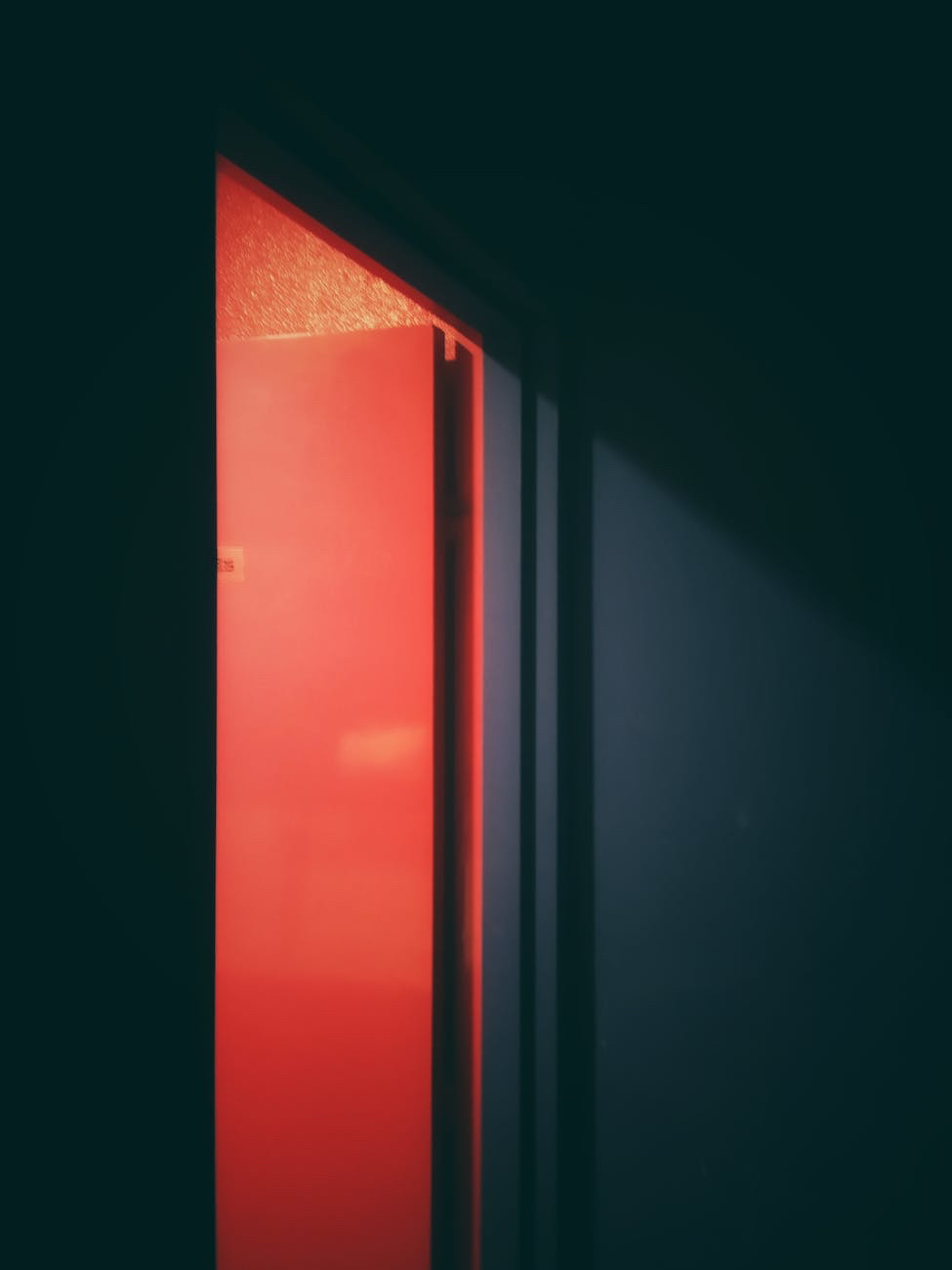
In the dining and living area, the Christians waited with my brother, sister, and me, prayed, and considered unwanted options as my father did his best to comfort my mother in their bedroom. We instinctively gave her the space she needed and kept our distance, not feeling helpful or useful under the circumstances. Restless and curious, I rose and moved toward the hallway under the guise of retrieving something from the far bedroom. As I walked past their bedroom, the open doorway functioned as a veritable camera shutter, my eyes permanently imprinting on my mind and memory, like film exposed to light, a poignant scene that spoke volumes.

Click.
What light remained of the day shone dimly through the far window. On a bed composed only of a sparse frame and a mattress wanting for comfortable cushioning, my mother lay on her left side, facing the doorway. Eyes shuttered tight, her expression betrayed only literal gut-wrenching pain. A wastebasket rested on the floor at the edge of the bed, prepared to catch anything her stomach expelled. Beside her, my father sat solemn and silent, holding her hand, offering his presence alone as he stared vacantly and uncertainly ahead.
The mental picture captured in the brief second it took me to pass, I then retrieved whatever it was I was after in the other bedroom and returned to the living room. During the next several days, she would enter one of the local hospitals, the doctors learning only after opening her up that scar tissue from a surgery years prior had shifted and created in her colon a blockage that intensified until it burst, resulting in peritonitis. The experience before, during, and after left her life in peril and deserves its own story. In any event, once able to travel following emergency surgery and insufficient treatment, we were forced home and found our experience as missionaries summarily brought to a swift and decided close with little time for goodbyes to all those we would leave behind.
__________________
I’ve revisited this bedside scene many times over the last 30 years, processed and reprocessed its meaning to me and the emotions I couldn’t adequately express then. It remains a photograph framed and exhibited nowhere but on the walls of my mind, an image I’m able to share only with the visual limitations of words. As a photograph, albeit mental, however, it has much to share.
Years of preparation, of planning, of feeling led to abandon the safety of their life in America and take the risk of a dramatic — some said “crazy” — move across the other side of the world into a country taking its first independent steps culminated in this single moment. Far from home, from the care that could rapidly be provided potentially to save a life, one wondered whether, only a year in, the decision would prove a fool’s errand, and a fatal one at that. “Perhaps it wasn’t God who sent you,” as the doubts might have stirred. “You wanted for purpose, meaning, so you left, and instead you find yourself putting God needlessly to the test. That is, if God is in it at all.”
I don’t know what thoughts may have been circling my parents’ minds in that moment, but in my mind’s eye, I still see the pain in my mother’s face, eyes tightly shutting out the world and wishing desperately for relief, even if it came in the form of death. I see my father’s vacant stare, one of the first and only times in my young life when I witnessed utter helplessness written in his expression. Nothing but faith to which they could cling, nothing but hope to assuage a sense of despair. As mentioned, my mother would spend several torturous days in the hospital thereafter, which is a harrowing story all on its own, but if I remember anything of them and this time in our lives, it is this single image that will survive.
__________________
“Though the fig tree does not bud
Habakkuk 3:17-18
and there are no grapes on the vines,
though the olive crop fails
and the fields produce no food,
though there are no sheep in the pen
and no cattle in the stalls,
yet I will rejoice in the Lord,
I will be joyful in God my Savior
I recently was reminded of this verse during a routine reading. Depending on my mood or circumstances, I either appreciate it or I prefer to be cynical about its attitude and perspective. When life isn’t living up to my expectations, when I am disappointed in myself and my sins or shortcomings, when the kids can’t seem to get it together with their ongoing issues (which can be deep, exhausting, and never-ending with adoptive parenting), I genuinely feel the urge to reject it. I just want to feel better, I don’t at the moment, and the words are of little comfort. Yet, it is for moments such as this that the words are intended. My circumstances, it infers, shouldn’t determine my posture, which, it would seem, is merely a matter of choice. It should be noted that the surrounding verses don’t suggest Habakkuk is ignoring the fact that life could and should be better than it is presently, but he doesn’t wholly blame God for it, and he chooses not to allow it to crush his faith irreparably.
This single, still image of my parents ought to instruct me more often than I have allowed it rather than serve merely as a meaningful picture worthy of a frame, were a camera available at the time. I know they felt desperation, doubt, and profound pain. While my mother languished in the hospital, my father, characteristically contained and controlled with his emotions, found himself unable to finish a simple blessing over a family meal — an observation that was the first genuinely to unsettle me throughout the ordeal. Even my parents’ faith, on which I relied up to that point, was vulnerable and could be tested.
I do wonder what might have been different about each of us had mom’s life ended. We all, ultimately, do not receive a favorable answer to prayer that we retain those we love. I do know that the experience bolstered their confidence and their faith. Remembrance of all that they endured and overcame does not always ease today’s pain, but it does inspire them here and now to choose hope over despair.
So, I will keep this picture tucked away in my mind, recalling it, if I am wise, as needed in moments of doubt or disappointment. It has much to teach me without the help of a thousand words. Yes, a camera might have been a useful tool to employ as I passed the pale doorway, but useful only insofar as it would have allowed me to share what I witnessed. In the end, this is all a camera actually allows us to do — to share what we already see and will be imprinted on our minds. If I’m honest, however, I suppose there are some things that are not to be shared, that are meant for each of us alone. If so, how rare are those moments, those memories, and, therefore, all the more precious and valuable, especially in an overshared age such as ours.