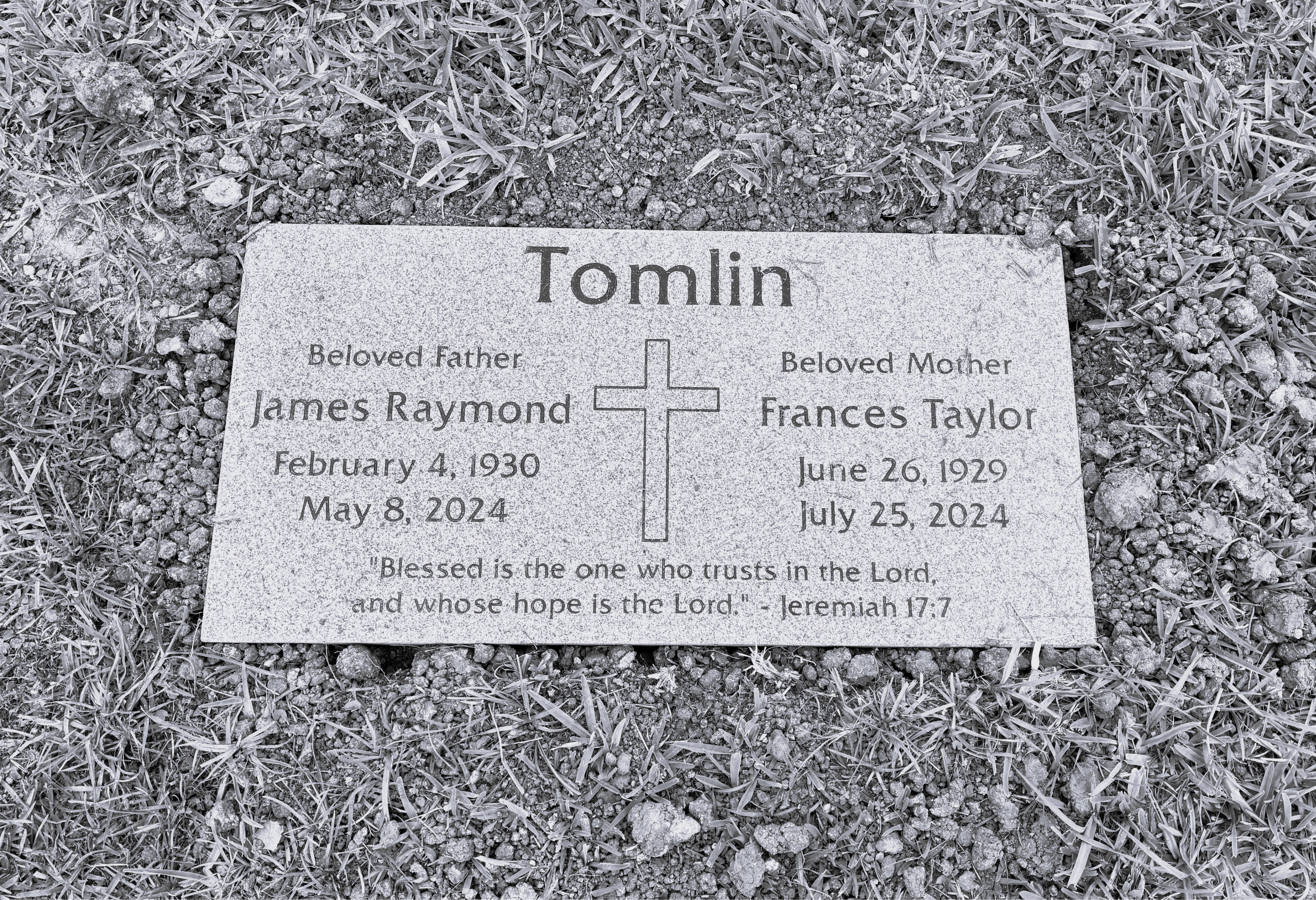
On the last day of my 40s, I visited my maternal granparents’ gravesite. Two years ago, they each passed within 2 ½ months of one another, having spent over 70 years faithfully married into their mid-90s. It’s taken that long to get around to us placing a headstone at their plot, for various reasons, but the cemetery office called to let me know it was done, and so I visited to check and send a picture to the rest of my family, who live much farther away.
As I approached the cemetery, my emotions got the better of me, reflecting that placing their marker, in a sense, marked the end of their earthly journey, at least for those of us who remain. Nothing was left to be done. It struck me as well that they were also near the end of their 40s when I showed up. I was their first grandkid, and my brother and sister would follow a few short years after. Although I’m not yet a grandparent and prefer to wait for that title until the circumstances present themselves at their most favorable, it would seem here on the first couple of days of my 50s that the age requirements for the title are, at the very least, ready and in place.
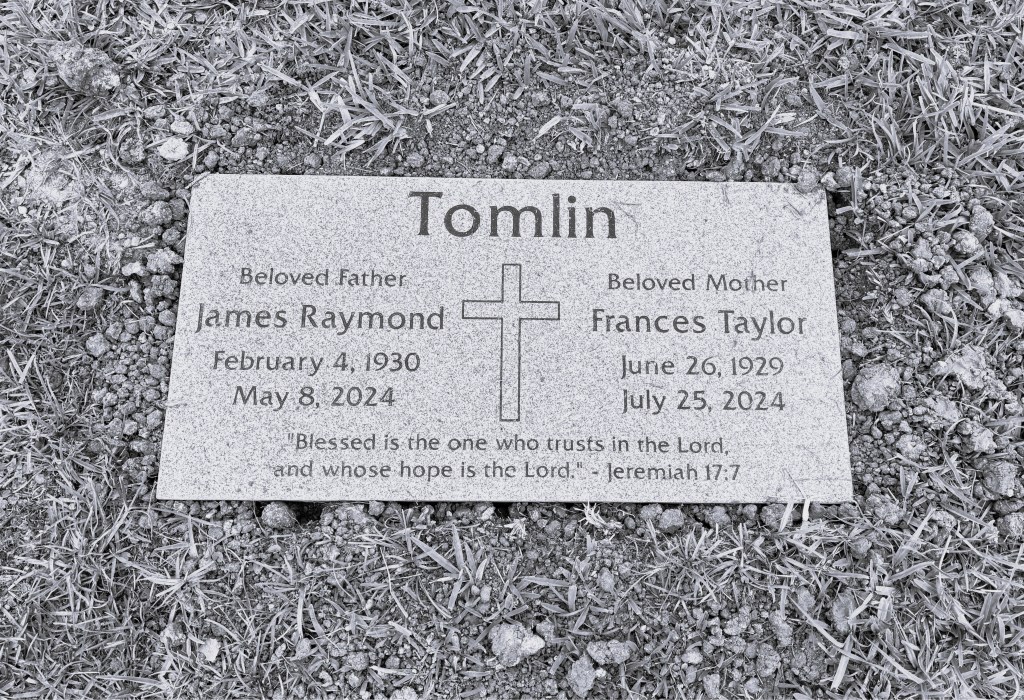
Standing over their marker, considering the emotions, thoughts, and memories that ebbed and flowed, I found the one wave that crashed the hardest was a deep and profound feeling of gratitude. What has carried me thus far, whether anyone on the outside looking in considers mine a successful and satisfying life or not, is the fact that I had a lot of help getting here. It’s been my observation that few who are young appreciate or are aware enough to see how they haven’t arrived where they are alone, wholly self-sufficient, deserving of an empty trophy. “No man is an island . . .” as John Donne astutely put it. As I pondered it, I found myself hoping that my children, if/when they arrive at the same place, would likewise feel the same inexpressible gratitude. That remains to be seen, of course, but the answers to other thoughtful and retrospective questions began to move in my head from the moment I left the gravesite, and I felt compelled to follow.
Having not written in some time, I resolved to lay it all out in the form of a mock interview the most important lessons I’ve learned over my first half-century, but it gradually shaped itself into a long-winded and relatively uninteresting piece that I knew I would not have wanted to read myself. So much content out there these days, too much, in fact, that most of us are better off conscientiously deciding what not to consume. No need to add to the glut of material, most of which is forgotten by the end of the day. I still, however, feel the need and even urgency to share. Time is fleeting, and I feel it more now than ever. I’m reminded as well that I started this writing thing not for fame or attention, but for myself and the few in my family who might follow and take an interest in who they are as it concerns who preceded them and had a hand in their history, whether they see it or not.
So, what is there to say after 50 years? If the ride abruptly stopped right here, what would I say I’ve learned that’s most worth passing on?
First, choose well. Another way of saying this, as we often do to our kids, is “Make good choices.” Here, however, I’m thinking more about one’s choice in a partner. My father-in-law long shared this advice to young singles or couples considering marriage, and I’d have to agree. Not everyone finds that one right person they end up choosing to spend the rest of their lives with, but some do. Those that do tend to find loneliness less of a problem, and problems themselves are more tolerable when you have somebody willingly moving in the same direction with you. I waited into my mid-30s, though I doubted up to then whether or not I should just settle for someone already. Instead, I kept plugging along until the two of us ran into one another and realized we’d be better off together rather than apart. Fourteen years in, and I still have no regrets. I enjoy life with my wife, and I’m glad I waited and chose well.
Second, work hard at whatever you do, whether school, or work, or even a hobby. One day you will wake up and wonder where the time went, and all you’ll have is to look back at what you have (or haven’t) done with that time. A job well-done is often its own reward, I’ve found.
Third, don’t let your career or job (i.e., whatever it is you do to make a living) define everything about you. I’m satisfied with the eighteen years I gave mine and what resulted, but I’ve learned that while you will remember the people you worked with and they will remember you, the organization itself for which you worked eventually will not. You will leave one day, and it will carry on just fine without you. Take pride in the efforts you gave, satisfied that you ultimately helped others and made a contribution, but move on, recognizing that a career is just a career and doesn’t have to be an identity.
Fourth, cultivate and maintain a few close, meaningful friendships rather than a wealth of shallow ones, even if you don’t get to spend as much time as you’d like with those cherished folks. My wife and I are fortunate that these few people, for both of us, are mostly the same people, and I’m glad we can share that. If you don’t know who they are for you, think of who would willingly open their door to you without hesitation if you found yourself in crisis, even if just to listen and simply to be with you. Yes, relationships change over time, and friends can come and go, but don’t spread yourself so thin that nobody knows who you authentically are. Find those people and keep them around.
Fifth, be present. I recently traveled to San Antonio for my father’s outpatient procedure to implant a stent near his heart. I am privileged still to have a close relationship with my family and parents, though we don’t live near one another, regrettably, but I observed something recently while making that visit. Waiting in pre-op, we didn’t fill all of the time with conversation, but it occurred to me while lingering that it didn’t matter. Communication itself is implicitly held up as the best way to connect with others, suggested by the innumerable ways we have to do so, whether by phone, text, email, video chat, and on and on. It struck me, however, that if we’re not careful, we mistake these options for presence, which they are not but instead are merely satisfactory substitutes. They can, unwittingly, provide us with an excuse not to be around, not to make the sacrifice of actually being present with someone. Presence—physical presence—communicates importance and priorities better than anything else. Sacrificing the time and effort simply to be with another communicates love better than any word could, regardless of the medium. So put the phone down. The latest coveted version or model is still not going to give you what we all really need in our relationships. I sincerely believe this is one of the most urgent needs of our time.
Sixth, if you have kids, no matter how you’ve gone about it, recognize that you’re always likely to worry about them, no matter what they’re up to. I want to worry less about them, and I should, God-willing, but, man, if they don’t give you a lot to burden your thoughts and imaginations with, especially when they start gaining more independence outside the home. They’re on my mind almost every moment of the day, if I’m honest. Also, while you hold on to your hopes and dreams for them, understand that their future may not look like you hope or expect. Be the parent, but as much as possible, remember that it’s a relationship. Try not to damage it unnecessarily, though it can feel like they’re making a consistent effort to do just that. Remember that they will always need you, whether they recognize it or not.
Seventh, take care of yourself. Life is good, and there are a lot of tasty things to eat and even more things to binge watch while you do so, but put the donut down and get up and move. Enjoy such pleasures from time to time, but don’t make them such a habit that your body forgets what it’s like to feel at your best. You’ll have to make the effort before you feel it, though. No need to run a marathon, mind you. The first guy who tried that died after he reached his destination (see “Philippides”), which most long-distance runners oddly seem to forget. Find your pace, but maybe challenge yourself a bit. Eat yummy food that’s also good for you. Make it a daily habit. Again, you have to decide to do it first before you feel it. Sometimes you may have to make that decision each day, but your body will thank you for it, and you’ll marvel at how good you feel for the exertion, especially when your head hits the pillow at the end of the day.
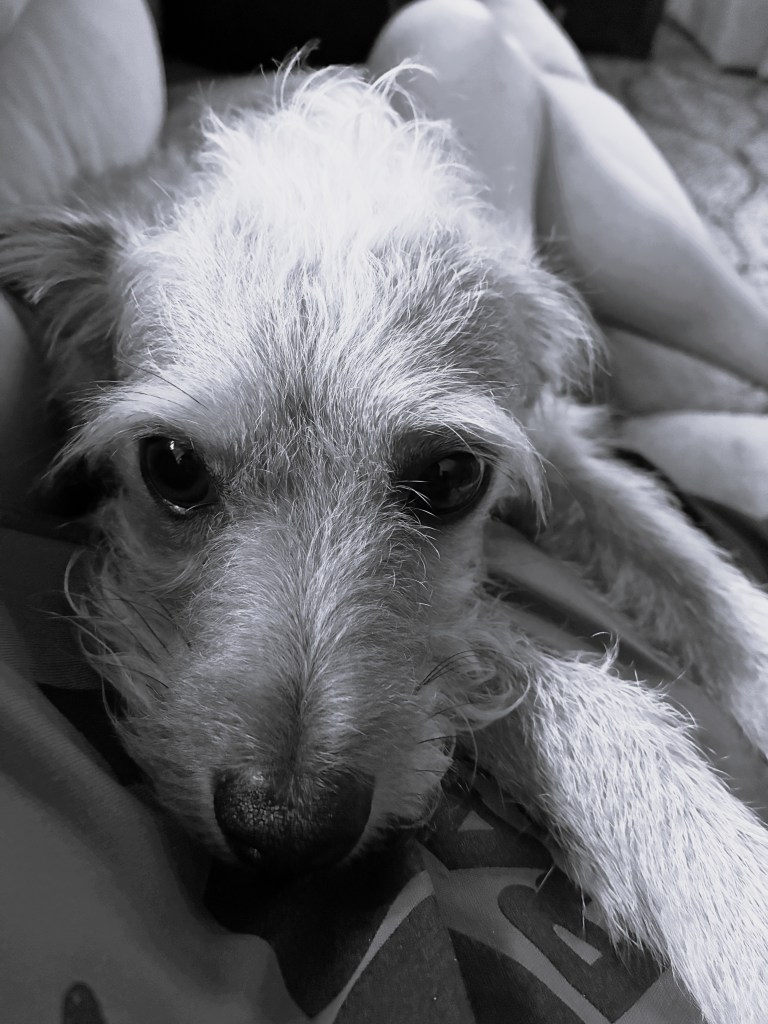
Eighth–and this is optional–find someone who looks at you like our diminutive 17-pound terrier, Caesar, looks at me (see picture). I did not want this dog, I must admit, but we got him as a companion for our 70-pound goldendoodle, Beaux, because I was tired of him following me around during my daily tasks, wondering why I wasn’t providing him constant attention. Yes, they were instant pals, but, man, if Caesar hasn’t become my favorite, and only because at the end of the day, as I collapse onto the couch, he dashes over to me, presses against me, and stares into my eyes as if he’s desperately in love and hasn’t seen me for years. That kind of affection can’t be bought, but no matter from whom or what it comes, it seldom fails to do the heart some good to know you’re loved like that, even if it’s from an animal who doesn’t know how else to say it.
Lastly, be grateful. Make this as much a habit as getting up in the morning. I have to work at this, but it goes a long way to get your mind in the habit of recognizing everything you have to be thankful for. This isn’t about being unrealistic or tricking yourself into overlooking or minimizing your problems, but figuring out that attitude is more often a choice, not something that’s handed to you. Observe what you “get to” do, not what you “have to” do today. Despair can creep up on me with little effort and is difficult to shake off once it gets a foothold. Pre-emptively get your mind where it needs to be at the beginning of each day and you may find it easier if or when the negative stuff makes a push as the challenges begin to present themselves.
Which brings me full-circle to the gratitude surfacing as I stood above my grandparents’ headstone.
My prayers these days are almost wholly focused on the kids. They are, in a sense, my job, and, as always, I want to do well. So much is out of my control, however. They’ve got to make their own choices, and all I can often do is hope and pray that they’re smart about them and don’t take for granted all they’ve been given, material or immaterial. I seldom sense a great deal of gratitude issued from them to me, though there are glimmers of it from time to time. I ask very often that they will learn it and their actions will reflect it. It’s difficult to understand what it takes to enjoy the privileges that you do if you haven’t thoughtfully witnessed what it has taken through the efforts of others to earn and keep them. We appreciate our own parents much more after we step into the game ourselves.
At any rate, my grandparents had quite a few years left to give after 50, and I have no idea if they thought much about it as I am now. I should hope I also have an ample number of years left myself. One can hope. I do know those years for them before and after that spot on the timeline were all fruitful and meaningful, which nurtured my first 50 with little notice from me. I’m grateful for it. 50 is a number to be proud of, and I think the next 10 are going to be great. My age has finally caught up with the budding white hairs in my beard, and I imagine there will be a few more by the time I finish this decade. Looking forward to it.


